
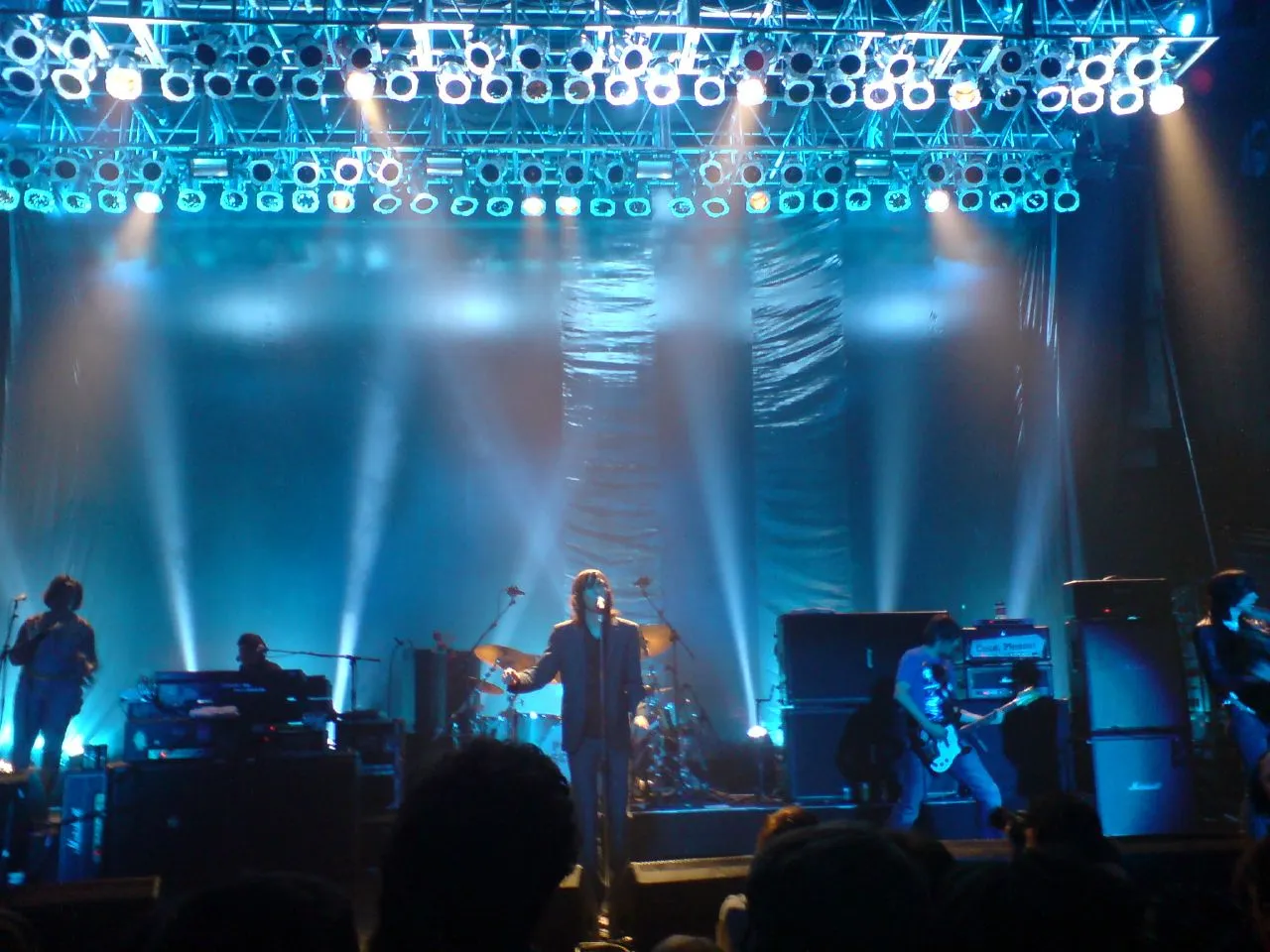
Photo by Phil Guest , licensed under CC BY-SA 2.0 · Wikimedia Commons
Rank #463
Primal Scream
Glasgow rock chameleons whose 'Screamadelica' fused indie and dance.
From Wikipedia
Primal Scream are a Scottish rock band originally formed in 1982 in Glasgow by Bobby Gillespie (vocals) and Jim Beattie (guitar). The band's current lineup consists of Gillespie, Andrew Innes (guitar) and Darrin Mooney (drums).
Members
- Gary Mounfield
Studio Albums
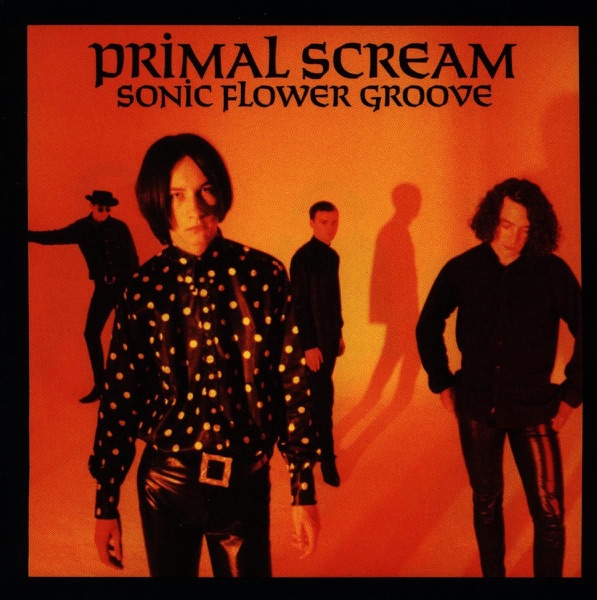
- 1987 Sonic Flower Groove
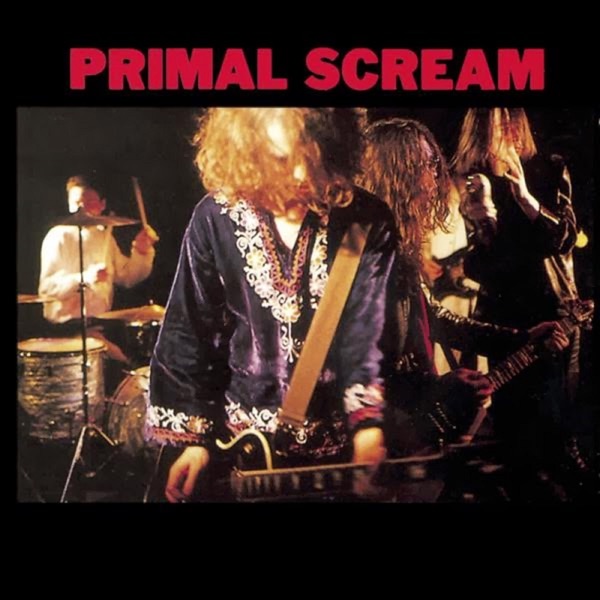
- 1989 Primal Scream
- 1991 Screamadelica
- 1994 Give Out but Don’t Give Up
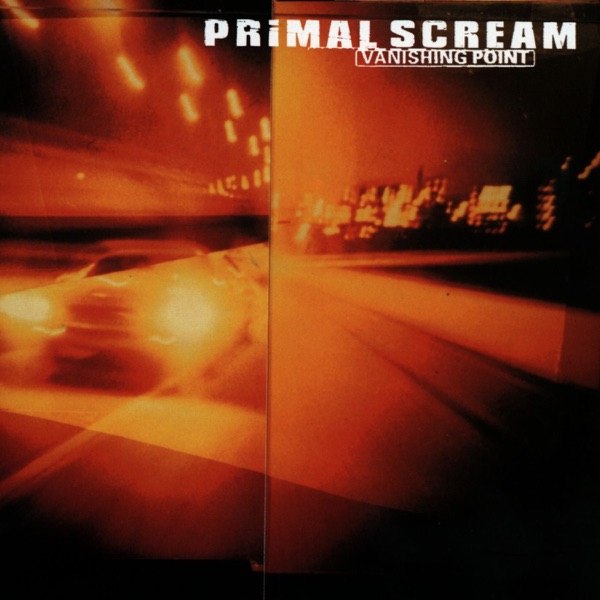
- 1997 Vanishing Point
- 1999 XTRMNTR
- 2002 Evil Heat
- 2006 Riot City Blues
- 2008 Beautiful Future
- 2013 More Light
- 2016 Chaosmosis
- 2024 Come Ahead
- 2025 Come Ahead: The Remixes, Vol 2 (Dubs)
Source: MusicBrainz
Deep Dive
Overview
Primal Scream are a Scottish rock band that emerged from Glasgow in 1982 and have maintained continuous activity into the 2020s. Fronted by Bobby Gillespie throughout their existence, the band built a reputation for stylistic restlessness—shifting from post-punk and indie rock into dance and electronic territories before cycling back again. Their 1991 album Screamadelica remains the watershed moment of their career, a record that capitalized on the collision between acid house culture and alternative rock to reach a mainstream UK audience. Across four decades and a dozen studio albums, Primal Scream have embodied the shape-shifting ethos of alternative rock itself, refusing to calcify into a single sound or era.
Formation Story
Primal Scream crystallized in Glasgow in 1982 when Bobby Gillespie (vocals) and Jim Beattie (guitar) formed the initial lineup. Glasgow in the early 1980s was a secondary music center, orbiting around post-punk and new wave sensibilities that had rippled outward from London and the wider post-punk movement. The city’s independent music scene provided both the artistic context and the scrappy DIY ethos that would inform the band’s early direction. The early lineup also included Gary Mounfield, who would become a crucial component of the band’s sonic architecture. From the start, Primal Scream positioned themselves within the alternative rock current that was gathering momentum in the UK independent sector.
Breakthrough Moment
Primal Scream’s path to wider recognition unfolded gradually across their first two albums. Sonic Flower Groove (1987) and the self-titled Primal Scream (1989) established them as a competent alternative rock unit, but neither penetrated beyond the independent rock faithful. The pivotal shift arrived with Screamadelica (1991), an album that arrived at a cultural inflection point. Riding the crest of acid house’s permeation into British pop culture and the broader collapse of genre boundaries that characterized early-1990s alternative music, Screamadelica blended shoegaze textures, dance production, and Gillespie’s raw vocal presence into a cohesive statement. The album’s commercial breakthrough in the UK established Primal Scream as more than a cult band—they had tapped into something the moment demanded, positioning themselves at the intersection of rave and rock.
Peak Era
The five-year span from 1991 to 1997 constituted Primal Scream’s most artistically restless and commercially significant period. Following the success of Screamadelica, the band consolidated and evolved their approach across three subsequent releases. Give Out but Don’t Give Up (1994) continued exploring electronic and dance influences while maintaining the core rock foundation. By Vanishing Point (1997), Primal Scream had internalized the lessons of both their dance experiments and their acid rock heritage, producing an album that showcased their maturity as arrangers and songwriters. During this era, the band was riding the tail end of Britpop’s dominance in the British music industry, but they had largely sidestepped the retro-rock orthodoxy that defined the movement, instead charting their own course through genre hybridity.
Musical Style
Primal Scream’s sound defies easy categorization because the band has actively resisted stylistic stasis. Their foundational approach combines rock instrumentation—guitar, bass, drums—with vocal melodies rooted in post-punk and indie rock sensibilities. From Screamadelica onward, they incorporated electronic production, sequencers, and beat-driven structures that aligned them with electronic dance music and acid house aesthetics. Bobby Gillespie’s vocal delivery is characteristically raw and emotionally direct, often sitting slightly back in the mix rather than commanding the foreground. The band’s guitar work, particularly from Andrew Innes, tends toward textural and atmospheric rather than virtuosic display. What unites their disparate styles across albums is a willingness to subordinate rock traditionalism to whatever production and arrangement choices serve the song, whether that means dub-inflected basslines, house music beats, or psychedelic guitar washes. Genre-wise, they occupy the liminal space between post-punk, alternative rock, and electronic music—a positioning that has allowed them to remain relevant across shifting musical landscapes.
Major Albums
Screamadelica (1991)
The definitive Primal Scream statement, fusing acid house energy with indie rock melody and shoegaze production. This album established the band’s willingness to synthesize dance and rock into a unified vision, and its commercial success in the UK opened the door to wider recognition.
Give Out but Don’t Give Up (1994)
A direct follow-up that deepened their exploration of electronic and dance production while maintaining rock credibility. Demonstrated that Screamadelica was not a one-off fusion but the beginning of a new creative direction.
Vanishing Point (1997)
The most musically mature and sonically sophisticated album of their first wave, Vanishing Point showcased the band’s evolution as arrangers and their ability to balance electronic and organic instrumentation.
XTRMNTR (1999)
A stark pivot toward raw, guitar-driven rock that rejected the dance elements of the previous decade, marking a return to primal rock foundations while maintaining the band’s alternative credentials.
Evil Heat (2002)
Primal Scream’s reinvention in the 2000s, navigating post-9/11 rock culture and moving toward a leaner, more punk-influenced approach while retaining their electronic experimentalism.
Signature Songs
- “Velocity Girl” — An emblematic Primal Scream track that exemplifies their fusion of indie pop melody with electronic production and shoegazing textures.
- “Rocks” — A defining moment from Screamadelica that captures the album’s synthesis of acid house rhythm and rock song structure.
- “Funky Jam” — Showcases the band’s embrace of funk and dance rhythms, demonstrating their genre-fluidity during their peak period.
- “Burning Bright” — A showcase for their ability to craft emotionally resonant rock songs even while embracing electronic and dance elements.
- “Some Velvet Morning” — A statement of intent demonstrating their willingness to reimagine and reinterpret existing material through their own sonic lens.
Influence on Rock
Primal Scream’s most lasting contribution to alternative rock was the legitimacy they lent to the synthesis of dance and rock during the 1990s. Before Screamadelica, the idea of an indie rock band embracing house music and acid house culture head-on was conceptually risky; afterward, it became a viable artistic strategy that other bands could explore. Their willingness to experiment across album cycles—swinging from dance-inflected to guitar-heavy without losing credibility—provided a model for artistic restlessness that influenced the broader alternative rock landscape. In the context of 1990s British rock, they occupied a middle path between the retrograde posturing of Britpop and the abstract experimentation of electronic music, showing that rock bands could engage with contemporary dance culture without surrendering their fundamental identity. Their legacy established Glasgow as a creative center capable of producing genuinely inventive alternative rock.
Legacy
Primal Scream have endured as a working band into the 2020s, with releases continuing into 2024 and 2025, demonstrating sustained creative ambition and a loyal audience. While they never achieved the canonical status of their absolute biggest peers, their influence on 1990s alternative rock remains measurable and their albums continue to be reassessed and rediscovered by successive generations. Screamadelica in particular has solidified its place as one of the essential alternative rock albums of the era, recognized as a landmark intersection of club culture and rock music. The band’s recorded output provides a documentary of alternative rock’s evolution across four decades, from post-punk through acid house adoption through various returns to guitar-driven rock.
Fun Facts
- Primal Scream formed in 1982 in Glasgow, making them one of the earlier crystallizations of the alternative rock impulse that would come to dominance in the 1990s.
- The band has maintained Bobby Gillespie as the constant creative center throughout their entire existence, making him one of the few UK alternative rock frontmen with unbroken tenure across four decades.
- Their stylistic pivots between albums—from Screamadelica to XTRMNTR—represent genuine aesthetic reinventions rather than incremental refinements, a rarity in rock music.
- Primal Scream released material on Creation Records, the legendary British independent label that also housed Oasis and other defining 1990s acts.
Discography & Previews
Click any album to expand its track list. Each track plays a 30-second preview streamed from Apple Music. Tap the link icon next to a track to open it in Apple Music for full playback.

- 1 Movin' On Up ↗ 3:51
- 2 Slip Inside This House ↗ 5:15
- 3 Don't Fight It, Feel It ↗ 6:54
- 4 Higher Than the Sun (Single Mix) ↗ 3:38
- 5 Inner Flight ↗ 5:02
- 6 Come Together (Farley Mix) ↗ 8:06
- 7 Loaded ↗ 7:03
- 8 Damaged ↗ 5:39
- 9 I'm Comin' Down ↗ 6:01
- 10 Higher Than the Sun (A Dub Symphony In Two Parts) ↗ 7:38
- 11 Shine Like Stars ↗ 3:45


- 1 Kill All Hippies ↗ 4:58
- 2 Accelerator ↗ 3:40
- 3 Exterminator ↗ 5:50
- 4 Swastika Eyes (Jagz Kooner Mix) ↗ 7:04
- 5 Pills ↗ 4:15
- 6 Blood Money ↗ 7:01
- 7 Keep Your Dreams ↗ 5:23
- 8 Insect Royalty ↗ 3:32
- 9 MBV Arkestra (If They Move Kill Them) ↗ 6:42
- 10 Swastika Eyes (Chemical Brothers Mix) ↗ 6:32
- 11 Shoot Speed / Kill Light ↗ 5:17
- 12 I'm 5 Years Ahead of My Time ↗ 4:08

- 1 Country Girl (Beans and Fatback Mix) ↗ 4:29
- 2 Suicide Sally & Johnny Guitar (Live @ XFM) ↗ 3:03
- 3 Bloods (2 Lone Swordsmen Mix) ↗ 3:53
- 4 Dolls (Some Spiders White Light Returned With Thanks Demo Mix) ↗ 4:18
- 5 Sometimes I Feel So Lonely (Bomb the Bass Remix) ↗ 4:33
- 6 Stone My Soul ↗ 3:01
- 7 Carry Me Home ↗ 5:16
- 8 Dolls ↗ 3:59
- 10 Sometimes I Feel So Lonely ↗ 5:06

- 1 Beautiful Future ↗ 5:10
- 2 Can't Go Back ↗ 3:43
- 3 Uptown ↗ 4:53
- 4 The Glory of Love ↗ 3:10
- 5 Suicide Bomb ↗ 5:52
- 6 Zombie Man ↗ 3:36
- 7 Beautiful Summer ↗ 4:42
- 8 I Love to Hurt (You Love to Be Hurt) ↗ 4:35
- 9 Over & Over ↗ 4:31
- 10 Necro Hex Blues ↗ 3:33
- 11 The Glory of Love (Single Version) ↗ 3:18
- 12 Urban Guerrilla ↗ 3:27

- 1 2013 ↗ 9:02
- 2 River of Pain ↗ 7:00
- 3 Culturecide ↗ 4:37
- 4 Hit Void ↗ 4:14
- 5 Tenement Kid ↗ 4:48
- 6 Invisible City ↗ 4:44
- 7 Goodbye Johnny ↗ 3:32
- 8 Sideman ↗ 3:57
- 9 Elimination Blues ↗ 5:49
- 10 Turn Each Other Inside Out ↗ 4:38
- 11 Relativity ↗ 7:31
- 12 Walking With The Beast ↗ 4:00
- 13 It's Alright, It's OK ↗ 5:11


- 1 Ready To Go Home ↗ 4:41
- 1 Ready To Go Home (Edit) ↗ 3:27
- 2 Love Insurrection ↗ 6:20
- 2 Love Insurrection (Edit) ↗ 3:32
- 3 Heal Yourself ↗ 5:33
- 3 Heal Yourself (Edit) ↗ 4:03
- 4 Innocent Money ↗ 6:31
- 4 Innocent Money (Edit) ↗ 3:33
- 5 Melancholy Man ↗ 5:16
- 5 Deep Dark Waters (Edit) ↗ 3:32
- 6 Love Ain't Enough ↗ 4:45
- 7 Circus of Life ↗ 5:53
- 8 False Flags ↗ 8:11
- 9 Deep Dark Waters ↗ 4:50
- 10 The Centre Cannot Hold ↗ 3:42
- 11 Settlers Blues ↗ 9:04

- 1 The Centre Cannot Hold (Lovefingers Chemical Dub) ↗ 8:12
- 2 Innocent Money (Lovefingers Root Of All Evil Dub) ↗ 9:25
- 3 Love Insurrection (Black Science Orchestra Dub) ↗ 7:41
- 4 Ready To Go Home (Hardway Bros Meet Monkton Uptown Dub) ↗ 7:30
- 5 Innocent Money (Radio Slave Remix Instrumental) ↗ 9:36
- 6 Innocent Money (Pet Shop Boys Remix Dub) ↗ 5:43
- 7 Love Insurrection (Terry Farley, Wade Teo Dub Mix) ↗ 5:13