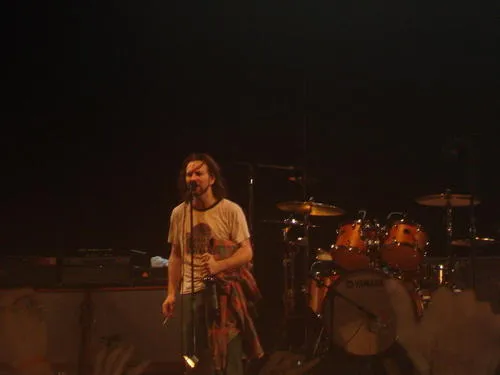
Photo by José Luiz Filho ( User:JoseLuizFilho ) , licensed under CC BY-SA 3.0 · Wikimedia Commons
Rank #430
Temple of the Dog
Soundgarden-Pearl-Jam tribute project whose lone album is a grunge cornerstone.
From Wikipedia
Temple of the Dog was an American rock supergroup that formed in Seattle, Washington, in 1990. It was conceived by vocalist Chris Cornell of Soundgarden as a tribute to his friend, the late Andrew Wood, lead singer of the bands Malfunkshun and Mother Love Bone. The lineup included Stone Gossard on rhythm guitar, Jeff Ament on bass guitar, Mike McCready on lead guitar, and Matt Cameron on drums. Eddie Vedder appeared as a guest to provide some lead and backing vocals and later became lead vocalist of Pearl Jam. Pearl Jam's debut album, Ten, was released four months after Temple of the Dog's only studio album.
Members
- Chris Cornell
- Eddie Vedder
- Jeff Ament
- Matt Cameron
- Mike McCready
- Stone Gossard
Studio Albums
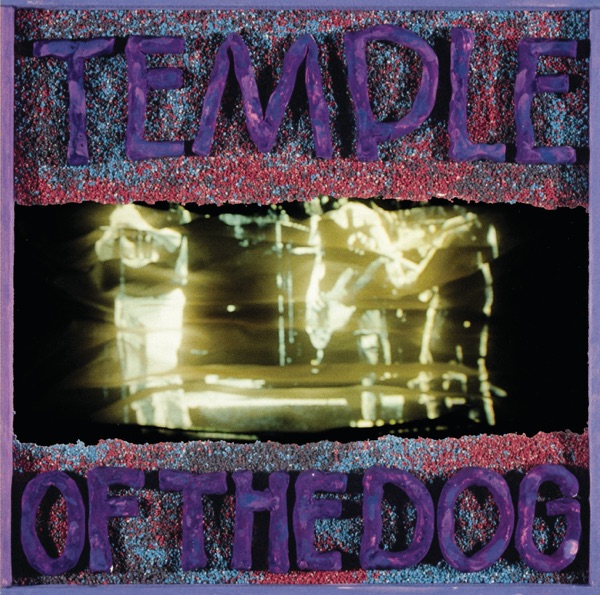
- 1991 Temple of the Dog
Source: MusicBrainz
Deep Dive
Overview
Temple of the Dog was an American rock supergroup that formed in Seattle, Washington, in 1990 as a direct response to grief and musical solidarity. Conceived by Chris Cornell, vocalist of Soundgarden, the project emerged as a tribute to Andrew Wood, the late lead singer of Malfunkshun and Mother Love Bone. Despite its brief existence—active only from 1990 to 1991—Temple of the Dog released a single self-titled album that has endured as one of grunge’s most essential documents, a moment when the genre’s most promising musicians converged to honor a fallen peer and, in doing so, helped define the sound of a generation.
Formation Story
Temple of the Dog crystallized in Seattle in 1990 in the wake of Andrew Wood’s death in September of that year. Chris Cornell’s decision to channel that loss into a musical tribute brought together some of the most accomplished musicians emerging from the Pacific Northwest scene at that moment. The core ensemble included Stone Gossard on rhythm guitar and Jeff Ament on bass—both of whom had played with Andrew Wood in Mother Love Bone—alongside Mike McCready on lead guitar and Matt Cameron on drums. Eddie Vedder, who would soon become the voice of Pearl Jam, joined as a guest contributor, providing both lead and backing vocals on several tracks. This alignment of talent reflected the tight-knit, collaborative ethos of the early Seattle grunge scene, where bands and musicians frequently crossed paths and supported one another’s projects.
Breakthrough Moment
Temple of the Dog released their self-titled album in 1991, and the record achieved immediate resonance within the grunge community and beyond. The album’s emotional directness and the convergence of so many respected musicians in a single project gave it substantial weight upon arrival. Four months after Temple of the Dog’s release, Eddie Vedder’s new band Pearl Jam debuted with the album Ten, which would become a commercial and critical watershed for grunge. The proximity of these two releases underscored the interconnected nature of Seattle’s rock ecosystem and positioned Temple of the Dog as a crucial link between the preceding moment of Mother Love Bone and the mainstream breakthrough that Pearl Jam and Soundgarden would help orchestrate in the following years.
Peak Era
Temple of the Dog’s entire recorded history compressed into 1990–1991, making their peak era synonymous with their existence. The project operated on compressed timescales typical of supergroup tributes: formed in response to a specific event, documented in a single album, and dissolved shortly after. Yet that brevity did not diminish the album’s impact. Released on A&M Records, Temple of the Dog’s self-titled effort captured a particular moment in grunge’s development—raw enough to feel rooted in underground Seattle sensibilities, yet polished and song-focused enough to register with a widening audience. The album functioned both as a memorial and as a showcase for the collaborative potential of Seattle’s emerging rock talent.
Musical Style
Temple of the Dog’s sound fused the heavy, riff-driven approach of Soundgarden with the more introspective, dynamic sensitivity that Stone Gossard, Jeff Ament, and Mike McCready had begun developing in earlier incarnations. The guitar work emphasized thick, distorted tones and memorable melodic hooks, with Matt Cameron’s drumming providing both power and restraint depending on the song’s emotional arc. Chris Cornell’s vocals—already distinguished by their remarkable range and intensity in Soundgarden—took on a more vulnerable character here, often emphasizing raw emotion over technical display. Eddie Vedder’s contributions added another textural layer, his deeper, more conversational vocal tone offsetting Cornell’s soaring approach. The overall production favored clarity and emotional directness; this was grunge aligned with song-craft rather than pure heaviness, rooted in the minor-key melancholia and dynamic shifts that characterized the genre’s most enduring work.
Major Albums
Temple of the Dog (1991)
The band’s only studio album stands as a grunge cornerstone, a single work that balanced tribute, innovation, and emotional authenticity. The record features some of the era’s most indelible songwriting, anchored by Chris Cornell’s vocal authority and the collective musicianship of a lineup that included future architects of Pearl Jam and continuers of Soundgarden’s legacy.
Signature Songs
- “Say Hello 2 Heaven” — The album’s most recognizable track, built on a driving guitar riff and Cornell’s soaring melody, became the de facto anthem of the project and a staple of Seattle grunge radio.
- “Hunger Strike” — A duet between Chris Cornell and Eddie Vedder that showcases the contrast between their vocal approaches and remains one of grunge’s most emotionally direct moments.
- “Wooden Jesus” — A deep cut that demonstrates the album’s range beyond its singles, balancing heaviness with introspection.
- “Man of Golden Words” — Anchored by Stone Gossard’s rhythmic guitar work, the track exemplifies the band’s ability to construct memorable, hook-driven compositions within the grunge framework.
Influence on Rock
Temple of the Dog’s influence operated partly through example and partly through the subsequent trajectories of its members. The project demonstrated that supergroup collaborations could serve artistic and emotional purposes beyond simple commercial calculation—that musicians could unite around shared loss and mutual respect. More tangibly, the album’s success helped establish the commercial viability of grunge at a moment when the genre was transitioning from regional phenomenon to mainstream force. Eddie Vedder’s visibility on the record raised his profile in the months before Pearl Jam’s debut, while the album’s existence reinforced Chris Cornell’s status as one of grunge’s most technically accomplished and emotionally expressive singers. The album’s emotional restraint and melodic sophistication influenced how subsequent grunge and alternative rock bands approached songwriting, validating an approach that balanced heaviness with accessibility.
Legacy
Temple of the Dog’s self-titled album has retained its stature across three decades. It stands as a permanent artifact of grunge’s foundational moment and as a testament to Andrew Wood’s significance within Seattle’s rock history. The album remains in print, regularly streams across digital platforms, and continues to introduce new listeners to the interconnected web of Seattle musicians who shaped rock in the early 1990s. The project’s history—a supergroup formed in grief, documented in a single essential album, then dissolved—has only added to its mythic dimension. For fans and historians alike, Temple of the Dog represents grunge at its most collaborative and most humane, a moment when technical skill, emotional authenticity, and genuine camaraderie aligned in recorded form.
Fun Facts
- Temple of the Dog was explicitly framed as a tribute project rather than an ongoing concern, making the band’s impermanence part of its artistic statement from inception.
- Chris Cornell and Eddie Vedder’s vocal interplay on “Hunger Strike” became one of the defining vocal duets of the grunge era, despite neither singer being Temple of the Dog’s primary focal point in their main bands.
- The album’s release in 1991 preceded Pearl Jam’s Ten by only four months, meaning that the Seattle rock world experienced two major releases from overlapping musician pools in rapid succession, amplifying grunge’s cultural momentum.
Discography & Previews
Click any album to expand its track list. Each track plays a 30-second preview streamed from Apple Music. Tap the link icon next to a track to open it in Apple Music for full playback.