Photo by tvbomb.co.uk , licensed under CC0 · Wikimedia Commons
Rank #370
The Maccabees
London indie-rockers of layered guitars and acclaimed late-period work.
From Wikipedia
The Maccabees are an English indie rock band, formed in 2004 in London. The band consists of Orlando Weeks, Felix White, Hugo White, Rupert Jarvis (bass) and Sam Doyle (drums).
Studio Albums
- 2006 Colour It In
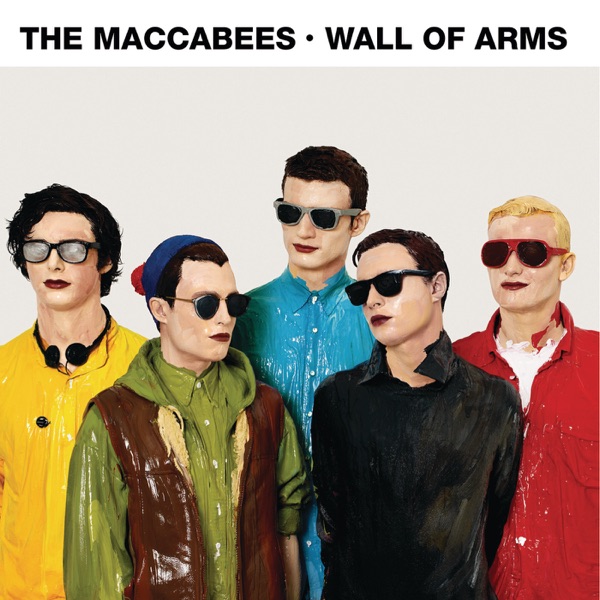
- 2009 Wall of Arms
- 2012 Given to the Wild
- 2015 Marks to Prove It
Source: MusicBrainz
Deep Dive
Overview
The Maccabees were an English indie rock band formed in London in 2004. Comprising Orlando Weeks on vocals, Felix White and Hugo White on guitar, Rupert Jarvis on bass, and Sam Doyle on drums, they became fixtures of the 2010s indie rock landscape through a series of albums marked by architectural guitar interplay and intricate songwriting. Active until 2017, their output—spanning four studio albums from Colour It In to Marks to Prove It—positioned them as thoughtful craftspeople within the broader post-punk revival and indie rock tradition.
Formation Story
The Maccabees emerged from London in 2004, a period when the city’s indie rock scene was already well-established but still generating new acts. The five-piece coalesced around the songwriting and vocal presence of Orlando Weeks, with the White brothers forming the band’s rhythmic and harmonic backbone through their intertwined guitar approach. Rupert Jarvis provided bass anchoring, while Sam Doyle’s drumming locked the ensemble together. London’s position as a cultural capital with access to both touring opportunities and a discerning audience proved formative, allowing the band to develop their craft in a competitive landscape.
Breakthrough Moment
The Maccabees’ official entry into broader recognition came with the release of their debut album Colour It In in 2006 on Fiction Records. The record established their architectural approach to arrangement and demonstrated a willingness to layer elements rather than strip songs to their bones. Their second album, Wall of Arms, arrived in 2009 and deepened their reputation within indie circles, showcasing increased songwriting maturity and a more confident studio presence. However, it was Given to the Wild in 2012 that marked their artistic and commercial peak, an album that would define their late-period legacy and cement their standing as one of the decade’s more accomplished indie rock ensembles.
Peak Era
The period from 2012 onward represented The Maccabees’ most artistically significant window. Given to the Wild consolidated everything they had learned across two previous albums while pushing their sonic palette into more textured, layered territory. Their final album, Marks to Prove It, arrived in 2015 and represented both a culmination and a farewell—the band ceased operations in 2017, bringing an official close to their thirteen-year run. This final chapter saw them approaching songwriting with a reflective quality that suggested artists aware of their own trajectory and choosing to exit on their own terms rather than fade into irrelevance.
Musical Style
The Maccabees trafficked in intelligent indie rock distinguished by dense guitar arrangements and careful dynamic control. Felix and Hugo White’s guitar work formed the band’s primary stylistic signature: rather than the wall-of-noise approach favored by some contemporaries, they favored interlocking melodic lines, counterpoint, and textural variety. Orlando Weeks’ vocal delivery remained the emotional anchor, sitting high enough in the mix to guide songs through their architecture without overwhelming the instrumental landscape. Their production choices evolved across albums from the relative clarity of Colour It In toward increasingly intricate studio work on later records. Rhythmically, Doyle and Jarvis built foundations that allowed space for the guitars to move; they favored precision over bombast. The band’s overall approach fell within the broader indie rock lineage extending from post-punk’s harmonic sophistication through 1990s alternative rock’s willingness to prioritize structural experimentation over simplicity.
Major Albums
Colour It In (2006)
Their debut established the Maccabees’ compositional intent and introduced their trademark interwoven guitar sound. It announced a band uninterested in straightforward verse-chorus structures or obvious hooks.
Wall of Arms (2009)
The second album refined their approach and demonstrated growing studio confidence. Songs became more ambitious in scope, with arrangements that suggested band members thinking in ensemble rather than solo terms.
Given to the Wild (2012)
Wide regarded as their artistic peak, this album represented the fullest realization of their sonic vision. The guitar work reached new levels of sophistication, and Weeks’ vocals acquired a deeper emotional register across the record’s twelve tracks.
Marks to Prove It (2015)
Their final studio statement, arriving three years after Given to the Wild, brought a reflective quality to their songwriting. The album functioned as both a continuation of their established aesthetic and a deliberate conclusion.
Signature Songs
- “Toothache” — A standout from early in their catalog demonstrating their ability to build tension across a conventional song structure.
- “Pelican” — Exemplified their knack for melody within complex harmonic and rhythmic frameworks.
- “Young Again” — Showcased the emotional accessibility that balanced their compositional complexity.
- “Marks to Prove It” — The title track from their final album, capturing both their sonic maturity and sense of artistic closure.
Influence on Rock
While The Maccabees occupied a middle tier of 2010s indie rock prominence rather than towering over it, they represented a particular strand of the era’s sensibilities: intelligent, guitar-driven, skeptical of both bombast and minimalism. Their insistence on layered arrangements and complex interplay influenced younger acts pursuing similar textural density within indie and alternative contexts. In an era when indie rock was fragmenting into numerous subgenres and styles, the Maccabees remained committed to a traditional band format and the possibilities that five musicians could explore together. They demonstrated that durability and craftsmanship could exist alongside artistic relevance in a landscape often dominated by novelty and trend.
Legacy
The Maccabees’ legacy rests primarily on their albums rather than on cultural ubiquity. Given to the Wild endures as a solid artifact of 2010s indie rock, streamed regularly by fans of the era and cited by musicians pursuing similar approaches to guitar arrangement and compositional complexity. Their 2017 dissolution came without fanfare—no reunion narrative, no dramatic breakup, simply a band that made four albums and chose to end. In the decades following their formation, London’s indie rock scene has come and gone through various cycles, but The Maccabees’ records remain evidence of a moment when guitar-based indie rock still occupied mainstream music discourse and when a band could build a respectful career on craft and integrity. Their influence appears less as direct imitation than as part of a broader indie rock lineage that values architecture and ensemble playing.
Fun Facts
- The Maccabees took their name from a historical source, a reference to the Maccabean Revolt in ancient Judea, reflecting a thoughtfulness in band nomenclature common among indie rock acts of the era.
- Orlando Weeks’ vocal range and phrasing drew comparisons to other London-based indie rock singers of the 2000s and 2010s, positioning him within a recognizable tradition of British alternative rock vocalists.
- The band’s tenure of thirteen years—from 2004 to 2017—spanned the entire lifecycle of the 2010s indie rock mainstream, witnessing the rise of streaming and the fragmentation of rock radio during their active period.
Discography & Previews
Click any album to expand its track list. Each track plays a 30-second preview streamed from Apple Music. Tap the link icon next to a track to open it in Apple Music for full playback.