
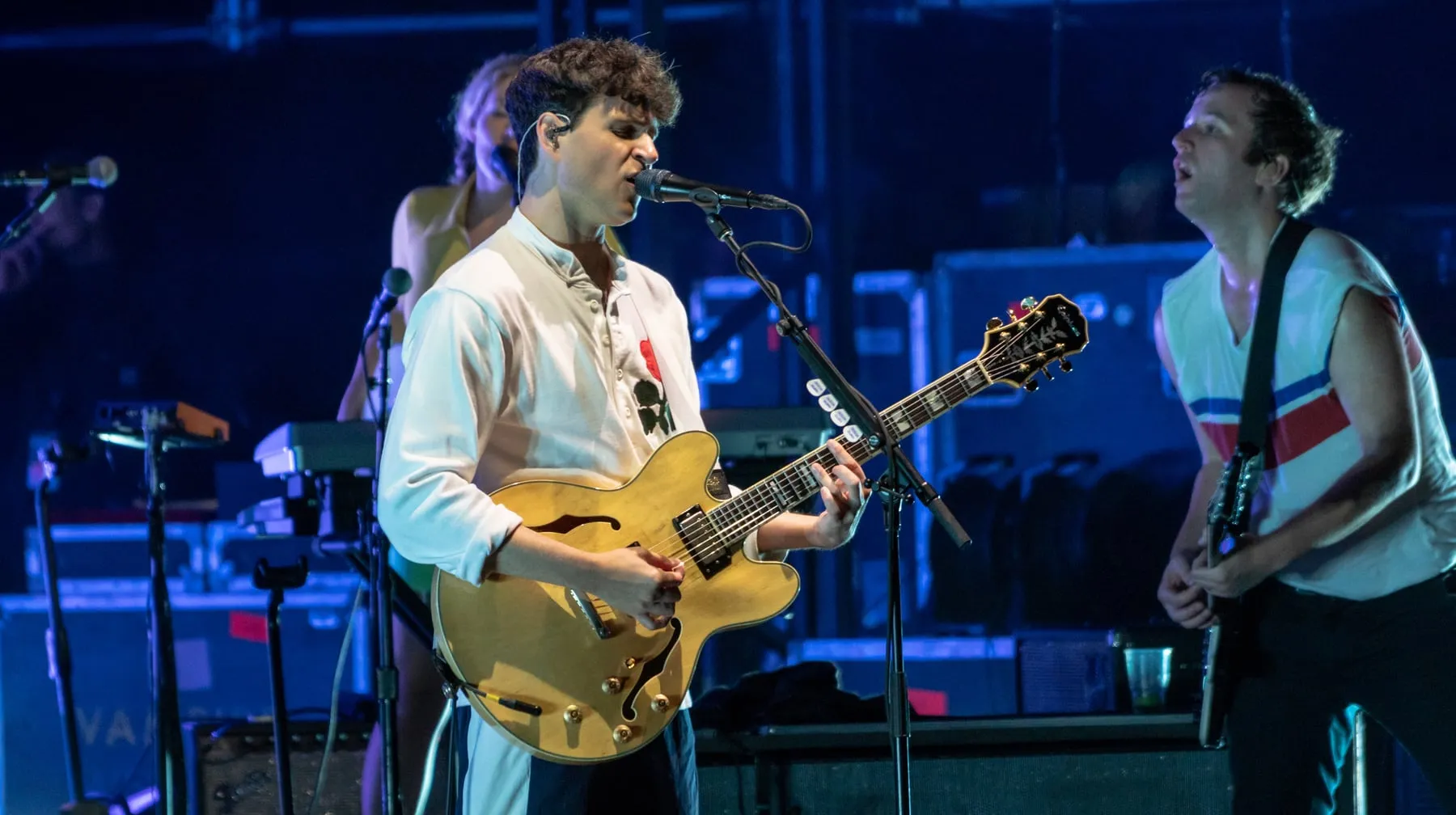
Photo by Raph_PH , licensed under CC BY 2.0 · Wikimedia Commons
Rank #390
Vampire Weekend
NYC band of Afro-pop-inflected guitars and preppy literary pop.
From Wikipedia
Vampire Weekend is an American rock band formed in New York City in 2006 and currently signed to Columbia Records. The band was formed by lead vocalist and guitarist Ezra Koenig, multi-instrumentalist Rostam Batmanglij, drummer Chris Tomson, and bassist Chris Baio. Batmanglij departed the group in early 2016 but has continued to occasionally contribute to subsequent albums as a songwriter, producer, and musician.
Members
- Rostam Batmanglij (2006–2016)
- Chris Baio
- Chris Tomson
- Ezra Koenig
Studio Albums
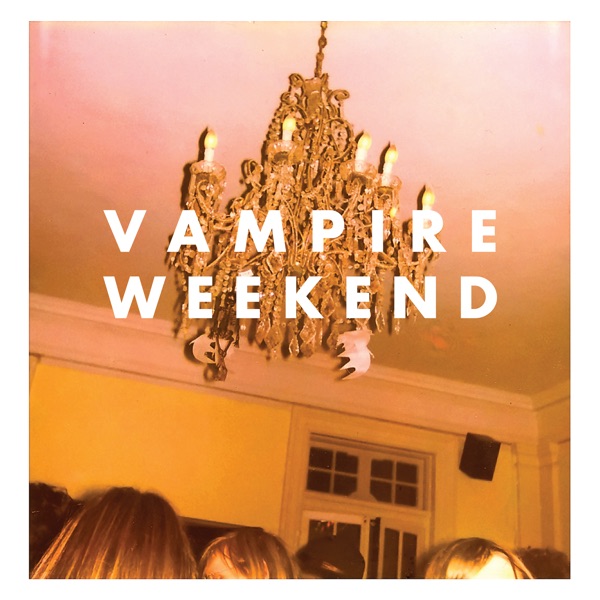
- 2007 Vampire Weekend
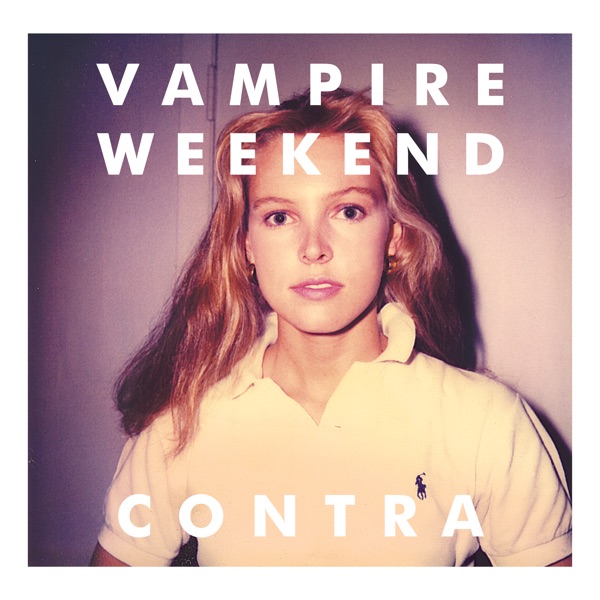
- 2010 Contra
- 2013 Modern Vampires of the City
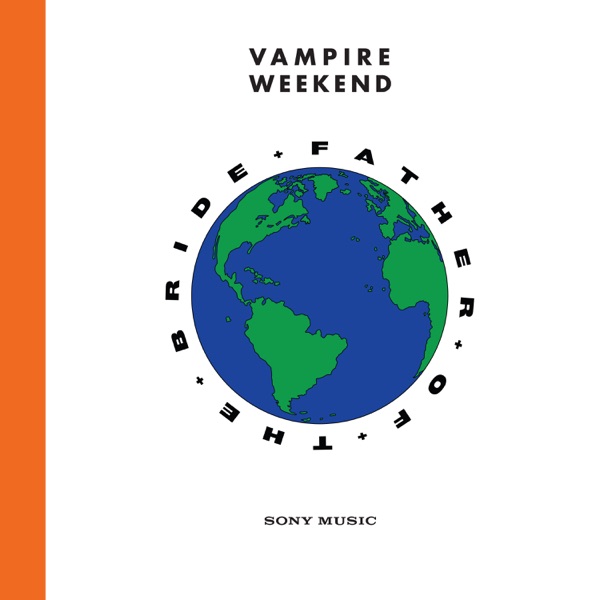
- 2019 Father of the Bride
- 2024 Only God Was Above Us
Source: MusicBrainz
Deep Dive
Overview
Vampire Weekend emerged from New York City in 2006 as an unlikely vessel for a new kind of American indie rock—one that drew from art rock, pop melody, Afro-pop guitar texture, and literary language in equal measure. The band’s founding quartet of Ezra Koenig, Rostam Batmanglij, Chris Baio, and Chris Tomson synthesized influences that seemed contradictory on paper but cohesive in practice: baroque pop arrangements, angular post-punk guitar work, African percussion and rhythmic patterns, and vocal delivery that mixed detachment with emotional precision. By the early 2010s, Vampire Weekend had become one of the most creatively vital indie bands of their generation, redefining what alternative rock could sound like beyond the guitar-bass-drums template that had calcified around them.
Formation Story
Vampire Weekend coalesced in New York City in 2006 around the songwriting partnership of Ezra Koenig and Rostam Batmanglij, who had begun collaborating at Columbia University. The band’s full lineage included bassist Chris Baio and drummer Chris Tomson, establishing the core lineup that would carry the group through their first three studio albums. New York City in the mid-2000s provided fertile ground: the indie rock boom had peaked and begun fragmenting, leaving space for bands willing to synthesize rather than regurgitate. Vampire Weekend entered this ecosystem with music that felt indebted to no single American precedent—closer in spirit to British post-punk, chamber pop experimentalism, and the rhythmic vocabulary of non-Western music traditions.
Breakthrough Moment
Vampire Weekend’s self-titled debut in 2007 arrived without major label backing or press machinery, yet the album’s songs—particularly “A-Punk,” “Oxford Comma,” and “One (Blake’s Got a New Face)“—circulated rapidly through indie music networks and began accumulating airplay on college radio and progressive commercial stations. The album’s aesthetic coherence and melodic sophistication set it apart from the post-garage rock revival still dominating indie playlists. Their second album, Contra, released in 2010, solidified their mainstream presence without sacrificing the band’s compositional ambition or sonic idiosyncrasy. Tracks like “Horchata” and “Untitled” demonstrated an expanded creative scope—fuller arrangements, more confident deployment of synthesizers and horn sections, and Koenig’s growing command of narrative voice.
Peak Era
The 2013 release of Modern Vampires of the City marked Vampire Weekend’s creative and commercial apogee. The album arrived with near-universal critical acclaim and represented the band’s most sonically refined and emotionally expansive work to date. Produced in collaboration with external forces while maintaining the band’s essential character, Modern Vampires of the City spawned the radio-friendly “Diane Young” and the aching slowburn “Hannah Hunt,” showcasing the band’s ability to move between uptempo pop hooks and sustained emotional climax. This period cemented Vampire Weekend as one of the defining bands of the 2010s indie rock moment, a time when the genre had achieved both cultural visibility and commercial viability. The album became a touchstone for critics and listeners seeking indie rock that engaged with literary sophistication, emotional authenticity, and rhythmic inventiveness simultaneously.
Musical Style
Vampire Weekend’s sound is built on a foundation of tightly played instrumentation combined with textural experimentation uncommon to indie rock orthodoxy. Rostam Batmanglij’s role as multi-instrumentalist proved crucial: his deployment of keyboards, strings, and percussive elements—often drawing from or inspired by non-Western musical traditions, particularly West African rhythmic patterns—created a sonic signature that set the band apart from their guitar-centric peers. Ezra Koenig’s vocals occupied an unusual register: precise and often detached in delivery, yet capable of genuine emotional weight, particularly in the album closers and extended builds that became a Vampire Weekend trademark. The band’s approach to melody was simultaneously pop-influenced and harmonically sophisticated, avoiding the verse-chorus-verse strictures that governed much indie rock. Their guitar work, handled primarily by Koenig with contributions from Baio, favored angular, percussive textures over sustain or distortion, a choice that allowed rhythm and arrangement to serve as the song’s primary structural elements.
Major Albums
Vampire Weekend (2007)
The debut established the band’s foundational aesthetic: sprightly guitar interplay, literary wordplay, and melodic precision set to rhythms that seemed to draw from multiple traditions simultaneously. Tracks like “Oxford Comma” and “Cape Cod Kwassa Kwassa” announced a band uninterested in genre purity.
Contra (2010)
The second album expanded the sonic palette significantly, introducing horn sections, synthesizers, and a more confident sense of production craft. “Horchata” became their most recognizable song, demonstrating an ability to embed sophistication within genuinely catchy pop structure.
Modern Vampires of the City (2013)
The band’s most critically acclaimed work balanced maximalist orchestration with emotional vulnerability. The album showcased Koenig’s lyrical maturity and the band’s studio craftsmanship at its peak.
Father of the Bride (2019)
Released six years after its predecessor, this album reflected the band’s evolution following Rostam Batmanglij’s departure in early 2016. The record maintained the band’s literary sensibility while embracing more expansive, sometimes synth-driven arrangements.
Only God Was Above Us (2024)
The band’s fifth studio album continued their trajectory of thoughtful, arrangement-heavy indie pop-rock, demonstrating continued creative investment nearly two decades into their career.
Signature Songs
- “Oxford Comma” — Defined the band’s early persona through witty lyricism and propulsive instrumentation.
- “A-Punk” — Remains their most immediate hook, a short, perfectly constructed indie pop statement.
- “Horchata” — The song that achieved genuine crossover recognition while maintaining artistic credibility.
- “Diane Young” — Demonstrated the band’s ability to craft radio-friendly material without compromise.
- “Hannah Hunt” — Showcased their skill at extended emotional builds, stretching past six minutes with sustained tension.
- “Walcott” — An album-closer that exemplified the band’s understanding of song architecture and finale.
Influence on Rock
Vampire Weekend’s influence on 2010s indie rock and alternative music cannot be overstated. They demonstrated that indie rock could engage with non-Western musical traditions not as pastiche or world-music tourism but as genuine compositional vocabulary. Their emphasis on arrangement, melodic sophistication, and lyrical literacy influenced a wave of subsequent indie bands who recognized that critical credibility and melodic accessibility were not mutually exclusive. The band’s visual aesthetic—preppy, literary, self-consciously artful—also became aspirational within indie music communities, influencing how bands approached presentation and branding.
Legacy
Vampire Weekend’s transition from their initial phase through the Rostam Batmanglij departure in 2016 and subsequent albums demonstrated a band capable of evolution without formulaic repetition. Their sustained presence on streaming platforms and continued tour schedules reflect an audience that has only grown since their early days. The band’s status within indie rock canon solidified relatively quickly; by the early 2020s, Modern Vampires of the City appeared on numerous critical lists of the decade’s best albums. Their longevity—active continuously since 2006 with no dissolution in sight—marks them as among the more enduring indie rock bands of their generation, a period often defined by short lifespans and sudden breakups.
Fun Facts
- Rostam Batmanglij, who departed as a full-time member in early 2016, has continued to contribute as a songwriter, producer, and musician on subsequent albums, maintaining a connection to the band’s creative output.
- The band’s name references the 1985 film My Own Private Idaho, a reference that encapsulates their sensibility of high-low cultural mixing.
- Columbia Records eventually signed the band, a major label partnership rare among indie rock acts of their era who typically chose smaller independent labels.
- Vampire Weekend’s self-titled debut, released in 2007 on XL Recordings, was recorded without the massive promotional infrastructure that would typically surround a band’s first release, relying instead on word-of-mouth and college radio circulation.
Discography & Previews
Click any album to expand its track list. Each track plays a 30-second preview streamed from Apple Music. Tap the link icon next to a track to open it in Apple Music for full playback.

- 1 Hold You Now (feat. Danielle Haim) ↗ 2:34
- 2 Harmony Hall ↗ 5:08
- 3 Bambina ↗ 1:43
- 4 This Life ↗ 4:29
- 5 Big Blue ↗ 1:49
- 6 How Long? ↗ 3:32
- 7 Unbearably White ↗ 4:40
- 8 Rich Man ↗ 2:30
- 9 Married in a Gold Rush (feat. Danielle Haim) ↗ 3:42
- 10 My Mistake ↗ 3:19
- 11 Sympathy ↗ 3:47
- 12 Sunflower (feat. Steve Lacy) ↗ 2:18
- 13 Flower Moon (feat. Steve Lacy) ↗ 3:57
- 14 2021 ↗ 1:39
- 15 We Belong Together (feat. Danielle Haim) ↗ 3:11
- 16 Stranger ↗ 4:09
- 17 Spring Snow ↗ 2:41
- 18 Jerusalem, New York, Berlin ↗ 2:55
