
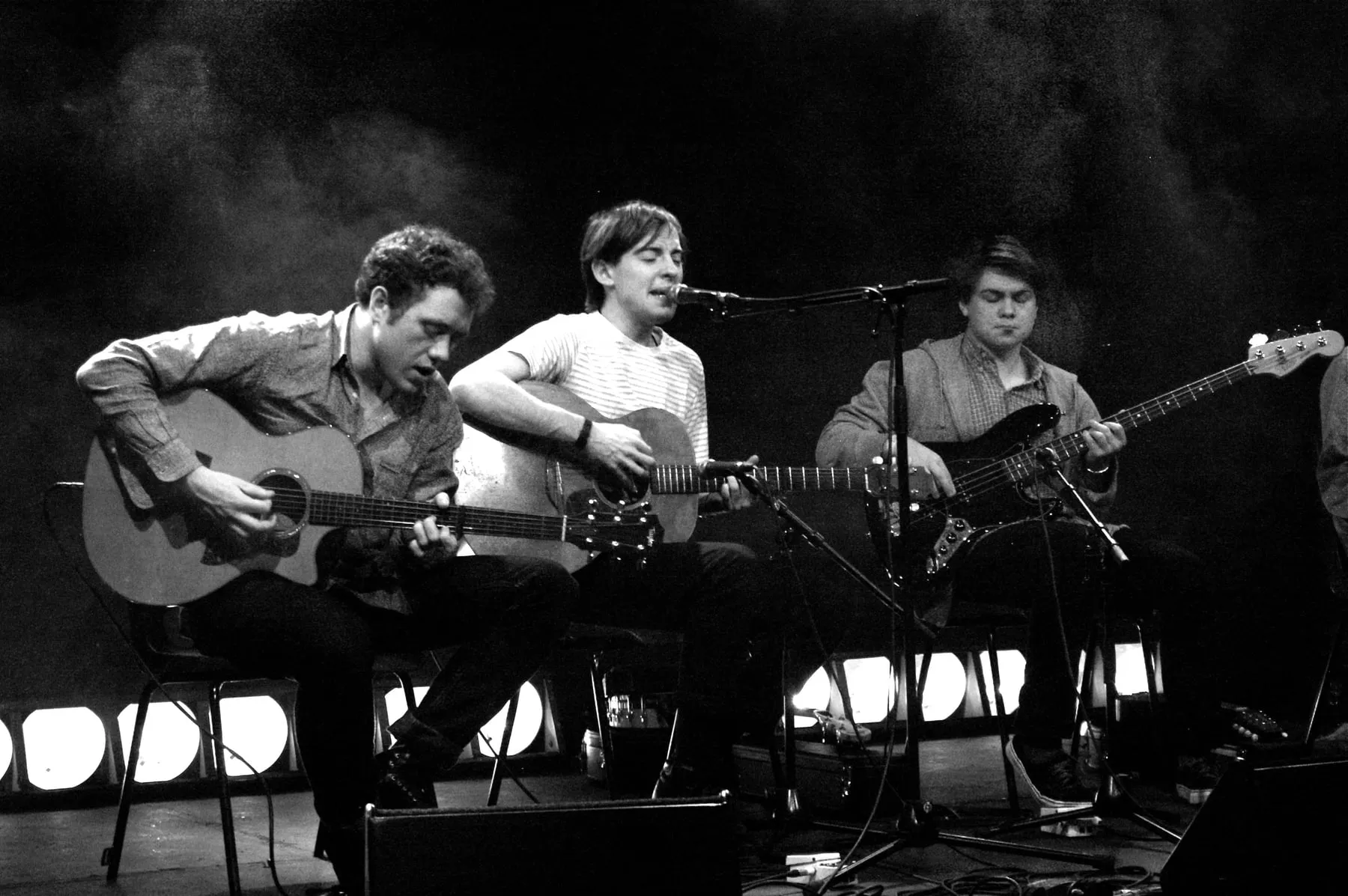
Photo by gustaffo89 , licensed under CC BY 2.0 · Wikimedia Commons
Rank #389
Bombay Bicycle Club
London indie-rockers of polyrhythmic playfulness and warm production.
From Wikipedia
Bombay Bicycle Club are an English indie rock band from Crouch End, London, consisting of Jack Steadman, Jamie MacColl, Suren de Saram, and Ed Nash. They are guitar-fronted and have experimented with different genres, including folk, electronica, world music and indie rock.
Studio Albums
- 2009 I Had the Blues but I Shook Them Loose
- 2010 Flaws
- 2011 A Different Kind of Fix
- 2014 So Long, See You Tomorrow
- 2020 Everything Else Has Gone Wrong
- 2023 My Big Day
Source: MusicBrainz
Deep Dive
Overview
Bombay Bicycle Club are an English indie rock band from Crouch End, London, formed in 2005. Operating as a guitar-fronted ensemble, the band built their reputation through a willingness to move beyond conventional indie rock boundaries, incorporating folk, electronica, and world music influences into their catalog. By the early 2010s, they had established themselves as one of the more experimentally inclined acts within the UK indie scene, sustained by a productive approach to songwriting and studio work that yielded multiple albums within a compressed timeframe.
Formation Story
Bombay Bicycle Club emerged from London’s Crouch End neighborhood in 2005, initially assembling as a guitar-driven indie rock unit. The core lineup solidified around Jack Steadman, Jamie MacColl, Suren de Saram, and Ed Nash, four musicians who shared an appetite for genre exploration that would become increasingly central to their identity. Operating under Island Records, the band entered the studio in the latter half of the 2000s, positioning themselves within the broader London indie rock infrastructure that was then home to numerous young acts exploring post-punk revival, folk-influenced alternatives, and electronic experiments.
Breakthrough Moment
The band’s breakthrough arrived with their second album, Flaws, released in 2010. This record signaled their arrival as more than a regional curiosity; it demonstrated a maturity in songwriting and production that resonated beyond indie-rock purists. Following the foundation laid by their debut, I Had the Blues but I Shook Them Loose (2009), Flaws proved that Bombay Bicycle Club could sustain listener attention across a full-length statement. The album’s reception established the band’s trajectory toward the wider recognition they would achieve throughout the 2010s, confirming that their willingness to blend genres was not a gimmick but a genuine compositional philosophy.
Peak Era
The period from 2010 to 2014 represented Bombay Bicycle Club’s commercial and creative peak. During this span, they released three studio albums—Flaws, A Different Kind of Fix (2011), and So Long, See You Tomorrow (2014)—each marking significant steps in their evolution. A Different Kind of Fix deepened their experimentation with electronic production and structural innovation, while So Long, See You Tomorrow arrived as the culmination of their early momentum, showcasing a band increasingly confident in their ability to shift sonic textures across single records. This era positioned them as fixture of the 2010s indie rock landscape, with touring and festival appearances cementing their status as working musicians of substance rather than passing trend.
Musical Style
Bombay Bicycle Club’s sound is fundamentally rooted in indie rock but refuses containment within a single genre frame. The band’s guitar-fronted arrangement provides structural anchoring, yet their production values and compositional choices consistently pull toward adjacent territories: the acoustic warmth of folk arrangements, the textural complexity of electronica, and rhythmic approaches derived from world music traditions. What distinguishes their approach is a sense of playfulness rather than gravity—their polyrhythmic choices and genre-blending do not carry the weight of artistic manifestos but rather emerge as natural extensions of curiosity. Vocal delivery tends toward the warm and conversational, avoiding histrionics in favor of melodic clarity. The band’s willingness to apply different sonic palettes across tracks within the same album—shifting from acoustic balladry to electronic production to rhythmically complex arrangements—became a defining trait, suggesting an act less concerned with brand consistency than with exploring the full range of sounds available within their musical vocabulary.
Major Albums
Flaws (2010)
Bombay Bicycle Club’s second album established the template for their subsequent work: guitars, electronic elements, and structural ambition housed within a framework of melodic accessibility. Flaws announced the band as serious musicians capable of sustaining listener investment across multiple listens.
A Different Kind of Fix (2011)
Released just a year after Flaws, this album intensified their electronic experimentation and pushed their production toward greater sophistication. The rapid succession of releases demonstrated a band operating at high productivity while maintaining quality standards.
So Long, See You Tomorrow (2014)
Arguably their most polished work to date, So Long, See You Tomorrow arrived as a statement of maturity, balancing all the band’s influences—electronic production, folk sensibilities, rhythmic complexity—into a cohesive artistic vision. The album represented the culmination of their early creative run.
Everything Else Has Gone Wrong (2020)
After a six-year gap, Bombay Bicycle Club returned with this album, marking a shift in their creative pace. The extended interval between records suggested a band recalibrating after a decade-plus of sustained output.
Signature Songs
- Dust to Dust — A track from Flaws that exemplifies the band’s ability to blend electronic textures with guitar-driven indie rock sensibilities.
- How Can You Swallow So Much Sleep — Demonstrates the warm, conversational vocal approach and accessible melody writing that characterizes their core identity.
- Lamplight — Showcases the band’s folk influences and acoustic arrangement capabilities within their broader sonic palette.
- Luna — Represents their comfort with electronica-influenced production without abandoning their guitar-rock foundation.
Influence on Rock
Bombay Bicycle Club occupied a distinctive position within 2010s indie rock by demonstrating that genre-blending need not signal artistic instability or commercial death wish. Their prolific output during 2009–2014 coincided with a broader cultural embrace of cross-genre collaboration and boundary-pushing within independent music; the band’s willingness to shift between electronic production, world music rhythms, and folk influences provided one model for how contemporary indie rock could evolve beyond the post-punk revival template that had dominated the previous decade. Though not typically cited as pioneers in the way more visually striking or sonically radical acts are, their influence operated through demonstration: that commercial viability and artistic restlessness could coexist, and that listeners would follow artists through genre shifts if the underlying songwriting remained strong.
Legacy
Bombay Bicycle Club remain active as of 2023, with the release of My Big Day, confirming their status as a working rather than historical entity. The band’s trajectory from 2005 formation to sustained touring and recording presence across nearly two decades positions them as among the more durable acts from the 2010s UK indie scene. Their discography provides a map of how indie rock evolved across a significant historical window: from the post-punk-inflected approaches of the late 2000s through the increasingly genre-fluid experimentation of the early 2010s. Streaming platforms maintain their catalog in active circulation, and their touring schedule suggests ongoing listener interest. The band’s decision to continue rather than dissolve—common among mid-tier indie acts—has allowed them to avoid the nostalgia trap, instead operating as a contemporary force.
Fun Facts
- Bombay Bicycle Club chose their name from the bike rental brand, a choice that reflects the band’s somewhat whimsical approach to band identity and branding.
- The band’s output from 2009 to 2014 comprised four studio albums in five years, demonstrating a prolific approach to songwriting and studio work unusual within contemporary indie rock.
- Their origin in Crouch End, North London, positioned them within a neighborhood music scene that has produced numerous alternative acts, placing them within a broader lineage of London-based independent musicians.
- The six-year gap between So Long, See You Tomorrow (2014) and Everything Else Has Gone Wrong (2020) marked a significant extended absence from recording, suggesting a deliberate recalibration of the band’s creative pace.
Discography & Previews
Click any album to expand its track list. Each track plays a 30-second preview streamed from Apple Music. Tap the link icon next to a track to open it in Apple Music for full playback.
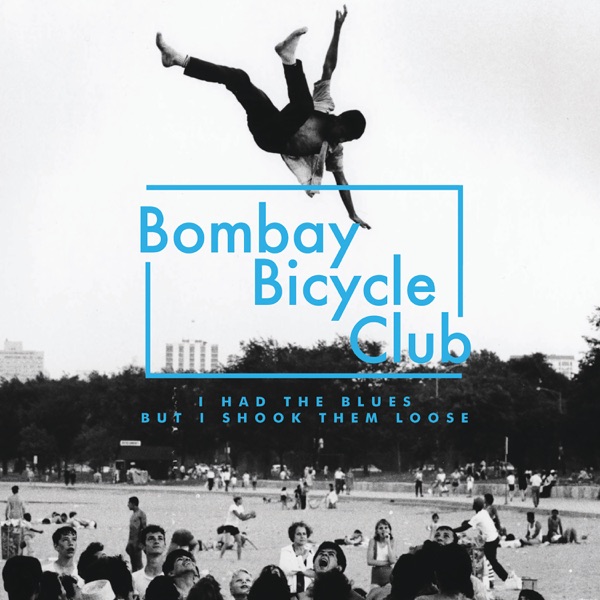


- 1 How Can You Swallow So Much Sleep ↗ 3:30
- 2 Bad Timing ↗ 3:34
- 3 Your Eyes ↗ 5:21
- 4 Lights Out, Words Gone ↗ 5:01
- 5 Take the Right One ↗ 3:36
- 6 Shuffle ↗ 3:55
- 7 Beggars ↗ 4:12
- 8 Leave It ↗ 3:54
- 9 Fracture ↗ 4:04
- 10 What You Want ↗ 4:20
- 11 Favourite Day ↗ 4:57
- 12 Still ↗ 4:24
- 13 Beg (Bonus Track) ↗ 3:52
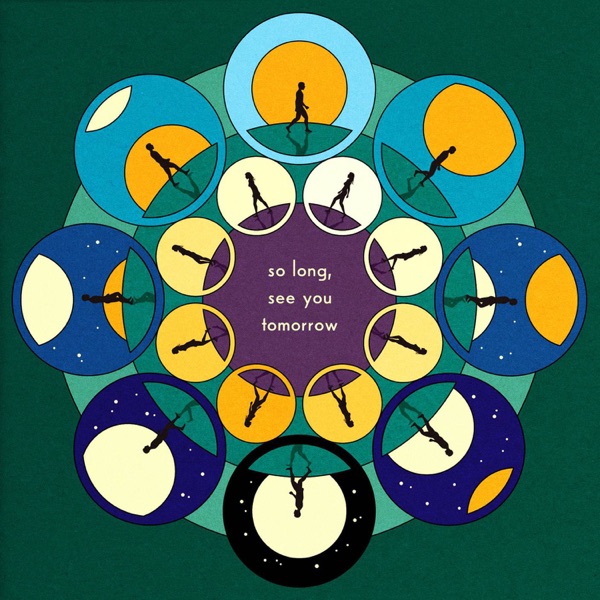
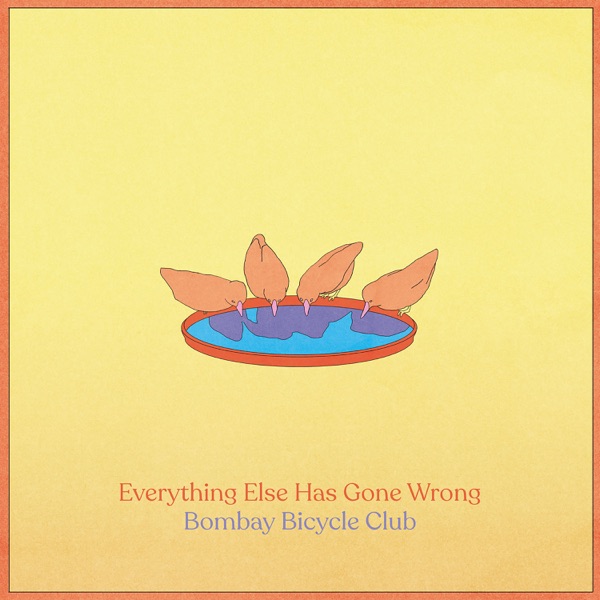
- 1 Get Up ↗ 2:34
- 2 Is It Real ↗ 3:06
- 3 Everything Else Has Gone Wrong ↗ 4:10
- 4 I Can Hardly Speak ↗ 3:59
- 5 Good Day ↗ 3:52
- 6 Eat, Sleep, Wake (Nothing But You) ↗ 3:40
- 7 I Worry Bout You ↗ 3:41
- 8 People People (feat. Liz Lawrence) ↗ 3:27
- 9 Do You Feel Loved? ↗ 4:23
- 10 Let You Go ↗ 4:48
- 11 Racing Stripes ↗ 4:07
