
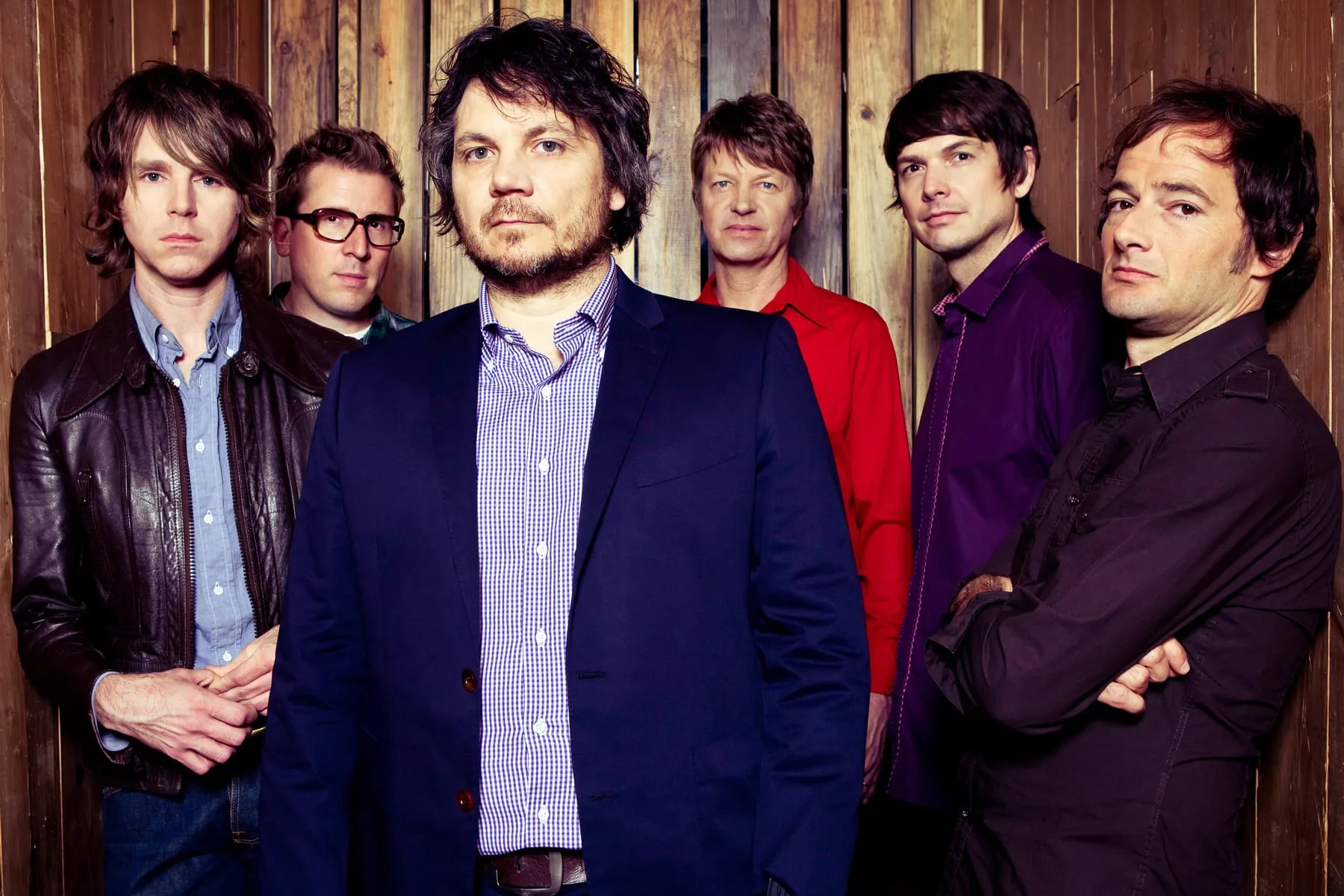
Photo by Austin Nelson , licensed under CC BY-SA 4.0 · Wikimedia Commons
Rank #397
Wilco
Chicago alt-country pioneers turned restless American art-rock band.
From Wikipedia
Wilco is an American rock band based in Chicago. The band was formed in 1994 by the remaining members of alternative country group Uncle Tupelo after singer Jay Farrar's departure. Wilco's lineup changed frequently during its first decade, with only singer Jeff Tweedy and bassist John Stirratt remaining from the original incarnation. Since early 2004 the lineup has been unchanged, consisting of Tweedy, Stirratt, guitarist Nels Cline, multi-instrumentalist Pat Sansone, keyboard player Mikael Jorgensen, and drummer Glenn Kotche. Wilco has released thirteen studio albums, a live double album, and four collaborations: three with Billy Bragg and one with the Minus 5.
Members
- Brian Henneman (1994–1995)
- Jay Bennett (1994–2002)
- Jeff Tweedy (1994–present)
- John Stirratt (1994–present)
- Ken Coomer (1994–2001)
- Bob Egan (1995–1998)
- Leroy Bach (1998–2004)
- Glenn Kotche (2001–present)
- Mikael Jorgensen (2002–present)
- Nels Cline (2004–present)
- Pat Sansone (2004–present)
Deep Dive
Overview
Wilco is an American rock band based in Chicago that emerged from the dissolution of Uncle Tupelo and evolved into one of indie rock’s most restless and ambitious acts. Formed in 1994, the band began as an alt-country project anchored by singer-songwriter Jeff Tweedy but gradually shed its country roots to pursue experimental art-rock arrangements. Their trajectory from alt-country outfit to the exploratory sound of Yankee Hotel Foxtrot and beyond marked a significant shift in how American indie rock bands approached studio craftsmanship and genre expectation.
Formation Story
Wilco coalesced in 1994 when Jeff Tweedy and bassist John Stirratt, both members of Uncle Tupelo, formed the new band following the departure of bandmate Jay Farrar. Uncle Tupelo had explored the intersection of country and punk in the early 1990s, and its dissolution created space for Tweedy to develop a different vision. The initial lineup included guitarist Brian Henneman alongside Stirratt and Tweedy, establishing themselves in Chicago as the primary creative hub. Though the early years saw frequent membership changes, the core partnership of Tweedy and Stirratt provided continuity.
Breakthrough Moment
Wilco’s early albums A.M. (1995) and Being There (1996) built a regional reputation but limited national reach. The collaboration with British folk singer Billy Bragg on Mermaid Avenue (1998) and Mermaid Avenue, Vol. II (2000)—recording incomplete Woody Guthrie lyrics—brought the band wider attention and demonstrated their capacity to work within ambitious conceptual frameworks. However, the true breakthrough arrived with Yankee Hotel Foxtrot (2002), a studio album that saw Wilco working with producer Jim O’Rourke and abandoning the Nashville-influenced alt-country sound for densely layered, electronically-inflected arrangements. The album’s delayed release and subsequent embrace by critics positioned Wilco as a band willing to alienate initial supporters in pursuit of artistic growth.
Peak Era
The period from 2002 through 2009 represented Wilco’s most creatively expansive and critically engaged phase. Yankee Hotel Foxtrot (2002) established a new sonic vocabulary built on studio experimentation and abstract arrangement. A Ghost Is Born (2004) consolidated those gains with even more elaborate production and instrumental interplay, marking the point at which the lineup stabilized with the addition of Nels Cline on guitar, Pat Sansone on keyboards and guitars, and with Mikael Jorgensen on keyboards firmly in place. The 2004 album A Ghost Is Born refined Wilco’s approach to instrumental detail and dynamic range, featuring extended explorations of texture and atmosphere. Sky Blue Sky (2007) and Wilco (The Album) (2009) signaled a partial retreat from the dense studio maximalism toward more accessible, song-driven structures, suggesting a mature phase of relative consolidation.
Musical Style
Wilco’s sound underwent a fundamental transformation across their catalog. The early albums A.M. and Being There drew from alt-country and Americana traditions, with twanged guitars and country-cadenced songwriting. By Summerteeth (1999), orchestral arrangements and pop-influenced production began infiltrating the sound, signaling an opening to broader influences. Yankee Hotel Foxtrot marked the clearest stylistic pivot: producer Jim O’Rourke introduced electronic textures, unconventional recording techniques, and abstract compositional approaches that abandoned traditional verse-chorus structures. From that point forward, Wilco’s palette included digital processing, layered guitar work from Nels Cline’s often-dissonant approach, keyboards and synth textures, and Jeff Tweedy’s introspective, sometimes falsetto-touched vocals. The band became increasingly defined by restlessness—each album explored different balances between arrangement complexity, pop sensibility, and experimental impulse. Guitars remained central, but they appeared alongside textures drawn from electronic music, art-rock precedent, and careful studio craft.
Major Albums
Being There (1996)
Wilco’s second album expanded beyond the alt-country template of A.M., adding chamber instrumentation and sprawling arrangements while retaining country-rock foundations; it established the band’s early identity as ambitious populists.
Yankee Hotel Foxtrot (2002)
Working with Jim O’Rourke, Wilco abandoned alt-country for densely layered, electronically-informed art-rock, with abstract arrangements and studio innovation that signaled a complete creative reinvention.
A Ghost Is Born (2004)
The first album with the stable five-piece core of Tweedy, Stirratt, Cline, Jorgensen, and Kotche, featuring refined instrumental ambition and an even wider dynamic range across its eleven tracks.
Sky Blue Sky (2007)
A relative return to song-centered structures and warmer, more direct arrangements after the density of the previous albums, showcasing a mature band balancing accessibility with continued harmonic sophistication.
The Whole Love (2011)
Released as Wilco continued exploring different production approaches and instrumental textures, further refining the balance between experimentation and melodic clarity.
Star Wars (2015)
An album demonstrating the band’s ongoing commitment to studio craft and arrangement innovation in their third decade of activity.
Signature Songs
- Misunderstood — An extended instrumental exploration that showcases Wilco’s approach to studio atmosphere and band telepathy.
- Jesus, Etc. — A Yankee Hotel Foxtrot centerpiece exemplifying the band’s ability to blend electronic texture with emotional vulnerability in Tweedy’s voice.
- I Am Trying to Break Your Heart — The opening track from Yankee Hotel Foxtrot, establishing the album’s art-rock ambitions and filtered vocal textures.
- Ashes of American Flags — Demonstrating the band’s capacity for melodic craft within elaborate arrangements.
- Spidertape — A Being There track showing early instrumental complexity and orchestral ambition.
Influence on Rock
Wilco’s evolution from alt-country to experimental art-rock in the early 2000s influenced how American indie rock bands approached studio work and artistic autonomy. Yankee Hotel Foxtrot’s success with unconventional production and genre-blurring encouraged peers to view studio as an instrument rather than merely documentation. The band demonstrated that a group rooted in traditional song structures could pursue electronic texture, instrumental abstraction, and pop sensibility simultaneously without losing coherence. Their willingness to abandon commercial expectation—Yankee Hotel Foxtrot was initially shelved due to its commercial uncertainty—established a model for artistic persistence within the alternative rock ecosystem. Bands that followed, particularly in the indie and art-rock spaces, drew from Wilco’s example of using the recording studio itself as a compositional tool.
Legacy
Wilco’s thirteen studio albums and decade-spanning body of work solidified them as one of the most important American rock bands of the 21st century. From their alt-country origins through their transformation into restless art-rock experimenters, they documented a sustained engagement with craft and risk-taking unusual in popular music. The collaborative albums with Billy Bragg on Woody Guthrie material established Wilco as willing to engage with American folk traditions while maintaining artistic independence. The band’s consistent presence on independent and alternative radio, combined with critical respect across their varied output, positioned Wilco as a bridge between indie-rock aesthetics and broader American popular music tradition. Their ongoing activity—releasing albums in 2015, 2016, 2019, 2022, and 2023—demonstrates a commitment to continued evolution rather than preservation of past accomplishment.
Fun Facts
- The Mermaid Avenue series with Billy Bragg, spanning three volumes (1998, 2000, 2012), used unrecorded lyrics and demos from Woody Guthrie’s archives, creating a temporal bridge between 1940s American folk tradition and contemporary indie-rock arrangement.
- Nels Cline, who joined the band in 2004, is also an accomplished jazz guitarist and bandleader, bringing instrumental sophistication and harmonic language from outside the rock tradition into Wilco’s sound.
- The title Yankee Hotel Foxtrot derives from a phonetic spelling of a phrase heard on a radio scanner, reflecting the band’s openness to chance and accident in the creative process.
- Jeff Tweedy’s songwriting often explores themes of failure, self-doubt, and emotional ambiguity, maintaining a lyrical consistency across the band’s genre transformations.