

Photo by Aaron Rubin , licensed under CC BY-SA 4.0 · Wikimedia Commons
Rank #408
Adam Ant
From Wikipedia
Stuart Leslie Goddard, known professionally as Adam Ant, is an English musician and actor. He gained popularity as the lead singer of new wave group Adam and the Ants and later as a solo artist, scoring 10 UK top ten hits from 1980 to 1983, including three UK No. 1 singles. He has also worked as an actor, appearing in many films and television episodes.
Discography & Previews
Browse through and click an album to open and play 30-second previews streamed from Apple Music.
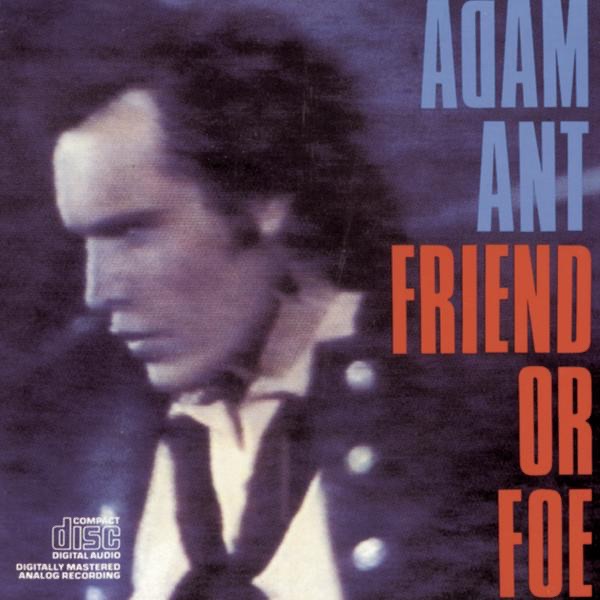
Friend or Foe
1982 · 24 tracks
- 1 Friend or Foe ↗ 3:23
- 2 Something Girls ↗ 3:52
- 3 Place In the Country ↗ 2:50
- 4 Desperate But Not Serious ↗ 4:15
- 5 Here Comes the Grump ↗ 3:36
- 6 Hello, I Love You ↗ 2:40
- 7 Goody Two Shoes ↗ 3:29
- 8 Crackpot History and the Right to Lie ↗ 2:45
- 9 Made of Money ↗ 3:31
- 10 Cajun Twisters ↗ 2:58
- 11 Try This for Sighs ↗ 3:04
- 12 Man Called Marco ↗ 3:30
- 13 Goody Two Shoes ↗ 3:22
- 14 Coup D'Etat ↗ 3:12
- 15 Goody Two Shoes ↗ 3:12
- 16 Here Comes the Grump ↗ 2:27
- 17 Little Italy ↗ 2:19
- 18 Maid of Money ↗ 2:50
- 19 Place In the Country ↗ 3:02
- 20 And So You Shall ↗ 3:38
- 21 Yellowbeard ↗ 2:27
- 22 I Know They Know ↗ 3:49
- 23 Gargoyles Are Go ↗ 2:21
- 24 Good Sex Rumples the Clothing ↗ 3:01

Strip
1983 · 18 tracks
- 1 Strip ↗ 3:49
- 2 Baby, Let Me Scream At You ↗ 4:07
- 3 Libertine ↗ 4:20
- 4 Spanish Games ↗ 3:00
- 5 Vanity ↗ 4:07
- 6 Puss 'n Boots ↗ 3:52
- 7 Playboy ↗ 3:51
- 8 Montreal ↗ 4:23
- 9 Navel to Neck ↗ 3:41
- 10 Amazon ↗ 3:51
- 11 Strip (Demo) ↗ 3:00
- 12 Dirty Harry (Demo Version of Amazon) ↗ 3:56
- 13 Horse You Rode In On (Demo) ↗ 2:45
- 14 She Wins Zulus (Demo) ↗ 3:06
- 15 Puss 'n Boots (Demo) ↗ 4:08
- 16 Playboy (Live Rehearsal 1/15/83) ↗ 6:06
- 17 Navel to Neck (Live Rehearsal 1/15/83) ↗ 3:56
- 18 Strip (Live Studio Version) ↗ 4:31

Vive le Rock
1985 · 20 tracks
- 1 Vive Le Rock ↗ 3:40
- 2 Miss Thing ↗ 3:08
- 3 Razor Keen ↗ 3:53
- 4 Rip Down ↗ 3:24
- 5 Scorpio Rising ↗ 4:07
- 6 Apollo 9 ↗ 3:23
- 7 Hell's Eight Acres ↗ 3:52
- 8 Mohair Locker Room Pin-Up Boys ↗ 3:15
- 9 No Zap ↗ 3:15
- 10 P.O.E. ↗ 3:25
- 11 Apollo 9 ↗ 1:30
- 12 Human Bondage Den ↗ 3:07
- 13 Vive Le Rock (12" Mix) ↗ 7:29
- 14 Apollo 9 (Francois K 7" Mix) ↗ 3:41
- 15 Doggy Style ↗ 3:48
- 16 Night They Vietcong ↗ 3:05
- 17 Big Big Man (Razor Down) ↗ 3:27
- 18 Rip Down (Demo) ↗ 3:15
- 19 Apollo 9 (Francois K Splashdown Mix) ↗ 6:47
- 20 Vive Le Rock (7" Mix) ↗ 3:49

Manners & Physique
1989 · 10 tracks

-
 Friend or FoeAdam Ant198224 tracks
 -
 StripAdam Ant198318 tracks
 -
 Vive le RockAdam Ant198520 tracks
 -
 Manners & PhysiqueAdam Ant198910 tracks
 -
 WonderfulAdam Ant199511 tracks
Deep Dive
Overview
Adam Ant, born Stuart Leslie Goddard in 1954, is an English musician who achieved major commercial success in the early 1980s as a solo artist, scoring ten UK top ten hits between 1980 and 1983, including three UK number-one singles. His ascent from the late-1970s punk and new wave underground to mainstream chart dominance redefined the visual and sonic possibilities of post-punk pop, blending punk’s raw energy with glam rock’s theatricality and new wave’s structural sophistication. As both a recording artist and later as an actor, Ant has maintained a presence across music and film for more than four decades.
Formation Story
Stuart Leslie Goddard was born in London in 1954, coming of age during the rise of punk rock and the post-punk ferment of the mid-to-late 1970s. He emerged from the British capital’s underground music scene at a moment when punk’s initial three-chord assault was fragmenting into dozens of new directions. Rather than follow punk’s minimalist code, Goddard developed an persona and sound that married punk’s rebellious energy with the theatrical presentation of glam rock and the disciplined architecture of new wave. The stage name Adam Ant and the early group Adam and the Ants gave him a platform to experiment with costume, makeup, and character-driven performance—visual strategies that would come to define his solo career as well.
Breakthrough Moment
Adam Ant’s commercial breakthrough as a solo artist arrived with the release of Friend or Foe in 1982, a debut that combined new wave’s pop sensibilities with residual punk aggression and marked a decisive shift toward chart-targeting pop-rock. The album produced multiple UK hit singles and established Ant as a distinctive presence on British radio and MTV, combining sharply tailored new wave production with his theatrical stage presence. The success of Friend or Foe consolidated the musical direction he had been developing with Adam and the Ants and set the template for the commercial peak that would follow across the next two years.
Peak Era
Adam Ant’s most commercially successful period extended from 1982 through 1983, spanning the releases of Friend or Foe and Strip. During this window, he scored ten UK top ten hits and three UK number-one singles, establishing himself as one of the defining pop-chart acts of the early 1980s. Strip, released in 1983, consolidated and refined the new wave-pop formula, further cementing his chart dominance in the UK. The combination of catchy, hook-driven songs, distinctive vocal delivery, and carefully constructed visual presentation made him a significant presence on emerging music video platforms and in the pop landscape.
Musical Style
Adam Ant’s sound synthesized punk rock’s energy and attitude with new wave’s structural clarity and production sophistication, seasoned by glam rock’s visual theatricality. His vocal approach—precise, rhythmic, and characterful—avoided the wailing intensity of punk singers while retaining an edge that distinguished him from smoother new wave contemporaries. His records combined propulsive percussion, sharp guitar work, and synthesizer textures in arrangements designed for both radio play and dance-floor mobility. The Ant persona itself was integral to the music: costume, makeup, and performance character were not decorative but central to the artistic statement, a philosophy rooted in punk’s notion that rock music was total aesthetic expression, not merely sonic.
Major Albums
Friend or Foe (1982)
Adam Ant’s debut solo album established the new wave-pop template that would define his commercial peak, combining punk-edged rhythm and new wave production with hooks designed for chart success and radio rotation.
Strip (1983)
His second album refined and reinforced the successful formula of Friend or Foe, continuing to yield multiple UK top ten hits and solidifying his status as a major chart act during the new wave era’s commercial zenith.
Vive le Rock (1985)
Released as his initial commercial momentum began to wane, Vive le Rock attempted to sustain the formula while adapting to shifts in early-to-mid-1980s pop sensibilities.
Manners & Physique (1989)
This album marked a further evolution in his approach, arriving as 1980s new wave gave way to the musical landscape of the late 1980s and early 1990s.
Wonderful (1995)
Released in the mid-1990s, Wonderful demonstrated Ant’s continued activity as a recording artist during a period when most of his 1980s new wave contemporaries had faded from active recording.
Signature Songs
- “Kings of the Wild Frontier” — The defining anthem from his peak era, combining punk rhythm and new wave precision with his theatrical vocal presence.
- “Stand and Deliver” — One of his most successful singles, exemplifying the blend of pop hooks and edge that made him a UK chart fixture in the early 1980s.
- “Goody Two Shoes” — A top ten hit that showcased his ability to balance accessibility with the structural sophistication of new wave.
- “Ant Rap” — A rhythmically innovative track that demonstrated his willingness to experiment within the new wave framework.
Influence on Rock
Adam Ant’s synthesis of punk’s rebellious energy with new wave’s pop architectonics and glam rock’s theatrical presentation influenced the trajectory of 1980s pop and new wave music. His emphasis on visual presentation as an integral component of the artistic statement—costumes, makeup, character-driven performance—reinforced the notion that post-punk music was fundamentally multimedia and visual, a philosophy that would extend through the MTV era and beyond. His UK chart dominance in the early 1980s proved that new wave and post-punk idioms could achieve genuine mass-market success without surrendering artistic distinctiveness, a lesson absorbed by countless subsequent acts navigating the balance between accessibility and artistic integrity.
Legacy
Adam Ant’s commercial peak in 1980–1983 left an enduring mark on British new wave and 1980s pop history. His ten UK top ten hits and three number-one singles during that narrow window remain a significant achievement in post-punk chart history. Beyond his recording career, his work as an actor in film and television expanded his profile and demonstrated the crossover potential available to 1980s pop stars with sufficient visual presence and charisma. Subsequent decades have seen him maintain an active presence as a touring and recording artist; his 2013 album Adam Ant Is the Blueblack Hussar in Marrying the Gunner’s Daughter demonstrated continued creative activity, albeit with considerably less commercial reach than his early-1980s dominance. Streaming-era reassessment of new wave and post-punk has restored attention to the early 1980s as a creatively fertile and commercially dynamic period, placing Ant’s chart-topping singles and theatrical presentation within a broader context of artistic experimentation across the genre.
Fun Facts
- Stuart Leslie Goddard adopted the stage name Adam Ant as part of a deliberate persona and branding strategy rooted in punk and glam rock’s emphasis on character-driven presentation.
- His three UK number-one singles between 1980 and 1983 established him as one of the highest-charting acts of the new wave era in the United Kingdom.
- Adam Ant has worked extensively as an actor in film and television, expanding his creative footprint beyond music into drama and comedy projects throughout his career.