

Photo by Adam Freese - Mitchell, SD , licensed under CC BY 2.0 · Wikimedia Commons
Rank #167
Bob Seger
From Wikipedia
Robert Clark Seger is an American retired singer, songwriter, and musician. As a locally successful Detroit-area artist, he performed and recorded with the groups Bob Seger and the Last Heard and the Bob Seger System throughout the 1960s, breaking through with his first album, Ramblin' Gamblin' Man in 1969. By the early 1970s, he had dropped the 'System' from his recordings and continued to strive for broader success with various other bands. In 1973, he put together The Silver Bullet Band, with a group of Detroit-area musicians, with whom he became most successful on the national level with the album Live Bullet (1976), recorded live in 1975 at Cobo Hall. In 1976, he achieved a national breakout with the studio album Night Moves. On his studio albums, he also worked extensively with the Alabama-based Muscle Shoals Rhythm Section, which appeared on several of Seger's best-selling singles and albums.
Discography & Previews
Browse through and click an album to open and play 30-second previews streamed from Apple Music.


I Knew You When
2017 · 13 tracks
-
 Beautiful LoserBob Seger19759 tracks
 -
 Ride OutBob Seger201410 tracks
 -
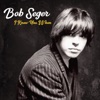 I Knew You WhenBob Seger201713 tracks
Deep Dive
Overview
Bob Seger is an American rock singer-songwriter whose career spans more than five decades, anchored by his emergence from Detroit’s regional music scene to become one of the most commercially successful touring acts in rock history. His appeal rests on a straightforward formula: blues-inflected rock songwriting, a weathered vocal delivery, and a working band of seasoned regional musicians. Seger’s breakthrough came late by some standards—his first nationally distributed album arrived in 1969, when he was already in his mid-twenties—but once achieved, his success proved durable and significant, placing him among the defining voices of classic rock radio and arena touring.
Formation Story
Robert Clark Seger was born in 1945 and came of age in Detroit during the Motown era and the rise of garage rock. The Motor City’s musical identity was split between soul and R&B export on one hand and indigenous hard-edged rock on the other; Seger gravitated toward the latter. In the 1960s, he performed and recorded with groups including Bob Seger and the Last Heard and the Bob Seger System, establishing himself as a capable local recording artist and live performer. These early projects, though regionally successful in Michigan and the Midwest, did not penetrate national radio or charts. The decade of work in Detroit bands served as an apprenticeship: learning to write songs, command a stage, and build an audience one night at a time.
Breakthrough Moment
Seger’s first album to achieve wider distribution was Ramblin’ Gamblin’ Man, released in 1969 to moderate national attention. The title track received radio play and established him as more than a regional act. Throughout the early 1970s, having dropped the ‘System’ from his recordings, Seger continued to pursue broader commercial success with a series of studio albums: Brand New Morning (1971), Smokin’ O.P.’s (1972), Back in ‘72 (1973), Seven (1974), and Beautiful Loser (1975). Each represented steady artistic and commercial progress, but none yet achieved the breakthrough that would define his career. That moment arrived with a live recording: Live Bullet, recorded at Cobo Hall in Detroit in 1975 and released in 1976. The album captured Seger and his newly assembled group, the Silver Bullet Band, in their native Detroit, performing with the energy and tightness of a fully matured road band. The album broke through nationally, establishing the Silver Bullet Band as the vehicle for Seger’s ambitions and signaling that sustained touring and live performance were central to his identity.
Peak Era
Following Live Bullet, Seger immediately released the studio album Night Moves in 1976, which became his signature work and launched him into arena rock prominence. The album showcased his songwriting maturity and the Silver Bullet Band’s instrumental prowess. From 1976 onward through the early 1980s, Seger enjoyed his most commercially successful period. During these years, he also worked extensively with the Muscle Shoals Rhythm Section, an Alabama-based ensemble of session and touring musicians who appeared on several of his best-selling singles and albums. This partnership enriched his sound with the muscular, blues-grounded production style that Muscle Shoals was known for. The combination of Seger’s directness as a songwriter and vocalist, the Silver Bullet Band’s road-tested solidity, and the Muscle Shoals Rhythm Section’s recorded expertise created a formula that dominated classic rock radio and concert venues throughout the late 1970s and beyond.
Musical Style
Seger’s music is rooted in American rock and roll heritage filtered through a blues sensibility. His vocal approach eschews technical virtuosity in favor of emotional clarity and a slightly raspy, worn-in tone that suggested hard touring and hard living. His songwriting favors narrative and specificity—songs about youth, romance, regret, and the road itself—delivered in straightforward verse-chorus structures built to accommodate audience participation and sing-along. Musically, his recordings with the Silver Bullet Band and Muscle Shoals emphasized a band-based rock sound, with electric guitars, bass, drums, and keyboards arranged to serve the song rather than to showcase technical complexity. His best-known recordings feature a production style that is clean but not polished, capturing the essence of a rock and roll band without studio artifice. Over time, his sound remained consistent: blues-inflected classic rock that prioritized the integrity of the ensemble and the directness of the message.
Major Albums
Ramblin’ Gamblin’ Man (1969)
Seger’s first nationally distributed album, it announced his arrival as a songwriter-performer beyond the Detroit region and included the title track, which achieved meaningful radio and chart presence.
Live Bullet (1976)
Recorded at Cobo Hall in Detroit in 1975, this live album captured the Silver Bullet Band at peak energy and professionalism, breaking Seger nationally and establishing the band as his primary backing ensemble.
Night Moves (1976)
Released the same year as Live Bullet, this studio album became Seger’s commercial peak and signature work, showcasing mature songwriting and the studio prowess of his backing musicians.
Beautiful Loser (1975)
One of the final albums before the Live Bullet breakthrough, it represents Seger’s increasing confidence as a songwriter and his maturation as a recording artist.
Signature Songs
- “Night Moves” — Title track from his most successful studio album; a nostalgic reflection on youthful romance and a staple of classic rock radio.
- “Ramblin’ Gamblin’ Man” — His first widely heard single, establishing his persona as a restless rocker.
- “Turn the Page” — A road song capturing the isolation and momentum of touring life, it became one of his most enduring compositions.
- “Come to Poppa” — A showcase for his more bluesy, soulful vocal side, featuring the influence of the Muscle Shoals Rhythm Section.
Influence on Rock
Seger’s influence on classic rock lies less in stylistic innovation than in the durability of a specific approach: the touring band rooted in regional identity, the songwriting that privileges narrative over technical display, and the vocal delivery that prioritizes emotional honesty over virtuosity. He demonstrated that a Detroit rock and roll musician could achieve national and international success without abandoning the blue-collar ethos of his hometown. His partnership with the Muscle Shoals Rhythm Section also helped validate the role of session musicians and regional production centers in shaping arena rock in the 1970s and 1980s. For subsequent generations of classic rock performers, Seger’s model—sustained touring, regional identity, working-band aesthetics, and straightforward songwriting—became a template for building a lasting audience.
Legacy
Bob Seger retired from performing in 2019 after more than fifty years of recording and touring. His catalog has remained a cornerstone of classic rock radio and streaming platforms, with Night Moves and Live Bullet in particular maintaining cultural presence. His songwriting and recorded work represent a crucial American rock tradition: the artist who built success through relentless touring, regional roots, and a refusal to chase trends. The Silver Bullet Band’s longevity as a touring ensemble became itself a model for how classic rock bands sustain themselves. Seger’s later studio albums—Face the Promise (2006), Ride Out (2014), and I Knew You When (2017)—extended his recorded presence into the twenty-first century, though his career is defined primarily by his peak era of the 1970s and 1980s and the live touring legacy that continued for decades thereafter.
Fun Facts
- Seger is a native of Detroit, Michigan, and performed primarily in the Detroit and Midwest region throughout the 1960s before achieving national success.
- Live Bullet was recorded at Cobo Hall in Detroit in 1975 and released in 1976; the live album format proved crucial to his breakthrough, as it captured the band’s stage presence.
- The Silver Bullet Band, assembled in 1973, remained his primary backing ensemble throughout his most successful touring decades, giving his career a continuity rare in rock music.
- Seger worked extensively with the Muscle Shoals Rhythm Section, the Alabama-based ensemble known for its role in shaping the sound of Southern rock and soul recordings.