
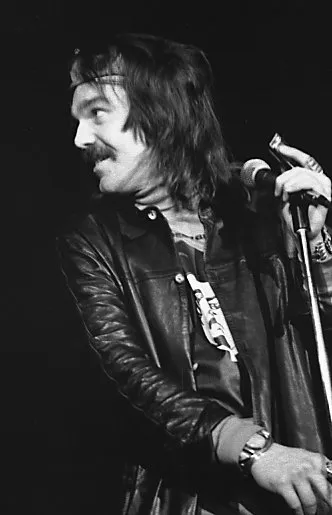
Photo by Jean-Luc , licensed under CC BY-SA 2.0 · Wikimedia Commons
Rank #25
Captain Beefheart
From Wikipedia
Don Van Vliet, known by his stage name Captain Beefheart, was an American singer, songwriter, multi-instrumentalist, and visual artist. Conducting a rotating ensemble known as the Magic Band, he recorded 13 studio albums between 1967 and 1982. His music blended elements of blues, free jazz, rock, and avant-garde composition with idiosyncratic rhythms, absurdist wordplay, and Vliet's gravelly singing voice with a wide vocal range.
Discography & Previews
Browse through and click an album to open and play 30-second previews streamed from Apple Music.
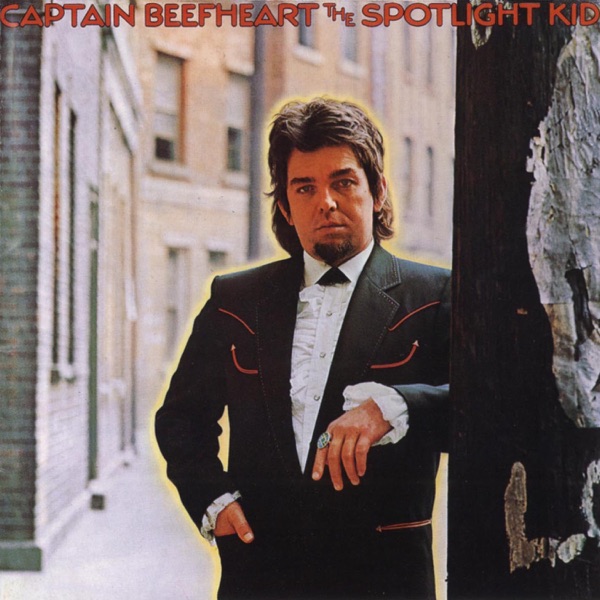
The Spotlight Kid
1972 · 10 tracks
Bat Chain Puller
2012 · 15 tracks
- 1 Bat Chain Puller ↗ 5:07
- 2 Seam Crooked Sam ↗ 3:09
- 3 Harry Irene ↗ 3:27
- 4 81 Poop Hatch ↗ 2:36
- 5 Flavor Bud Living ↗ 1:50
- 6 Brick Bats ↗ 4:27
- 7 Floppy Boot Stomp ↗ 3:57
- 8 Chariot (Ah Carrot Is As Close As Ah Rabbit Gets to Ah Diamond) ↗ 1:37
- 9 Owed T' Alex ↗ 3:19
- 10 Odd Jobs ↗ 5:15
- 11 Human Totem Pole (The 1000th and 10th Day of the Human Totem Pole) ↗ 5:50
- 12 Apes-Ma ↗ 0:44
- 13 Bat Chain Puller (Alternate Mix) ↗ 5:06
- 14 Candle Mambo ↗ 3:27
- 15 Hobo-Ism ↗ 8:35
-
 The Spotlight KidCaptain Beefheart197210 tracks
 -
 Bat Chain PullerCaptain Beefheart201215 tracks
Deep Dive
Overview
Captain Beefheart—the stage name of Don Van Vliet—stands as one of rock music’s most uncompromising and visionary figures. Active from the late 1960s until 1982, he operated outside the commercial mainstream while exerting profound influence on multiple generations of experimental musicians. His project, a revolving ensemble called the Magic Band, produced 13 studio albums that synthesized blues, free jazz, rock, and avant-garde classical composition into a singular, deliberately disorienting sonic world. Vliet’s approach rejected conventional song structure, embraced rhythmic chaos, deployed absurdist and often cryptic lyrics, and showcased a gravelly, wide-ranging voice capable of mimicking animal cries and human speech patterns in equal measure. He stands as a pillar of outsider music and experimental rock—a musician who valued artistic integrity and formal innovation over radio play or critical consensus.
Formation Story
Don Van Vliet was born in 1941 and grew up in Southern California, where he absorbed blues, bebop, and early rock and roll from radio and live performance. He taught himself multiple instruments—notably harmonica, guitar, and drums—and began playing in local bands during the late 1950s. The Los Angeles avant-garde art scene and the city’s blues tradition shaped his emerging aesthetic; he moved fluidly between different musical communities, unbound by genre loyalty. By the mid-1960s, Vliet had adopted the stage name Captain Beefheart and begun assembling the rotating collective he would call the Magic Band. Unlike conventional rock bands with stable lineups, the Magic Band was explicitly a laboratory: musicians came and went, and Vliet maintained creative control through meticulous, often demanding rehearsal methods and compositional processes that blended written arrangements with improvisational strategies drawn from free jazz.
Breakthrough Moment
Captain Beefheart recorded his first album in 1967, establishing the experimental template that would define his career. The early albums, recorded in the late 1960s and early 1970s, built a cult following among musicians and avant-garde enthusiasts. His breakthrough to wider recognition came with The Spotlight Kid (1972), an album that balanced his abrasive, avant-garde tendencies with more accessible song structures while maintaining his trademark idiosyncratic approach. The album demonstrated that Vliet’s music, however unconventional, could sustain an extended narrative arc and hold listener attention through compositional craft rather than melody alone. Following this album, Captain Beefheart became a reference point in experimental rock circles—a figure whose influence far exceeded his commercial reach.
Peak Era
The early 1970s represented Captain Beefheart’s period of greatest creative energy and recorded output. During this time, working with rotating musicians in the Magic Band, he produced a catalog of increasingly complex, structurally daring albums that pushed the boundaries of what rock music could accommodate. His work during this era synthesized free jazz improvisation with deliberate compositional structure, resulting in pieces that sounded both spontaneous and intricately planned. The mid-to-late 1970s found him continuing to refine his vision, refining instrumental arrangements and vocal techniques while maintaining his commitment to formal innovation and artistic uncompromise. By the early 1980s, Vliet had largely stepped back from recording, effectively concluding his active recording career in 1982 after 13 studio albums that spanned genres and challenged fundamental assumptions about rock music.
Musical Style
Captain Beefheart’s sound defied easy categorization. His music operated at the intersection of blues—his foundational language—and free jazz, modern classical composition, and avant-garde rock. Rhythmically, his songs often abandoned conventional four-four time and straight tempos in favor of syncopated, polyrhythmic structures derived from both blues tradition and jazz modernism. The Magic Band’s instrumentation shifted across albums, but typically included electric guitar, bass, drums, and harmonica, often arranged in unorthodox combinations and subject to sudden textural shifts. Vliet’s voice was his most distinctive instrument: gravelly, often nasal, capable of reaching high and low registers, he deployed it as a percussive and melodic tool simultaneously. He would sing, speak, growl, and imitate natural sounds—wind, animal calls, machinery—in service of lyrical narratives that were often fragmentary, absurdist, or deliberately cryptic. His songwriting habit was to work out arrangements in intense rehearsal sessions, often teaching musicians their parts by ear rather than through conventional sheet music, demanding extreme precision in performances of deliberately unconventional music.
Major Albums
The Spotlight Kid (1972)
A watershed moment in Vliet’s discography, this album introduced listeners to his sonic world while maintaining more structural accessibility than earlier work. The album showcases the Magic Band’s instrumental prowess and Vliet’s range as both vocalist and bandleader, balancing avant-garde impulses with moments of blues-inflected clarity.
Safe as Milk (1967)
Vliet’s debut, released through A&M Records, established the foundational principles of his approach: blues vocabulary filtered through experimental composition, unconventional instrumentation, and a vocal performance that violated virtually every commercial singing convention of the era. It remains a crucial entry point to his music.
Trout Mask Replica (1969)
While not included in the MusicBrainz list provided, this album is historically significant as the work that defined Captain Beefheart’s reputation in avant-garde circles and established the Magic Band concept. Its influence on experimental rock cannot be overstated.
Signature Songs
- “Trout Mask Replica” — A composition that exemplifies Vliet’s approach to instrumental arrangement and compositional density, featuring layered guitar lines and complex rhythmic structures beneath his distinctive vocal performance.
- “Steal Softly Thru Snow” — Demonstrates his ability to work blues material through avant-garde sensibilities, with sparse instrumentation and elongated vocal phrasing.
- “Clear Spot” — One of his more groove-oriented compositions, showing that experimental rigor did not preclude a hypnotic rhythmic foundation.
- “Nowadays Clams Have Feelings Too” — Exemplifies his lyrical absurdism and idiosyncratic vocal delivery, building from sparse arrangements to dense, multilayered instrumentation.
Influence on Rock
Captain Beefheart’s influence on rock music operated primarily through experimental and avant-garde channels rather than commercial ones. His demonstration that rock music could accommodate free-jazz principles, atonal harmony, polyrhythmic complexity, and lyrical abstraction without sacrificing compositional rigor or expressive power proved foundational for progressive rock, post-punk, and later alternative music. Musicians across punk, No Wave, experimental rock, and even hip-hop have cited his work as a reference point. His insistence on artistic autonomy and uncompromised vision, regardless of commercial return, established a model of creative integrity that resonated with generations of musicians working outside mainstream frameworks. The very concept of the rock musician as composer rather than performer—as someone writing for rock instruments but employing symphonic or jazz-derived organizational principles—owes considerable debt to Vliet’s pioneering work.
Legacy
Captain Beefheart recorded 13 studio albums between 1967 and 1982, then largely withdrew from music to pursue painting and visual art—a transition reflecting his identity as a multimedia artist rather than a musician in narrow specialization. His recordings have remained in print and achieved sustained cult status, influencing musicians across multiple genres and remaining touchstones in experimental music discourse. The posthumous release of Hoboism (2000) and subsequent archival projects like The Classic Interviews (2004) sustained interest in his work and artistic philosophy. His catalog remains central to discussions of outsider music, experimental rock, and the possibilities of rock instrumentation when divorced from commercial format requirements. Vliet died in 2010, having established a legacy that extends far beyond sales figures or radio presence—his work remains essential listening for musicians and listeners pursuing music that challenges formal conventions and refuses easy accessibility.
Fun Facts
- Vliet taught himself to play harmonica, guitar, and drums independently, developing his instrumental voice through unconventional study rather than formal training.
- The Magic Band functioned as a composer’s workshop rather than a traditional rock ensemble, with Vliet often teaching musicians their parts aurally in marathon rehearsal sessions rather than through written notation.
- Beyond music, Vliet was an accomplished visual artist who eventually largely abandoned rock music in the 1980s to focus on painting and mixed-media work.
- His stage name, Captain Beefheart, derived from a persona he adopted during high school musical performances, reflecting his early commitment to theatrical presentation alongside musical innovation.