
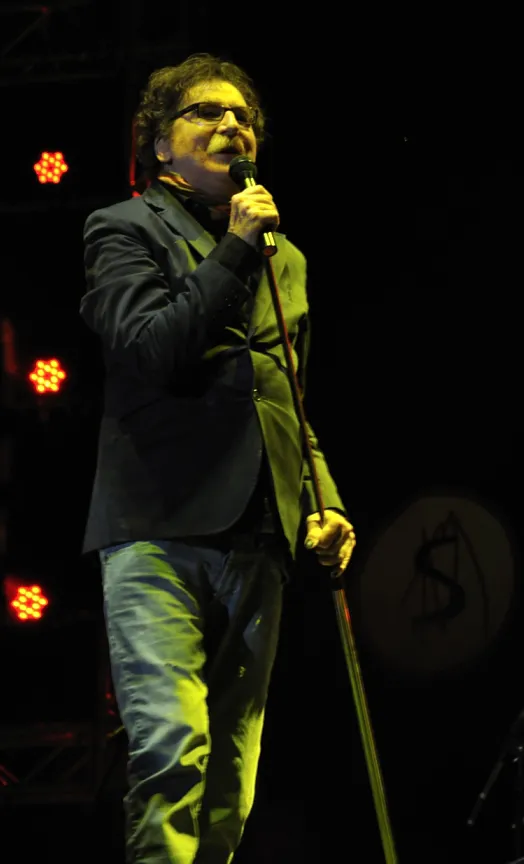
Photo by dandrez , licensed under CC BY-SA 2.0 · Wikimedia Commons
Rank #436
Charly García
From Wikipedia
Carlos Alberto García Moreno, better known by his stage name Charly García, is an Argentine singer-songwriter, multi-instrumentalist, composer and record producer, considered one of the most important rock musicians in Argentine and Latin American music. Named "the father of rock nacional", García is widely acclaimed for his recording work, both in his multiple groups and as a soloist, and for the complexity of his music compositions, covering genres like folk rock, progressive rock, symphonic rock, jazz, new wave, pop rock, funk rock, and synth-pop. His lyrics are known for being transgressive and critical towards modern Argentine society, especially during the era of the military dictatorship, and for his rebellious and extravagant personality, which has drawn significant media attention over the years.
Discography & Previews
Browse through and click an album to open and play 30-second previews streamed from Apple Music.
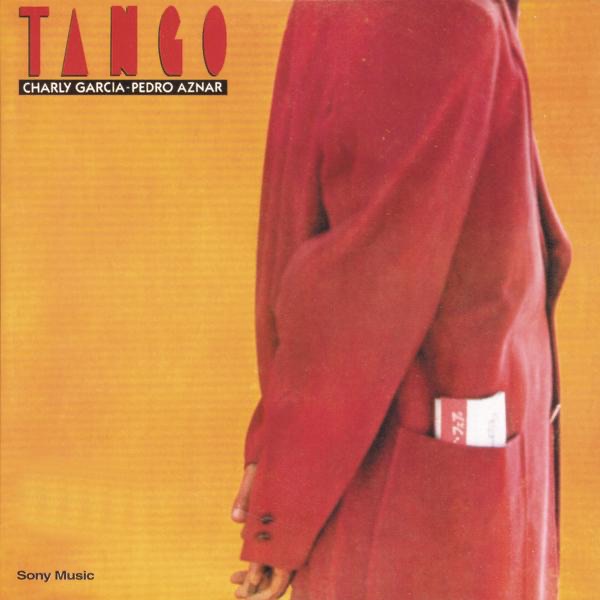

Parte de la religión
1987 · 10 tracks
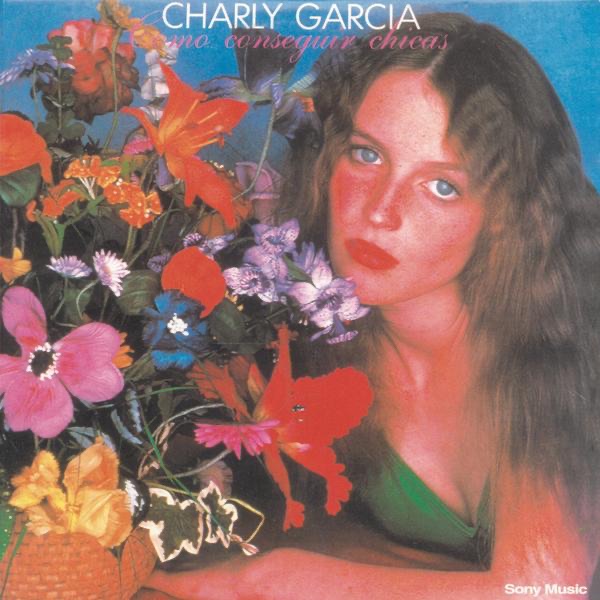
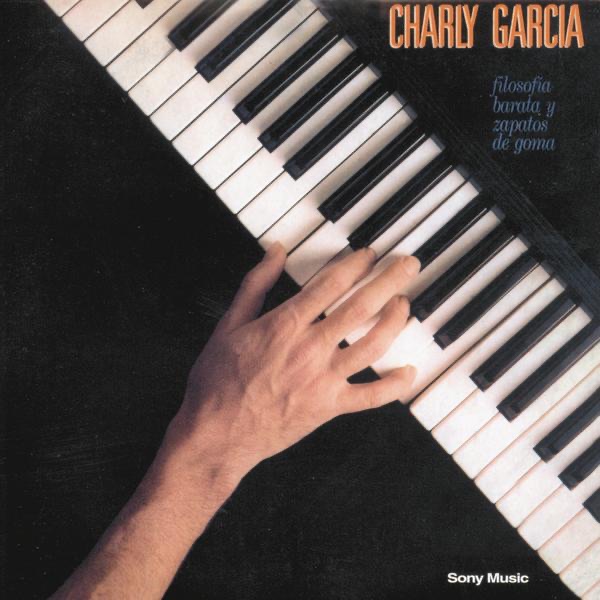
Filosofía barata y zapatos de goma
1990 · 11 tracks
- 1 De Mi ↗ 3:07
- 2 Filosofia Barata y Zapatos de Goma ↗ 3:52
- 3 Reloj de Plastilina ↗ 4:42
- 4 Gato de Metal ↗ 3:15
- 5 No Te Mueras en Mi Casa ↗ 3:32
- 6 Curitas ↗ 5:36
- 7 Solo un Poquito No Màs ↗ 3:28
- 8 Me Siento Mucho Mejor (I Feel Much Better) ↗ 3:05
- 9 Siempre Puedes Olvídar ↗ 3:51
- 10 La Canciòn del Indeciso ↗ 3:03
- 11 Himno Nacional Argentino ↗ 4:35
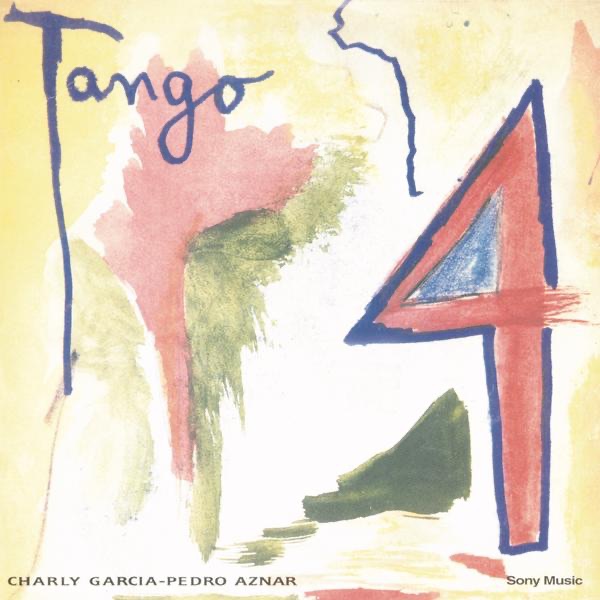
Tango 4
1991 · 13 tracks
- 1 Tu Amor ↗ 3:06
- 2 Mientes ↗ 4:15
- 3 Vampiro ↗ 5:44
- 4 Rompan Todo ↗ 3:57
- 5 Mala Señal ↗ 3:20
- 6 30 Denaríos ↗ 5:32
- 7 Solo Dios Sabe ↗ 3:19
- 8 Cucamonga Dance ↗ 3:00
- 9 Díana ↗ 4:01
- 10 Happy and Real ↗ 4:01
- 11 Vampiro (Instrumental) ↗ 5:44
- 12 Díana (Instrumental) ↗ 4:03
- 13 Solo Dios Sabe (Instrumental) ↗ 3:14
La hija de la lágrima
1994 · 23 tracks
- 1 Overture ↗ 3:01
- 2 Víctima ↗ 5:01
- 3 Jaco y Chofi ↗ 2:51
- 4 Atlantis ↗ 2:17
- 5 La Sal No Sala ↗ 3:38
- 6 Chipi-Chipi ↗ 3:06
- 7 Calle [Taxi] ↗ 2:26
- 8 Love Is Love ↗ 3:13
- 9 Tema de Amor ↗ 1:19
- 10 Fax U ↗ 7:27
- 11 Lament ↗ 1:06
- 12 Intermedio ↗ 3:01
- 13 Workin' In the Morning ↗ 1:52
- 14 Waitin ↗ 4:11
- 15 Kurosawa ↗ 5:51
- 16 Chiquilin ↗ 2:10
- 17 Andan (Excerpt) ↗ 0:19
- 18 James Brown ↗ 0:45
- 19 Intraterreno ↗ 2:49
- 20 No Sugar ↗ 2:45
- 21 Atlantis ↗ 3:59
- 22 Locomotion ↗ 2:11
- 23 Andan (Complete) ↗ 3:22
Say No More
1996 · 14 tracks
- 1 Estaba en Llamas Cuando Me Acoste ↗ 7:03
- 2 Vemos... ↗ 0:34
- 3 Canciónes de Jirafas ↗ 2:49
- 4 Necesito un Gol ↗ 5:16
- 5 Alguien en el Mundo Piensa en Mí ↗ 4:27
- 6 Constant Concept ↗ 4:37
- 7 Say No More ↗ 4:36
- 8 Cuchillos ↗ 4:29
- 9 A1 ↗ 1:43
- 10 Plan 9 ↗ 5:01
- 11 Casa Vacía ↗ 5:14
- 12 Podrias Entender ↗ 6:09
- 13 Intuicion ↗ 1:40
- 14 La Vanguardía Es Así ↗ 1:59
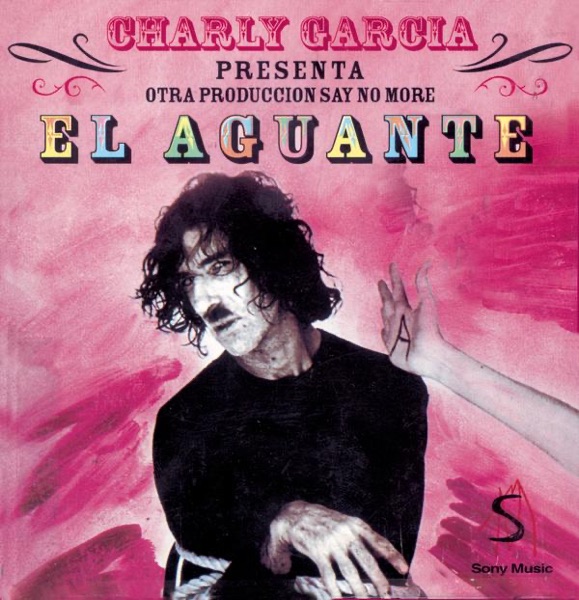
El aguante
1998 · 10 tracks
- 1 El Aguante ↗ 3:27
- 2 Kill My Mother ↗ 8:44
- 3 Pedro Trabaja en el Cine ↗ 4:25
- 4 No Estaria Mal (It Won't Be Wrong) ↗ 2:53
- 5 Soldado de Lata (Tin Soldier) ↗ 3:32
- 6 Correte Beethoven (Roll Over Beethoven) ↗ 4:22
- 7 Tu Arma en el Sur ↗ 5:09
- 8 Dos Edificios Dorados ↗ 5:26
- 9 Uno a Uno (One to One) ↗ 3:01
- 10 Lo Que Ves Es Lo Que Hay (Todo el Mundo Quiere Olvídar) ↗ 7:58

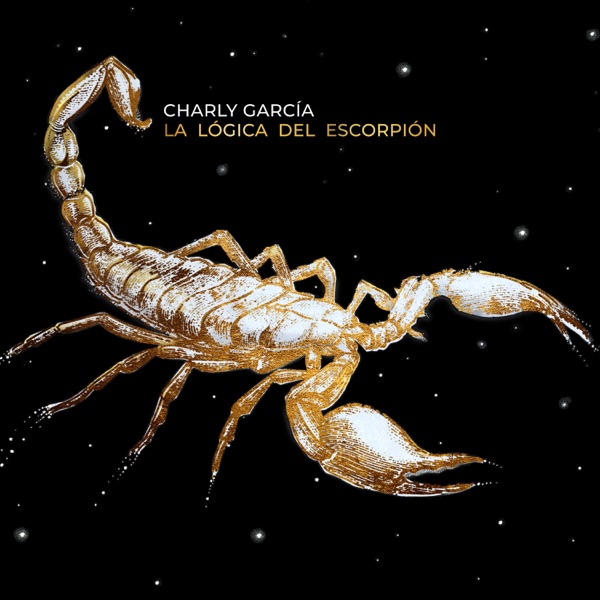
La lógica del escorpión
2024 · 13 tracks
- 1 Rompela ↗ 1:45
- 2 Yo Ya Sé ↗ 2:03
- 3 El Club de los 27 ↗ 3:33
- 4 La Medicina Nº 9 ↗ 3:46
- 5 Te Recuerdo Invierno ↗ 2:24
- 6 Autofemicidio ↗ 2:22
- 7 América ↗ 3:52
- 8 Juan Represión ↗ 4:08
- 9 Estrellas al Caer ↗ 1:55
- 10 La Pelicana y el Androide ↗ 2:44
- 11 Watching the Wheels ↗ 2:00
- 12 La Lógica del Escorpión ↗ 1:41
- 13 Rock and Roll Star ↗ 2:21
-
 TangoCharly García19866 tracks
 -
 Parte de la religiónCharly García198710 tracks
 -
 Cómo conseguir chicasCharly García198910 tracks
 -
 Filosofía barata y zapatos de gomaCharly García199011 tracks
 -
 Tango 4Charly García199113 tracks
 -
 La hija de la lágrimaCharly García199423 tracks
 -
 Say No MoreCharly García199614 tracks
 -
 El aguanteCharly García199810 tracks
 -
 RandomCharly García201710 tracks
 -
 La lógica del escorpiónCharly García202413 tracks
Deep Dive
Overview
Charly García stands as one of the most consequential rock musicians in Argentine and Latin American history. Born Carlos Alberto García Moreno in 1951, he emerged from Argentina’s vibrant rock scene to become known as “the father of rock nacional”—a designation that reflects both his pioneering role in establishing rock as a vital cultural force in Argentina and his sustained influence across five decades of creative work. His significance rests on a foundation of technical mastery across multiple instruments, fearless genre experimentation, and lyrically transgressive songwriting that engaged directly with the political and social upheaval of his nation.
García’s influence extends far beyond Argentina’s borders. His work spans symphonic rock, progressive rock, folk rock, new wave, funk rock, synth-pop, and jazz—rarely confining itself to a single idiom for long. His lyrics are marked by social criticism and rebellion, particularly during Argentina’s military dictatorship era, when his music provided both artistic resistance and cultural commentary. His volatile, extravagant public persona has been inseparable from his artistic identity, generating decades of media attention and cementing him as a figure of genuine cultural consequence.
Formation Story
Charly García’s entry into rock music emerged from Argentina’s 1950s and 1960s cultural ferment, a period when the nation was developing its own distinct rock sound separate from North American and British models. Growing up in post-war Argentina, García absorbed the folk traditions of his homeland alongside the emerging rock and roll idiom spreading internationally. His multi-instrumental facility—demonstrated across keyboards, guitars, and various other instruments—developed early, setting him apart from single-instrument musicians who might have pursued conventional paths.
By the early 1980s, García had developed enough compositional voice and technical skill to launch a solo career, marking a transition from his prior work in group contexts. This period coincided with Argentina’s return to democracy following years of military rule, a moment of cultural opening when rock music could engage more directly with political and social themes. García’s solo career began in this window of possibility, positioning him to become not just a performer but a defining voice for a generation of Argentine rock musicians and listeners.
Breakthrough Moment
Charly García’s solo breakthrough arrived with his 1982 debut Yendo de la cama al living, which announced his arrival as a solo force with distinctive compositional ambition and instrumental command. The album established the template for much of his subsequent work: complex arrangements, literary lyrics, and an willingness to move fluidly between musical idioms. Following this foundation, García released Clics modernos in 1983, which deepened his artistic profile and solidified his reputation as more than a novelty or transitional figure.
The early-to-mid 1980s represented García’s emergence into broader Latin American consciousness. His willingness to incorporate new wave and synth-pop elements into his rock framework, evident in albums like Piano bar (1984), demonstrated that he was not content to mine a single seam. These early solo releases established García as an artist of restless creative energy, unwilling to repeat himself or conform to marketplace expectations. By the mid-1980s, he had secured his position as a leading figure in Argentine rock, with influence radiating across Latin America.
Peak Era
The period from the mid-1980s through the early 1990s represents García’s most artistically ambitious and commercially successful stretch as a solo artist. Tango (1986), Parte de la religión (1987), and Cómo conseguir chicas (1989) showcase an artist at the height of his powers, commanding multiple genres simultaneously and deepening his lyrical engagement with Argentine society. Filosofía barata y zapatos de goma (1990) continued this trajectory, demonstrating sustained creative vitality even as Argentina itself underwent political and economic transformation in the post-dictatorship era.
During these years, García’s music served as both artistic statement and cultural mirror, reflecting the hopes and anxieties of Argentines navigating redemocratization and economic uncertainty. His willingness to incorporate funk rock and progressive elements into albums like Tango 4 (1991) showed an artist uninterested in formulaic repetition. These years established the contours of his mature style: intellectually ambitious arrangements, lyrically dense and often cryptic songwriting, and an uncompromising refusal to simplify his music for radio or commercial consumption.
Musical Style
Charly García’s sound is defined by restless genre-crossing and instrumental virtuosity. He commands keyboards, guitars, and various percussion and electronic instruments, using this multi-instrumental facility to construct densely layered arrangements that reject the verse-chorus-verse simplicity of mainstream rock. His compositions frequently employ asymmetrical song structures, unexpected harmonic turns, and production choices that prioritize textural complexity over commercial clarity. The influence of progressive rock is evident throughout his work, particularly in his use of extended instrumental passages and conceptual ambition.
García’s vocal approach is characteristically Argentine—melodic without being conventionally “pretty,” often edged with irony or tension. His lyrics operate on multiple levels: immediate social observation combined with more abstract or surreal imagery, frequently delivered with a conversational intimacy that draws listeners into his perspective. Across his catalog, he has integrated symphonic rock arrangements, synth-pop production aesthetics, funk rock grooves, and even jazz harmonic complexity, demonstrating an artist constantly evolving rather than defending a fixed territory. The common thread is intellectual rigor and refusal of superficiality, whether the context is folk-influenced acoustic work or heavily synthesized production.
Major Albums
Yendo de la cama al living (1982)
García’s solo debut announced his artistic ambitions and multi-instrumental command, establishing the foundation for his subsequent solo career with complex arrangements and literary songwriting that immediately distinguished him as an important voice.
Clics modernos (1983)
Following his debut, this album deepened García’s profile and demonstrated sustained artistic vision, solidifying his reputation across Latin America as more than a transitional figure.
Tango (1986)
This album exemplifies García’s peak-era ambition, incorporating symphonic and progressive elements while maintaining his distinctive lyrical voice and social consciousness.
Cómo conseguir chicas (1989)
Released during a period of sustained creativity, this work showcases García’s ability to incorporate funk and new wave elements while maintaining his compositional complexity and critical edge.
Filosofía barata y zapatos de goma (1990)
This album represents García in full command of his powers, demonstrating technical mastery and thematic depth during Argentina’s post-dictatorship cultural moment.
Influencia (2002)
A return to form after a period of relative commercial quietude, this album demonstrated García’s continued creative relevance and ability to update his sound without abandoning his core identity.
Signature Songs
- “Yendo de la cama al living” — The title track from his 1982 debut, establishing his signature blend of literary lyrics and complex instrumental arrangements.
- “Clics modernos” — A defining song that illustrates his integration of new wave and synth-pop elements into a rock framework.
- “Tango” — A centerpiece of his 1986 album, showcasing his ability to engage with Argentine musical tradition while remaining thoroughly contemporary.
- “Parte de la religión” — Title track from his 1987 album, exemplifying his critical lyrical approach and progressive arrangements.
- “Filosofía barata y zapatos de goma” — From his 1990 album, demonstrating his ability to craft immediately memorable songs from complex compositional foundations.
Influence on Rock
Charly García’s impact on Argentine and Latin American rock cannot be overstated. He essentially created the template for rock nacional as a serious artistic form—not merely an adaptation of Anglo-American models but a genuinely Argentine expression rooted in local musical traditions while embracing international progressive and avant-garde influences. His demonstration that rock music could be intellectually rigorous, lyrically complex, and politically engaged simultaneously influenced generations of Latin American musicians working across rock, progressive, and experimental idioms.
García’s willingness to treat rock as a canvas for constant stylistic experimentation—moving from progressive rock to synth-pop to funk to jazz fusion without losing coherence—expanded what was permissible within rock discourse. His influence extends to musicians across Latin America who saw in his work proof that rock need not be subordinate to Anglo-American models, that local identity and international sophistication were not mutually exclusive. His fearless engagement with political and social critique, particularly during Argentina’s dictatorship, established rock music as a valid medium for resistance and witness.
Legacy
Charly García’s six-decade career—from his emergence in the early 1980s through his 2024 album La lógica del escorpión—establishes him as a towering figure in rock history. His sustained creative output, evidenced by a steady stream of album releases across multiple decades, demonstrates an artist unwilling to coast on past achievements or accept the diminishment that sometimes accompanies age. The breadth of his stylistic exploration, from his 1982 debut through his recent work, marks him as an artist of genuine restlessness and intellectual hunger.
García’s position as “the father of rock nacional” reflects not merely historical priority but ongoing artistic relevance. His influence permeates contemporary Latin American rock, with countless musicians citing his work as formative. The continued availability of his catalog through Sony Music Latin ensures new generations encounter his music, while his volatile personal life and extravagant public persona have maintained his presence in Argentine cultural consciousness. In the broader context of world rock history, García stands as a crucial figure in demonstrating how rock music could flourish outside Anglo-American centers while remaining engaged with international artistic developments—a model that influenced rock’s development across Latin America and beyond.
Fun Facts
- García’s multi-instrumental mastery extends across keyboards, guitars, and various percussion instruments, making him capable of performing entire albums essentially as a one-man band in studio contexts.
- His 2009 album Demasiado Beatles represents an explicit dialogue with Beatle influence, demonstrating his willingness to directly engage with the rock traditions that shaped his own work.
- García’s extravagant public persona and rebellious nature have generated significant media attention throughout his career, making him as much a cultural personality as a musician.
- The consistency of his album releases—with new work appearing regularly across five decades—marks him as an artist of remarkable productivity and sustained creative engagement.