

Photo by Crossover2015 , licensed under CC BY-SA 4.0 · Wikimedia Commons
Rank #492
Chris Norman
From Wikipedia
Christopher Ward Norman is an English soft rock singer. Norman was the original lead singer of the English rock band Smokie (1964–1986), which found success in Europe in the 1970s. "Stumblin' In", a 1978 duet with Suzi Quatro, became a big hit in the United States and Europe. The single "Midnight Lady" also became an international hit. In the 1990-2000s, he toured the countries of Eastern Europe; he is most popular in the Baltic countries.
Discography & Previews
Browse through and click an album to open and play 30-second previews streamed from Apple Music.

Some Hearts Are Diamonds
1986 · 13 tracks
- 1 Some Hearts Are Diamonds ↗ 3:44
- 2 Hunters of the Night ↗ 4:05
- 3 Chain Reaction ↗ 3:41
- 4 It's a Tragedy ↗ 3:42
- 5 No Arms Can Ever Hold You ↗ 3:44
- 6 Midnight Lady ↗ 4:09
- 7 Love for Sale ↗ 3:25
- 8 Love Is... ↗ 3:31
- 9 Stop At Nothing ↗ 3:30
- 10 Till the Night We Meet Again ↗ 4:13
- 11 Broken Heroes ↗ 3:21
- 12 Some Hearts Are Diamonds (Maxi-Version) ↗ 5:42
- 13 Midnight Lady (Maxi-Version) ↗ 5:04

Reflections
1995 · 13 tracks
- 1 Reflections Of My Life ↗ 4:50
- 2 Under Your Spell ↗ 3:58
- 3 Obsession ↗ 4:08
- 4 Cryin' Time ↗ 4:35
- 5 Long Way From Home ↗ 3:08
- 6 Independent Girl ↗ 3:13
- 7 All Aboard For America ↗ 6:25
- 8 If I Get Lucky ↗ 4:11
- 9 Miss You ↗ 3:36
- 10 Maybe Tomorrow ↗ 4:31
- 11 Don't Fence Me In ↗ 3:37
- 12 One Night Stand ↗ 3:17
- 13 Lost In Flight ↗ 4:20

Into the Night
1997 · 13 tracks
- 1 Into the Night ↗ 3:44
- 2 Running Scared ↗ 4:11
- 3 Baby I Miss You ↗ 3:30
- 4 For You ↗ 4:10
- 5 Dangerous Heart ↗ 3:40
- 6 Stay One More Night ↗ 4:04
- 7 Baby Don't Change ↗ 3:43
- 8 Follow Me ↗ 4:02
- 9 I'll Be There ↗ 5:17
- 10 Love Is a Bridge Between Two Hearts ↗ 3:57
- 11 I Cry a Lot More Now ↗ 3:10
- 12 Tomorrow's Another Day ↗ 3:47
- 13 Send a Sign to My Heart ↗ 4:02

Breathe Me In
2001 · 15 tracks
- 1 Breathe Me In ↗ 3:29
- 2 When the Indians Cry ↗ 3:38
- 3 Heartaches ↗ 4:24
- 4 I Want You ↗ 3:23
- 5 No One Calls My Name ↗ 3:56
- 6 Hot Summer Nights ↗ 3:14
- 7 You and I ↗ 3:57
- 8 Just Another Drink ↗ 3:57
- 9 Sweet Surrender ↗ 3:20
- 10 I Will ↗ 3:39
- 11 Out in the Night ↗ 3:07
- 12 Don't Lie to Me ↗ 3:12
- 13 Let the Beat Begin ↗ 4:04
- 14 When the River Runs Dry ↗ 4:10
- 15 Ich Mach Meine Augen Zu ↗ 4:20

Handmade
2003 · 14 tracks
- 1 Keep Talking ↗ 4:29
- 2 It's Crazy ↗ 4:06
- 3 Something About You ↗ 3:25
- 4 She Forgot ↗ 4:22
- 5 It's Alright ↗ 5:19
- 6 The Caravan Moves On ↗ 4:18
- 7 Under The Same Sun ↗ 3:49
- 8 Baby It's History ↗ 3:20
- 9 So Radical ↗ 3:25
- 10 Angel Of Berlin ↗ 4:00
- 11 Only You ↗ 3:26
- 12 Let's Do It ↗ 3:54
- 13 Down Louisiana ↗ 3:07
- 14 Nothing Stays The Same ↗ 3:59

Million Miles
2006 · 14 tracks
- 1 Heart & Soul ↗ 5:13
- 2 Love You Heavy ↗ 3:33
- 3 All Alone ↗ 3:50
- 4 Turn Right, Turn Wrong ↗ 2:46
- 5 Million Miles to Nowhere ↗ 4:06
- 6 Find My Way ↗ 3:47
- 7 Right Time, Wrong Place ↗ 3:33
- 8 Alles klar ↗ 3:36
- 9 If My Heart Is Not Enough ↗ 3:57
- 10 The Summer Wind ↗ 3:21
- 11 Let's Get Real ↗ 4:21
- 12 Bill's Song ↗ 3:08
- 13 Crazy For You ↗ 2:54
- 14 All Day, All Night ↗ 3:24
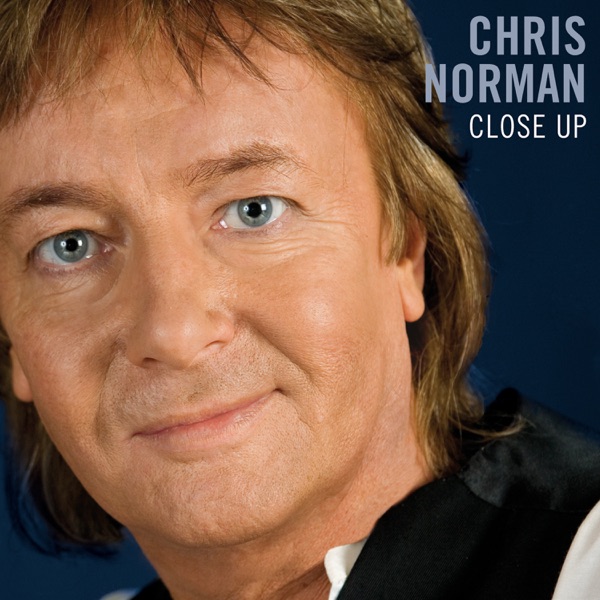
Close Up
2007 · 13 tracks
- 1 Lay Me Down ↗ 4:20
- 2 Love Not War ↗ 2:37
- 3 Trying To Find My Home ↗ 3:14
- 4 Hello Baby ↗ 3:58
- 5 Close To You ↗ 3:33
- 6 Catch Your Dream ↗ 3:23
- 7 Sleep Alone Tonight ↗ 4:09
- 8 When The Midnight Hour Is Calling ↗ 3:22
- 9 When A Love Affair Ends ↗ 4:20
- 10 I Melt Away ↗ 3:37
- 11 Maybe There's A Way ↗ 3:53
- 12 Baby I Call Your Name ↗ 3:08
- 13 Survival ↗ 2:50

Time Traveller
2011 · 12 tracks

There and Back
2013 · 13 tracks
- 1 I'm Gone ↗ 4:53
- 2 Gypsy Queen ↗ 3:26
- 3 Nobody's Fool ↗ 5:30
- 4 Wish You Well ↗ 6:28
- 5 My Jenny ↗ 5:22
- 6 Whisky & Water ↗ 4:14
- 7 Love's Such a Strange Thing ↗ 3:31
- 8 Lovers and Friends ↗ 3:19
- 9 Hard Road to Cross ↗ 5:11
- 10 Hounddog Blues ↗ 4:22
- 11 Did the Monkeys Take Over the Zoo ↗ 4:57
- 12 Hot Love ↗ 4:24
- 13 Northern Star ↗ 1:23

Crossover
2015 · 13 tracks
- 1 Waiting ↗ 4:32
- 2 Cat's Eyes ↗ 3:46
- 3 Hard to Find ↗ 3:59
- 4 Fly Away ↗ 4:46
- 5 Highest Mountain ↗ 3:48
- 6 Before the Morning Knows ↗ 3:50
- 7 The Girl I Love ↗ 3:51
- 8 Beautiful Rain ↗ 3:58
- 9 Carry On ↗ 3:16
- 10 Take This Lonely Heart ↗ 3:17
- 11 Alien Like You ↗ 3:13
- 12 Love's On Fire ↗ 3:59
- 13 40 Years On (Remix) ↗ 4:03

Don’t Knock the Rock
2017 · 14 tracks
- 1 Don't Knock the Rock ↗ 2:07
- 2 Crawling up the Wall ↗ 3:18
- 3 Sun Is Rising ↗ 4:15
- 4 You Are the Light ↗ 3:42
- 5 Sweet Virginia ↗ 3:08
- 6 Good, Good Loving ↗ 3:02
- 7 Losing You ↗ 3:49
- 8 If We Had Wings ↗ 3:46
- 9 On Night of Love ↗ 3:22
- 10 Resurrection ↗ 3:29
- 11 Chasing After Starlight ↗ 3:22
- 12 Straight to My Heart ↗ 3:33
- 13 Suicide Street ↗ 3:42
- 14 Little Butterfly ↗ 2:24
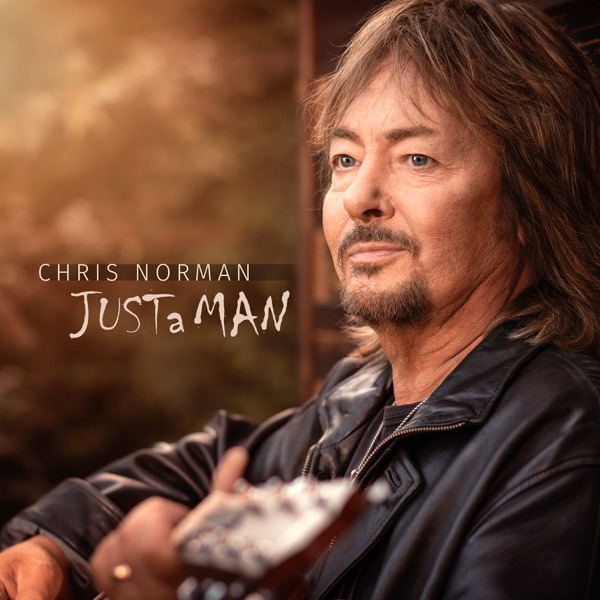
Just a Man
2021 · 12 tracks
- 1 Streets Of Manhattan ↗ 3:43
- 2 All Because Of You ↗ 4:39
- 3 Give Us A Smile ↗ 4:22
- 4 Just A Man ↗ 3:36
- 5 Low Life ↗ 5:20
- 6 Magic Woman ↗ 4:47
- 7 Hey Mr. Music Man ↗ 3:52
- 8 Let Your Heart Speak For You ↗ 4:17
- 9 Goin' Down ↗ 3:30
- 10 Hello, How Are You? ↗ 3:12
- 11 Instead Of Me ↗ 4:13
- 12 Good Enough For Rock 'n' Roll ↗ 4:05

Rediscovered Love Songs
2022 · 12 tracks
- 1 Need You Now ↗ 4:11
- 2 To Love Somebody ↗ 3:36
- 3 Wonderful Tonight ↗ 3:42
- 4 I Drove All Night ↗ 4:12
- 5 Make You Feel My Love ↗ 3:32
- 6 My Girl ↗ 3:16
- 7 Need Your Love So Bad ↗ 4:39
- 8 Handle With Care ↗ 3:26
- 9 Always On My Mind ↗ 3:18
- 10 Nights In White Satin ↗ 4:37
- 11 Just The Way You Are ↗ 3:39
- 12 The First Time Ever I Saw Your Face ↗ 4:24

Junction 55
2024 · 12 tracks

Lifelines
2026 · 15 tracks
- 1 Lifelines ↗ 3:51
- 2 So You Win Again ↗ 4:21
- 3 Crying in the Rain (feat. Susan Norman) ↗ 3:31
- 4 Strawberry Fields Forever ↗ 3:10
- 5 Run ↗ 5:07
- 6 Free Fallin ↗ 4:17
- 7 Midnight Lady ↗ 4:25
- 8 Addicted to Love ↗ 4:00
- 9 All I Have to Do Is Dream (feat. Susan Norman) ↗ 2:47
- 10 Piece of My Heart ↗ 3:53
- 11 Fix You ↗ 4:52
- 12 Mexican Girl ↗ 3:55
- 13 Whiskey in the Jar ↗ 4:02
- 14 The Air That I Breathe ↗ 3:41
- 15 Everybody Hurts ↗ 5:00
-
 Some Hearts Are DiamondsChris Norman198613 tracks
 -
 ReflectionsChris Norman199513 tracks
 -
 Into the NightChris Norman199713 tracks
 -
 Breathe Me InChris Norman200115 tracks
 -
 HandmadeChris Norman200314 tracks
 -
 Million MilesChris Norman200614 tracks
 -
 Close UpChris Norman200713 tracks
 -
 Time TravellerChris Norman201112 tracks
 -
 There and BackChris Norman201313 tracks
 -
 CrossoverChris Norman201513 tracks
 -
 Don’t Knock the RockChris Norman201714 tracks
 -
 Just a ManChris Norman202112 tracks
 -
 Rediscovered Love SongsChris Norman202212 tracks
 -
 Junction 55Chris Norman202412 tracks
 -
 LifelinesChris Norman202615 tracks
Deep Dive
Overview
Chris Norman is an English soft rock singer whose career spans more than seven decades, beginning as the original lead vocalist of Smokie and evolving into a prolific solo artist with a devoted international following. His partnership with the band established him in the 1970s European rock landscape, while his 1978 duet “Stumblin’ In” with Suzi Quatro broke through to mainstream success in the United States and beyond. Though his peak commercial visibility occurred in the late 1970s and 1980s, Norman sustained a remarkable recording and touring presence that extended well into the 21st century, particularly in Eastern European markets where his artistry maintained enduring popularity.
Formation Story
Chris Norman emerged from the English rock and pop scene of the mid-20th century, coming of age during an era when soft rock and glam rock aesthetics were reshaping popular music. His early professional identity was forged as the lead singer of Smokie, an English rock band he joined in 1964 and fronted for more than two decades. The band’s success in Europe during the 1970s provided Norman with both a platform and a catalog of material that would define his artistic signature. By the early 1980s, as Smokie’s original iteration wound down in 1986, Norman transitioned into solo work, leveraging his established reputation and the catalog of songs he had helped create with the band. This shift marked not an abandonment of his roots but rather an expansion of his creative autonomy, allowing him to develop material beyond the collaborative framework that had sustained Smokie.
Breakthrough Moment
Norman’s solo breakthrough arrived through the duet “Stumblin’ In,” recorded in 1978 with American rock and pop artist Suzi Quatro. The single achieved significant commercial success on both sides of the Atlantic, becoming a major hit in the United States and across Europe. This collaboration demonstrated Norman’s ability to connect with audiences as a solo voice and his appeal to radio programmers seeking melodic, accessible rock material. The success of “Stumblin’ In” positioned him as a viable solo artist independent of his band identity and validated the decision to pursue a solo career. Another international hit, “Midnight Lady,” further solidified his presence in the global market and established him as more than a one-hit wonder, confirming that his commercial viability extended beyond a single novelty collaboration.
Peak Era
Norman’s most visible solo period corresponded with the early to mid-1980s, immediately following Smokie’s 1986 dissolution. His albums Rock Away Your Teardrops (1982) and Some Hearts Are Diamonds (1986) appeared during this transition, while Different Shades (1987) and Break the Ice (1989) solidified his presence as an independent recording artist. During this era, Norman refined his soft rock aesthetic, crafting material that balanced pop sensibility with rock instrumentation. The late 1980s into the 1990s saw continued output; Interchange (1991), The Growing Years (1992), and Jealous Heart (1993) maintained his recording schedule even as radio support in traditional Western markets began to wane. By the mid-1990s, Norman’s commercial emphasis shifted toward European and Eastern European touring, particularly in the Baltic countries, where his catalog retained strong resonance and where live performances became his primary means of artistic engagement.
Musical Style
Norman’s vocal approach centers on smooth, melodic phrasing characteristic of soft rock; his delivery emphasizes clarity and emotional accessibility over technical virtuosity or raw power. His recordings typically feature pop-rock instrumentation—keyboards, electric guitar, rhythm section arrangements—layered with production values designed to maximize radio appeal and commercial polish. Throughout his solo career, Norman inhabited the intersection of pop rock, soft rock, and glam rock aesthetics, drawing from a songwriting tradition emphasizing hooks, narrative lyrics, and romantic or introspective themes. The production style of his albums reflects the era in which they were recorded; his early 1980s work carries the synth-influenced sheen of that decade, while later recordings adjusted to contemporary production standards. Genre-wise, his catalog also touched on disco and pop influences, particularly during the late 1970s and 1980s when those sonic territories overlapped with mainstream rock radio. Norman’s collaborations, most notably with Quatro, showcased his ability to blend voices and adapt his vocal persona to partnership contexts, suggesting range and interpretive flexibility within his fundamentally accessible, harmony-driven approach.
Major Albums
Rock Away Your Teardrops (1982)
Norman’s debut solo album, released after Smokie’s original run, established his independent artistic voice and demonstrated that his commercial appeal extended beyond the band context. The album set the template for his solo aesthetic: melodic soft rock anchored in pop sensibility.
Some Hearts Are Diamonds (1986)
Released in the year Smokie formally dissolved, this album arrived at a transitional moment in Norman’s career, bridging his band identity with his emerging solo persona. The album consolidated his reputation as a solo recording artist capable of sustaining commercial output.
Different Shades (1987)
Following the official end of Smokie, Different Shades represented Norman’s first fully independent solo work, unshaded by the band’s legacy. The album reflected his matured approach to composition and arrangement in a post-Smokie landscape.
Into the Night (1997)
Release during the 1990s marked a period of sustained productivity despite reduced mainstream radio presence, demonstrating Norman’s commitment to recording even as his commercial visibility in Western markets diminished. Eastern European audiences remained receptive to new material.
Crossover (2015)
Appearing more than three decades after his initial solo work, Crossover exemplified Norman’s continued output into his later career, affirming his status as a prolific artist whose recording schedule rarely paused, regardless of commercial climate or cultural attention.
Signature Songs
- “Stumblin’ In” (1978, with Suzi Quatro) — The international hit duet that established Norman as a viable solo artist and remains his most widely recognized recording.
- “Midnight Lady” — An international chart success that confirmed Norman’s solo commercial appeal beyond the novelty of the Quatro collaboration.
- “Smokie” songs — As Smokie’s original lead vocalist, Norman’s interpretations of the band’s catalog remain central to his artistic identity and live performances.
Influence on Rock
Norman’s influence on rock music operates primarily through the Smokie legacy and through the soft rock and pop-rock aesthetic he embodied as a solo artist. His work contributed to the 1970s and 1980s soft rock mainstream, a genre that emphasized melodic accessibility and commercial polish over experimental or avant-garde impulses. The success of “Stumblin’ In” demonstrated the viable market for duets pairing established male and female rock vocalists, a template that influenced radio programming and artist collaboration strategies. In Eastern Europe and the Baltic countries, Norman achieved a kind of staying power that transcended typical Western commercial cycles, suggesting that his music offered something of enduring appeal beyond trendy radio rotation—possibly a sincerity of emotional expression or a timeless melodic sensibility that resisted dating. His decades-long touring presence in these markets established him as a cultural figure with genuine regional significance, influencing local audiences’ relationship to 1970s and 1980s rock idioms.
Legacy
Chris Norman’s career demonstrates the trajectory of a rock musician whose greatest commercial visibility occurred in a specific era—the late 1970s and early 1980s—yet who sustained meaningful artistic and professional engagement far beyond that window. His continuing output into the 2020s, including Junction 55 (2024) and the forthcoming Lifelines (2026), affirms his status as an active recording artist who did not retreat from the studio or touring circuit. In Western markets, his legacy rests primarily on the Smokie catalog and the “Stumblin’ In” hit, both of which receive steady streaming and radio play. His deep integration into Eastern European and particularly Baltic rock culture created a second career of substantial touring and cultural presence, making him a figure of genuine significance in regional markets where his music never fell from relevance. Though not inducted into major Western rock halls of fame, Norman’s longevity, consistent output, and loyal fanbase testify to a sustainable career model in rock music—one built not on explosive cultural dominance but on reliable craftsmanship, melodic sensibility, and genuine connection with audiences across generational and geographic boundaries.
Fun Facts
- Norman has been actively recording and touring for over seven decades, from his 1964 inception with Smokie through solo releases continuing into 2026, demonstrating remarkable career longevity.
- His popularity in Eastern Europe and the Baltic countries, where he tours extensively, represents a secondary career of substantial regional significance that exceeded his sustained presence in Western mainstream markets.
- The duet “Stumblin’ In” with Suzi Quatro remains his most commercially successful solo recording and one of the few rock collaborations of that era to achieve simultaneous major chart success in both North America and Europe.