
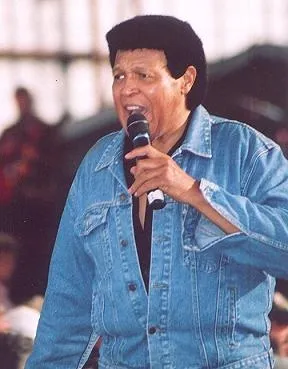
Photo by The original uploader was ACT1 at English Wikipedia . , licensed under CC BY-SA 3.0 · Wikimedia Commons
Rank #387
Chubby Checker
From Wikipedia
Chubby Checker is an American rock and roll singer and dancer. He is known for popularizing many dance styles, including the Twist, with his 1960 hit cover of Hank Ballard & The Midnighters' R&B song "The Twist", and the Pony, with his 1961 cover of the song "Pony Time". His biggest UK hit, "Let's Twist Again", was released one year later. That same year, Checker also popularized the song "Limbo Rock", a previous-year instrumental hit by the Champs to which he added lyrics and its trademark Limbo dance. He also introduced other dance styles, such as the Fly. In September 2008, "The Twist" topped Billboard's list of the most popular singles to have appeared in the Hot 100 since its debut in 1960, an honor it maintained in an August 2013 update of the list. In 2014, Checker was inducted into the National Rhythm & Blues Hall of Fame, and he was selected for induction into the Rock and Roll Hall of Fame in 2025.
Discography & Previews
Browse through and click an album to open and play 30-second previews streamed from Apple Music.

Twist With Chubby Checker
1960 · 12 tracks
- 1 Twistin' U.S.A. ↗ 2:35
- 2 The "Ooh Poo Pah Doo" Shimmy ↗ 2:23
- 3 The "C.C. Rider" Stroll ↗ 2:18
- 4 The Strand ↗ 2:41
- 5 The Chicken ↗ 2:48
- 6 The Hucklebuck ↗ 2:34
- 7 The Twist ↗ 2:36
- 8 The Madison ↗ 2:40
- 9 "Love Is Strange" Calypso ↗ 2:48
- 10 The "Mexican Hat" Twist ↗ 2:18
- 11 The Slop ↗ 2:12
- 12 The Pony ↗ 2:34

Let’s Twist Again
1961 · 24 tracks
- 1 Pony Time ↗ 2:29
- 2 The Watusi ↗ 2:34
- 3 The Hully Gully ↗ 2:37
- 4 The Stroll ↗ 2:35
- 5 The Mashed Potatoes ↗ 2:17
- 6 Hi Ho Silver ↗ 2:34
- 7 We Like Birdland ↗ 2:26
- 8 Let's Dance, Let's Dance, Let's Dance ↗ 2:32
- 9 The Shimmy ↗ 2:14
- 10 The Charleston ↗ 2:20
- 11 Dance the Mess Around ↗ 2:24
- 12 Pony Express ↗ 2:23
- 13 I Could Have Danced All Night ↗ 2:09
- 14 The Jet ↗ 2:05
- 15 Continental Walk ↗ 2:24
- 16 I Almost Lost My Mind ↗ 2:56
- 17 Fishin' ↗ 2:22
- 18 Quarter to Three ↗ 2:15
- 19 Let's Twist Again ↗ 2:17
- 20 Ballin' the Jack ↗ 2:20
- 21 Peanut Butter ↗ 2:20
- 22 The Ray Charles-Ton ↗ 2:24
- 23 Takes Two to Tango ↗ 1:59
- 24 Dance-A-Long ↗ 2:41
It’s Pony Time
1961 · 24 tracks
- 1 Pony Time ↗ 2:29
- 2 The Watusi ↗ 2:34
- 3 The Hully Gully ↗ 2:37
- 4 The Stroll ↗ 2:35
- 5 The Mashed Potatoes ↗ 2:17
- 6 Hi Ho Silver ↗ 2:34
- 7 We Like Birdland ↗ 2:26
- 8 Let's Dance, Let's Dance, Let's Dance ↗ 2:32
- 9 The Shimmy ↗ 2:14
- 10 The Charleston ↗ 2:20
- 11 Dance the Mess Around ↗ 2:24
- 12 Pony Express ↗ 2:23
- 13 I Could Have Danced All Night ↗ 2:09
- 14 The Jet ↗ 2:05
- 15 Continental Walk ↗ 2:24
- 16 I Almost Lost My Mind ↗ 2:56
- 17 Fishin' ↗ 2:22
- 18 Quarter to Three ↗ 2:15
- 19 Let's Twist Again ↗ 2:17
- 20 Ballin' the Jack ↗ 2:20
- 21 Peanut Butter ↗ 2:20
- 22 The Ray Charles-Ton ↗ 2:24
- 23 Takes Two to Tango ↗ 1:59
- 24 Dance-A-Long ↗ 2:41

Limbo Rock / Let’s Limbo Some More
1962 · 2 tracks
Limbo Rock
1962 · 2 tracks
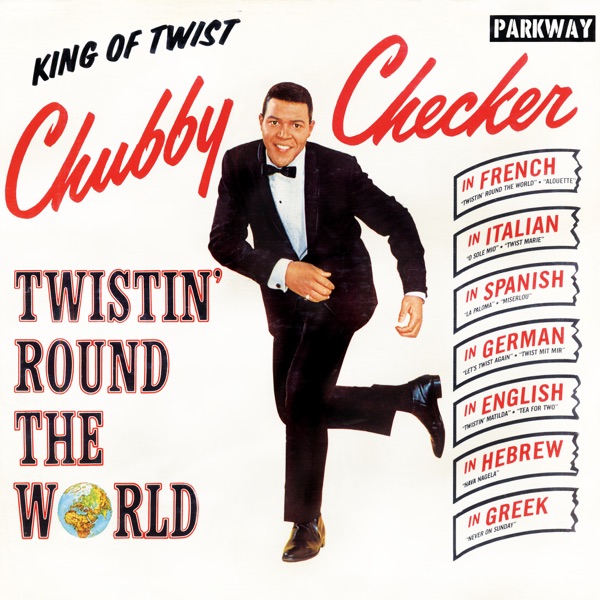
Twistin’ Round the World
1962 · 12 tracks
- 1 Twistin' Round the World ↗ 2:37
- 2 La Paloma Twist ↗ 2:12
- 3 Hava Nagela ↗ 2:06
- 4 Twist Mit Mir (Mus I Denn) ↗ 2:42
- 5 Never on Sunday ↗ 3:04
- 6 Twist Marie ↗ 2:13
- 7 Let's Twist Again (Der Twist Beginnt) ↗ 2:19
- 8 Twistin' Matilda ↗ 2:37
- 9 O Sole Mio ↗ 2:42
- 10 Tea for Two ↗ 2:14
- 11 Alouette (All You Twisters) ↗ 2:00
- 12 Miserlou ↗ 2:43

Beach Party
1962 · 12 tracks

Let's Limbo Some More
1963 · 12 tracks
- 1 How Low Can You Go? (Stereo) ↗ 2:27
- 2 Manana (Stereo) ↗ 2:47
- 3 Cindy, Oh Cindy (Stereo) ↗ 2:43
- 4 The Girl With the Swingin' Derriere (Stereo) ↗ 2:26
- 5 Peanut Vendor (Stereo) ↗ 2:14
- 6 Twenty Miles ↗ 2:13
- 7 Let's Limbo Some More ↗ 2:15
- 8 Rum and Coca Cola (Stereo) ↗ 2:43
- 9 A Lotta Limbo (Stereo) ↗ 2:46
- 10 Mama Look a Boo Boo (Stereo) ↗ 2:55
- 11 Mother Goose Limbo (Stereo) ↗ 2:24
- 12 Run, Chico, Run (Stereo) ↗ 2:20

The Twist
1999 · 3 tracks
The Twist
2000 · 3 tracks
-
 Twist With Chubby CheckerChubby Checker196012 tracks
 -
 Let’s Twist AgainChubby Checker196124 tracks
 - It’s Pony TimeChubby Checker196124 tracks
-
 Limbo Rock / Let’s Limbo Some MoreChubby Checker19622 tracks
 - Limbo RockChubby Checker19622 tracks
-
 Twistin’ Round the WorldChubby Checker196212 tracks
 -
 Beach PartyChubby Checker196212 tracks
 -
 Let's Limbo Some MoreChubby Checker196312 tracks
 -
 The TwistChubby Checker19993 tracks
 - The TwistChubby Checker20003 tracks
Deep Dive
Overview
Chubby Checker stands as one of rock and roll’s most unlikely but undeniably consequential figures—a performer whose hits were inextricably tied to the dance crazes they spawned. Born in 1941, Checker rose to prominence in the early 1960s not through virtuosic musicianship but through his ability to connect popular song to mass participation and movement. His cover of Hank Ballard & The Midnighters’ “The Twist” became the cornerstone of American pop culture, eventually ranking as Billboard’s most popular single in the entire Hot 100 era since 1960. Where most rock pioneers of the era built legacies on guitar innovation or vocal transcendence, Checker built his on rhythm, accessibility, and the democratization of dance itself.
Formation Story
Chubby Checker came of age in the late 1950s at a moment when rock and roll was consolidating into radio-friendly formats and the youth market was primed for novelty and participation. Born in 1941, he entered the music business as rock and roll was still establishing its commercial infrastructure—a time when dance records and party records held legitimate commercial weight. His path to the microphone was not born of a particular regional scene or family musical tradition documented in standard sources; rather, he emerged through the Cameo-Parkway Records system, a label positioned to capitalize on the dance and novelty side of early 1960s rock. This was the era when song-and-dance were not yet separated into distinct artistic categories, and a singer could become a star by popularizing a single move or gesture that millions could imitate.
Breakthrough Moment
Chubby Checker’s ascent crystallized with “The Twist” in 1960, a cover of an R&B number that transformed from regional record into a continental phenomenon. The song’s central hook—an instruction to perform a simple, hip-rotating dance move—proved irresistible to radio programmers and teenagers alike. Unlike much of early rock, “The Twist” required no particular skill, no elaborate costume, and no special venue. It could be performed at school dances, in living rooms, and at formal venues, making it a cultural bridge between generations. The success of “The Twist” established Checker as the go-to interpreter of dance records and opened the door for rapid follow-ups. By 1961, he had capitalized on this momentum with “Pony Time,” another cover that introduced yet another branded dance step into the national lexicon.
Peak Era
The years 1960 through 1963 represent Chubby Checker’s creative and commercial zenith. In 1961, he released “Let’s Twist Again,” which became his biggest UK hit and cemented the Twist’s permanence in Anglo-American pop culture. That same year saw the release of multiple albums—It’s Pony Time, Let’s Twist Again, and others—flooding the market with dance-themed material. In 1962, he tackled “Limbo Rock,” originally an instrumental by the Champs, and added lyrics and the limbo dance to create another instant standard. His album Limbo Rock arrived that year alongside Let’s Limbo Some More, Limbo Party, Beach Party, and Twistin’ Round the World. The pace was frenetic and commercially astute: each album capitalized on a specific dance craze, and each contained multiple tracks that radio could rotate. By 1963, with Let’s Limbo Some More, the peak had begun to flatten, though Checker remained a recognized name throughout the 1960s and continued recording across subsequent decades.
Musical Style
Chubby Checker’s sound was deliberately un-complex. His vocals are straightforward, even conversational—pitched toward clarity and instruction rather than emotional depth. The records themselves are upbeat, rhythmically direct R&B and rock hybrids, built on uncomplicated chord progressions and strong backbeats. Production values are clean and bright, typical of early 1960s pop-rock: prominent drums, simple horn sections on several tracks, and rhythm guitar playing a supporting role. The genius of his records lay not in harmonic sophistication or instrumental prowess but in their singular focus: create a memorable hook, attach it to a described dance move, and repeat the instructions until the listener understood what to do. This was populism in its purest form, a rejection of the virtuosity that was beginning to characterize rock’s more serious practitioners. Even so, Checker’s approach represented a distinct contribution to rock’s aesthetic: the notion that rock could be participatory, communal, and physically engaging in ways that transcended listening.
Major Albums
Twist with Chubby Checker (1960)
His debut and breakthrough, anchored by the epochal cover of “The Twist.” This record established the template for Checker’s entire career: approachable, radio-friendly, and tied to a specific dance phenomenon.
Let’s Twist Again (1961)
Released during the height of Twist mania, this album consolidated his UK success and introduced additional material that capitalized on the dance-craze formula already proven successful.
It’s Pony Time (1961)
A rapid follow-up exploiting the Pony dance trend, demonstrating Checker’s ability to cycle through novelty material while maintaining commercial momentum.
Limbo Rock (1962)
Checker’s final canonical dance-craze album, built around his adaptation of the Champs’ instrumental into a full production. “Limbo Rock” itself remains a staple of novelty and party music decades later.
Signature Songs
- “The Twist” (1960) — His definitive recording, establishing him as a cultural force and ranking as the most popular single in Billboard Hot 100 history.
- “Let’s Twist Again” (1961) — His biggest UK hit, extending the Twist’s dominance into European markets.
- “Pony Time” (1961) — A cover that introduced another branded dance and proved his formula was repeatable.
- “Limbo Rock” (1962) — His adaptation of an instrumental into a lyrical, dance-instructional format that endures in popular culture.
Influence on Rock
Chubby Checker’s influence on rock music was categorical rather than stylistic. He did not change how guitars were played or how songs were structured. Instead, he fundamentally altered rock’s relationship to dance and physical participation. In the decades before Checker, rock and roll had courted dancers but had not systematized dance as a marketing and creative device. Checker proved that a record could succeed primarily because of the dance it enabled, not in spite of it. This validated the role of novelty, participation, and accessibility in rock—values that would resurface periodically in punk’s DIY ethos, new wave’s synthetic danceability, and electronic music’s focus on the club and the body. While his own records did not spawn imitators with comparable cultural impact, Checker’s demonstration that rock could be democratic, non-technical, and mass-participatory influenced the broader industry’s willingness to market dance and movement as core elements of rock and pop culture.
Legacy
Chubby Checker’s legacy is secure and continuously refreshed through cultural replication. “The Twist” has never left commercial and social circulation; it resurfaces in films, television, and popular consciousness with remarkable regularity, and its 2008 and 2013 rankings atop Billboard’s all-time Hot 100 list cemented its status as one of the most enduring pop records ever released. In 2014, Checker was inducted into the National Rhythm & Blues Hall of Fame, acknowledging his roots in the R&B and novelty traditions. In 2025, he was selected for induction into the Rock and Roll Hall of Fame, a formal recognition of his foundational role in rock and popular music history. His albums and recordings remain in print and readily available on streaming platforms, ensuring that his catalog reaches new generations of listeners. The songs and dances he popularized—the Twist, the Pony, the Limbo, the Fly—have become part of the shared language of American leisure and celebration, embedded so deeply in cultural memory that they no longer require explanation.
Fun Facts
- In September 2008, “The Twist” topped Billboard’s list of the most popular singles in Hot 100 history, an honor it retained in an August 2013 update, underscoring its singular longevity and commercial impact.
- Checker recorded a prolific series of novelty and dance-themed albums in rapid succession between 1960 and 1963, sometimes releasing two or three albums in a single year in an effort to capitalize on concurrent dance crazes.
- His cover of “The Twist” was not the song’s original recording; it was adapted from Hank Ballard & The Midnighters’ R&B version, demonstrating how crossover marketing and repositioning could transform a regional hit into a continental phenomenon.
- Checker continued recording and performing for decades after his commercial peak, releasing albums as recently as 2013 with Let’s Twist Again, the Very Best of Chubby Checker, maintaining a presence in the music industry well into the 21st century.