

Photo by Hilary Feutz , licensed under CC BY 2.0 · Wikimedia Commons
Rank #382
Lisa Loeb
From Wikipedia
Lisa Anne Loeb is an American singer-songwriter, musician, author and actress. She started her career with "Stay " (1994) from the film Reality Bites, the first number-one single on the Billboard Hot 100 for an artist without a recording contract. She achieved additional top-20 singles with "Do You Sleep?" in 1996 and "I Do" in 1998. Her albums Tails (1995) and Firecracker (1997) were certified gold.
Discography & Previews
Browse through and click an album to open and play 30-second previews streamed from Apple Music.

Tails
1995 · 13 tracks
- 1 It's Over ↗ 3:46
- 2 Snow Day ↗ 3:54
- 3 Taffy ↗ 3:19
- 4 When All the Stars Were Falling ↗ 2:51
- 5 Do You Sleep? ↗ 3:53
- 6 Hurricane ↗ 4:53
- 7 Rose - Colored Times ↗ 3:22
- 8 Sandalwood ↗ 2:39
- 9 Alone ↗ 2:59
- 10 Waiting for Wednesday ↗ 3:09
- 11 Lisa Listen ↗ 3:28
- 12 Garden of Delights ↗ 2:36
- 13 Stay (I Missed You) ↗ 3:04


Cake and Pie
2001 · 12 tracks
- 1 The Way It Really Is ↗ 3:57
- 2 Bring Me Up ↗ 3:28
- 3 Underdog ↗ 3:00
- 4 Everyday ↗ 4:02
- 5 Someone You Should Know ↗ 3:20
- 6 Drops Me Down ↗ 3:00
- 7 We Could Still Belong Together ↗ 2:59
- 8 Kick Start ↗ 2:47
- 9 You Don't Know Me ↗ 3:50
- 10 Payback ↗ 4:40
- 11 Too Fast Driving ↗ 3:07
- 12 She's Falling Apart ↗ 4:15
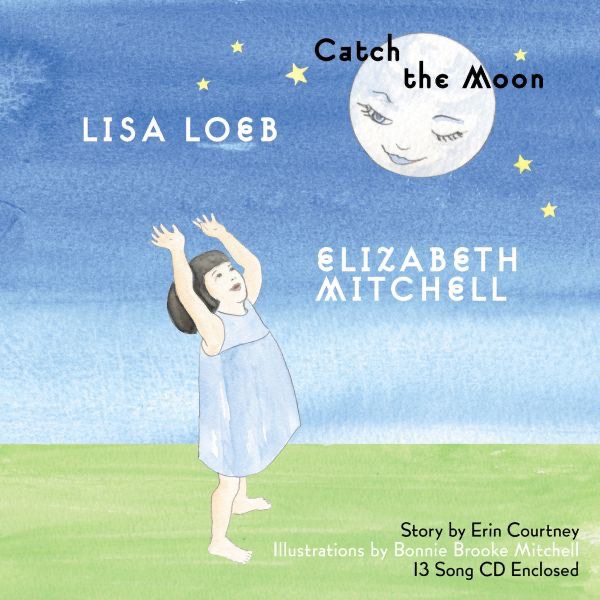
Catch the Moon
2004 · 13 tracks
- 1 Big Rock Candy Mountain ↗ 2:46
- 2 Little Red Caboose ↗ 2:22
- 3 Oh Susanna ↗ 2:20
- 4 Catch the Moon ↗ 3:10
- 5 La Manita ↗ 1:38
- 6 Twinkle Twinkle Little Star ↗ 2:14
- 7 Stop and Go ↗ 2:30
- 8 New Morning ↗ 3:46
- 9 Oh Groundhog ↗ 2:44
- 10 Butterfly ↗ 2:32
- 11 Donguri / Rolling Acorn ↗ 1:51
- 12 Free Little Bird ↗ 2:12
- 13 Fais dodo ↗ 1:36

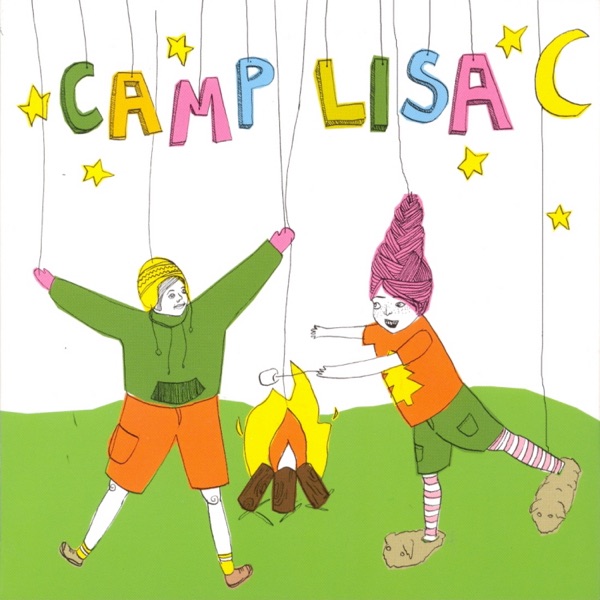
Camp Lisa
2008 · 19 tracks
- 1 Are You Ready for the Summer? ↗ 1:22
- 2 Going Away ↗ 3:29
- 3 Woodchuck #1 ↗ 0:23
- 4 The Wake Up Song ↗ 1:12
- 5 Best Friend ↗ 2:45
- 6 Grandma's In the Cellar ↗ 0:42
- 7 The Disappointing Pancake ↗ 3:22
- 8 Woodchuck #2 ↗ 0:20
- 9 Home On the Range ↗ 3:39
- 10 Father Abraham ↗ 2:06
- 11 Woodchuck #3 ↗ 0:12
- 12 Love Is a Rose ↗ 2:07
- 13 Peanut Butter & Jelly ↗ 1:07
- 14 When It Rains ↗ 3:43
- 15 The Cookie Jar Chant ↗ 1:32
- 16 The Cookie Jar Song ↗ 2:14
- 17 H.A.P.P.Y ↗ 0:06
- 18 It's Not Goodbye ↗ 3:36
- 19 Linger ↗ 2:13
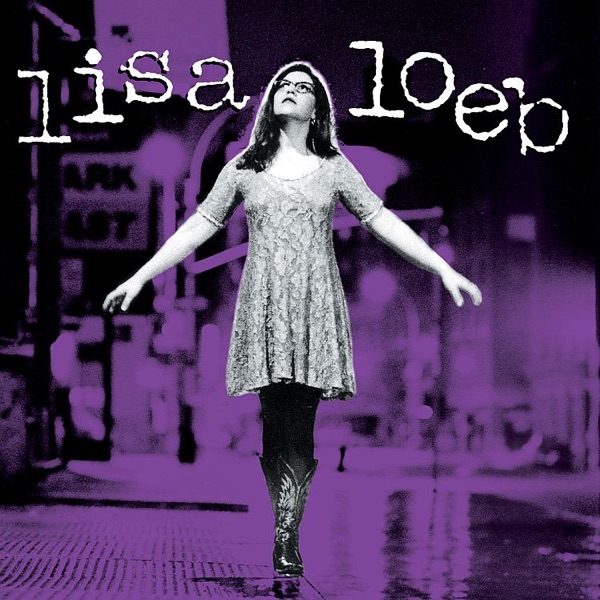
The Purple Tape
2008 · 33 tracks
- 1 Snow Day ↗ 3:33
- 1 The Purple Tape: Introduction & History ↗ 2:34
- 2 Train Songs ↗ 3:19
- 2 Early Days In NYC ↗ 1:04
- 3 Hurricane ↗ 3:50
- 3 Liz and Lisa ↗ 1:18
- 4 Come Back Home ↗ 3:39
- 4 Why the Purple Tape? ↗ 0:57
- 5 It's Over ↗ 3:37
- 5 Gigging In NYC ↗ 1:54
- 6 This ↗ 3:02
- 6 Nine Stories ↗ 0:37
- 7 Days Were Different ↗ 3:28
- 7 Marketing & the Music Business ↗ 3:09
- 8 Guessing Game ↗ 2:21
- 8 Recording the Purple Tape ↗ 3:27
- 9 Do You Sleep ↗ 3:41
- 9 The Purple Tape Artwork ↗ 1:53
- 10 Airplanes ↗ 2:16
- 10 Songwriting ↗ 1:52
- 11 Snow Day (Interview) ↗ 4:49
- 12 Train Songs (Interview) ↗ 3:50
- 13 Hurricane (Interview) ↗ 3:20
- 14 Come Back Home (Interview) ↗ 3:11
- 15 It's Over (Interview) ↗ 3:59
- 16 This (Interview) ↗ 4:02
- 17 Days Were Different (Interview) ↗ 1:20
- 18 Guessing Game (Interview) ↗ 2:44
- 19 Do You Sleep (Interview) ↗ 4:06
- 20 Airplanes (Interview) ↗ 2:38
- 21 Bringing the Past to the Present ↗ 1:41
- 22 Snow Day (Live In-Studio) ↗ 4:05
- 23 Stay (I Missed You) [Acoustic Version] ↗ 2:58

Lisa Loeb's Silly Sing-Along: The Disappointing Pancake and Other Zany Songs
2011 · 10 tracks


Feel What U Feel
2016 · 12 tracks
- 1 Moon Star Pie (It’s Gonna Be Alright) ↗ 2:19
- 2 Say Hello ↗ 2:19
- 3 Feel What U Feel (feat. Craig Robionson) ↗ 4:04
- 4 I Was Here ↗ 2:52
- 5 You Can Count on Me ↗ 1:52
- 6 The Sky Is Always Blue ↗ 2:39
- 7 Wiggle ↗ 2:10
- 8 It’s All Right to Cry (feat. Craig Robinson) ↗ 2:23
- 9 Let’s Keep the Band Together ↗ 2:35
- 10 You Have It in You ↗ 2:25
- 11 Wanna Do Day (feat. Ed Helms) ↗ 2:41
- 12 You Can Count on Me (Lullaby) ↗ 2:15

Nursery Rhyme Parade!
2016 · 37 tracks
- 1 Abc (A capella) ↗ 0:23
- 2 Jack and Jill ↗ 1:16
- 3 The Muffin Man ↗ 0:43
- 4 This Old Man Introduction (Declan) ↗ 0:10
- 5 This Old Man ↗ 1:59
- 6 It’s Raining, It’s Pouring ↗ 0:11
- 7 Itsy Bitsy Spider ↗ 0:51
- 8 Little Bo Peep ↗ 0:41
- 9 London Bridge ↗ 1:33
- 10 This Little Piggy ↗ 0:16
- 11 Oh Where, Oh Where Has My Little Dog Gone? ↗ 0:42
- 12 Sing a Song of Sixpence ↗ 0:41
- 13 Row, Row, Row Your Boat ↗ 0:31
- 14 Skip to My Lou ↗ 1:45
- 15 Pop! Goes the Weasel ↗ 0:54
- 16 Peter Piper ↗ 0:21
- 17 Mary Had a Little Lamb ↗ 1:02
- 18 Here We Go Round the Mulberry Bush ↗ 1:40
- 19 Humpty Dumpty ↗ 0:41
- 20 The Farmer in the Dell ↗ 1:51
- 21 I Had a Little Nut Tree ↗ 1:04
- 22 Baa, Baa Black Sheep ↗ 0:34
- 23 Ring Around the Rosie ↗ 0:19
- 24 Three Little Kittens ↗ 1:50
- 25 Mary, Mary, Quite Contrary ↗ 0:38
- 26 Hey Diddle Diddle ↗ 0:40
- 27 Hickory Dickory Dock ↗ 0:25
- 28 A-Tisket a-Tasket ↗ 0:52
- 29 Pease Porridge Hot ↗ 0:45
- 30 There Was a Crooked Man ↗ 0:14
- 31 Diddle Diddle Dumpling ↗ 0:44
- 32 Yankee Doodle ↗ 0:40
- 33 Star Light, Star Bright (Lyla) ↗ 0:24
- 34 Twinkle, Twinkle Little Star ↗ 1:06
- 35 Hush, Little Baby ↗ 1:08
- 36 Little Boy Blue ↗ 1:16
- 37 Abc ↗ 1:01

Lullaby Girl
2017 · 13 tracks
- 1 Be My Baby ↗ 3:11
- 2 Don’t Stop ↗ 3:21
- 3 Close Your Eyes ↗ 2:55
- 4 Dream a Little Dream ↗ 3:13
- 5 In My Room ↗ 4:14
- 6 O-O-H Child ↗ 3:34
- 7 Rainbow Connection ↗ 3:56
- 8 All the Pretty Little Horses ↗ 2:39
- 9 Lullaby Girl ↗ 2:08
- 10 Inch Worm ↗ 4:04
- 11 What the World Needs Now Is Love ↗ 2:57
- 12 A Dream Is a Wish Your Heart Makes ↗ 2:26
- 13 Tomorrow ↗ 2:48

A Simple Trick to Happiness
2020 · 11 tracks

That’s What it’s All About
2024 · 11 tracks
- 1 Mairzy Doats ↗ 2:29
- 2 If I Knew You Were Comin' i'd've Baked a Cake ↗ 2:28
- 3 Say, Say Oh Playmate ↗ 2:35
- 4 A Doodlin’ song (Doop Doo De Oop a Doodlin Song) ↗ 2:23
- 5 Take It While the Takin’s Good ↗ 2:55
- 6 Keep Growing ↗ 3:09
- 7 Put Your Little Foot Right Out ↗ 2:21
- 8 Don’t Fence Me In ↗ 3:16
- 9 The Hokey Pokey Dance ↗ 2:41
- 10 Hi-Lili, Hi-Lo ↗ 3:25
- 11 I Want to Shake Hands With the Man in the Moon ↗ 2:35
-
 TailsLisa Loeb199513 tracks
 -
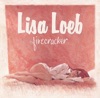 FirecrackerLisa Loeb199712 tracks
 -
 Cake and PieLisa Loeb200112 tracks
 -
 Catch the MoonLisa Loeb200413 tracks
 -
 The Way It Really IsLisa Loeb200411 tracks
 -
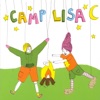 Camp LisaLisa Loeb200819 tracks
 -
 The Purple TapeLisa Loeb200833 tracks
 -
 Lisa Loeb's Silly Sing-Along: The Disappointing Pancake and Other Zany SongsLisa Loeb201110 tracks
 -
 No Fairy TaleLisa Loeb201212 tracks
 -
 Feel What U FeelLisa Loeb201612 tracks
 -
 Nursery Rhyme Parade!Lisa Loeb201637 tracks
 -
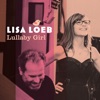 Lullaby GirlLisa Loeb201713 tracks
 -
 A Simple Trick to HappinessLisa Loeb202011 tracks
 -
 That’s What it’s All AboutLisa Loeb202411 tracks
Deep Dive
Overview
Lisa Loeb is an American singer-songwriter, musician, author, and actress whose career has spanned nearly three decades across mainstream pop, folk rock, and children’s music. She emerged into the public consciousness via “Stay,” a acoustic pop confection that became the first number-one single on the Billboard Hot 100 for an artist without a recording contract—a watershed moment in 1990s independent music. Beyond that singular hit, Loeb sustained a recording career through the late 1990s with additional chart success, then pivoted toward a prolific output of children’s albums, establishing herself as a multi-platform entertainer and author.
Formation Story
Born in 1968, Lisa Anne Loeb grew up in the United States and came of age during an era when independent record labels and alternative distribution channels were beginning to reshape how artists reached audiences. She developed her musicianship and songwriting voice in the folk-rock idiom, gravitating toward acoustic instrumentation and introspective, conversational lyrics. Her path into rock and pop music reflected broader 1990s trends: a rejection of heavyweight production in favor of directness and authenticity, and an interest in exploring the middle ground between folk tradition and contemporary pop sensibility.
Breakthrough Moment
Loeb’s breakthrough arrived through the soundtrack to the 1994 film “Reality Bites,” for which she contributed “Stay.” The song, driven by a simple acoustic guitar and Loeb’s soft, earnest vocal, became a cultural phenomenon and proved that a commercially viable hit could reach number one without the backing of a major record label—a rare achievement that underscored shifting industry dynamics at the height of the 1990s alternative music wave. The success of “Stay” established Loeb as a distinctive voice and granted her the leverage to sign with a major label, Geffen Records, for her debut album.
Peak Era
Loeb’s most commercially successful period spanned the mid to late 1990s. Her debut album Tails (1995), released on Geffen, achieved gold certification and consolidated the promise of “Stay.” She followed with Firecracker (1997), also gold-certified, which included the top-20 single “Do You Sleep?” and cemented her presence on commercial radio and MTV. A third major-label single, “I Do” (1998), charted in the top 20, bringing her string of chart success to three notable hits across a four-year period. During these years, Loeb balanced her recording work with acting and television appearances, establishing herself as a multimedia personality.
Musical Style
Loeb’s musical identity centers on acoustic folk-rock fundamentals filtered through 1990s alternative sensibility. Her vocal approach—conversational, unhurried, often breathy—prioritizes lyrical clarity and emotional transparency over technical showmanship. Guitar remains the primary instrument in her arrangements, typically electric-acoustic hybrid textures that sit comfortably in the folk-pop continuum. Her songwriting favors introspective, relationship-focused narratives delivered in plain language, a quality that distinguished “Stay” from the heavier, more oblique lyrical modes favored by many of her contemporaries. Over time, particularly following her transition into children’s music, Loeb adapted her harmonic vocabulary and production approach to suit younger audiences while maintaining her foundational folk-rock aesthetics.
Major Albums
Tails (1995)
Loeb’s debut on Geffen Records, Tails introduced her to a major-label audience and earned gold certification. The album showcased the conversational, acoustic-driven songwriting that had made “Stay” a hit, establishing the template for her 1990s work.
Firecracker (1997)
Her second album, Firecracker, repeated the commercial success of Tails and generated the top-20 single “Do You Sleep?,” demonstrating that Loeb’s popularity extended beyond a one-hit phenomenon. The album consolidated her position in mid-1990s pop radio.
Cake and Pie (2001)
Released on Artemis Records, Cake and Pie marked a shift following her earlier major-label period and reflected an evolution in her artistic direction as she explored a broader range of thematic and sonic territory.
Camp Lisa (2008)
This children’s album signaled a new chapter in Loeb’s career, one devoted to entertaining and educating young audiences. The album inaugurated a prolific second act focused on children’s music that would generate multiple releases over the following decade.
Signature Songs
- “Stay” (1994) — The acoustic landmark that introduced Loeb to a mass audience and became the first number-one single by an artist without a recording contract.
- “Do You Sleep?” (1996) — A top-20 single from Firecracker that showcased her conversational lyrical approach and solidified her commercial momentum.
- “I Do” (1998) — Her third top-20 hit, confirming her sustained appeal on mainstream radio during the late 1990s.
Influence on Rock
Loeb’s emergence as a number-one artist without major-label backing was a symbolic and practical victory for independent distribution and artist autonomy at a moment when such pathways were becoming viable but still exceptional. Her success with “Stay” demonstrated that acoustic, introspective pop could command mainstream chart attention without conforming to the production bombast or angst-driven aesthetics that dominated alternative rock in the early 1990s. While her chart presence proved brief, the template she exemplified—the independent singer-songwriter achieving major-label crossover—resonated throughout the late 1990s and 2000s as digital distribution further democratized music industry access.
Legacy
Loeb’s long-term cultural footprint rests primarily on “Stay,” a song that has maintained steady streaming presence and cultural resonance across multiple generations and media platforms. Beyond that singular achievement, her sustained output—spanning pop albums, children’s releases, acting roles, and an author career—positioned her as a successful multimedia entertainer rather than a one-dimensional rock figure. The prolific children’s music output beginning in 2008, including Camp Lisa, Sing-Along with Lisa Loeb, and subsequent albums like Nursery Rhyme Parade! (2016) and Lullaby Girl (2017), established a secondary career that has arguably generated more recent creative output than her 1990s pop period. Her records remain available on streaming platforms, and her continued releases into the 2020s—including That’s What it’s All About (2024)—reflect an artist who has sustained a career by diversifying across entertainment forms and age demographics.
Fun Facts
- “Stay” appeared on the “Reality Bites” soundtrack before Loeb secured a major record deal, making its chart success a rare instance of a soundtrack placement launching an uncontracted artist to number one.
- Loeb has maintained an independent creative practice alongside major-label periods, recording for multiple labels including Zoë Records, Artemis Records, A&M Records, and 429 Records across her career.
- Her prolific output of children’s albums—including multiple releases in single years (2008 saw the release of three albums)—reflects a strategic pivot toward a demographic and format less subject to mainstream radio and chart competition, allowing sustained creative productivity beyond her pop hit period.