

Photo by Marc Lostracco , licensed under CC BY-SA 3.0 · Wikimedia Commons
Rank #337
Corey Hart
From Wikipedia
Corey Mitchell Hart is a Canadian singer, musician and songwriter known for his hit singles "Sunglasses at Night", "Never Surrender" and "It Ain't Enough". He has sold over 16 million records worldwide and recorded nine US Billboard Top 40 hits. In Canada, 30 of Hart's recordings have been Top 40 hits, including 11 in the Top 10, over the course of over 35 years in the music industry. Nominated for the Grammy Award for Best New Artist in 1984, Hart is an inductee of both Canadian Music Hall of Fame and Canada's Walk of Fame, and is also a multiple Juno award nominee and winner, including the Diamond Award for his best-selling album Boy in the Box. He has also been honoured by the American Society of Composers, Authors and Publishers (ASCAP) and the Society of Composers, Authors and Music Publishers of Canada (SOCAN).
Discography & Previews
Browse through and click an album to open and play 30-second previews streamed from Apple Music.


Fields of Fire
1986 · 11 tracks

Young Man Running
1988 · 11 tracks


Attitude & Virtue
1992 · 10 tracks
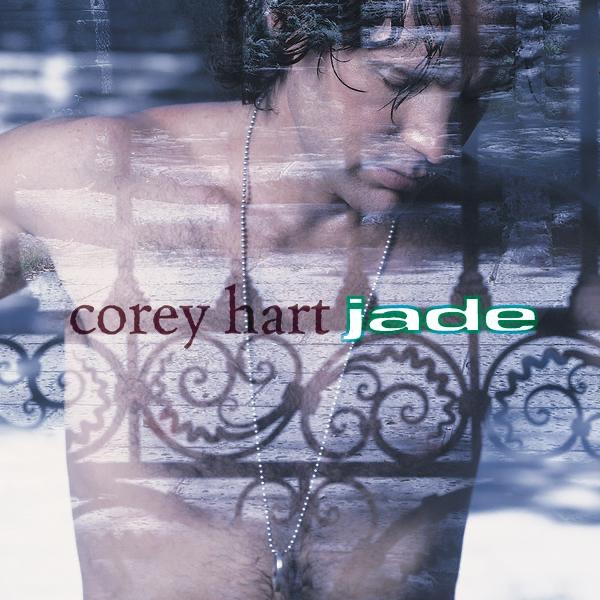
Jade
1998 · 12 tracks

Ten Thousand Horses
2014 · 10 tracks
- 1 Ten Thousand Horses (feat. Jane Siberry) [Radio version] ↗ 4:16
- 2 Ten Thousand Horses (feat. Jane Siberry) ↗ 5:22
- 3 Ten Thousand Horses (feat. Jane Siberry) [Guitar version] ↗ 5:25
- 4 Dix Mille Chevaux (feat. Julie Masse) ↗ 4:16
- 5 Ciao Bella ↗ 3:16
- 6 Sweet River (Rough Demo) ↗ 3:54
- 7 She's So Good ↗ 3:36
- 8 Falling From Graceland ↗ 3:36
- 9 Sail Away ↗ 4:30
- 10 Walk In Beauty (Rough Demo) ↗ 3:42
-
 First OffenseCorey Hart198310 tracks
 -
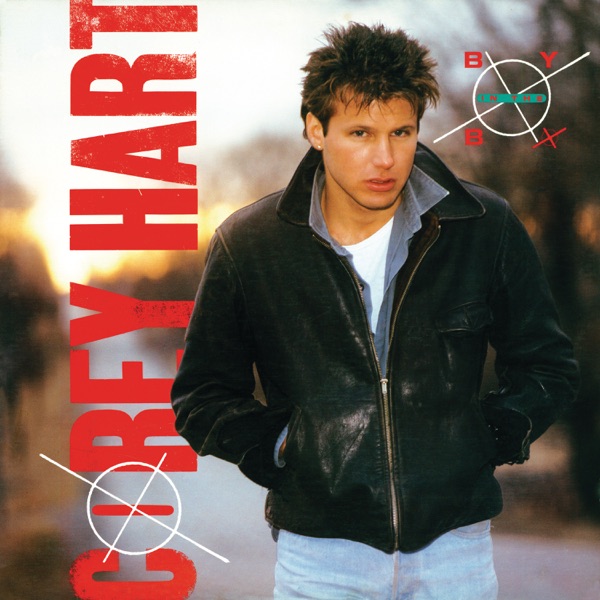
 Boy in the BoxCorey Hart19859 tracks
 -
 Fields of FireCorey Hart198611 tracks
 -
 Young Man RunningCorey Hart198811 tracks
 -
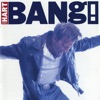 Bang!Corey Hart199011 tracks
 -
 Attitude & VirtueCorey Hart199210 tracks
 -
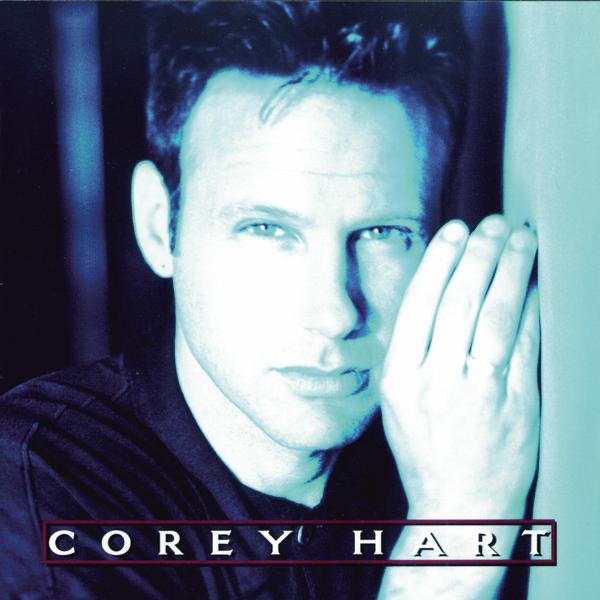
 Corey HartCorey Hart199611 tracks
 -
 JadeCorey Hart199812 tracks
 -
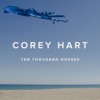 Ten Thousand HorsesCorey Hart201410 tracks
Deep Dive
Overview
Corey Hart is a Canadian singer, musician, and songwriter born in 1962 who emerged as one of new wave’s most commercially successful figures. With over 16 million records sold worldwide and nine US Billboard Top 40 hits to his name, Hart became a defining voice of 1980s new wave while maintaining a recording career that has now spanned more than 35 years. His breakthrough single “Sunglasses at Night” became his signature song, establishing him as a mainstream crossover act during an era when new wave was transitioning from underground credibility to radio-friendly ubiquity.
Formation Story
Corey Mitchell Hart was born in Montreal in 1962, emerging from Canada’s French-English bilingual music scene at a pivotal moment when new wave was beginning to reshape popular music globally. Growing up in Montreal during the late 1970s, Hart came of age as punk and new wave were establishing themselves as viable alternatives to the stadium rock and disco that dominated FM radio. The city’s cultural position—straddling French and English-speaking markets, geographically proximate to the United States but maintaining distinct Canadian identity—shaped his approach to songwriting and performance. Hart pursued music professionally from the early 1980s onward, signing initially with Aquarius Records before securing a deal with Capitol Records, the major-label backing that would enable his ascent to international prominence.
Breakthrough Moment
Hart’s debut album, First Offense, arrived in 1983 but remained a regional success until his sophomore release Boy in the Box in 1985 catapulted him into the international mainstream. The album became his best-selling work and earned him a Grammy nomination for Best New Artist in 1984—a recognition that underscored the commercial intensity of his arrival. The lead single from the album, “Sunglasses at Night,” became his signature composition: a synth-driven new wave earworm with an infectious chorus that climbed charts across North America and established Hart as a radio staple. The song’s combination of synthesizer-forward production, clever wordplay, and undeniable melodic hook exemplified the new wave formula at its most commercially viable moment. This success placed Hart among the era’s most bankable new wave acts, alongside contemporaries trading in upbeat, synthesizer-heavy pop-rock designed for MTV rotation and mainstream radio play.
Peak Era
The mid-to-late 1980s marked Hart’s period of maximum commercial visibility and critical momentum. Following Boy in the Box, he released Fields of Fire in 1986 and Young Man Running in 1988, each yielding additional Top 40 hits and solidifying his status as a multi-platinum recording artist. During this span, Hart accumulated nine US Billboard Top 40 entries, while in Canada his commercial dominance was even more pronounced: he logged 30 Top 40 hits domestically, including 11 in the Top 10. This Canadian chart dominance reflected both his popularity in his home market and the strength of national radio support that sustained his career beyond his initial American breakthrough. By the late 1980s, Hart had become one of Canada’s most successful musical exports, a position he maintained through the 1990s with releases including Bang! (1990), Attitude & Virtue (1992), and the self-titled Corey Hart (1996).
Musical Style
Hart’s sound is quintessentially 1980s new wave, built on the foundation of synthesizer-driven pop-rock with strong pop sensibilities grafted onto new wave’s angular production aesthetic. His vocal approach—bright, conversational, occasionally theatrical—sits comfortably within new wave’s broader aesthetic of accessible artificiality; his voice is not powerfully expressive in the soul or rock-vocal tradition, but rather clearly enunciated and melodically centered. The instrumentation across his peak releases emphasizes synthesizers, drum machines, and clean electric guitars, characteristics that place him in the commercial wing of new wave alongside acts like Men at Work and Thompson Twins rather than the post-punk or art-school fringes of the genre. His songwriting tends toward hooks-first construction: memorable choruses, sing-along refrains, and lyrics that balance romantic narratives with clever turns of phrase. As new wave evolved through the 1980s and synthesizer pop became increasingly mainstream, Hart’s music drifted naturally toward lighter, more radio-friendly territory, reflecting the genre’s broader trajectory from subcultural challenge to MTV-era mainstream commodity.
Major Albums
Boy in the Box (1985)
Hart’s breakthrough album and best-selling work, featuring “Sunglasses at Night” and establishing his signature new wave-pop formula with polished production and infectious melodies.
Fields of Fire (1986)
Following up on breakthrough success, this album continued Hart’s string of Top 40 hits and consolidated his position as a mainstream new wave radio staple.
Young Man Running (1988)
Hart’s third major-label release extended his commercial dominance through the late 1980s, yielding additional chart entries and reinforcing his status as one of new wave’s most bankable acts.
Bang! (1990)
Entering the 1990s, this album saw Hart adapting to changing production values and musical trends while maintaining his core new wave-pop identity.
Signature Songs
- “Sunglasses at Night” — His signature and biggest hit, a synth-driven new wave earworm that became synonymous with his career and remains his most recognizable composition.
- “Never Surrender” — A major hit demonstrating Hart’s ability to craft uplifting, radio-friendly new wave pop with arena-ready anthemic qualities.
- “It Ain’t Enough” — Another prominent single that exemplified his gift for melodic hooks and commercially accessible new wave songwriting.
Influence on Rock
While Hart is primarily a commercial new wave success rather than a stylistic innovator, his sustained popularity and multi-platinum sales figures made him one of the decade’s defining ambassadors for synthesizer-driven pop-rock in the mainstream. His early 1980s breakthrough coincided with new wave’s transformation from underground challenge to radio-friendly mainstream pop, a transition Hart navigated more successfully than many of his contemporaries. The international success of “Sunglasses at Night” in particular demonstrated the global commercial potential of upbeat, synthesizer-based pop that blended new wave’s aesthetic with pop music’s accessibility—a formula that influenced how record labels and producers approached new wave acts in the mid-1980s. Hart’s sustained Canadian chart dominance over 35+ years of recording also established a template for long-term new wave success outside the glamorous but often brief careers of MTV-era one-hit wonders, showing that the genre could sustain committed artists across multiple decades.
Legacy
Corey Hart’s legacy is that of a commercially successful new wave musician whose career longevity and multi-platinum sales figures secured him a permanent position in Canadian rock music history. He was inducted into the Canadian Music Hall of Fame and Canada’s Walk of Fame, recognizing his status as one of his country’s most successful musical figures. The Diamond Award recognition for Boy in the Box reflected the album’s sustained commercial performance and cultural resonance within Canada. Over 35 years of continuous recording and touring—from First Offense in 1983 through Dreaming Time Again in 2019—Hart demonstrated that new wave’s commercial viability extended far beyond the MTV-era brief careers of many of his contemporaries. Though his cultural footprint has diminished relative to his 1980s peak, “Sunglasses at Night” remains an evergreen streaming presence and a staple of 1980s nostalgia media, ensuring that his most famous work continues to reach new audiences decades after its release. Multiple Juno Award nominations and recognitions from ASCAP and SOCAN underscore his professional standing within the North American music industry.
Fun Facts
- Hart was nominated for the Grammy Award for Best New Artist in 1984, placing him among the era’s most acclaimed new wave arrivals alongside acts like Cyndi Lauper and Culture Club.
- In Canada, Hart achieved 30 Top 40 hits over his career, with 11 of those reaching the Top 10—a level of sustained chart dominance rare for any artist in the country’s music history.
- After a decade-long recording hiatus following Jade in 1998, Hart returned to the studio in 2014 with Ten Thousand Horses, demonstrating his commitment to continued creative work in his fifth decade of life.
- His official website and ongoing touring presence have kept him connected to both legacy audiences and new listeners discovering his music through streaming platforms.