
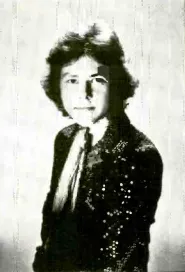
Photo by CBS Records , licensed under Public domain · Wikimedia Commons
Rank #479
Dan Hartman
From Wikipedia
Daniel Earl Hartman was an American pop rock musician. Among songs he wrote and recorded were "Free Ride" as a member of the Edgar Winter Group, and the solo hits "Relight My Fire", "Instant Replay", "I Can Dream About You", "We Are the Young" and "Second Nature". "I Can Dream About You", his most successful US hit, reached No. 6 on the Billboard Hot 100 in 1984. The James Brown song "Living in America", which Hartman co-wrote and produced, reached No. 4 on March 1, 1986.
Discography & Previews
Browse through and click an album to open and play 30-second previews streamed from Apple Music.

Images
1976 · 11 tracks
- 1 Hear My Song ↗ 3:14
- 2 High Sign ↗ 3:19
- 3 On the Telephone ↗ 4:22
- 4 Thank You for the Good Times ↗ 3:05
- 5 Lighthouse ↗ 2:58
- 6 My Love ↗ 4:00
- 7 Shake It Down ↗ 3:53
- 8 Love It Too Much ↗ 2:59
- 9 If Only I Were Stronger ↗ 4:31
- 10 Can't Stand in the Way of Love ↗ 3:45
- 11 The Party's in the Back Room ↗ 3:15

Instant Replay
1978 · 10 tracks


It Hurts to Be in Love
1981 · 12 tracks

-
 ImagesDan Hartman197611 tracks
 -
 Instant ReplayDan Hartman197810 tracks
 -
 Relight My FireDan Hartman19796 tracks
 -
 It Hurts to Be in LoveDan Hartman198112 tracks
 -
 I Can Dream About YouDan Hartman198410 tracks
Deep Dive
Overview
Dan Hartman was an American pop rock musician whose career spanned from the mid-1970s through the early 1990s, leaving an indelible mark on both the group and solo arenas. Best known for the 1984 chart-topper “I Can Dream About You,” which reached No. 6 on the Billboard Hot 100, Hartman demonstrated a gift for crafting radio-friendly rock songs with broad pop appeal. Beyond his own recordings, he distinguished himself as a songwriter and producer, most notably co-writing and producing James Brown’s “Living in America,” which climbed to No. 4 on the charts in March 1986. His work bridged the gap between rock instrumentation and pop sensibility, making him a fixture in mainstream rock radio throughout the 1980s.
Formation Story
Dan Hartman emerged from the American rock scene of the early 1970s, where he gained initial prominence as a member of the Edgar Winter Group. The outfit, anchored by keyboardist Edgar Winter, delivered instrumental rock with strong jazz and blues undertones. It was within this ensemble that Hartman first garnered recognition, contributing his distinctive musical voice to the group’s output. By the mid-1970s, as his songwriting developed and his ambitions expanded, Hartman was ready to step into the solo spotlight. His transition from sideman to bandleader reflected the broader trend of rock musicians in the 1970s who leveraged group success into independent recording careers, seeking greater creative control and the spotlight their talents commanded.
Breakthrough Moment
Hartman’s breakthrough as a solo artist came swiftly. His 1976 debut, Images, introduced his songwriting sensibility and vocal presence, while that same year he released the provocatively titled Who Is Dan Hartman and Why Is Everyone Saying Wonderful Things About Him?—a clear statement of artistic intent. However, it was 1978’s Instant Replay that crystallized his commercial promise. The album produced a significant radio hit with the title track, establishing Hartman as more than a former sideman coasting on past glory. Instant Replay proved he could sustain a solo career with songs that blended rock musicianship with pop accessibility, a combination that would define his work for the next decade.
Peak Era
Hartman’s commercial and creative peak arrived in the early 1980s and extended through the mid-1980s. His 1979 album Relight My Fire demonstrated growing confidence in his songwriting and production choices, featuring the title track as a solo showcase that revealed his ability to command listener attention. However, his crowning commercial achievement came with 1984’s I Can Dream About You. The album’s title track became his signature song, reaching No. 6 on the Billboard Hot 100 and establishing him as a legitimate solo artist capable of top-ten placement on the mainstream charts. This period also saw him expanding his influence beyond recording—his work as a producer and songwriter for other artists, particularly his collaboration with James Brown on “Living in America,” demonstrated that his talents extended well beyond performing his own material.
Musical Style
Hartman’s sound was fundamentally rooted in rock but consistently reached toward pop production values and radio accessibility. His background in the Edgar Winter Group gave him an understanding of keyboard-driven arrangements and a comfort with instrumental sophistication, qualities that informed his solo work. His vocal delivery was understated and conversational rather than powerfully demonstrative, fitting his songs into the FM radio format of the late 1970s and 1980s. The production on his albums reflected contemporary studio trends—synthesizer use became increasingly prominent as the 1980s progressed, particularly on I Can Dream About You, where keyboard textures shaped the overall sonic landscape. Lyrically, Hartman favored accessible themes of romance, desire, and introspection, eschewing the mythological or socially conscious posturing that dominated certain rock circles. His gift lay in crafting memorable melodic hooks and recognizing which arrangements would best serve a song’s commercial potential without sacrificing musicianship.
Major Albums
Instant Replay (1978)
Hartman’s breakthrough album that confirmed his viability as a solo artist and producer, featuring the radio-friendly title track that announced his arrival to mainstream audiences.
Relight My Fire (1979)
A follow-up that deepened his songwriting confidence and showcased his ability to command production decisions, establishing consistency in his catalog and commercial appeal.
I Can Dream About You (1984)
Hartman’s commercial peak, featuring his signature song and highest-charting single, demonstrating full mastery of the pop rock format and production sophistication of the era.
New Green Clear Blue (1989)
His final studio album, representing a late-period statement that carried forward the synthesizer-driven pop rock sound he had perfected over the previous decade.
Signature Songs
- “Free Ride”—A standout contribution from his Edgar Winter Group era that helped establish his reputation as a songwriter before his solo career took flight.
- “Relight My Fire”—The title track from his 1979 album that showcased his ability to anchor a song with vocal presence and emotional directness.
- “Instant Replay”—The breakthrough single that demonstrated Hartman’s knack for radio-friendly rock hooks and earned him mainstream recognition.
- “I Can Dream About You”—His signature achievement, reaching No. 6 on the Billboard Hot 100 and becoming the track most associated with his name and commercial success.
- “We Are the Young”—A notable solo-era single that revealed his facility with uplift and accessibility in songwriting.
- “Second Nature”—Another solo hit that confirmed his staying power in the marketplace and his ability to generate multiple successful tracks across his catalog.
Influence on Rock
Hartman’s influence extended primarily through his work as a songwriter and producer rather than as a groundbreaking innovator in rock instrumentation or technique. His success as a solo artist demonstrated the commercial viability of keyboard-driven pop rock in the 1980s, a style that became increasingly central to mainstream rock radio as synthesizer technology advanced. His production work, particularly the crafting of “Living in America” for James Brown—a collaboration that placed a classic soul artist at No. 4 on the charts in 1986—illustrated how rock and pop studio expertise could revitalize artists from earlier eras. This work prefigured the broader trend of younger producers and musicians helping established artists remain relevant in the MTV age. While Hartman did not pioneer a new genre or fundamentally alter rock’s aesthetic, his consistent commercial success and professional adaptability influenced how rock musicians thought about crossover appeal and the role of polished production in reaching mainstream audiences.
Legacy
Dan Hartman’s career remains a solid example of the working rock musician of the 1970s and 1980s—professionally accomplished, commercially successful, and creatively steady without being revolutionary. His death in 1994 ended a career that had lasted nearly two decades as a solo artist and encompassed songwriting, production, and performance across multiple styles and collaborations. In the streaming era, his catalog has remained accessible, with “I Can Dream About You” continuing to appear on 1980s nostalgia playlists and in classic rock rotation. While he was not inducted into major rock halls of fame or claimed as a direct influence by subsequent generations of rock stars in the way that more innovative artists have been, his songs and production work remain embedded in the cultural memory of the 1980s. His willingness to embrace contemporary production technology and his consistent focus on melody and accessibility marked him as a professional musician focused on craft and commerce rather than artistic statement—a role that, while often undervalued in critical circles, has sustained his work’s relevance across subsequent decades.
Fun Facts
- Hartman’s 1976 album title Who Is Dan Hartman and Why Is Everyone Saying Wonderful Things About Him? was a humorous response to his emerging reputation as a talented musician and craftsman.
- His production collaboration with James Brown on “Living in America” paired a legendary soul innovator with a rock producer versed in 1980s synthesizer-based pop, resulting in an unexpected chart success.
- Hartman recorded on Blue Sky Records, a label founded by musician-producer Allee Willis and others, placing him within a network of 1970s and 1980s studio professionals.