

Photo by Ohconfucius , licensed under CC BY 3.0 · Wikimedia Commons
Rank #427
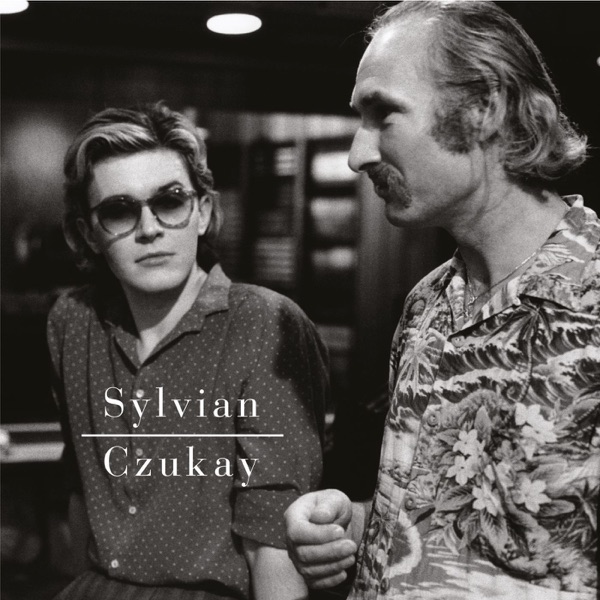
David Sylvian
From Wikipedia
David Sylvian is an English musician, singer and songwriter who came to prominence in the late 1970s as frontman and principal songwriter of the band Japan.
Discography & Previews
Browse through and click an album to open and play 30-second previews streamed from Apple Music.


Alchemy: An Index of Possibilities
1985 · 7 tracks
- 1 Words with the Shaman, Pt. 1 (Ancient Evening) ↗ 5:16
- 2 Words with the Shaman, Pt. 2 (Incantation) ↗ 3:30
- 3 Words with the Shaman, Pt. 3 (Awakening [Songs From The Treetops]) ↗ 5:18
- 4 Preparations for a Journey ↗ 3:41
- 5 The Stigma of Childhood (Kin) ↗ 8:30
- 6 A Brief Conversation Ending in Divorce ↗ 3:31
- 7 Steel Cathedrals ↗ 18:58

Gone to Earth
1986 · 20 tracks
- 1 Taking the Veil ↗ 4:41
- 1 The Healing Place ↗ 5:28
- 2 Laughter and Forgetting ↗ 3:18
- 2 Answered Prayers ↗ 3:07
- 3 Before the Bullfight ↗ 9:20
- 3 Where the Railroad Meets the Sea ↗ 2:50
- 4 Gone to Earth ↗ 3:06
- 4 The Wooden Cross ↗ 5:04
- 5 Wave ↗ 9:11
- 5 Silver Moon over Sleeping Steeples ↗ 2:21
- 6 River Man ↗ 4:55
- 6 Camp Fire: Coyote Country ↗ 3:48
- 7 Silver Moon ↗ 6:10
- 7 A Bird of Prey Vanishes into a Bright Blue Cloudless Sky ↗ 3:14
- 8 River Man (Remix) ↗ 4:24
- 8 Home ↗ 4:31
- 9 Gone to Earth (Remix) ↗ 1:57
- 9 Sunlight Seen Through Towering Trees ↗ 3:00
- 10 Camp Fire: Coyote Country (Remix) ↗ 3:46
- 10 Upon This Earth ↗ 6:30

Secrets of the Beehive
1987 · 10 tracks


Dead Bees on a Cake
1999 · 14 tracks
- 1 I Surrender ↗ 9:25
- 2 Dobro #1 ↗ 1:30
- 3 Midnight Sun ↗ 4:02
- 4 Thalheim ↗ 6:09
- 5 Godman ↗ 4:03
- 6 Alphabet Angel ↗ 2:07
- 7 Krishna Blue ↗ 8:12
- 8 The Shining of Things ↗ 3:10
- 9 Cafe Europa ↗ 7:01
- 10 Pollen Path ↗ 3:26
- 11 All of My Mother's Names (Summers With Amma) ↗ 6:11
- 12 Wanderlust ↗ 6:46
- 13 Praise (Pratah Smarami) ↗ 4:02
- 14 Darkest Dreaming ↗ 4:01


When Loud Weather Buffeted Naoshima
2007 · 1 track
- 1 When Loud Weather Buffeted Naoshima ↗ 70:21


Died in the Wool / Manafon Variations
2011 · 13 tracks
- 1 Small Metal Gods ↗ 5:09
- 2 Died In the Wool ↗ 6:03
- 3 I Should Not Dare (For N.O.) ↗ 3:24
- 4 Random Acts of Senseless Violence ↗ 6:25
- 5 A Certain Slant of Light (For M. K.) ↗ 3:28
- 6 Anomaly At Taw Head ↗ 5:06
- 7 Snow White In Appalachia ↗ 5:59
- 8 Emily Dickinson ↗ 3:35
- 9 The Greatest Living Englishman (Coda) ↗ 3:06
- 10 Anomaly At Taw Head (A Haunting) ↗ 3:12
- 11 Manafon ↗ 4:05
- 12 The Last Days of December ↗ 6:16
- 13 When We Return You Won't Recognise Us ↗ 18:15


There's a Light That Enters Houses With No Other House in Sight
2014 · 1 track
- 1 There's a Light That Enters Houses With No Other House In Sight (feat. Franz Wright & Christian Fennesz) ↗ 64:22

Upon This Fleeting Dream
2022 · 10 tracks
- 1 Upon This Fleeting Dream (feat. David Sylvian & Kazuko Hohki) ↗ 1:39
- 2 I Borrow Moonlight (feat. David Sylvian & Kazuko Hohki) ↗ 5:58
- 3 Throughout the Frosty Night (feat. David Sylvian & Kazuko Hohki) ↗ 2:28
- 4 My Coming, My Going (feat. David Sylvian & Kazuko Hohki) ↗ 3:08
- 5 If I Leave No Trace (feat. David Sylvian & Kazuko Hohki) ↗ 3:24
- 6 The Cicada's Song (feat. David Sylvian & Kazuko Hohki) ↗ 5:37
- 7 Kaite Mitari (feat. David Sylvian & Kazuko Hohki) ↗ 3:22
- 8 Cherry Blossoms Fall (feat. David Sylvian & Kazuko Hohki) ↗ 3:38
- 9 A Poppy Blooms (feat. David Sylvian & Kazuko Hohki) ↗ 5:32
- 10 Empty Handed (feat. David Sylvian & Kazuko Hohki) ↗ 0:25

-
 Brilliant TreesDavid Sylvian19847 tracks
 -
 Alchemy: An Index of PossibilitiesDavid Sylvian19857 tracks
 -
 Gone to EarthDavid Sylvian198620 tracks
 -
 Secrets of the BeehiveDavid Sylvian198710 tracks
 -
 Plight & PremonitionDavid Sylvian19884 tracks
 - Flux + MutabilityDavid Sylvian19894 tracks
-
 The First DayDavid Sylvian19937 tracks
 -
 Dead Bees on a CakeDavid Sylvian199914 tracks
 -
 BlemishDavid Sylvian20038 tracks
 -
 When Loud Weather Buffeted NaoshimaDavid Sylvian20071 track
 -
 ManafonDavid Sylvian20099 tracks
 -
 Died in the Wool / Manafon VariationsDavid Sylvian201113 tracks
 -
 WandermüdeDavid Sylvian20137 tracks
 -
 There's a Light That Enters Houses With No Other House in SightDavid Sylvian20141 track
 -
 Upon This Fleeting DreamDavid Sylvian202210 tracks
 -
 Vermilion HoursDavid Sylvian20254 tracks
Deep Dive
Overview
David Sylvian is an English musician, singer, and songwriter who emerged as a defining voice in late-1970s new wave as the frontman of Japan before establishing himself as a solo artist of considerable range and ambition. His solo career, spanning four decades from 1984 onward, has navigated ambient music, experimental rock, jazz-informed composition, and avant-garde territories with a restless intellectual rigor that resists easy categorization. Sylvian’s work stands at the intersection of pop sensibility and art-world experimentation—a position that granted him cult status rather than mainstream dominance, but secured his influence among musicians and listeners who prize depth over accessibility.
Formation Story
Born in 1958 in England, Sylvian came of age during the post-punk upheaval and New York new wave moment. He found his idiom as the vocalist and principal songwriter of Japan, the band through which he first reached a wider audience in the late 1970s. Japan’s synthesis of synthesizers, art-school aesthetics, and angular new wave energy provided a launching pad, but by the early 1980s Sylvian was already pursuing directions that the band’s format could not fully contain. The decision to pursue a solo career was less a dramatic break than a natural expansion into a more personal and eclectic musical vision.
Breakthrough Moment
Sylvian’s solo debut, Brilliant Trees (1984), announced his arrival as an independent artist of serious intent. The album showcased a more meditative and sonically sophisticated approach than anything Japan had recorded, establishing themes and aesthetics that would preoccupy him for decades: layered production, introspective lyricism, and an openness to non-rock sources and collaborators. Brilliant Trees found an audience among art-rock listeners and experimental-music enthusiasts, positioning Sylvian not as a pop figure seeking a second act but as an artist determined to push his own boundaries.
Peak Era
The period from 1984 through the early 1990s represents Sylvian’s most sustained creative output and perhaps his most integrated artistic vision. Alchemy: An Index of Possibilities (1985), Gone to Earth (1986), and Secrets of the Beehive (1987) deepened his exploration of ambient textures, orchestral arrangements, and intricate songwriting. The First Day (1993) synthesized these impulses into a work of considerable conceptual and sonic cohesion, marking a creative summit. During this period, Sylvian demonstrated an almost classical composer’s attention to timbre, harmonic sophistication, and structural subtlety—qualities that set him apart from most of his contemporaries in rock.
Musical Style
Sylvian’s sound is fundamentally post-rock in the broadest sense: it takes rock’s emotional and textural vocabulary but places it in dialogue with ambient music, art pop, jazz, and electronic composition. His voice—tender, precise, occasionally fragile—functions as another instrument in richly layered arrangements rather than as a vehicle for conventional rock drama. Keyboards, orchestral strings, and electronic processing dominate over guitar; when guitars appear, they tend toward atmospheric and textural rather than rhythmic or virtuosic use. His songwriting favors elliptical imagery and abstract emotional landscape over narrative or confession, and his production aesthetic favors depth, space, and detail over punch or immediacy. Over time, his work has incorporated jazz harmonies and improvisational elements, pulling even further from rock’s structural conventions, while never abandoning the melodic sensibility that makes his work accessible to listeners beyond the avant-garde underground.
Major Albums
Brilliant Trees (1984)
Sylvian’s solo debut established the template for his career—sophisticated production, introspective songwriting, and a willingness to let songs breathe rather than conform to pop or rock radio formats.
Alchemy: An Index of Possibilities (1985)
A more ambient and experimental follow-up that deepened Sylvian’s exploration of texture and atmosphere, incorporating orchestral and electronic elements into increasingly complex arrangements.
Secrets of the Beehive (1987)
Marked by intricate songwriting and layered production, this album consolidated Sylvian’s reputation as an artist operating at the intersection of pop craftsmanship and experimental sensibility.
The First Day (1993)
A culminating work from this era, The First Day integrated all of Sylvian’s accumulated techniques into an album of striking coherence and emotional depth, cementing his status as a serious composer-performer.
Dead Bees on a Cake (1999)
After an extended absence from recording, Sylvian returned with an album that married his earlier sophistication to a more direct emotional engagement, suggesting new creative directions.
Manafon (2009)
A significant later work that demonstrated Sylvian’s continued evolution, incorporating jazz and improvisation while maintaining the intricate production values that define his approach.
Signature Songs
- “Red Guitar” — A shimmering, introspective piece that showcases Sylvian’s gift for emotional understatement and sophisticated production.
- “Brilliant Trees” — The title track from his debut, a sonic landscape that establishes the textural and emotional terrain of his solo work.
- “Let the Happiness In” — A delicate composition that demonstrates Sylvian’s ability to craft beauty from restraint and simplicity.
- “September” — A characteristic example of his melancholic sensibility and his skill at orchestral arrangement within a pop song framework.
- “Answers Come in Dreams” — An atmospheric piece that illustrates his incorporation of ambient and experimental music into accessible songwriting.
Influence on Rock
While Sylvian’s lack of mainstream commercial success limited his direct influence on rock radio, his impact on art rock, post-rock, and experimental music circles has been considerable. His career model—an artist who emerged from new wave but consistently refused to repeat commercial success, instead pursuing increasingly esoteric and formally ambitious work—influenced a generation of musicians who valued artistic integrity over sales trajectory. His integration of ambient music, jazz, and electronic composition into a rock context prefigured many late-1990s and 2000s developments in alternative and experimental music. Artists working at the intersection of rock and ambient, post-rock, and electronic music owe an intellectual debt to Sylvian’s insistence that these categories need not be mutually exclusive.
Legacy
David Sylvian’s legacy rests on a body of work that has only grown more relevant with time. His output—including live albums and collaborations spanning decades—documents an artist in constant evolution, never content to replicate earlier success and always pushing toward greater formal ambition and emotional subtlety. In an era when streaming has made back catalogs instantly available, Sylvian’s vast discography rewards deep listening and careful study. His influence on contemporary art rock and experimental music remains understated but persistent, appearing in the work of musicians who value conceptual rigor, sonic sophistication, and emotional honesty in equal measure. Recent releases like Upon This Fleeting Dream (2022) and Vermilion Hours (2025) demonstrate that his creative impulse remains intact well into the 21st century.
Fun Facts
- Sylvian’s 1984 debut Brilliant Trees was released on Virgin Records, establishing a relationship with the label that would define much of his early solo career.
- His discography includes multiple live recordings and experimental audio documents, reflecting his commitment to capturing spontaneous and improvisational moments alongside formal studio work.
- Sylvian has maintained an official website documenting his work, career, and artistic philosophy, ensuring direct communication with his audience independent of institutional gatekeepers.
- The breadth of his genre associations—from ambient pop to avant-garde music to jazz and art pop—demonstrates his refusal to be confined by any single musical category or movement.