
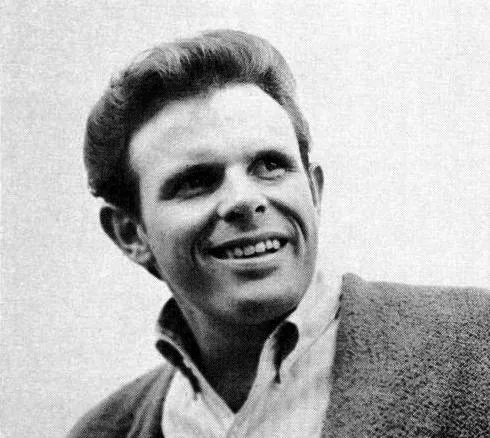
Photo by Amy Records , licensed under Public domain · Wikimedia Commons
Rank #461
Del Shannon
From Wikipedia
Charles Weedon Westover, known professionally as Del Shannon, was an American musician, singer, and songwriter, best known for his 1961 number-one Billboard hit "Runaway", which was covered later by various major artists, including Elvis Presley and the Traveling Wilburys. In 1999, he was posthumously inducted into the Rock and Roll Hall of Fame. In addition to his music career, he had minor acting roles.
Discography & Previews
Browse through and click an album to open and play 30-second previews streamed from Apple Music.
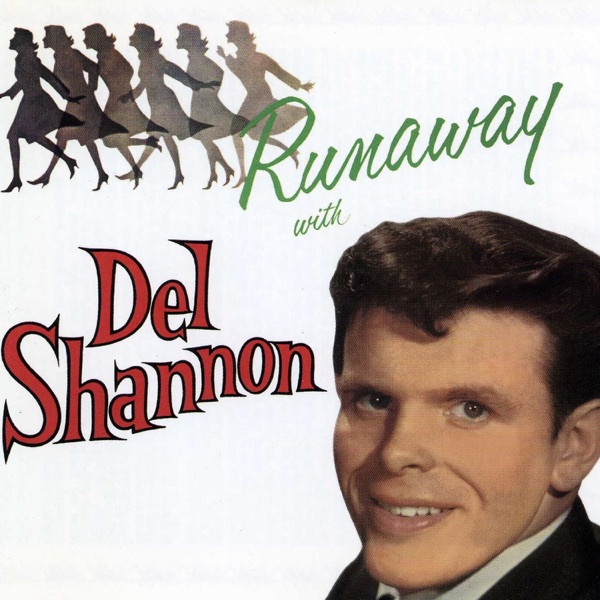
Runaway With Del Shannon
1961 · 13 tracks

Hats Off to Del Shannon
1962 · 12 tracks
- 1 The Swiss Maid ↗ 2:07
- 2 Cry Myself to Sleep ↗ 2:22
- 3 Ginny in the Mirror ↗ 2:11
- 4 You Never Talked About Me ↗ 2:12
- 5 Don't Gild the Lily, Lily ↗ 2:21
- 6 I Won't Be There ↗ 2:02
- 7 Hats off to Larry ↗ 2:02
- 8 The Answer to Everything ↗ 2:46
- 9 Hey Little Girl ↗ 2:31
- 10 I'm Gonna Move On ↗ 2:49
- 11 I Don't Care Anymore ↗ 2:52
- 12 So Long Baby ↗ 2:00

Little Town Flirt
1963 · 15 tracks
- 1 Two Kinds of Tear Drops ↗ 2:31
- 2 Dream Baby ↗ 2:34
- 3 Happiness ↗ 2:23
- 4 Hey Little Girl ↗ 2:32
- 5 She Thinks I Still Care ↗ 2:45
- 6 Runaway ↗ 2:17
- 7 Runaround Sue ↗ 2:39
- 8 Hats off to Larry ↗ 2:03
- 9 Kelly ↗ 2:37
- 10 Hey Baby ↗ 2:23
- 11 Go Away Little Girl ↗ 2:19
- 12 Little Town Flirt ↗ 2:49
- 13 Two Silhouettes ↗ 2:20
- 14 From Me to You ↗ 1:57
- 15 My Wild One ↗ 1:59

Handy Man
1964 · 12 tracks
- 1 Memphis ↗ 2:37
- 2 That's the Way Love Is ↗ 2:28
- 3 Ruby Baby ↗ 2:19
- 4 I'll Be Lonely Tomorrow ↗ 2:13
- 5 I Can't Fool Around Anymore ↗ 2:23
- 6 Handy Man ↗ 2:15
- 7 Crying ↗ 2:42
- 8 Mary Jane ↗ 2:28
- 9 World Without Love ↗ 2:47
- 10 Sorry (I Ran All the Way) ↗ 1:52
- 11 Give Her Lots of Lovin' ↗ 2:06
- 12 Twist and Shout ↗ 2:38

Total Commitment
1966 · 12 tracks
- 1 Under My Thumb ↗ 2:47
- 2 Red Rubber Ball ↗ 2:18
- 3 She Was Mine ↗ 2:42
- 4 Where Were You When I Needed You ↗ 3:01
- 5 The Joker Went Wild ↗ 2:45
- 6 The Pied Piper ↗ 2:10
- 7 Sunny ↗ 2:47
- 8 Show Me ↗ 2:21
- 9 Time Won't Let Me ↗ 2:34
- 10 What Makes You Run ↗ 2:42
- 11 I Can't Be True ↗ 2:21
- 12 Summer In The City ↗ 2:44

This Is My Bag
1966 · 12 tracks
- 1 The Big Hurt ↗ 2:12
- 2 Kicks ↗ 2:21
- 3 For A Little While ↗ 2:28
- 4 Lightnin' Strikes ↗ 3:06
- 5 When You Walk In The Room ↗ 2:14
- 6 The Cheater ↗ 2:42
- 7 Oh, Pretty Woman ↗ 2:44
- 8 Everybody Loves A Clown ↗ 2:25
- 9 Never Thought I Could ↗ 2:26
- 10 It's Too Late ↗ 2:25
- 11 Hey! Little Star ↗ 2:38
- 12 Action ↗ 1:52

The Further Adventures of Charles Westover
1968 · 12 tracks

…and the Music Plays On
1978 · 14 tracks
- 1 It's My Feeling ↗ 2:20
- 2 Mind Over Matter ↗ 2:53
- 3 Silently ↗ 2:57
- 4 Cut And Come Again ↗ 2:51
- 5 My Love Has Gone ↗ 2:41
- 6 Led Along ↗ 2:30
- 7 Life Is But Nothing ↗ 3:25
- 8 And The Music Plays On ↗ 3:38
- 9 Easy To Say ↗ 2:47
- 10 Friendly With You ↗ 1:53
- 11 Raindrops ↗ 3:02
- 12 He Cheated ↗ 2:08
- 13 Leaving You Behind ↗ 2:34
- 14 Runaway '67 ↗ 3:28
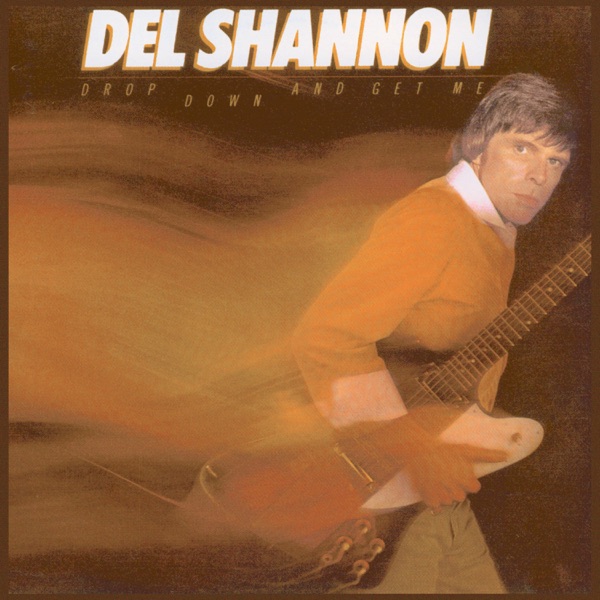
Drop Down and Get Me
1981 · 12 tracks

Rock On!
1991 · 10 tracks

-
 Runaway With Del ShannonDel Shannon196113 tracks
 -
 Hats Off to Del ShannonDel Shannon196212 tracks
 -
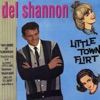 Little Town FlirtDel Shannon196315 tracks
 -
 Handy ManDel Shannon196412 tracks
 -
 Total CommitmentDel Shannon196612 tracks
 -
 This Is My BagDel Shannon196612 tracks
 -
 The Further Adventures of Charles WestoverDel Shannon196812 tracks
 -
 …and the Music Plays OnDel Shannon197814 tracks
 -
 Drop Down and Get MeDel Shannon198112 tracks
 -
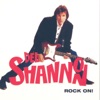 Rock On!Del Shannon199110 tracks
 -
 RunawayDel Shannon—12 tracks
Deep Dive
Overview
Del Shannon, born Charles Weedon Westover, stands as a pivotal figure in early rock and roll. Though his commercial peak spanned less than a decade, he achieved what few artists do: he created a genuine standard. His 1961 number-one hit “Runaway” remains one of the most recognizable rock songs ever recorded, covered by everyone from Elvis Presley to the Traveling Wilburys. Shannon’s blend of infectious pop-rock melody, innovative production, and straightforward songwriting made him a crucial bridge between 1950s rock and the mainstream pop-rock landscape of the 1960s.
Formation Story
Charles Weedon Westover grew up in the American Midwest, where he absorbed both country and early rock and roll. He took the stage name Del Shannon early in his professional career, marking a deliberate reinvention as a rock performer. By the late 1950s, he was gigging regularly in clubs and on regional radio, building the musicianship and instinctive understanding of what made rock and roll audiences respond. His early years were spent honing his craft in the crucible of live performance, developing the vocal clarity and interpretive confidence that would define his later work.
Breakthrough Moment
Shannon’s breakthrough arrived with the 1961 release of “Runaway,” which immediately ascended to number one on the Billboard Hot 100. The song’s wheezing keyboard riff—played on a Vox Continental organ by collaborator Max Crook—became instantly iconic; the melody was simple and memorable enough for any listener to hum, yet distinctive enough to set it apart from the teen pop and doo-wop that dominated the era. “Runaway” established Shannon as more than a one-hit wonder: it demonstrated that he could craft or choose material with genuine staying power. The album Runaway With Del Shannon (1961) capitalized on this momentum, establishing him as a legitimate force in the emerging pop-rock mainstream.
Peak Era
The years from 1961 through 1966 marked Shannon’s most creatively fertile and commercially successful period. He released a steady stream of albums including Hats Off to Del Shannon (1962), Little Town Flirt (1963), Handy Man (1964), and Total Commitment (1966), demonstrating both consistency and a willingness to explore different material and production approaches. During this stretch, Shannon maintained significant chart presence and radio play, touring extensively and establishing himself as a staple of rock and roll variety shows and television appearances. His ability to deliver both uptempo rockers and ballads, combined with his clean, unaffected vocal delivery, made him a reliable presence on the commercial landscape even as his chart dominance gradually waned.
Musical Style
Del Shannon’s sound was fundamentally a synthesis of early rock and roll’s energy with pop sensibility and melodic accessibility. His vocal approach was direct and unpretentious—he did not employ the vocal gymnastics of soul singers or the theatrical phrasing of crooners, instead letting the melody and emotional content of the song carry the weight. Instrumentation typically featured tight, efficient arrangements built around guitar, bass, drums, and keyboards, with Shannon’s own vocals as the focal point. The signature Vox Continental organ on “Runaway” became emblematic of a particular production approach: clean, bright, slightly whimsical, yet never frivolous. This aesthetic allowed Shannon to record covers of country material (as on Del Shannon Sings Hank Williams: Your Cheatin’ Heart in 1964) without losing his identity as a rock and roll artist; his interpretive approach remained consistent regardless of the source material.
Major Albums
Runaway With Del Shannon (1961)
The debut album riding the success of “Runaway,” this collection established Shannon’s template: catchy, straightforward rock-and-roll songs delivered with confidence and clarity. It remains his commercial high-water mark and the definitive snapshot of his peak period.
Hats Off to Del Shannon (1962)
This follow-up demonstrated Shannon’s range and his appeal to mainstream pop audiences. It contained several moderately successful singles and confirmed that “Runaway” was not a fluke but the beginning of a sustained run.
Little Town Flirt (1963)
Released at the height of his popularity, this album showcased Shannon’s ability to navigate the transitional moment between early rock and roll and the emerging British Invasion aesthetic.
Total Commitment (1966)
Coming near the end of his initial commercial peak, this album captured Shannon moving into a more sophisticated production framework while maintaining his essential vocal personality and melodic sensibility.
Signature Songs
- “Runaway” (1961) — The defining moment of Shannon’s career and one of rock and roll’s most enduring hits, its bleeping keyboard riff and infectious melody made it an instant standard.
- “Handy Man” (1964) — A cover of a Jimmy Jones song that became a signature piece for Shannon, showcasing his ability to reinterpret established material with his own vocal stamp.
- “Little Town Flirt” (1963) — A bouncy, playful single that proved Shannon had more than one hit formula in his arsenal.
- “Keep Searching (We’ll Follow the Sun)” (1964) — A mid-60s single demonstrating Shannon’s continued ability to deliver commercial rock-and-roll material.
Influence on Rock
Shannon’s influence extends well beyond his immediate era. He demonstrated that rock and roll, despite its early association with youth rebellion and novelty, could produce material with genuine staying power and cross-generational appeal. “Runaway” became a template for how a single instrumental or production hook could define an entire song and career; it proved that simplicity in melody and arrangement, combined with memorable sonic identity, was sufficient to create lasting impact. The song’s subsequent covers—by artists as varied as Elvis Presley, the Traveling Wilburys, and countless others—attest to its fundamental soundness as a composition and the universality of its melodic appeal. Shannon’s career also illustrated the transitional moment in rock history: he represented a bridge between 1950s rock and roll’s rough energy and 1960s pop-rock’s more polished, production-conscious approach.
Legacy
Del Shannon’s place in rock history was formally cemented with his 1999 posthumous induction into the Rock and Roll Hall of Fame, recognition that arrived nearly a decade after his death in 1990. This honor acknowledged not only his commercial success but his role as an architect of the early rock-and-roll mainstream. “Runaway” continues to circulate in popular culture, covered and referenced regularly in film, television, and by successive generations of musicians. His records remain available on streaming platforms and in reissue form, ensuring that listeners can access the full body of his work beyond the hit single. For historians and critical listeners, Shannon represents a crucial moment in rock music’s maturation: the point at which commercial rock and roll began to develop the production sophistication and melodic ambition that would characterize the genre’s ongoing evolution.
Fun Facts
- Shannon had minor acting roles alongside his music career, diversifying his presence in the entertainment industry during the 1960s.
- The Vox Continental organ sound that defined “Runaway” became so closely associated with the song that the instrument itself entered popular consciousness as part of the track’s cultural legacy.
- “Runaway” was later covered by Elvis Presley, bringing Shannon’s composition to yet another generation of listeners and demonstrating its status as a standard within the rock repertoire.