
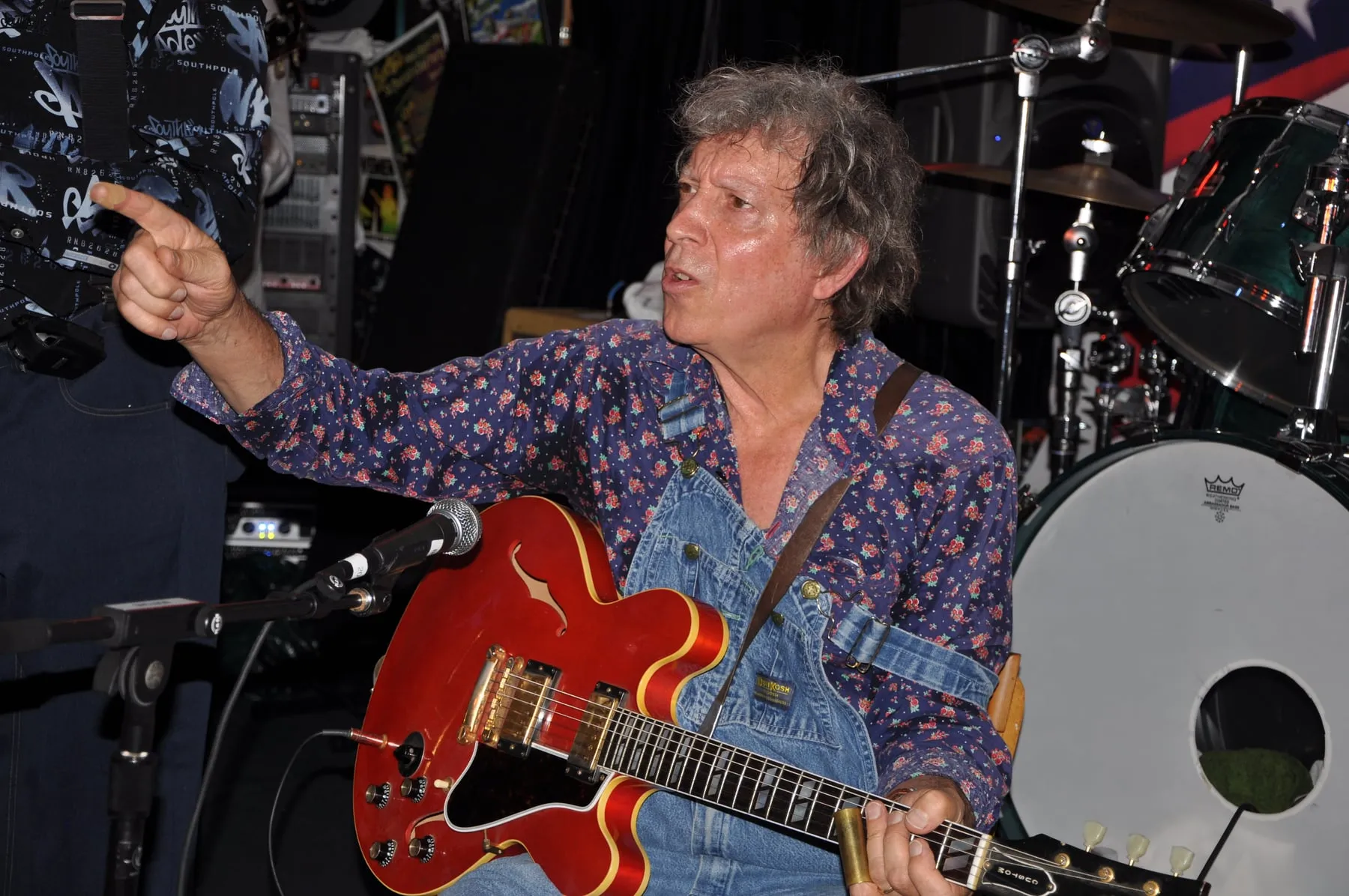
Photo by Carl Lender , licensed under CC BY 2.0 · Wikimedia Commons
Rank #394
Elvin Bishop
From Wikipedia
Elvin Richard Bishop is an American blues and rock music singer, guitarist, bandleader, and songwriter. He was inducted into the Rock and Roll Hall of Fame as a member of the Paul Butterfield Blues Band in 2015, and in the Blues Hall of Fame as a solo artist in 2016.
Discography & Previews
Browse through and click an album to open and play 30-second previews streamed from Apple Music.
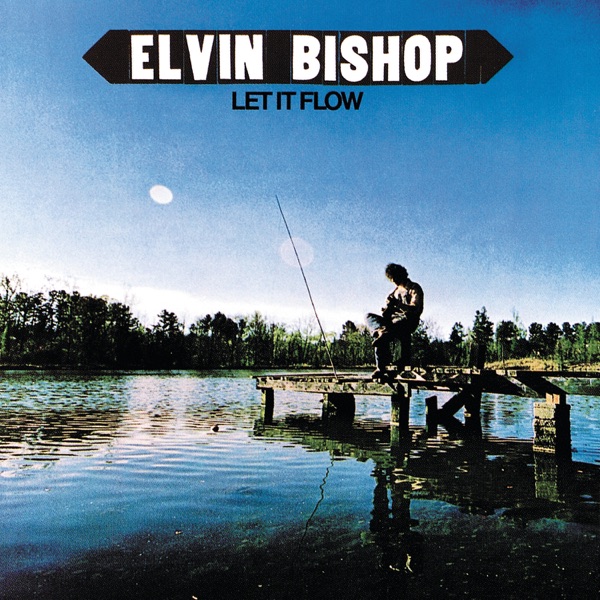
Let It Flow
1974 · 11 tracks


Big Fun
1988 · 11 tracks
- 1 Don't Lie To Me ↗ 3:08
- 2 Beer Drinking Woman ↗ 4:14
- 3 Oklahoma Country Girl ↗ 2:51
- 4 My Dog ↗ 3:34
- 5 Midnight Hour Blues ↗ 3:34
- 6 No Broken Hearts ↗ 2:50
- 7 The Right String But The Wrong Yo-Yo ↗ 2:37
- 8 She Puts Me In The Mood ↗ 3:35
- 9 Country Boy ↗ 3:04
- 10 Honest I Do ↗ 3:04
- 11 Fishin' Again ↗ 3:27
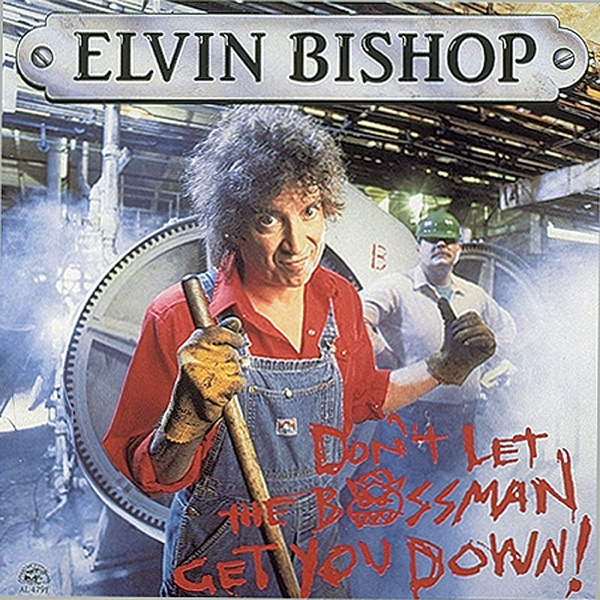
Don't Let the Bossman Get You Down!
1991 · 12 tracks
- 1 Fannie Mae ↗ 3:20
- 2 Don't Let The Bossman Get You Down ↗ 2:50
- 3 Murder In The First Degree ↗ 3:09
- 4 Kissing In The Dark ↗ 2:44
- 5 My Whiskey Head Buddies ↗ 5:24
- 6 Stepping Up In Class ↗ 2:57
- 7 You Got To Rock 'Em ↗ 4:10
- 8 Come On In This House ↗ 3:08
- 9 Soul Food ↗ 2:45
- 10 Rollin' With My Blues ↗ 3:38
- 11 Devil's Slide ↗ 2:57
- 12 Just Your Fool ↗ 2:42
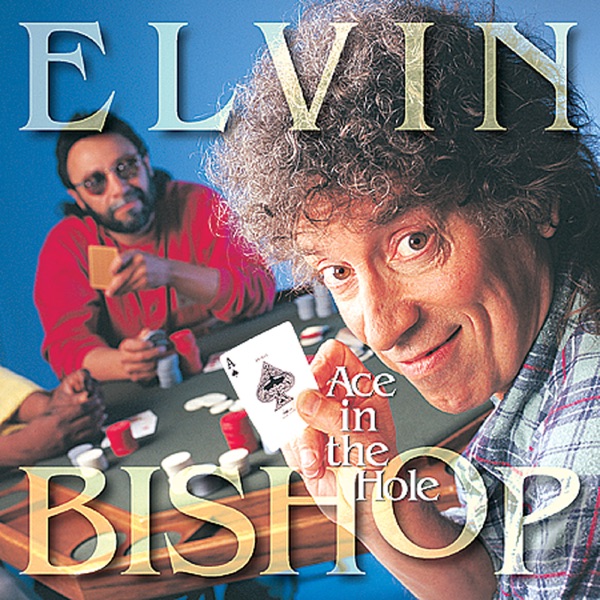
Ace in the Hole
1995 · 13 tracks
- 1 Another Mule Kickin' In Your Stall ↗ 4:34
- 2 Driving Wheel ↗ 3:02
- 3 Give Me Some Of That Money ↗ 4:38
- 4 Ace In The Hole ↗ 2:16
- 5 Party 'Til The Cows Come Home ↗ 4:02
- 6 Think ↗ 3:12
- 7 Home Of The Blues ↗ 4:31
- 8 Pigmeat On The Line ↗ 3:28
- 9 Ain't That Love ↗ 3:17
- 10 Fishin' ↗ 7:35
- 11 Blue Flame ↗ 4:07
- 12 Talkin' Mood ↗ 4:05
- 13 Fooled Around And Fell In Love ↗ 4:46

The Skin I'm In
1998 · 12 tracks

The Blues Rolls On
2008 · 12 tracks
- 1 The Blues Rolls On ↗ 4:24
- 2 Night Time Is the Right Time ↗ 3:10
- 3 Yonder's Wall ↗ 4:07
- 4 Struttin' My Stuff ↗ 4:00
- 5 Keep a Dollar In Your Pocket ↗ 4:53
- 6 Who's the Fool ↗ 3:48
- 7 Black Gal ↗ 3:12
- 8 Oklahoma ↗ 5:22
- 9 Come On In This House ↗ 3:40
- 10 I Found Out ↗ 3:17
- 11 Send You Back to Georgia ↗ 3:16
- 12 Honest I Do ↗ 2:47

Red Dog Speaks
2010 · 11 tracks
- 1 Red Dog Speaks ↗ 4:47
- 2 Neighbor Neighbor ↗ 3:07
- 3 Fat & Sassy ↗ 4:34
- 4 Barbecue Boogie ↗ 2:46
- 5 Many Rivers to Cross ↗ 3:50
- 6 Blues Cruise ↗ 3:25
- 7 Doo-Wop Medley ↗ 3:59
- 8 Get Your Hand Out of My Pocket ↗ 2:55
- 9 His Eye Is On the Sparrow ↗ 3:30
- 10 Clean Livin' ↗ 2:43
- 11 Midnight Hour Blues ↗ 4:18

Can't Even Do Wrong Right
2014 · 10 tracks
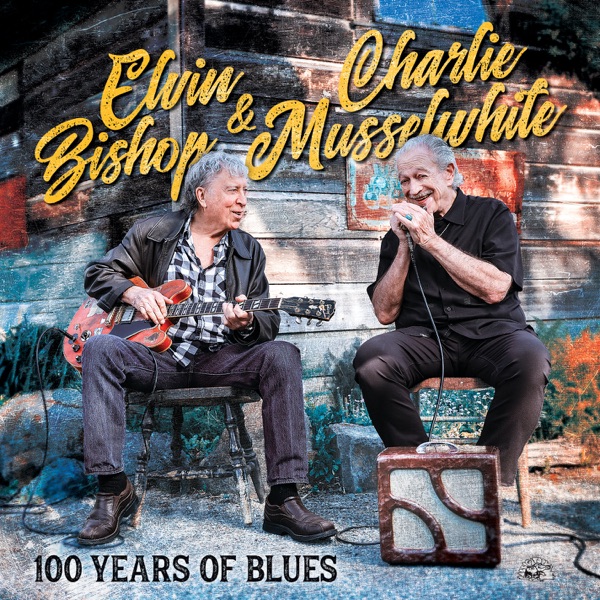
100 Years of Blues
2020 · 12 tracks
- 1 Birds Of A Feather ↗ 3:22
- 2 West Helena Blues ↗ 4:52
- 3 What The Hell? ↗ 3:06
- 4 Good Times ↗ 3:46
- 5 Old School ↗ 4:59
- 6 If I Should Have Bad Luck ↗ 4:01
- 7 Midnight Hour Blues ↗ 4:13
- 8 Blues, Why Do You Worry Me? ↗ 4:03
- 9 South Side Slide ↗ 3:14
- 10 Blues For Yesterday ↗ 5:54
- 11 Help Me ↗ 5:15
- 12 100 Years Of Blues ↗ 5:11
-
 Let It FlowElvin Bishop197411 tracks
 -
 Struttin’ My StuffElvin Bishop197510 tracks
 -
 Juke Joint JumpElvin Bishop19759 tracks
 -
 Hog HeavenElvin Bishop19789 tracks
 -
 Big FunElvin Bishop198811 tracks
 -
 Don't Let the Bossman Get You Down!Elvin Bishop199112 tracks
 -
 Ace in the HoleElvin Bishop199513 tracks
 -
 The Skin I'm InElvin Bishop199812 tracks
 -
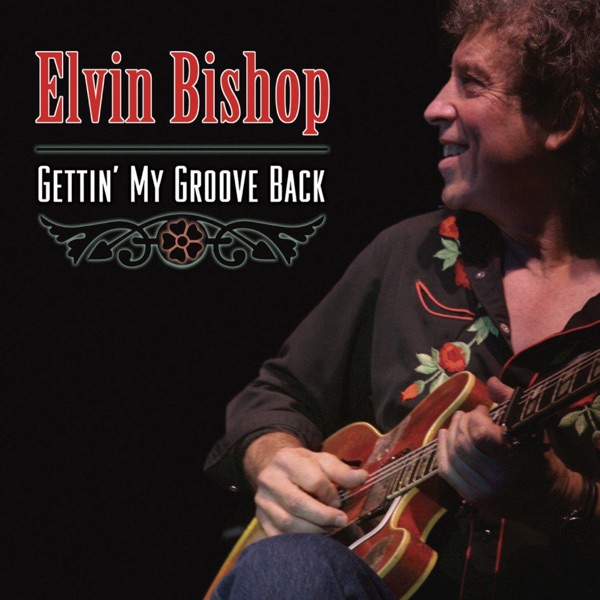
 Gettin' My Groove BackElvin Bishop20059 tracks
 -
 The Blues Rolls OnElvin Bishop200812 tracks
 -
 Red Dog SpeaksElvin Bishop201011 tracks
 -
 Can't Even Do Wrong RightElvin Bishop201410 tracks
 -
 100 Years of BluesElvin Bishop202012 tracks
Deep Dive
Overview
Elvin Richard Bishop is an American blues and rock guitarist, bandleader, and songwriter born in 1942 whose career spans seven decades and bridges the electric blues tradition of the 1960s with modern blues-rock. Though he is perhaps best known as a member of the Paul Butterfield Blues Band—inducted into the Rock and Roll Hall of Fame in 2015 for that work—Bishop emerged as a formidable solo artist in his own right, releasing a steady stream of albums that established him as a keeper of authentic blues vocabulary and a skilled bandleader. His induction into the Blues Hall of Fame as a solo artist in 2016 affirmed his standing as both a historian of the form and an active practitioner.
Formation Story
Born in 1942, Elvin Bishop came of age during the folk and blues revival of the late 1950s and early 1960s. He gravitated toward blues as his primary musical language, drawn to the electric guitar tradition and the improvisational depth it offered. By the early 1960s, Bishop was immersed in the Chicago blues scene and the broader movement of white musicians learning from and collaborating with Black blues masters. This apprenticeship led to his partnership with Paul Butterfield, a harmonica virtuoso and bandleader who was assembling a racially integrated blues ensemble that would become one of the most influential groups of the decade. Bishop’s role as a lead guitarist in the Butterfield band placed him at the center of a pivotal moment in rock and blues history—the moment when electric blues began to cross over to rock audiences and reshape the musical landscape.
Breakthrough Moment
Elvin Bishop’s national prominence arrived through his work with the Paul Butterfield Blues Band during the mid-1960s. The band’s self-titled debut and its successor, East-West (1966), established a template for blues-rock that influenced countless rock musicians. Bishop’s guitar work—fluid, bluesy, and respectful of tradition while open to experimentation—was integral to the band’s sound. However, the experience was ultimately a foundation for his solo career. By the early 1970s, Bishop began recording under his own name, taking the lessons of the Butterfield years and the blues lineage they represented into a more personal artistic direction.
Peak Era
Bishop’s solo recording career solidified in the mid-1970s with the release of Let It Flow (1974), Struttin’ My Stuff (1975), and Hometown Boy Makes Good (1976). These albums established the sonic and thematic blueprint for his work: a fusion of traditional blues forms with rock energy, featuring his distinctive guitar tone and a singer’s command of phrasing and emotional delivery. He continued recording steadily through the 1980s and 1990s, with Hog Heaven (1978) and Big Fun (1988) further cementing his reputation as a reliable interpreter and performer of blues-rock material. Rather than chasing trends, Bishop remained committed to the core aesthetics that had defined his playing in the Butterfield band, adapting and deepening his approach across a career that extended well into the 21st century.
Musical Style
Elvin Bishop’s guitar voice draws directly from the lineage of Chicago electric blues, flavored with the rock sensibility he developed during his years in the Butterfield ensemble. His playing is marked by clear, singing single-note lines and an ability to shift fluidly between rhythm and lead work. As a vocalist, Bishop brings a conversational, slightly gravelly tone to his interpretations, avoiding histrionics in favor of phrasing that serves the lyrical and emotional content. His songwriting gravitates toward blues standards and originals written in traditional blues forms—the 12-bar structure, minor pentatonic melodies, and the call-and-response logic that blues demands. The instrumentation on his albums typically features guitar, bass, drums, and organ or keyboards, a lineup that honors the small-group blues tradition while allowing room for ensemble interplay. Over his career, his sound has remained fundamentally consistent: blues-rooted, guitar-forward, and aimed at dancers and listeners who respect the tradition.
Major Albums
Let It Flow (1974)
Bishop’s solo debut established his independent identity as a bandleader and recording artist, moving away from the role of sideman into a front-and-center position where his guitar and vocals anchor the material.
Struttin’ My Stuff (1975)
Released the same year as his second album, this record showcased Bishop’s command of groove-oriented blues-rock and his ability to balance instrumental prowess with accessible songwriting.
Hometown Boy Makes Good (1976)
With this album, Bishop solidified his reputation for consistency and authenticity, crafting material that connected with blues and rock audiences who valued traditional values in contemporary contexts.
Hog Heaven (1978)
A peak moment in Bishop’s solo work, this album demonstrated his maturity as a bandleader and his commitment to the groove-heavy, dance-oriented end of blues-rock.
Big Fun (1988)
Released a decade after Hog Heaven, this record proved that Bishop’s energy and relevance had not diminished; he remained an engaged performer and composer in a changing musical landscape.
The Skin I’m In (1998)
Bishop’s late-career albums, including this one, benefited from his accumulated experience and the elder-statesman status he had earned, allowing him to deepen his explorations of blues themes and his guitar voice.
Signature Songs
- “Fooled Around and Fell in Love” — Bishop’s most recognizable song, a staple of his live performances and a touchstone of 1970s blues-rock radio.
- “Sure Feels Good” — A showcase for his conversational vocal delivery and his ability to craft blues narratives rooted in everyday experience.
- “Little Girl Sing the Blues” — A demonstration of his skill at leading a band and creating space for ensemble interplay within a blues framework.
- “You and Me” — Representative of Bishop’s songwriting gift for intimate, relationship-centered blues material.
Influence on Rock
Elvin Bishop’s significance lies partly in his role as a bridge figure in American blues and rock history. As a member of the Paul Butterfield Blues Band, he participated in one of the first sustained, racially integrated efforts to bring Chicago blues to national rock audiences. That work opened doors and changed perceptions about who could play blues and how it might sound in a rock context. As a solo artist, Bishop embodied a particular strain of American blues traditionalism—the idea that electric blues could be kept alive and relevant by musicians who understood its history and respected its forms while also embracing contemporary performance and recording techniques. His steady, uncompromising approach to the blues influenced later musicians who valued authenticity and craftsmanship over chasing commercial trends.
Legacy
Elvin Bishop’s induction into the Rock and Roll Hall of Fame in 2015 and the Blues Hall of Fame in 2016 formally recognized his dual legacy as both a key figure in 1960s blues-rock history and as a durable solo artist whose career has spanned decades. His continued recording activity—releasing Red Dog Speaks (2010), Can’t Even Do Wrong Right (2014), and 100 Years of Blues (2020) well into his later years—demonstrates his commitment to the form and his refusal to rest on historical laurels. Bishop’s catalog remains in print and accessible to new listeners through streaming platforms, while his concerts continue to draw audiences interested in blues-rock played with authenticity and skill. He stands as a living link to the electric blues revival of the 1960s and as evidence that a career rooted in blues principles and traditional musicianship can sustain and evolve across generations.
Fun Facts
- Bishop has remained active as a recording and touring artist into his 80s, releasing albums and performing regularly across North America and beyond.
- His induction into the Blues Hall of Fame in 2016 came the year after his Rock and Roll Hall of Fame induction, an unusual honor that underscores his significance in both genres.
- The title of his 2020 album, 100 Years of Blues, references not his own age but the broader century of blues history he has helped document and perpetuate through his playing and recordings.
- Bishop has maintained an independent presence in the music industry, recording for Blind Pig Records, a label that has championed blues artists committed to traditional values.