
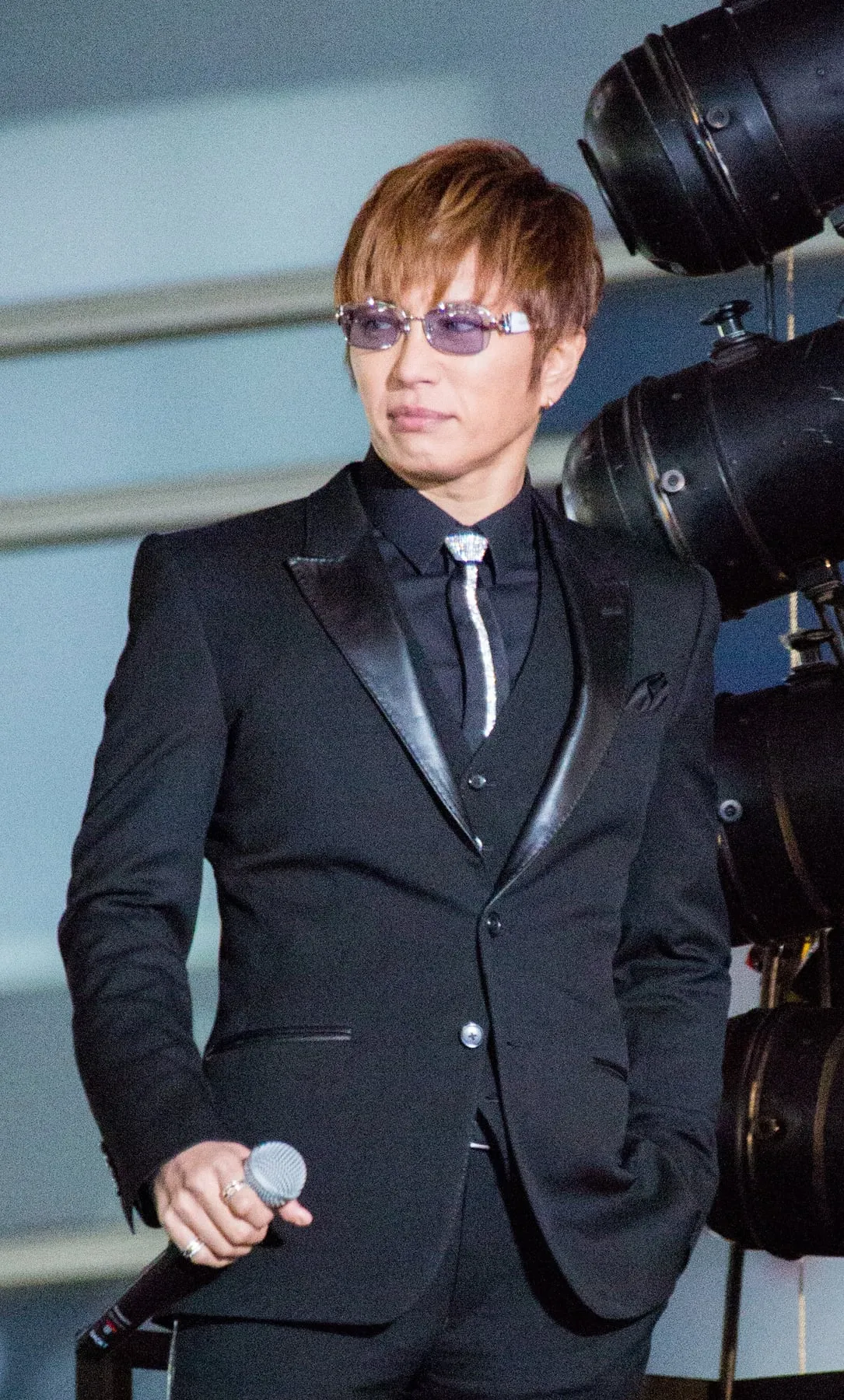
Photo by Dick Thomas Johnson from Tokyo, Japan , licensed under CC BY-SA 2.5 · Wikimedia Commons
Rank #352
GACKT
From Wikipedia
Gakuto Oshiro , better known as Gackt, is a Japanese singer-songwriter, musician, record producer and actor.
Discography & Previews
Browse through and click an album to open and play 30-second previews streamed from Apple Music.
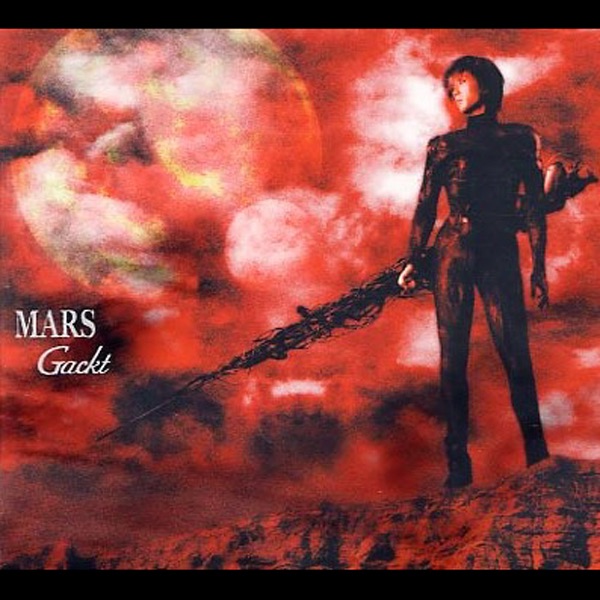
MARS
2000 · 12 tracks
- 1 Ares ↗ 1:35
- 2 Asrun Dream ↗ 4:28
- 3 Emu (For My Dear) ↗ 6:05
- 4 U+K ↗ 4:21
- 5 Vanilla ↗ 4:10
- 6 Freesia OP1 (Yokohama Arena Live) ↗ 2:39
- 7 Freesia OP2 (Yokohama Arena Live) ↗ 1:57
- 8 Illness Illusion ↗ 3:12
- 9 Mirror (Mars Version) ↗ 5:25
- 10 Dears (Mars Version) ↗ 4:18
- 11 Oasis (Mars Version) ↗ 4:38
- 12 Kono Dare Mo Inai Heya De ↗ 7:13

GACKTRACKS -ULTRA DJ ReMIX-
2015 · 14 tracks
- 1 Another World (Taku Takahashi Remix) ↗ 4:06
- 2 Jesus (TeddyLoid Remix) ↗ 4:15
- 3 Things I Can Do for You (TJO & YUSUKE Remix) ↗ 5:05
- 4 Redemption (Studio Apartment Remix) ↗ 5:04
- 5 Cube (MARC PANTHER DanceFloor Experience Mix) ↗ 5:24
- 6 White Lovers (DAICHI YOKOTA Remix) ↗ 5:17
- 7 Lu: Na (DJ OMKT Remix) ↗ 4:32
- 8 Oasis (MITOMI TOKOTO Remix) ↗ 6:54
- 9 Claymore (DJ KOO Ultra Dj Remix) ↗ 4:45
- 10 Koakuma Heaven (FPM Eurodisco Mix) ↗ 5:02
- 11 Secret Garden (Jazztronik Remix) ↗ 5:52
- 12 Needing You (Jazzin'park D&B Remix) ↗ 4:40
- 13 Akatsukizukuyo - Day Breakers (el poco maro Remix) ↗ 5:23
- 14 I Don't Forget You (ROCKETMAN Remix) ↗ 4:22

LAST MOON
2016 · 13 tracks
- 1 Arrow ↗ 5:45
- 2 Fallen Petals ↗ 3:29
- 3 Returner - The End of Darkness ↗ 4:17
- 4 Ride or Die ↗ 3:28
- 5 Akatsukizukuyo - Day Breakers ↗ 5:55
- 6 Zan ↗ 4:38
- 7 Pulling My Strings ↗ 4:06
- 8 One More Kiss ↗ 4:05
- 9 Wooha Baby ↗ 3:56
- 10 Love Friday ↗ 4:31
- 11 Belong to You ↗ 5:09
- 12 P. S. I Love U ↗ 6:00
- 13 Setsugekka - The End of Silence ↗ 6:34
-
 MARSGACKT200012 tracks
 -
 RebirthGACKT200111 tracks
 -
 MOONGACKT200212 tracks
 -
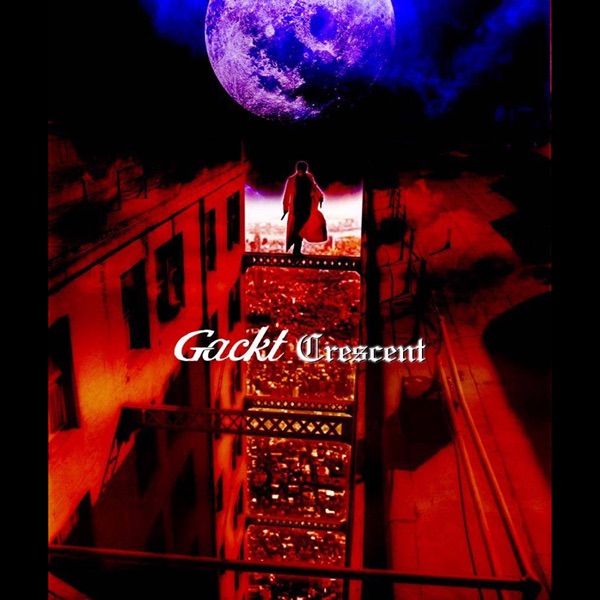
 CrescentGACKT200311 tracks
 -
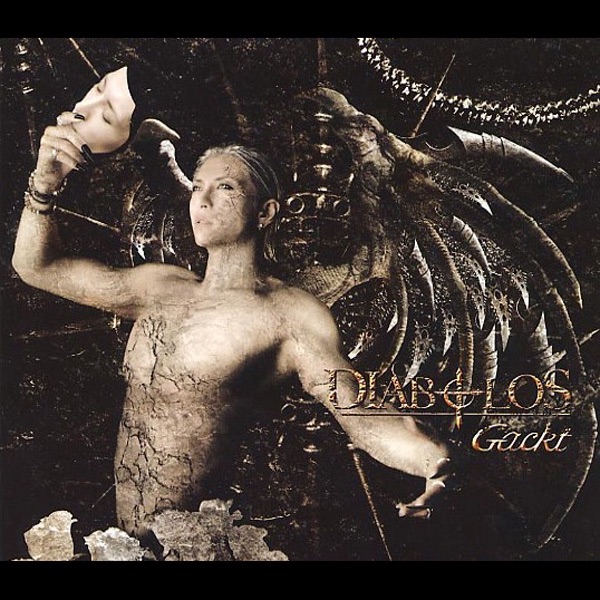
 DIABOLOSGACKT200511 tracks
 -
 Love LetterGACKT200510 tracks
 -
 GACKTRACKS -ULTRA DJ ReMIX-GACKT201514 tracks
 -
 LAST MOONGACKT201613 tracks
Deep Dive
Overview
Gackt, the stage name of Gakuto Oshiro, is a Japanese singer-songwriter, musician, record producer, and actor whose career has spanned from the turn of the millennium to the present day. Emerging in Japan during a period of distinctive visual and sonic experimentation in rock music, Gackt carved a distinct path as a solo artist working across rock, production, and multimedia performance. His work represents a bridge between Western rock idioms and the Japanese music industry’s sophisticated approach to artist development, visual presentation, and cross-media engagement.
Formation Story
Gackt was born Gakuto Oshiro in 1973, establishing his artistic identity during Japan’s 1990s music scene, a period marked by rapid stylistic diversification and the rise of visual-rock aesthetics. Rather than emerging from a traditional band structure, Gackt developed as a solo artist within the Japanese rock ecosystem, a path that allowed him to control his artistic vision across music, production, and theatrical presentation. His approach reflected the Japanese industry’s embrace of artist-as-multimedia-creator, where music was one facet of a broader performance and visual identity. By the year 2000, Gackt had positioned himself to launch his solo recording career in earnest, beginning a prolific period of album releases that would define his artistic output through the following decades.
Breakthrough Moment
Gackt’s initial solo albums in the early 2000s established his commercial and artistic foundation. His debut album MARS arrived in 2000, followed swiftly by Rebirth in 2001 and MOON in 2002. These three releases within as many years demonstrated both his productivity and his intent to build a substantial catalog quickly. The sequential titles—MARS, Rebirth, and MOON—suggested a thematic or conceptual arc, a practice common in Japanese rock and pop music that engaged audiences on both sonic and narrative levels. By 2003, Gackt had released both a live tour recording, Gackt Live Tour 上弦の月 最終章, and the studio album Crescent, cementing his status as an active and professionally productive recording artist within Japan’s music industry.
Peak Era
The period from 2000 to 2005 represented Gackt’s most concentrated recording phase. He released MARS, Rebirth, MOON, Crescent, DIABOLOS, and Love Letter across a five-year window, averaging more than one album per year. This sustained output, combined with live touring and production work, positioned him as one of Japan’s consistently visible rock musicians during the early 2000s. The year 2005 marked a turning point, with both DIABOLOS and Love Letter arriving in the same year, suggesting an experimental push or a shift in artistic direction. After this intensive period, his recording schedule became less frequent, with RE:BORN arriving in 2009 and subsequent releases spaced further apart, indicating a possible reorientation of his career priorities or artistic focus.
Musical Style
Gackt’s work in rock music reflects a sophisticated understanding of both Western rock traditions and Japanese sonic and visual aesthetics. His early 2000s output drew from rock foundations while incorporating elements of theatrical presentation, orchestral arrangement, and production techniques that elevated his work beyond straightforward rock-song structures. The titles of his albums—MARS, MOON, DIABOLOS, CRESCENT—evoke cosmic, mystical, or philosophical imagery, suggesting that his sonic vision carried conceptual weight beyond individual tracks. As a musician and producer, Gackt maintained hands-on involvement with his recordings, shaping both the instrumental textures and the overall sonic character of his releases. His evolution as an artist appeared to encompass experimentation with production styles and thematic material, as evidenced by the varied nomenclature and spacing of his albums over time.
Major Albums
MARS (2000)
Gackt’s debut solo studio album, establishing his artistic identity and marking the beginning of his prolific early-2000s output.
Rebirth (2001)
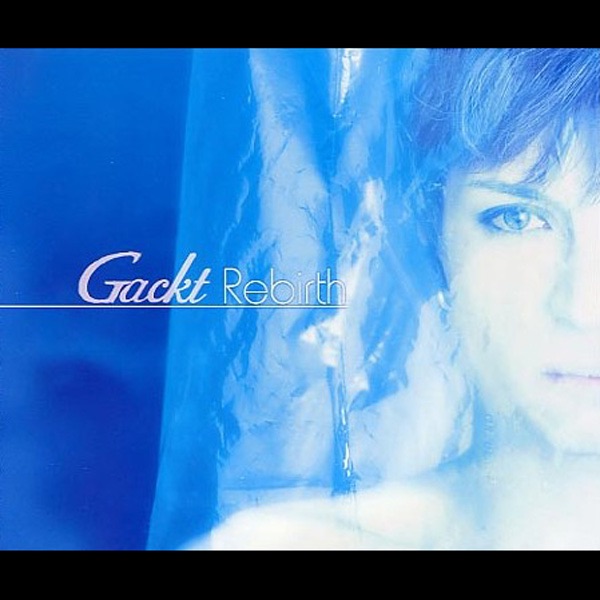
Following MARS within a single year, Rebirth continued to develop his sonic and thematic vocabulary, suggesting an artist engaged in rapid creative evolution.
MOON (2002)
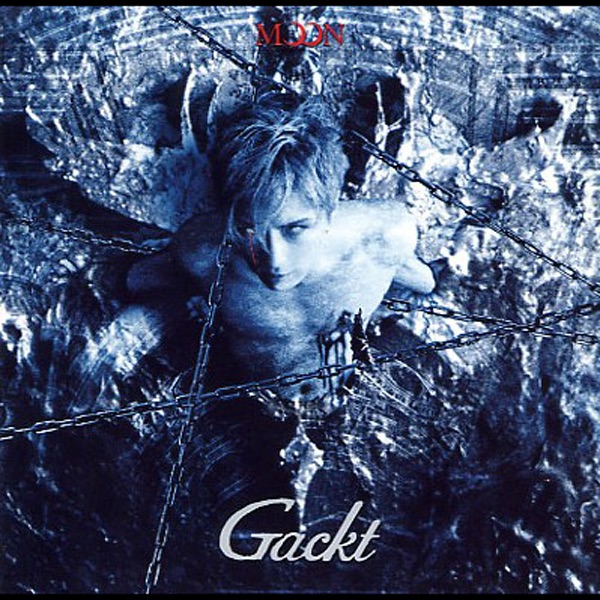
The third album in his initial trilogy, MOON completed an intense introductory phase and demonstrated sustained momentum in both recording and commercial visibility.
Crescent (2003)
Released alongside a live tour recording, Crescent reflected Gackt’s integration of studio and performance work into a unified artistic practice.
DIABOLOS (2005)
Part of his final year of dual-album output, DIABOLOS represented his work in the mid-2000s, a period before his recording frequency diminished.
Signature Songs
- **