

Photo by Angela George , licensed under CC BY-SA 3.0 · Wikimedia Commons
Rank #353
Melissa Etheridge
From Wikipedia
Melissa Lou Etheridge is an American singer, songwriter, musician, and guitarist. Her eponymous debut album was released in 1988 and became an underground success. It peaked at No. 22 on the Billboard 200 and its lead single, "Bring Me Some Water", garnered Etheridge her first Grammy Award nomination for Best Rock Vocal Performance, Female in 1989. Her second album, Brave and Crazy, appeared that same year and earned Etheridge two more Grammy nominations. In 1992, Etheridge released her third album, Never Enough, and its lead single, "Ain't It Heavy", won Etheridge her first Grammy Award.
Discography & Previews
Browse through and click an album to open and play 30-second previews streamed from Apple Music.




Lucky
2004 · 13 tracks

The Awakening
2007 · 16 tracks
- 1 All There Is ↗ 1:04
- 2 California ↗ 3:48
- 3 An Unexpected Rain ↗ 6:56
- 4 Message to Myself ↗ 3:26
- 5 God Is In the People ↗ 1:59
- 6 Map of the Stars ↗ 5:31
- 7 Threesome ↗ 3:34
- 8 All We Can Really Do ↗ 1:18
- 9 I've Loved You Before ↗ 4:16
- 10 A Simple Love ↗ 1:17
- 11 Heroes and Friends ↗ 4:23
- 12 The Kingdom of Heaven ↗ 4:12
- 13 Open Your Mind ↗ 5:13
- 14 The Universe Listened ↗ 3:10
- 15 Imagine That ↗ 3:00
- 16 What Happens Tomorrow ↗ 6:18

A New Thought for Christmas
2008 · 10 tracks


4th Street Feeling
2012 · 13 tracks
- 1 Kansas City ↗ 3:20
- 2 4th Street Feeling ↗ 3:33
- 3 Falling Up ↗ 3:38
- 4 Shout Now ↗ 3:17
- 5 The Shadow of a Black Crow ↗ 3:18
- 6 Be Real ↗ 3:52
- 7 A Disaster ↗ 4:07
- 8 Sympathy ↗ 3:53
- 9 Enough Rain ↗ 2:50
- 10 A Sacred Heart ↗ 4:23
- 11 I Can Wait ↗ 3:30
- 12 Rock and Roll Me ↗ 6:03
- 13 Just What You Asked For ↗ 3:32

This Is M.E.
2014 · 11 tracks

Memphis Rock and Soul
2016 · 12 tracks
- 1 Memphis Train ↗ 3:49
- 2 Respect Yourself (People Stand Up) ↗ 4:25
- 3 Who’s Making Love ↗ 3:51
- 4 Hold On, I’m Coming ↗ 3:23
- 5 I’ve Been Loving You Too Long (To Stop Now) ↗ 4:05
- 6 Any Other Way ↗ 3:24
- 7 I’m a Lover ↗ 3:06
- 8 Rock Me Baby ↗ 4:47
- 9 I Forgot to Be Your Lover ↗ 4:52
- 10 Wait a Minute ↗ 2:55
- 11 Born Under a Bad Sign ↗ 4:36
- 12 I’ve Got Dreams to Remember ↗ 4:29


-
 Melissa EtheridgeMelissa Etheridge198810 tracks
 -
 Brave and CrazyMelissa Etheridge198910 tracks
 -
 Never EnoughMelissa Etheridge199210 tracks
 -
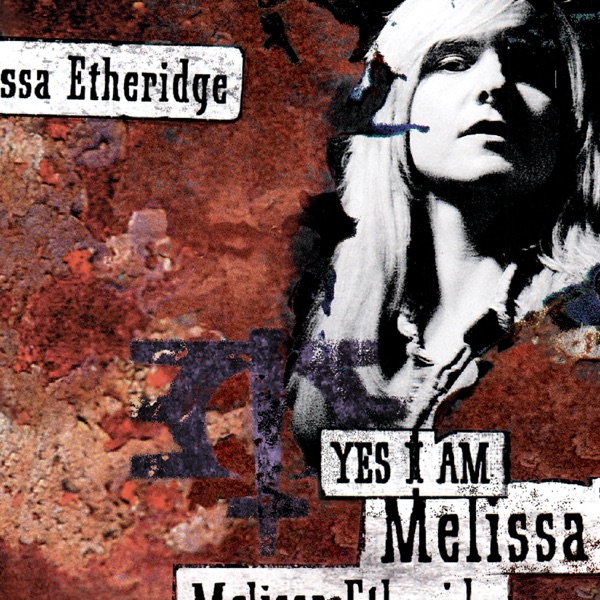
 Yes I AmMelissa Etheridge199310 tracks
 -
 Your Little SecretMelissa Etheridge199510 tracks
 -
 BreakdownMelissa Etheridge199911 tracks
 -
 SkinMelissa Etheridge200110 tracks
 -
 LuckyMelissa Etheridge200413 tracks
 -
 The AwakeningMelissa Etheridge200716 tracks
 -
 A New Thought for ChristmasMelissa Etheridge200810 tracks
 -
 Fearless LoveMelissa Etheridge20101 track
 -
 4th Street FeelingMelissa Etheridge201213 tracks
 -
 This Is M.E.Melissa Etheridge201411 tracks
 -
 Memphis Rock and SoulMelissa Etheridge201612 tracks
 -
 The Medicine ShowMelissa Etheridge201911 tracks
 -
 One Way OutMelissa Etheridge20219 tracks
 -
 RiseMelissa Etheridge202611 tracks
Deep Dive
Overview
Melissa Lou Etheridge is an American singer, songwriter, musician, and guitarist who emerged from the folk-rock tradition to become one of the defining singer-songwriter voices of her generation. Born in 1961, Etheridge built a career spanning more than three decades marked by introspective songwriting, skilled guitar work, and a distinctive alto vocal presence. Her early releases established her as a serious artist within the rock mainstream, while her prolific output and live performance reputation cemented her place in the pantheon of American rock musicians.
Formation Story
Melissa Etheridge was born in 1961 and grew up immersed in American rock and folk traditions that would shape her artistic direction. Coming of age during the singer-songwriter renaissance of the 1970s and 1980s, she developed her craft as both a vocalist and guitarist, drawing from the introspective lyrical tradition of folk rock and the emotional directness of contemporary rock music. Her path to a recording career was forged through years of songwriting and performance, culminating in her signing to Island Records and the release of her eponymous debut album in 1988.
Breakthrough Moment
Etheridge’s debut album Melissa Etheridge, released in 1988, announced her arrival as a serious artist in the rock landscape. The album peaked at No. 22 on the Billboard 200 and achieved underground success that extended her reach beyond regional audiences. Its lead single, “Bring Me Some Water,” became her first significant chart moment and earned her a Grammy Award nomination for Best Rock Vocal Performance, Female in 1989—a recognition that validated her artistic credibility before she had reached her mid-twenties. The immediate follow-up, Brave and Crazy, came in 1989 and brought two additional Grammy nominations, establishing Etheridge as an artist whose work commanded critical and industry attention.
Peak Era
The early 1990s marked Etheridge’s ascent to her most commercially and creatively significant period. In 1992, she released Never Enough, which featured the lead single “Ain’t It Heavy”—a song that won her first Grammy Award and demonstrated her growing command of both her songwriting voice and recording presence. The momentum continued with Yes I Am in 1993, followed by Set Yourself Free in 1994 and Your Little Secret in 1995. This five-year span established Etheridge as a consistent creative force whose albums earned regular chart presence and whose live performances built a devoted fanbase. Her ability to balance introspective songwriting with accessible rock arrangements made her a fixture on rock radio and in concert venues throughout the decade.
Musical Style
Etheridge’s sound is rooted in the American folk-rock tradition, blending acoustic and electric guitar work with lyrics that emphasize emotional honesty and personal observation. Her vocal approach—warm, often conversational, delivered with precise control—became her signature characteristic, conveying vulnerability without sacrificing strength. Her guitar playing is equally central to her identity; she writes and performs as a multi-instrumentalist, with her guitar work anchoring her compositions rather than serving as accompaniment. The evolution across her catalog shows movement from relatively straightforward rock structures in her earliest work toward more expansive production and arrangement choices, though the core of her sound remained rooted in the singer-songwriter tradition. Her songs typically explore themes of relationships, personal experience, and emotional introspection, delivered with the directness and specificity prized in folk and rock songwriting.
Major Albums
Melissa Etheridge (1988)
Her self-titled debut introduced Etheridge’s voice and songwriting to a national audience, reaching No. 22 on the Billboard 200 and yielding her first Grammy nomination through “Bring Me Some Water.”
Brave and Crazy (1989)
Released the same year as her debut’s commercial and critical success, this follow-up consolidated her early momentum with two additional Grammy nominations, proving her debut was no one-off.
Never Enough (1992)
This album marked a creative turning point, featuring “Ain’t It Heavy,” which won her first Grammy Award and demonstrated her growth as a writer and performer.
Yes I Am (1993)
Continuing her commercial ascent, this release solidified Etheridge’s presence as a consistent and reliable presence in rock music during the early 1990s.
Your Little Secret (1995)
By the mid-1990s, Etheridge had become an established touring act and recording artist, with this album representing the peak of her early commercial visibility.
Skin (2001)
This release demonstrated Etheridge’s sustained creative engagement, appearing more than a decade into her career and showing her continued relevance in American rock music.
Signature Songs
- “Bring Me Some Water” — Her debut single and first Grammy-nominated track, introducing her distinctive vocal and songwriting voice to national audiences.
- “Ain’t It Heavy” — The Grammy Award-winning single from Never Enough that marked her first major award victory.
Influence on Rock
Melissa Etheridge’s career contributed to the sustained presence of singer-songwriter rock in the American mainstream during the 1990s, a period when such introspective, guitar-based approaches competed with grunge, hip-hop, and alternative rock for audience attention. Her success demonstrated continued commercial viability for folk-rock-influenced material that prioritized songwriting craft and emotional authenticity. Her presence as a touring artist and recording musician helped maintain the visibility of acoustic-based rock within festival lineups and radio formats dominated by heavier alternative and grunge acts. The longevity of her career—spanning from the late 1980s through subsequent decades—illustrated the enduring appeal of the singer-songwriter tradition within rock music.
Legacy
Melissa Etheridge’s career has spanned more than three decades, with her early albums establishing her as a significant voice in American rock music and her sustained recording and touring activity demonstrating remarkable artistic longevity. From her 1988 debut through releases extending into the 2020s, including One Way Out in 2021 and an upcoming album Rise scheduled for 2026, Etheridge has maintained an active presence in American rock music. Her early Grammy recognition and successful chart performances in the late 1980s and early 1990s secured her position within the rock canon, while her continued recording activity and touring presence have ensured her relevance across generations of rock fans. Her work remains a touchstone for the folk-rock and singer-songwriter traditions within American rock music.
Fun Facts
- Etheridge released a Christmas album, A New Thought for Christmas, in 2008, demonstrating her willingness to explore genres and themes beyond her core rock identity.
- Her 2016 album Memphis Rock and Soul marked a deliberate stylistic exploration, suggesting her continued interest in genre-crossing artistic challenges.
- With nearly 20 studio albums across her career, Etheridge has maintained one of the most consistent release schedules of any American rock artist active since the 1980s.