
Image courtesy of Apple Music
Rank #360
GG Allin
From Wikipedia
Kevin Michael "GG" Allin was an American punk rock musician who performed and recorded with many groups during his career. His live performances often featured transgressive acts, including self-mutilation, defecating on stage, and assaulting audience members, for which he was arrested and imprisoned on multiple occasions. AllMusic called him "the most spectacular degenerate in rock n' roll history", while G4TV's That's Tough placed him second on their list of "toughest rock stars in the world".
Discography & Previews
Browse through and click an album to open and play 30-second previews streamed from Apple Music.
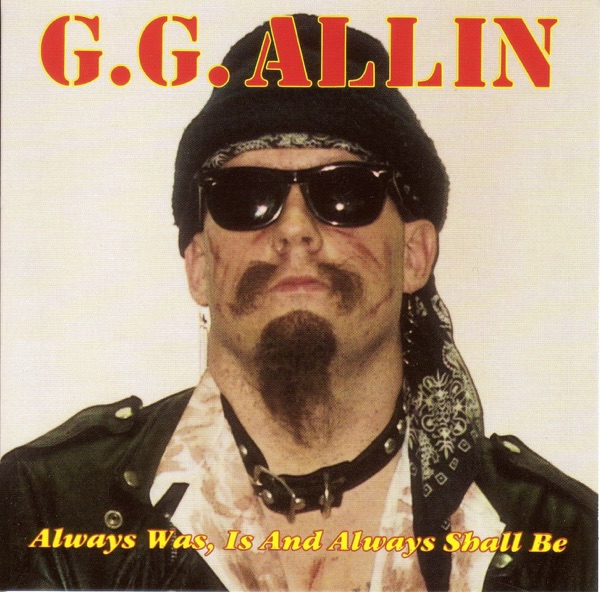
Always Was, Is and Always Shall Be
1980 · 11 tracks

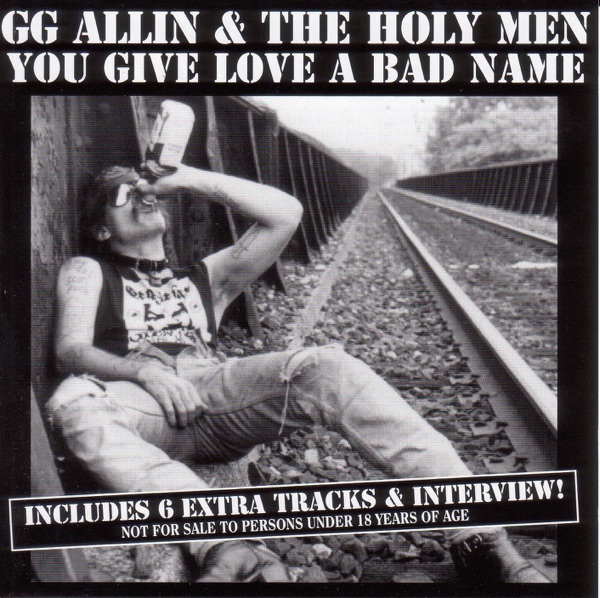
You Give Love a Bad Name
1987 · 17 tracks
- 1 Swank F****n' ↗ 2:53
- 2 Bloody Mary's Bloody C**t ↗ 3:26
- 3 Tough F****n' Shit ↗ 2:08
- 4 I'm a Rapist ↗ 4:28
- 5 Suck Dog ↗ 2:50
- 6 Teenage Twats ↗ 3:29
- 7 Beer Picnic ↗ 4:22
- 8 Stink Finger C**t ↗ 3:04
- 9 Scars On My Body / Scabs On My Dick ↗ 2:31
- 10 Garbage Dump ↗ 2:24
- 11 Watch Me Kill the Boston Girl ↗ 1:00
- 12 Castration Crucifixion ↗ 2:06
- 13 Snakeman's Dance ↗ 3:04
- 14 Slaughterhouse Death Camp ↗ 1:16
- 15 Feces & Blood ↗ 3:42
- 16 Master Daddy ↗ 1:45
- 17 Interview from Prison ↗ 15:59
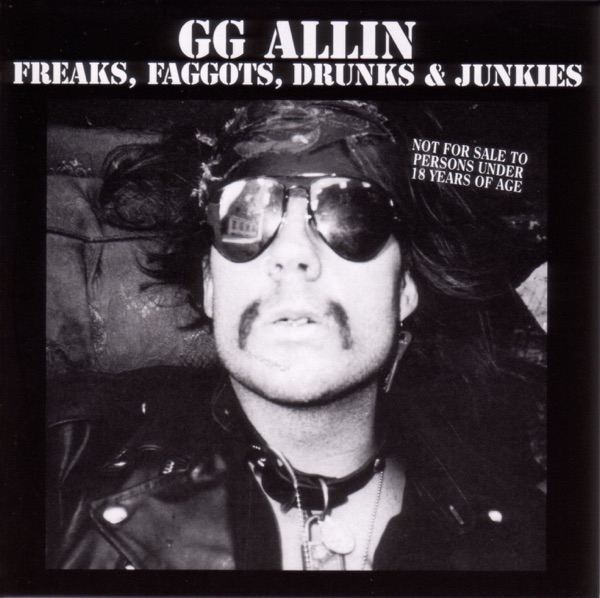
Freaks, Faggots, Drunks & Junkies
1988 · 19 tracks
- 1 My Revenge ↗ 0:43
- 2 Dope Money ↗ 2:47
- 3 Be My F****n Whore ↗ 2:41
- 4 Suck My Ass It Smells ↗ 0:27
- 5 Dog Shit ↗ 2:13
- 6 Wild Riding ↗ 5:30
- 7 Sleeping In My Piss ↗ 2:07
- 8 Anti Social Masterbator ↗ 3:13
- 9 Last In Line for the Gang Bang ↗ 2:14
- 10 Die When You Die ↗ 1:37
- 11 Commit Suicide ↗ 1:53
- 12 Crash & Burn ↗ 3:58
- 13 Outlaw Scumfuc ↗ 2:24
- 14 Caroline & Sue ↗ 2:35
- 15 C**t Sucking Cannibal ↗ 2:45
- 16 Family ↗ 3:03
- 17 Young Little Meat ↗ 1:33
- 18 I Wanna Kill You ↗ 3:19
- 19 My Bloody Mutilation ↗ 5:03
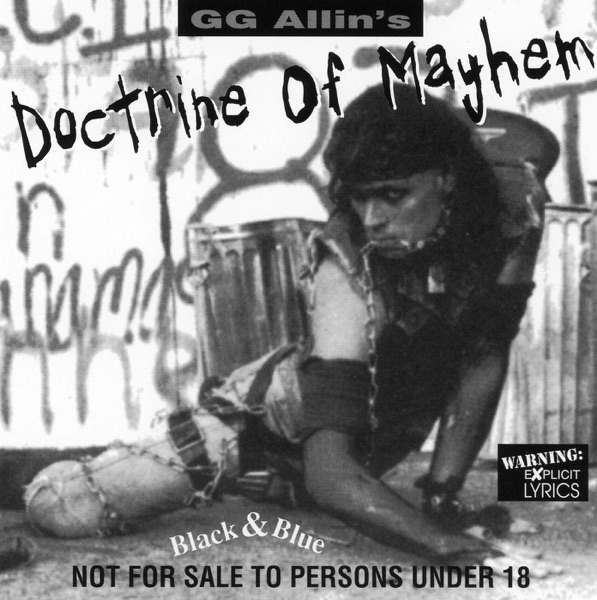
Doctrine of Mayhem
1990 · 16 tracks
- 1 Blood for You (Acoustic) ↗ 2:45
- 2 Darkness & a Bottle to Hold ↗ 2:21
- 3 In This Room ↗ 4:05
- 4 Sluts In the City ↗ 4:04
- 5 Blood for You ↗ 3:37
- 6 Interview ↗ 2:10
- 7 Abuse Me (I Want to Die) ↗ 4:11
- 8 I Wanna F*** Myself ↗ 2:57
- 9 Needle Up My C**k ↗ 3:15
- 10 Ass F***in Butt Sucking ↗ 3:05
- 11 You'll Never Tame Me ↗ 2:45
- 12 Torture You ↗ 3:11
- 13 Bite It You Scum ↗ 3:50
- 14 F*** the Dead ↗ 4:27
- 15 I Wanna Piss On You ↗ 2:50
- 16 GG's Xmas Song (Bonus Cut) ↗ 5:28
You Give Love a Bad Name
1991 · 17 tracks
- 1 Swank F****n' ↗ 2:53
- 2 Bloody Mary's Bloody C**t ↗ 3:26
- 3 Tough F****n' Shit ↗ 2:08
- 4 I'm a Rapist ↗ 4:28
- 5 Suck Dog ↗ 2:50
- 6 Teenage Twats ↗ 3:29
- 7 Beer Picnic ↗ 4:22
- 8 Stink Finger C**t ↗ 3:04
- 9 Scars On My Body / Scabs On My Dick ↗ 2:31
- 10 Garbage Dump ↗ 2:24
- 11 Watch Me Kill the Boston Girl ↗ 1:00
- 12 Castration Crucifixion ↗ 2:06
- 13 Snakeman's Dance ↗ 3:04
- 14 Slaughterhouse Death Camp ↗ 1:16
- 15 Feces & Blood ↗ 3:42
- 16 Master Daddy ↗ 1:45
- 17 Interview from Prison ↗ 15:59

Suicide Sessions
1991 · 31 tracks
- 1 Phone Interview ↗ 0:08
- 2 I Hate My Audience ↗ 1:02
- 3 Outlaw Scumfuc ↗ 2:03
- 4 Dope Money ↗ 2:04
- 5 Die When I Die ↗ 1:43
- 6 Abuse Myself I Wanna Die ↗ 2:27
- 7 Caroline and Sue ↗ 2:07
- 8 Jesus and Mother's C**t ↗ 6:12
- 9 C**k On the Loose ↗ 1:52
- 10 Expose Yourself to Kids ↗ 3:43
- 11 I'm a Gypsy M**********r ↗ 2:05
- 12 Hangin' Out With Jim ↗ 2:53
- 13 I'm Gonna Rape You ↗ 2:04
- 14 Bite It You Scum ↗ 1:52
- 15 Outlaw Scumfuc ↗ 1:41
- 16 I Wanna F**k Myself ↗ 2:05
- 17 Dagger In My Heart ↗ 2:56
- 18 Shit On My Prick ↗ 1:24
- 19 Cornhole Lust ↗ 1:37
- 20 Spread Your Legs, Part Your Lips ↗ 2:50
- 21 I Live to Be Hated ↗ 2:02
- 22 Stick a Cross Up a Nun's C**t ↗ 1:47
- 23 Kiss Me In the Gutter ↗ 2:31
- 24 I Want to Burn ↗ 1:05
- 25 Lillian Phone F****r ↗ 1:41
- 26 Pain and Suffering ↗ 1:03
- 27 Troubled Troubador of Tomorrow / Liquor Slicked Highway ↗ 3:48
- 28 Can't Afford the Ball ↗ 1:26
- 29 Drug Whore ↗ 2:46
- 30 I Will Not Act Civilized ↗ 1:29
- 31 I'm Dying, I'm Dying, I'm Dead ↗ 1:24
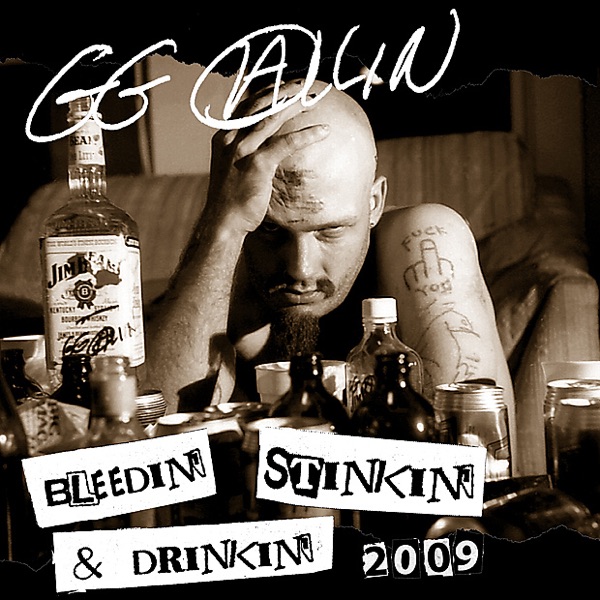
Bleedin', Stinkin' & Drinkin'
1991 · 7 tracks
- 1 Part One - GG Allin On the Live Show ↗ 5:39
- 2 Part Two - GG Allin On the Audience & the Music Industry ↗ 3:52
- 3 Part Three - GG Allin On Touring ↗ 4:20
- 4 Part Four - GG Allin On Jail ↗ 4:25
- 5 Part Five - GG Allin On His Mission ↗ 4:31
- 6 Part Six - GG Allin On Being On the Road ↗ 4:41
- 7 Part Seven - GG Allin On His Tampa Trip ↗ 5:55
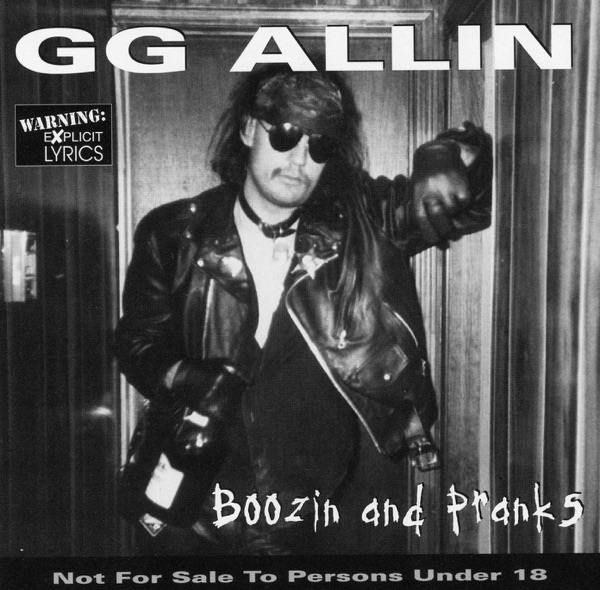
Boozin And Pranks
1995 · 1 track
- 1 Live At the Twilight Room, Dallas TX 1985 ↗ 43:37
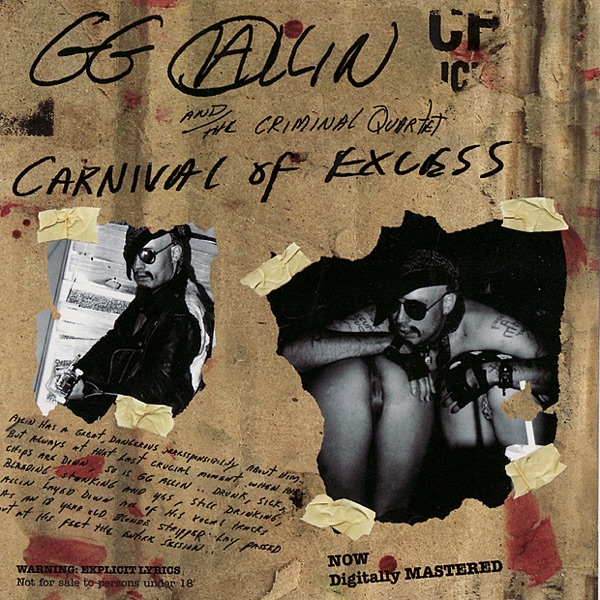
Carnival of Excess
1995 · 12 tracks
- 1 Outskirts of Life ↗ 3:20
- 2 F**k Authority ↗ 3:25
- 3 Carmelita ↗ 2:59
- 4 Guns, Bitches, Brawls and Bottles ↗ 3:16
- 5 Son of Evil ↗ 3:06
- 6 Watch Me Kill ↗ 1:47
- 7 The Snake Man ↗ 2:39
- 8 GG and Tiny Tim On COE ↗ 2:49
- 9 No Rights ↗ 3:58
- 10 Pick Me Up (On Your Way Down) ↗ 1:59
- 11 Borrowed Time ↗ 4:11
- 12 GG's Vision ↗ 1:25

The Troubled Troubadour
1996 · 12 tracks
- 1 When I Die ↗ 3:53
- 2 Liquor Slicked Highway ↗ 2:56
- 3 Sitting In This Room ↗ 2:54
- 4 Kissing the Flames ↗ 2:36
- 5 Rowdy Beer Drinkin' Night ↗ 3:04
- 6 Up Against the Wall ↗ 2:03
- 7 Conversation No. 1 ↗ 25:51
- 8 Conversation No. 2 ↗ 11:46
- 9 Conversation No. 3 ↗ 3:10
- 10 Spoken Word No. 1 ↗ 1:52
- 11 Dead Flowers ↗ 4:48
- 12 Spoken Word No.2 ↗ 0:49
-
 Always Was, Is and Always Shall BeGG Allin198011 tracks
 -
 Public Animal #1GG Allin19878 tracks
 -
 You Give Love a Bad NameGG Allin198717 tracks
 -
 Freaks, Faggots, Drunks & JunkiesGG Allin198819 tracks
 -
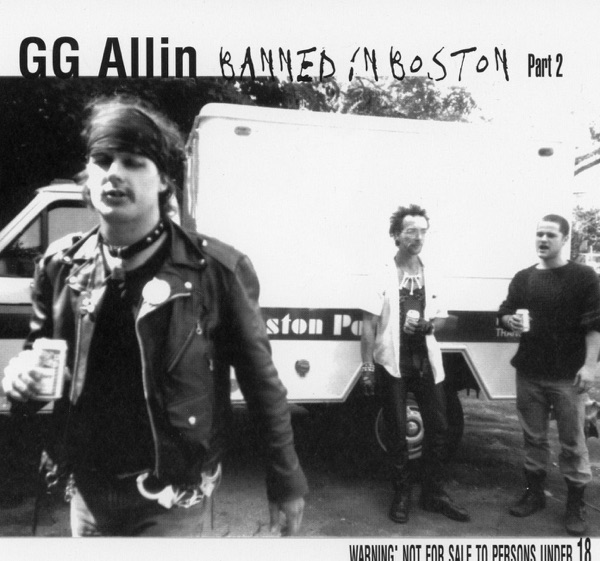
 Banned in BostonGG Allin19899 tracks
 -
 Doctrine of MayhemGG Allin199016 tracks
 - You Give Love a Bad NameGG Allin199117 tracks
-
 Suicide SessionsGG Allin199131 tracks
 -
 Bleedin', Stinkin' & Drinkin'GG Allin19917 tracks
 -
 Boozin And PranksGG Allin19951 track
 -
 Carnival of ExcessGG Allin199512 tracks
 -
 The Troubled TroubadourGG Allin199612 tracks
Deep Dive
Overview
GG Allin was an American punk rock musician whose career spanned from 1980 to the early 1990s, producing a staggering volume of studio recordings across multiple bands and record labels. Born Kevin Michael Allin in 1956, he became one of punk rock’s most polarizing figures, remembered as much for his extreme live performances as for his musical output. Positioned at the intersection of hardcore punk, shock rock, and performance art, Allin represented punk’s most uncompromising, anti-establishment ethos—one that rejected conventional notions of musicianship, decorum, and human decency in favor of raw transgression.
AllMusic’s characterization of Allin as “the most spectacular degenerate in rock n’ roll history” captures the cultural paradox he embodied: a prolific recording artist whose prolific studio work was often overshadowed by his reputation for on-stage violence, bodily desecration, and assaults on audience members. His career trajectory and criminal arrests punctuated a period when punk rock itself was fragmenting into increasingly extreme subgenres, and Allin’s unrelenting provocations marked one extreme endpoint of that spectrum.
Formation Story
GG Allin emerged from the American punk rock scene in the late 1970s and early 1980s, entering his recording career at age 24 with his first studio album in 1980. Rather than a conventional band origin story, Allin’s career was defined by a succession of projects, collaborations, and shifting lineups under various group names—The Murder Junkies among them—and his prolific output across independent and alternative labels including Awareness Records, Bomp! Records, Homestead Records, and ROIR. This decentralized approach to making and recording music reflected punk’s DIY ethos while also enabling Allin’s relentless productivity: he could record, release, and move on to the next project without the constraints of a stable ensemble or major-label oversight.
From his first album, Always Was, Is and Always Shall Be (1980), Allin established himself as a recording artist committed to rapid output and deliberate provocation. Over the next fifteen years, he would release or appear on more than twenty studio albums, treating the recording studio as a space to document his musical vision with minimal mediation. This prolific approach—sometimes yielding multiple albums in a single year—became a hallmark of his career and reflected both his commitment to the punk ethos of accessibility and his desire to remain perpetually in the public consciousness through sheer volume of product.
Breakthrough Moment
Allin’s transition from underground punk figure to broader notoriety came not through a single definitive album but through the escalating extremity and visibility of his live performances throughout the 1980s. Recordings such as Eat My Fuc (1984) and You’ll Never Tame Me (1985) circulated within punk and hardcore communities, establishing him as a figure committed to sonic and lyrical transgression. However, it was his stage presence—characterized by self-mutilation, defecation, physical assault on audience members, and other acts designed to violate and provoke—that transformed him into a figure of international infamy.
The mid-to-late 1980s saw Allin’s arrest and imprisonment on multiple occasions as a direct result of his stage conduct. Albums released during this period, including Public Animal #1 (1987), Freaks, Faggots, Drunks & Junkies (1988), and Banned in Boston (1989), bore titles that advertised his defiant stance. By the end of the 1980s, Allin had achieved a dark kind of celebrity as a figure whom police, venue owners, and audiences either sought out or actively avoided, making him impossible to ignore within the broader landscape of American punk and underground rock.
Peak Era
The period from 1987 to 1993 represented Allin’s most prolific recording phase, during which he released or appeared on approximately a dozen studio albums. Between Public Animal #1 (1987) and his final recording in 1993, War In My Head - I’m Your Enemy, Allin maintained an astonishing pace of studio activity, producing Doctrine of Mayhem (1990), Suicide Sessions (1991), Bleedin’, Stinkin’ & Drunks (1991), Murder Junkies (1991), and Brutality and Bloodshed for All (1993). This era saw him working across multiple configurations and record labels, suggesting both a restless creative energy and an industry willing to document his work despite—or perhaps because of—his notoriety.
During these years, Allin’s performances became increasingly infamous, his name appearing in underground punk zines, alternative press, and eventually mainstream media coverage of extreme performance art. His recordings functioned partly as documents of his raw, unpolished approach to punk rock and partly as promotional vehicles for his increasingly notorious live appearances. The sheer volume of releases during this period, combined with the escalating extremity of his behavior, made him a defining figure of 1980s and early-1990s hardcore punk’s most nihilistic wing.
Musical Style
GG Allin’s musical approach was rooted in hardcore punk’s stripped-down, high-energy aesthetic, characterized by short, aggressive songs, driving rhythms, and raw vocal delivery. His songwriting and recording style prioritized immediacy and visceral impact over technical refinement; albums were often recorded quickly with minimal post-production, preserving the rough texture of live instrumentation and Allin’s often-shouted vocal performance. This anti-polish stance reflected punk rock’s broader rejection of 1970s rock’s production values and represented a deliberate aesthetic choice—one that positioned musical craftsmanship as irrelevant compared to emotional authenticity and transgressive content.
Allin’s music existed within shock rock’s lineage while remaining firmly rooted in hardcore punk’s genealogy. Song titles and lyrical content were frequently inflammatory, misogynistic, and deliberately offensive, treating shock value as a primary artistic tool. His prolific output across multiple bands and configurations meant that his sound varied across releases, but the underlying commitment to raw, unmediated punk rock remained consistent. Whether recording as GG Allin, with The Murder Junkies, or in various other configurations, he maintained a commitment to punk’s speed, aggression, and anti-establishment posture, even as his live performances became his primary vehicle for notoriety.
Major Albums
Always Was, Is and Always Shall Be (1980)
Allin’s debut studio album established his recording presence and introduced his unpolished, direct approach to hardcore punk songwriting. This early work set the template for his prolific career to follow.
Eat My Fuc (1984)
Released four years into Allin’s recording career, this album’s provocative title and content cemented his reputation for offensive shock tactics and helped establish him within the underground punk and hardcore scenes.
You’ll Never Tame Me (1985)
Recorded during a particularly productive year, this album reinforced Allin’s commitment to transgression and his defiant stance toward mainstream rock conventions and social norms.
Public Animal #1 (1987)
This mid-career release arrived as Allin’s live performances were becoming increasingly notorious, with the album serving as a sonic counterpart to his escalating stage extremity.
Doctrine of Mayhem (1990)
Released during Allin’s peak period of studio activity, this album exemplified his prolific approach and his continued refusal to moderate his content or presentation.
Brutality and Bloodshed for All (1993)
One of Allin’s final studio albums, released during the last year of his life, this work represented the endpoint of a thirteen-year recording career defined by relentless output and unyielding transgression.
Signature Songs
While GG Allin’s individual songs are less widely known than his reputation for live transgression, his recorded work includes numerous tracks that exemplify his approach to hardcore punk songwriting and shock rock provocation. The extreme nature of much of his content and the sheer volume of his releases mean that specific song titles and their contexts require careful documentation; his significance rests more on his overall body of work and his impact on live performance as an art form than on any single recorded moment.
Influence on Rock
GG Allin’s impact on rock and punk music is paradoxical and difficult to measure through conventional metrics. He did not birth a movement or establish a widely imitated musical style; instead, he represented an extreme endpoint of punk rock’s anti-establishment ethos and performance art’s fascination with transgression. His influence manifested in underground and independent punk scenes, where his commitment to uncompromising provocation and his rejection of industry constraints inspired subsequent generations of performers to push beyond conventional boundaries. His legacy resides not in a specific sound or technique but in the demonstrated possibility of punk rock as a medium for extreme performance art and deliberate social transgression.
Allin’s career also influenced discussions within punk and rock criticism about the relationship between artistic integrity, shock value, and morality. By embodying punk’s most literal interpretation—as a complete rejection of social norms and decency—Allin forced audiences and critics to confront questions about where artistic freedom ends and personal responsibility begins. His prolific recording output across multiple independent labels demonstrated an alternative model of music production and distribution outside major-label structures, even if his artistic achievements rarely matched the radical nature of his stated intentions.
Legacy
GG Allin remains a polarizing and marginal figure in rock history, remembered primarily for his notoriety rather than for enduring musical achievements. His death in 1993 at age 36 marked the end of a thirteen-year recording career that produced more than twenty studio albums and numerous live recordings. While his name appears in discussions of punk rock’s most extreme figures and shock rock’s transgressive history, his actual musical influence on subsequent rock music has been limited. His recordings remain available through reissues and streaming platforms, allowing new audiences to encounter his work, but they function primarily as historical documents of 1980s underground punk rather than as sources of ongoing musical innovation.
Allin’s legacy within punk rock is that of a figure who pushed the genre’s anti-establishment ethos to its logical extreme, demonstrating both punk’s democratic potential for anyone to make and distribute music and its vulnerability to nihilism and personal destruction. He stands as a cautionary figure in rock history—one whose prolific output, criminal behavior, and violent performances illustrated the distance between punk rock’s idealistic origins and its possible descent into pure transgression divorced from broader artistic or political purpose.
Fun Facts
- GG Allin recorded albums across multiple independent record labels throughout the 1980s and early 1990s, including Awareness Records, Bomp! Records, Homestead Records, and ROIR, demonstrating punk’s distributed DIY approach to music production and distribution.
- His prolific output included multiple albums released in single years, such as 1985 and 1991, when he recorded and released three or more studio albums, maintaining an extraordinary pace of studio activity.
- AllMusic’s characterization of Allin as “the most spectacular degenerate in rock n’ roll history” became one of the most widely cited descriptions of his career and cultural impact, despite—or perhaps because of—its apparent moral condemnation.
- G4TV’s “That’s Tough” program ranked Allin second on their list of “toughest rock stars in the world,” placing him in a cultural conversation about rock’s most extreme and dangerous figures.