
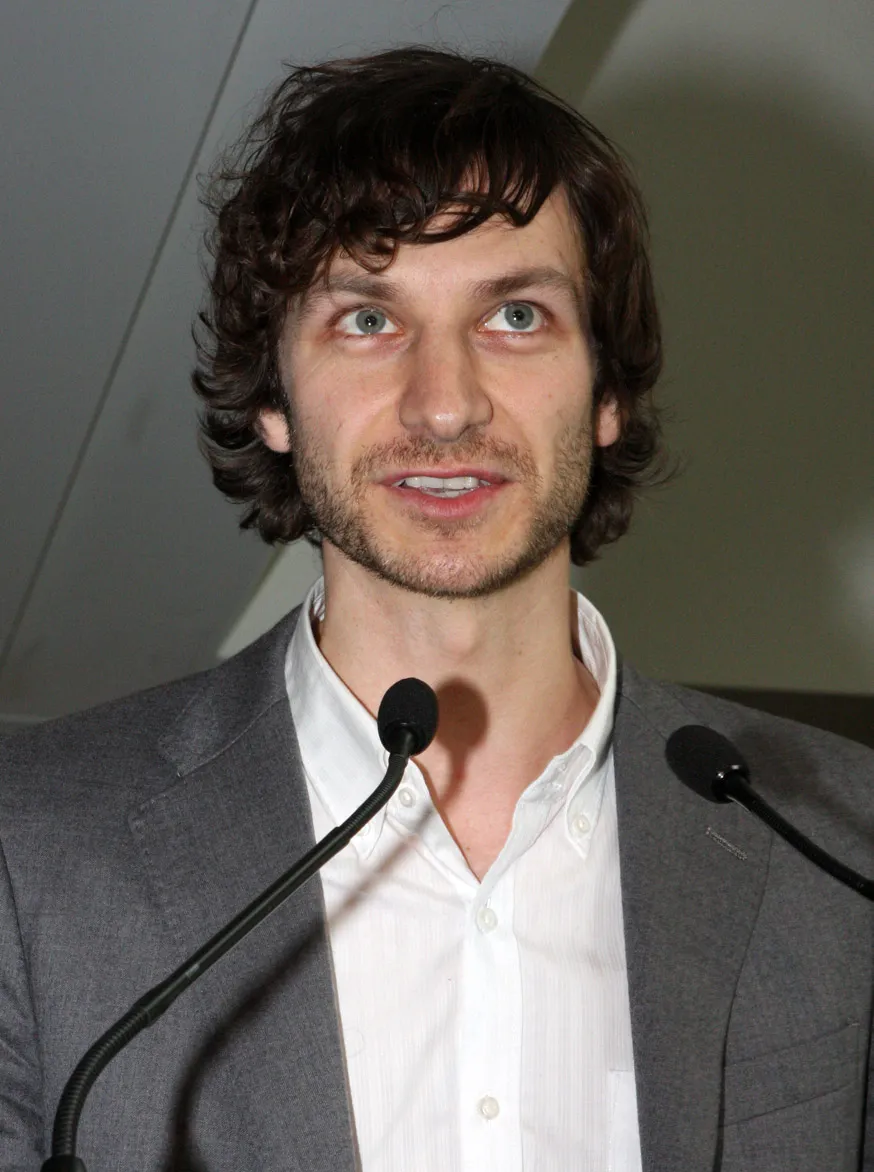
Photo by Eva Rinaldi , licensed under CC BY-SA 2.0 · Wikimedia Commons
Rank #117
Gotye
From Wikipedia
Wouter André "Wally" De Backer is a Belgian-born Australian singer-songwriter and multi-instrumentalist. His 2011 single "Somebody That I Used to Know" topped the Billboard Hot 100, as well as several international charts, and became the best-selling song of 2012. He has won five ARIA Awards and received a nomination for an MTV EMA for Best Asia and Pacific Act. At the 55th Annual Grammy Awards, the song won Record of the Year and Best Pop Duo/Group Performance, while its parent album — Making Mirrors (2012) — won Best Alternative Music Album.
Discography & Previews
Browse through and click an album to open and play 30-second previews streamed from Apple Music.

Like Drawing Blood
2006 · 12 tracks
- 1 Like Drawing Blood ↗ 0:22
- 2 The Only Way ↗ 4:49
- 3 Hearts A Mess ↗ 6:03
- 4 Coming Back ↗ 6:39
- 5 Thanks For Your Time ↗ 4:34
- 6 Learnalilgivinanlovin ↗ 2:50
- 7 Puzzle With A Piece Missing ↗ 5:40
- 8 A Distinctive Sound ↗ 6:17
- 9 Seven Hours With A Backseat Driver ↗ 4:42
- 10 Night Drive ↗ 6:10
- 11 Worn Out Blues ↗ 0:38
- 12 The Only Thing I Know ↗ 7:04
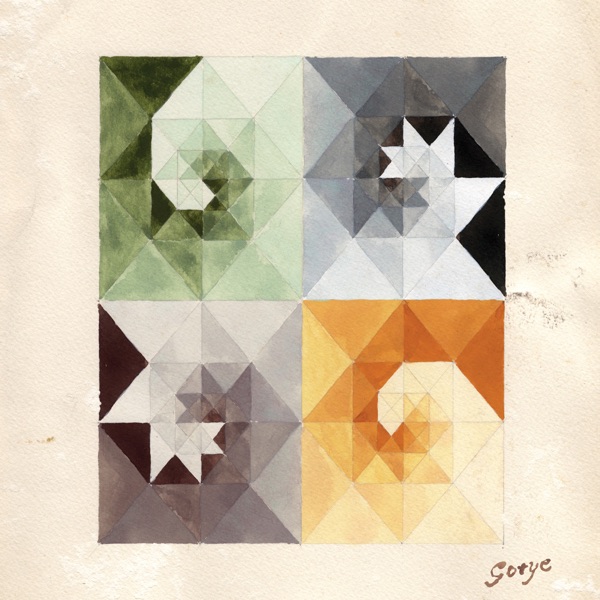
Making Mirrors
2011 · 12 tracks
- 1 Making Mirrors ↗ 1:01
- 2 Easy Way Out ↗ 1:58
- 3 Somebody That I Used to Know (feat. Kimbra) ↗ 4:05
- 4 Eyes Wide Open ↗ 3:11
- 5 Smoke and Mirrors ↗ 5:13
- 6 I Feel Better ↗ 3:19
- 7 In Your Light ↗ 4:39
- 8 State of the Art ↗ 5:22
- 9 Don’t Worry, We'll Be Watching You ↗ 3:18
- 10 Giving Me a Chance ↗ 3:07
- 11 Save Me ↗ 3:51
- 12 Bronte ↗ 3:19
-
 Like Drawing BloodGotye200612 tracks
 -
 Making MirrorsGotye201112 tracks
Deep Dive
Overview
Wouter André “Wally” De Backer, known professionally as Gotye, is a Belgian-born Australian singer-songwriter and multi-instrumentalist whose influence on contemporary indie rock and alternative music expanded dramatically in the early 2010s. Though active as a recording artist and experimenter since the early 2000s, Gotye achieved mainstream global recognition through a single song that became ubiquitous: in 2011, “Somebody That I Used to Know” topped the Billboard Hot 100 and numerous international charts, establishing Gotye as one of the defining artists of early-2010s popular music. The track’s parent album, Making Mirrors, cemented his standing within indie and alternative rock circles while simultaneously crossing into mainstream consciousness—a rare feat in an era of fragmenting radio audiences.
Formation Story
Gotye was born in Belgium to a Belgian mother and Australian father, an early exposure to cultural duality that would inform his approach to music and artistic identity. His family relocated to Australia during his childhood, and he grew up absorbing both European and Australian musical traditions alongside the alternative rock and indie movements that were flourishing during the 1990s. De Backer developed his multi-instrumentalist skills from an early age, teaching himself to play multiple instruments and developing an approach to songwriting and arrangement that emphasized layered instrumentation and textural experimentation. His path into professional music was gradual and self-directed rather than rooted in a specific local scene or band context; instead, he built his artistic identity through studio work and independent releases, establishing himself as a solo artist committed to hands-on production and arrangement before pursuing any major-label recognition.
Breakthrough Moment
Gotye’s initial albums—Boardface (2003) and Like Drawing Blood (2006)—were released independently or through smaller labels, establishing a devoted cult following within indie rock and alternative music communities but remaining largely outside mainstream awareness. His self-titled album Gotye (2008) marked a deepening of his artistic voice and production sophistication, yet mainstream commercial success remained elusive. The breakthrough came with Making Mirrors (2011), an album that synthesized years of experimentation into a collection of meticulously crafted pop and alternative songs. The album’s lead single, “Somebody That I Used to Know,” featuring Kimbra, became a global phenomenon almost immediately upon its release. The song’s distinctive production—featuring a pared-down acoustic arrangement, pitch-shifted vocal effects, and an immediately recognizable melodic hook—resonated across radio formats, streaming platforms, and international markets, ultimately topping the Billboard Hot 100 and claiming the title of best-selling song of 2012.
Peak Era
The Making Mirrors era, spanning 2011 through 2012 and beyond, represents Gotye’s period of maximum cultural and commercial impact. The success of “Somebody That I Used to Know” elevated the entire album into the mainstream consciousness, with Making Mirrors becoming a fixture on international charts and streaming services. At the 55th Annual Grammy Awards, the song won Record of the Year and Best Pop Duo/Group Performance, while Making Mirrors itself won Best Alternative Music Album—recognition that validated Gotye’s standing among both critics and the Recording Academy. This period also brought significant accolades within Australia’s music industry, including multiple ARIA Award wins, and broader international recognition including an MTV EMA nomination for Best Asia and Pacific Act. The success was remarkable not merely for its commercial scale but for how thoroughly it penetrated global consciousness despite indie rock’s continued existence outside traditional mainstream radio structures.
Musical Style
Gotye’s approach to songwriting and production is grounded in meticulous arrangement and textural experimentation rather than reliance on conventional rock band dynamics. As a multi-instrumentalist, he typically handles a broad range of instruments within his own compositions, building songs from distinctive sonic elements rather than from a guitar-drums-bass foundation. His vocal delivery is expressive and often processed, employing pitch manipulation, layering, and other studio effects as integral compositional tools rather than superficial embellishment. The musical style draws from indie rock, alternative rock, and electronic music traditions while maintaining accessibility to pop sensibilities—a balance that allowed “Somebody That I Used to Know” to function equally effectively as an art-rock statement and a mainstream single. His earlier work showed more experimental leanings, with Boardface and Like Drawing Blood exploring layered, atmospherically rich soundscapes; by the Making Mirrors era, those tendencies were refined into more concise, hook-driven structures without sacrificing sonic complexity.
Major Albums
Boardface (2003)
Gotye’s debut album established his foundational approach to multi-instrumentalism and studio-based songwriting, showcasing early experiments with layered arrangements and unconventional production techniques within an indie rock framework.
Like Drawing Blood (2006)
The second album deepened his experimental tendencies, featuring richly textured arrangements and atmospheric production that attracted critical attention within alternative rock circles and built his reputation as a serious artistic voice.
Gotye (2008)
Released under his stage name, this self-titled album represented a consolidation of his artistic vision, with more refined songwriting and production that would anticipate the breakthrough moments of Making Mirrors.
Making Mirrors (2012)
Gotye’s commercial and critical apex, this album balanced accessibility with artistic sophistication, transforming the indie rock artist into a mainstream phenomenon while earning Grammy recognition including Best Alternative Music Album.
Signature Songs
- “Somebody That I Used to Know” — The inescapable 2011 single that topped the Billboard Hot 100 and became the best-selling song of 2012, reshaping Gotye’s career trajectory overnight.
- “Eyes Open” — A track that showcased his ability to balance electronic production with organic instrumentation and expressive vocals.
- “Lemons” — A composition demonstrating his skill at building distinctive melodic hooks within layered, textually rich arrangements.
Influence on Rock
Gotye’s impact on indie rock and alternative music in the early 2010s extended beyond “Somebody That I Used to Know,” though that song’s global success brought unprecedented visibility to the broader indie and alternative rock communities. His approach to multi-instrumental composition and meticulous studio production influenced a generation of artists navigating the space between indie credibility and mainstream accessibility. The massive success of Making Mirrors demonstrated to the broader music industry that alternative and indie rock artists could achieve stratospheric commercial success without compromising artistic vision or experimental impulses—a lesson that reverberated throughout the 2010s as streaming platforms and social media increasingly democratized music distribution and discovery. His work reinforced the legitimacy of studio-centric songwriting and vocal processing as core elements of contemporary rock and pop production.
Legacy
Gotye remains a fixture within indie rock and alternative music history as the artist who, almost accidentally, created one of the decade’s defining songs and in doing so achieved something rare: a moment of genuine mainstream ubiquity without associated backlash or dismissal from serious musicians and critics. Making Mirrors continues to stream billions of times across platforms, with “Somebody That I Used to Know” remaining one of the most recognizable songs of the 2010s globally. His Grammy Awards recognition—particularly Best Alternative Music Album for Making Mirrors—secured his standing within the Recording Academy’s conception of serious artistic achievement. Beyond commercial metrics, Gotye’s career trajectory illustrates the evolving relationship between indie rock and mainstream success in the streaming era, where independent or alternative artists could reach global audiences without traditional radio gatekeeping. His influence extends through artists who similarly combine studio sophistication with genre-crossing accessibility, cementing his position within early-2010s rock and popular music history.
Fun Facts
- Gotye was born in Belgium to a Belgian mother and Australian father, making him genuinely bicultural before settling in Australia during childhood—a heritage that informed his artistic identity and approach to music.
- Beyond his work under the Gotye moniker, De Backer is a multi-instrumentalist who typically plays the majority of instruments on his own recordings, functioning as both composer and performer in studio settings.
- “Somebody That I Used to Know” was a genuine cultural phenomenon, spawning countless cover versions, parodies, and references across global media and social platforms in 2011 and 2012.