
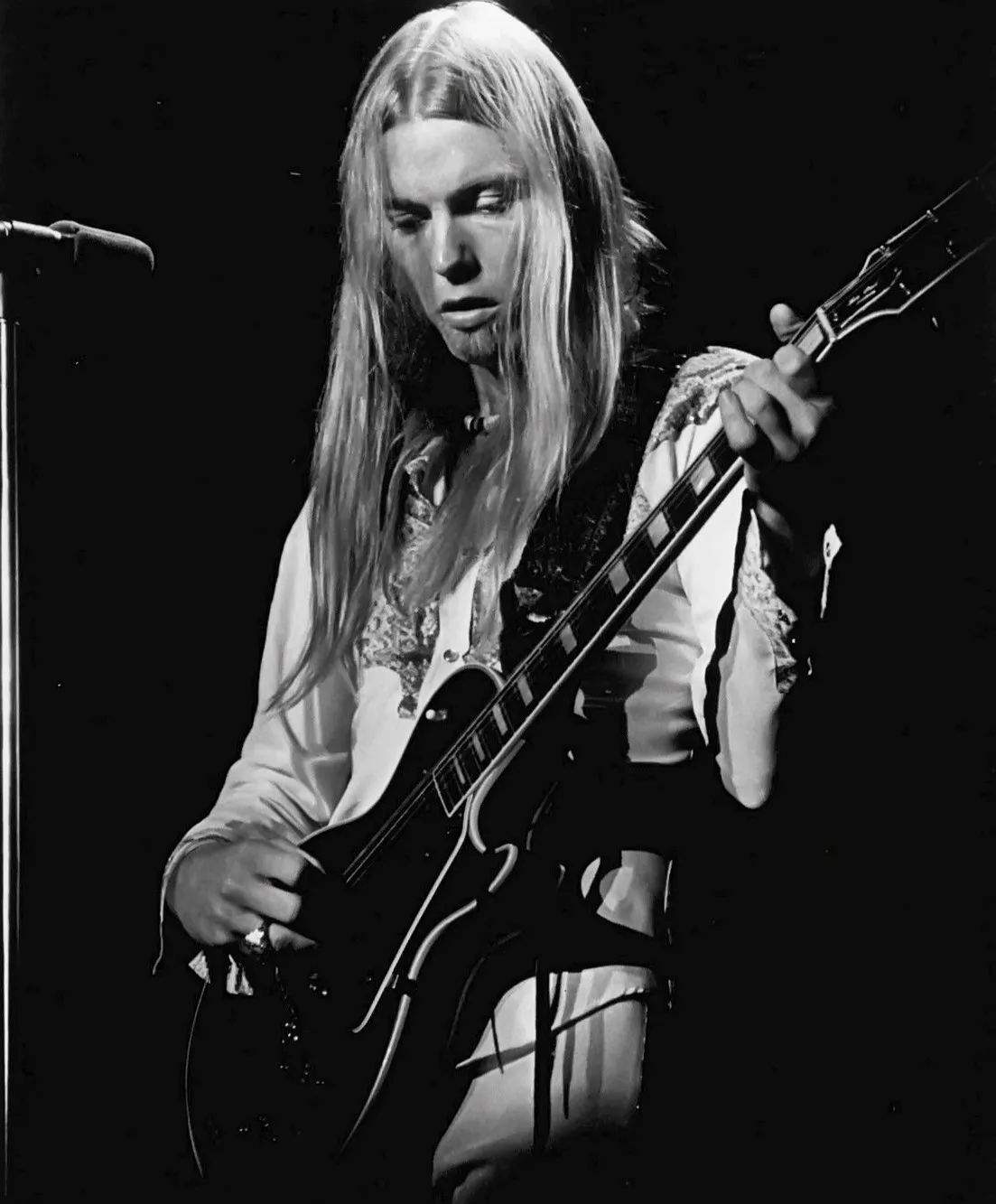
Photo by Paragon Agency-management , licensed under Public domain · Wikimedia Commons
Rank #385
Gregg Allman
From Wikipedia
Gregory LeNoir Allman was an American musician, singer and songwriter. He was known for performing in the Allman Brothers Band. Allman grew up with an interest in rhythm and blues music, and the Allman Brothers Band fused it with rock music, jazz, and country. He wrote several of the band's most popular songs, including "Whipping Post", "Melissa", and "Midnight Rider". Allman also had a successful solo career, releasing eight studio albums. He was born and spent much of his childhood in Nashville, Tennessee, before relocating to Daytona Beach, Florida, and then Macon, Georgia.
Discography & Previews
Browse through and click an album to open and play 30-second previews streamed from Apple Music.

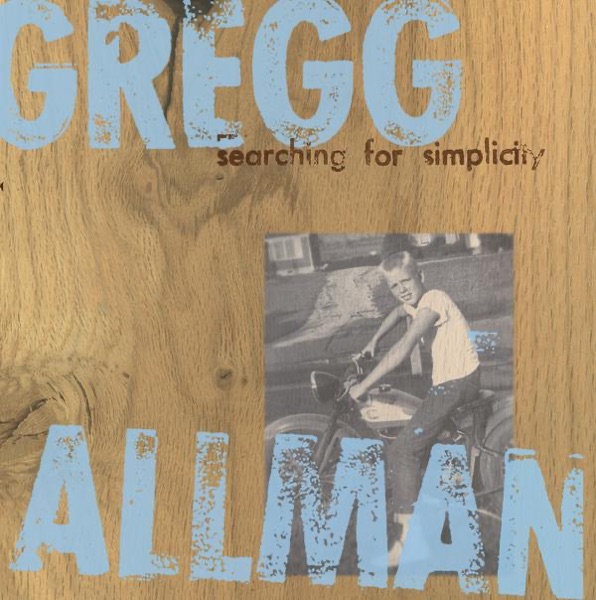
Searching for Simplicity
1997 · 13 tracks
- 1 Whipping Post ↗ 4:40
- 2 House of Blues ↗ 3:59
- 3 Come Back and Help Me ↗ 3:35
- 4 Silence Ain't Golden Anymore ↗ 3:33
- 5 Rendezvous with the Blues ↗ 3:53
- 6 Wolf's A'Howlin' ↗ 4:13
- 7 Love the Poison ↗ 3:29
- 8 Don't Deny Me ↗ 4:36
- 9 Dark End of the Street ↗ 3:15
- 10 Neighbor, Neighbor ↗ 3:54
- 11 I've Got News for You ↗ 4:37
- 12 Memphis In the Meantime ↗ 3:43
- 13 Startin' Over ↗ 3:19
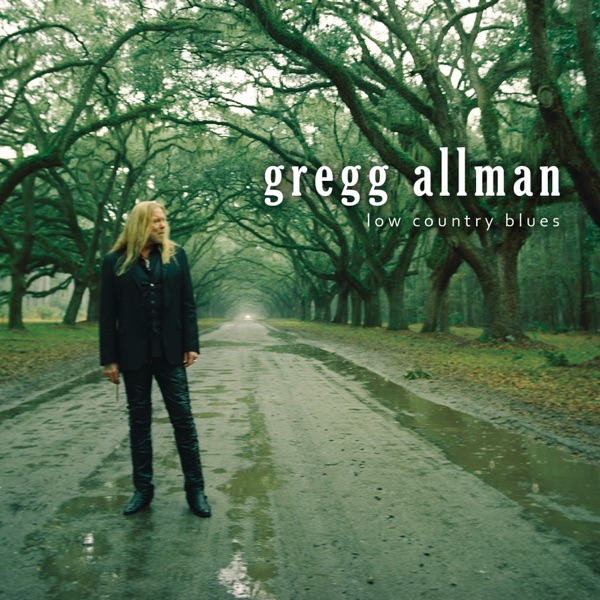
Low Country Blues
2011 · 12 tracks
- 1 Floating Bridge ↗ 4:45
- 2 Little By Little ↗ 2:46
- 3 Devil Got My Woman ↗ 4:53
- 4 I Can't Be Satisfied ↗ 3:32
- 5 Blind Man ↗ 3:46
- 6 Just Another Rider ↗ 5:39
- 7 Please Accept My Love ↗ 3:07
- 8 I Believe I'll Go Back Home ↗ 3:49
- 9 Tears, Tears, Tears ↗ 4:55
- 10 My Love Is Your Love ↗ 4:14
- 11 Checking On My Baby ↗ 4:06
- 12 Rolling Stone ↗ 7:04

Southern Blood
2017 · 12 tracks
- 1 My Only True Friend ↗ 6:17
- 2 Once I Was ↗ 3:57
- 3 Going Going Gone ↗ 4:30
- 4 Black Muddy River ↗ 4:37
- 5 I Love the Life I Live ↗ 3:31
- 6 Willin' ↗ 3:36
- 7 Blind Bats and Swamp Rats ↗ 4:33
- 8 Out of Left Field ↗ 4:10
- 9 Love Like Kerosene ↗ 4:17
- 10 Song for Adam (feat. Jackson Browne) ↗ 6:22
- 11 I Love the Life I Live (Live at The Clay Center, Charleston, WV, 05/06/16) ↗ 5:25
- 12 Love Like Kerosene (Live at The Tower Theatre, Philadelphia, PA, 04/01/16) ↗ 7:10
-
 Laid BackGregg Allman19738 tracks
 -
 Searching for SimplicityGregg Allman199713 tracks
 -
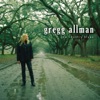 Low Country BluesGregg Allman201112 tracks
 -
 Southern BloodGregg Allman201712 tracks
Deep Dive
Overview
Gregg Allman stands as one of the foundational voices of Southern rock, equally renowned for his work as the keyboardist and vocalist of the Allman Brothers Band and for his prolific solo career. Born Gregory LeNoir Allman in 1947, he emerged from Nashville during a pivotal moment in American popular music, when the boundaries between blues, country, rock, and jazz were collapsing into something new. His songwriting produced some of rock’s most enduring compositions—“Midnight Rider,” “Whipping Post,” and “Melissa” remain staples of classic rock radio—while his soulful, emotive vocal delivery and fluid keyboard work helped define the sound of an entire region and era.
Formation Story
Gregg Allman was born in Nashville, Tennessee in 1947, a city saturated with country music tradition yet equally alive with blues and soul records that shaped the young musician’s sensibility. Growing up with a deep interest in rhythm and blues, Allman absorbed influences far beyond Nashville’s mainstream country scene, gravitating toward the rawer emotional power of blues singers and the sophisticated harmonic language of soul music. His childhood migration from Nashville to Daytona Beach, Florida and eventually to Macon, Georgia placed him in environments where blues and Southern rock culture flourished. By his late teens and early twenties, Allman had absorbed the musical DNA of multiple traditions—the blues harmonica and vocal phrasing of artists like Sonny Boy Williamson, the keyboard sophistication of Ray Charles, and the electric guitar swagger of rock and roll. These influences would coalesce when he began his recording career in the early 1970s.
Breakthrough Moment
Allman’s breakthrough came in the context of the Allman Brothers Band, which crystallized his musical vision and gave his songwriting its broadest platform. In 1972, he released Duane & Greg Allman, a collaborative album that functioned partly as a solo project and partly as a showcase for his interplay with his brother Duane, whose slide guitar had become legendary among rock musicians. The following year, Laid Back (1973) established Allman as a solo artist in his own right, demonstrating that his appeal transcended the ensemble context of his famous band. During this period, Allman’s most celebrated compositions—“Midnight Rider” and “Whipping Post”—became anthems of the era, their infectious grooves and emotionally raw lyrics resonating with audiences across regional and generational lines. These songs showcased his ability to craft narratives that balanced introspection with driving, danceable rhythms, a hallmark that would sustain his career for decades.
Peak Era
The 1970s through early 1980s represented Allman’s creative and commercial zenith. The Allman Brothers Band’s albums became cornerstones of rock radio, while Allman himself maintained an active solo presence, balancing both identities with remarkable energy. His songwriting during this period drew heavily from blues traditions while incorporating the harmonic and rhythmic innovations of rock and soul. The band’s blend of extended instrumental passages, vocal melodies steeped in blues feeling, and country-inflected lyrical themes created a template that countless Southern rock acts would follow. Allman’s keyboard work—whether on organ, piano, or synthesizer—provided melodic counterpoint and harmonic depth to the band’s ensemble sound. His voice, rough-edged yet capable of genuine tenderness, carried songs that ranged from uptempo rockers to introspective ballads. This era saw the Allman Brothers Band become festival headliners and stadium-level attractions, while Allman’s solo work maintained artistic credibility even as it remained secondary to the band’s reputation.
Musical Style
Gregg Allman’s sound fused blues, rock, and country into a style that became synonymous with Southern rock. As a keyboardist, he favored Hammond B3 organ and acoustic piano, voices that gave his music harmonic richness and soul music sophistication. His approach to keys was melodic rather than percussive; he played for flow and emotional expression rather than flash. Vocally, Allman inhabited his blues-influenced style with a raspy, yearning quality that conveyed both vulnerability and grit. His songwriting operated in a tradition of blues storytelling but filtered through a rock sensibility—his lyrics often detailed emotional struggles, journeys, and searching, set to grooves that made those struggles danceable and communal. The Allman Brothers Band’s sound, which Allman co-led, featured multiple guitarists creating counterpoint rather than unison, a configuration that allowed for jazz-like textural complexity within a rock framework. This approach reflected Allman’s deep listening to jazz harmony and improvisation, elements that elevated their music beyond straightforward rock-and-roll convention. Over time, Allman’s style evolved to incorporate more country elements and, in later years, more explicit blues returns, yet the core remained constant: emotional authenticity paired with sophisticated musicianship.
Major Albums
Duane & Greg Allman (1972)
A landmark collaboration between the Allman brothers that showcased their distinctive keyboard-and-guitar approach; the album crystallized the musical partnership that defined the Allman Brothers Band and established Allman’s solo credentials.
Laid Back (1973)
Allman’s first fully solo album, demonstrating his range as a vocalist and songwriter while maintaining the blues-rock foundation that made him distinctive among his peers in the classic rock pantheon.
Low Country Blues (2011)
A late-career return to his blues roots, recorded decades into his career and signaling a renewed commitment to the genre that had always anchored his identity.
Southern Blood (2017)
Allman’s final studio album, released the year of his death, served as both a retrospective meditation on his musical journey and a testament to his enduring vitality.
Signature Songs
- “Midnight Rider” — An indelible classic combining infectious grooves, yearning vocals, and lyrics about restlessness and survival that became an anthem for generations.
- “Whipping Post” — A slow-burn blues rock composition showcasing Allman’s emotional depth and the band’s ability to build tension through extended instrumental passages.
- “Melissa” — A tender, piano-driven ballad revealing Allman’s capacity for introspection and gentle vulnerability alongside his harder-edged rock persona.
- “Statesboro Blues” — A cover that became a signature vehicle for Allman’s slide guitar virtuosity and his deep reverence for the blues tradition.
Influence on Rock
Gregg Allman and the Allman Brothers Band fundamentally shaped Southern rock’s trajectory, establishing a template for blues-rock fusion that would influence countless acts. The band’s configuration—multiple guitarists, keyboard-driven arrangements, improvisational approach—inspired bands across generations to experiment with ensemble dynamics. Allman’s songwriting, grounded in blues emotion but executed with rock-era production and accessibility, showed that serious blues-influenced work could achieve mainstream radio success without diluting its artistic integrity. His influence rippled through classic rock, country-rock, and jam-band cultures; artists from Lynyrd Skynyrd to The Black Crowes to modern jam bands built on the foundation Allman helped establish. His willingness to inhabit multiple identities—as band member and solo artist, as blues purist and rock innovator—created a model for serious musicians navigating between ensemble and individual work.
Legacy
Gregg Allman’s death in 2017 marked the end of an era in American rock and blues. His catalog remains a cornerstone of classic rock radio, with “Midnight Rider” and “Whipping Post” certified as among the most durable rock songs ever recorded. The Allman Brothers Band’s influence extends far beyond their own recordings; their approach to collaboration, improvisation, and genre-blending shaped how rock bands conceived of themselves and their music. Allman’s later albums, including Low Country Blues and Southern Blood, demonstrated his commitment to authentic artistic expression over market trends, earning respect from critics and musicians alike. Streaming platforms, reissues, and documentary retrospectives have kept his work visible to new generations, while the anniversary reissues of Allman Brothers Band albums have cemented his place in the rock and blues canon. His legacy encompasses not just the songs he wrote, but the possibilities he opened for how Southern, blues-influenced rock could sound—sophisticated yet visceral, traditional yet innovative, deeply rooted yet universally resonant.
Fun Facts
- Allman recorded Duane & Greg Allman partly as a collaborative effort with his brother Duane, one of rock’s most influential slide guitarists, before Duane’s tragic death reshaped the trajectory of both the band and Gregg’s solo career.
- His relocation from Nashville to Macon, Georgia placed him at the heart of a vibrant Southern rock scene that would produce multiple influential bands during the 1970s.
- Allman maintained the rare balance of being equally committed to his solo work and his role in the Allman Brothers Band across multiple decades, releasing solo albums even during the band’s most active periods.