
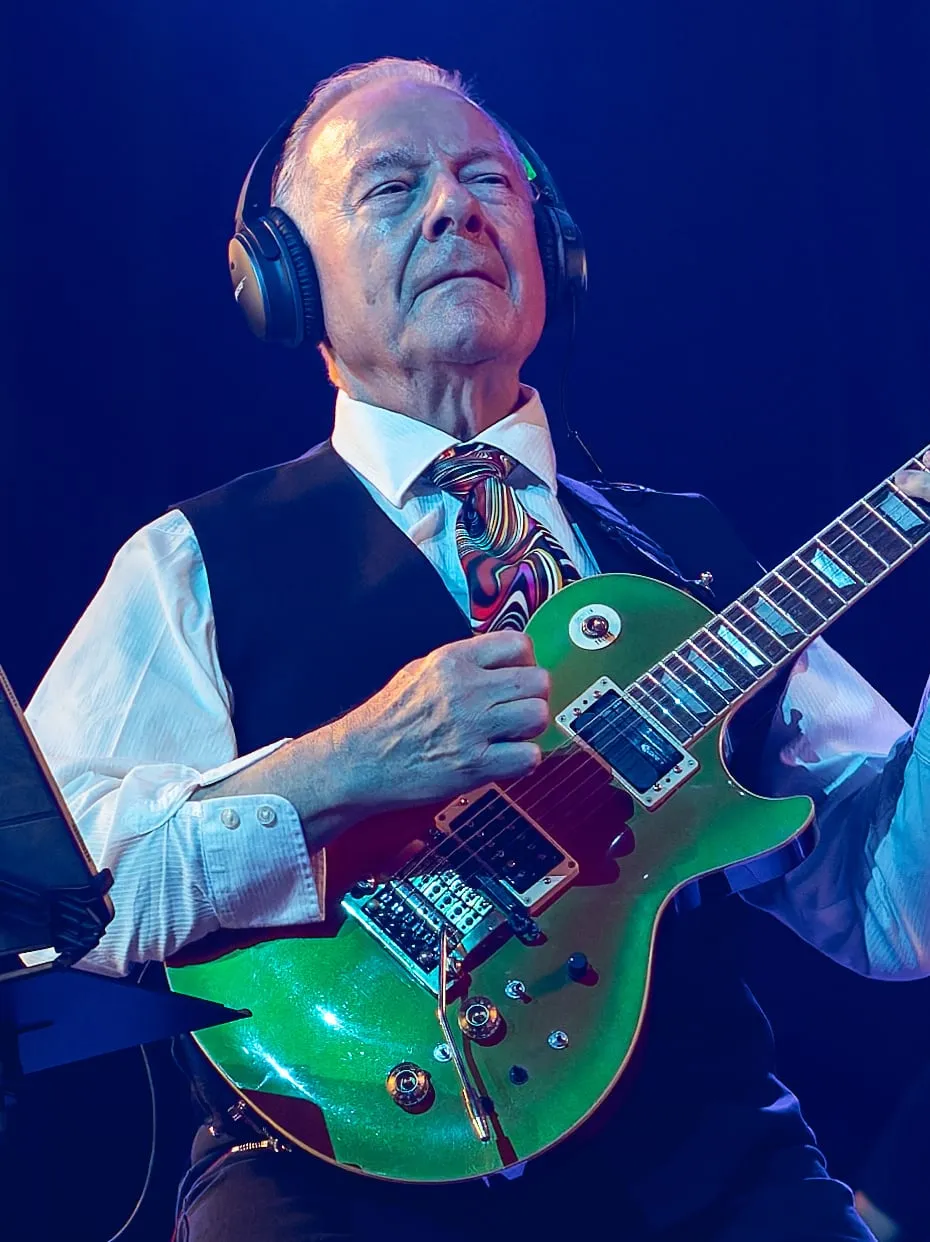
Photo by Raph_PH , licensed under CC BY 2.0 · Wikimedia Commons
Rank #386
Robert Fripp
From Wikipedia
Robert Fripp is an English musician, composer, record producer, and author, best known as the guitarist, founder and only constant member of the progressive rock band King Crimson. He has worked extensively as a session musician and collaborator, notably with David Bowie, Blondie, Brian Eno, Peter Gabriel, Peter Hammill, Daryl Hall, the Roches, Talking Heads, and David Sylvian. He also composed the startup sound of Windows Vista, in collaboration with Tucker Martine and Steve Ball. His discography includes contributions to more than 700 official releases.
Discography & Previews
Browse through and click an album to open and play 30-second previews streamed from Apple Music.

Exposure
1979 · 39 tracks
- 1 Preface (First Edition: Original 1979 Release) ↗ 1:16
- 1 Preface (Third Edition) ↗ 1:16
- 2 You Burn Me up I'm a Cigarette (First Edition: Original 1979 Release) ↗ 2:23
- 2 You Burn Me up I'm a Cigarette (Third Edition) ↗ 2:24
- 3 Breathless (First Edition: Original 1979 Release) ↗ 4:46
- 3 Breathless (Third Edition) ↗ 4:43
- 4 Disengage (First Edition: Original 1979 Release) ↗ 2:47
- 4 Disengage II (Third Edition) ↗ 2:44
- 5 North Star (First Edition: Original 1979 Release) ↗ 3:06
- 5 North Star (Third Edition) ↗ 3:12
- 6 Chicago (First Edition: Original 1979 Release) ↗ 2:12
- 6 Chicago (Third Edition) ↗ 2:18
- 7 Ny3 (First Edition: Original 1979 Release) ↗ 2:24
- 7 New York, New York, New York (Third Edition) ↗ 2:18
- 8 Mary (First Edition: Original 1979 Release) ↗ 2:09
- 8 Mary (Third Edition) ↗ 2:09
- 9 Exposure (First Edition: Original 1979 Release) ↗ 4:26
- 9 Exposure (Third Edition) ↗ 4:26
- 10 Hāaden Two (First Edition: Original 1979 Release) ↗ 2:54
- 10 Hāaden Two (Third Edition) ↗ 1:58
- 11 Urban Landscape (First Edition: Original 1979 Release) ↗ 2:35
- 11 Urban Landscape (Third Edition) ↗ 2:35
- 12 I May Not Have Had Enough of Me but I've Had Enough of You (First Edition: Original 1979 Release) ↗ 3:44
- 12 I May Not Have Had Enough of Me, but I've Had Enough of You (Third Edition) ↗ 3:37
- 13 First Inaugural Address to the I.A.C.E. Sherborne House (First Edition: Original 1979 Release) ↗ 0:05
- 13 First Inaugural Address to the I.A.C.E. Sherborne House (Third Edition) ↗ 0:07
- 14 Water Music I (First Edition: Original 1979 Release) ↗ 1:27
- 14 Water Music I (Third Edition) ↗ 1:19
- 15 Here Comes the Flood (First Edition: Original 1979 Release) ↗ 4:07
- 15 Here Comes the Flood (Third Edition) ↗ 3:56
- 16 Water Music II (First Edition: Original 1979 Release) ↗ 4:28
- 16 Water Music II (Third Edition) ↗ 3:54
- 17 Postscript (First Edition: Original 1979 Release) ↗ 0:38
- 17 Postscript (Third Edition) ↗ 0:55
- 18 Exposure (Alternative Take) ↗ 4:28
- 19 Mary (Alternative Take) ↗ 2:07
- 20 Disengage (Alternative Take) ↗ 2:50
- 21 Chicago (Alternative Take) ↗ 2:03
- 22 Ny3 (Alternative Take) ↗ 2:16

I Advance Masked
1982 · 13 tracks
- 1 I Advance Masked ↗ 5:14
- 2 Under Bridges of Silence ↗ 1:42
- 3 China - Yellow Leader ↗ 7:09
- 4 In the Cloud Forest ↗ 2:32
- 5 New Marimba ↗ 3:39
- 6 Girl on a Swing ↗ 2:05
- 7 Hardy Country ↗ 3:02
- 8 The Truth of Skies ↗ 2:06
- 9 Painting and Dance ↗ 3:25
- 10 Still Point ↗ 3:09
- 11 Lakeland / Aquarelle ↗ 1:43
- 12 Seven on Seven ↗ 1:38
- 13 Stultified ↗ 1:28


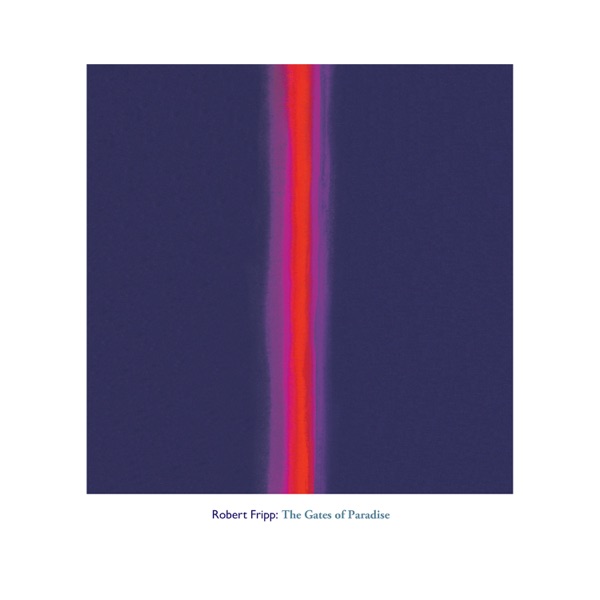
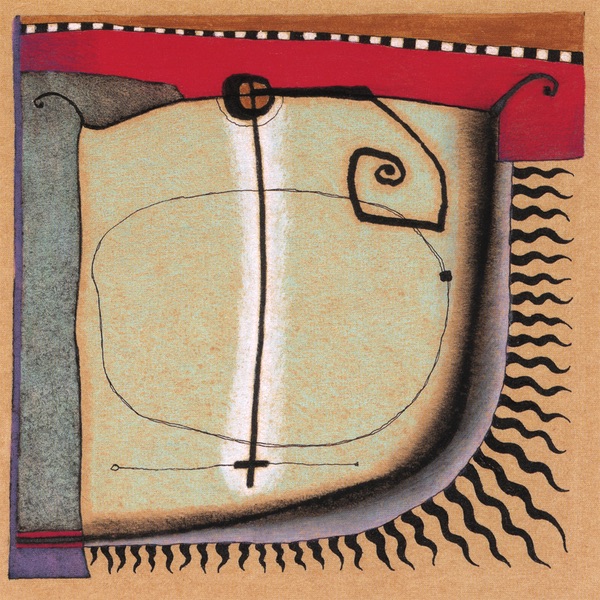
The Repercussions of Angelic Behavior
1999 · 10 tracks


Between the Silence
2018 · 24 tracks
- 1 The Apparent Chaos of Stone (Live (All Saints Church, Broad Chalke - 21 May 2009) ↗ 8:37
- 2 In a Field of Green (Live (All Saints Church, Broad Chalke - 21 May 2009) ↗ 7:52
- 3 Route 23 (Improv) [Live (All Saints Church, Broad Chalke - 21 May 2009] ↗ 2:55
- 4 The Offering (Live (All Saints Church, Broad Chalke - 21 May 2009) ↗ 7:14
- 5 Blue Calm (Live (All Saints Church, Broad Chalke - 21 May 2009) ↗ 5:18
- 6 Moonchild (Live (All Saints Church, Broad Chalke - 21 May 2009) ↗ 5:40
- 7 Duet for the End of Time (Live (All Saints Church, Broad Chalke - 21 May 2009) ↗ 7:53
- 8 Coda: Duet for the End of Time (Live (All Saints Church, Broad Chalke - 21 May 2009) ↗ 5:31
- 9 Emporium (Live (Spiegeltent, Bath Festival - 5 June 2010) ↗ 4:15
- 10 In a Field of Green (Live (Spiegeltent, Bath Festival - 5 June 2010) ↗ 11:35
- 11 Rotary Symmetrical (Live (Spiegeltent, Bath Festival - 5 June 2010) ↗ 6:24
- 12 Moonchild (Live (Spiegeltent, Bath Festival - 5 June 2010) ↗ 5:43
- 13 A Careful Distance (Live (Spiegeltent, Bath Festival - 5 June 2010) ↗ 10:34
- 14 Blue Calm (Live (Spiegeltent, Bath Festival - 5 June 2010) ↗ 3:42
- 15 Route 23 (Improv) [Live (Spiegeltent, Bath Festival - 5 June 2010] ↗ 5:37
- 16 Duet for the End of Time (Live (Spiegeltent, Bath Festival - 5 June 2010) ↗ 14:40
- 17 Encore: Bath Improv (Live (Spiegeltent, Bath Festival - 5 June 2010) ↗ 5:19
- 18 The Power to Believe (Live (All Saints Church, Pittville, Cheltenham - 16 July 2010) ↗ 1:27
- 19 Pastorale (Live (All Saints Church, Pittville, Cheltenham - 16 July 2010) ↗ 7:10
- 20 Rotary Symmetrical (Live (All Saints Church, Pittville, Cheltenham - 16 July 2010) ↗ 6:03
- 21 Dark Clouds (Live (All Saints Church, Pittville, Cheltenham - 16 July 2010) ↗ 8:35
- 22 Blue Calm (Live (All Saints Church, Pittville, Cheltenham - 16 July 2010) ↗ 8:36
- 23 When the Rains Fall (Live (All Saints Church, Pittville, Cheltenham - 16 July 2010) ↗ 10:31
- 24 Duet for the End of Time (Live (All Saints Church, Pittville, Cheltenham - 16 July 2010) ↗ 9:42

-
 ExposureRobert Fripp197939 tracks
 -
 I Advance MaskedRobert Fripp198213 tracks
 -
 BewitchedRobert Fripp198410 tracks
 -
 The First DayRobert Fripp19937 tracks
 -
 The Gates of ParadiseRobert Fripp19974 tracks
 -
 The Repercussions of Angelic BehaviorRobert Fripp199910 tracks
 -
 A Temple in the CloudsRobert Fripp20004 tracks
 -
 ThreadRobert Fripp20089 tracks
 -
 A Scarcity of MiraclesRobert Fripp20116 tracks
 -
 FollowRobert Fripp20129 tracks
 -
 DiscretionRobert Fripp20128 tracks
 -
 Starless StarlightRobert Fripp20158 tracks
 -
 Between the SilenceRobert Fripp201824 tracks
 -
 LeviathanRobert Fripp20219 tracks
Deep Dive
Overview
Robert Fripp stands as one of progressive rock’s most restless and intellectually driven figures. Born in 1946, he is best known as the guitarist, founder, and only constant member of King Crimson, the Cambridge-based ensemble that redefined what rock music could be through dissonance, formal complexity, and uncompromising artistic vision. Beyond King Crimson, Fripp’s appetite for collaboration and innovation has led him to contribute to more than 700 official releases, working as a session musician and creative partner with figures ranging from David Bowie and Brian Eno to Talking Heads, Peter Gabriel, and Blontel. His influence extends into the digital age—he even composed the startup sound for Windows Vista.
Formation Story
Fripp emerged from the English Midlands and the progressive rock movement of the late 1960s. After schooling in the region, he gravitated toward the Cambridge music scene, where he encountered the musicians and sensibilities that would coalesce into King Crimson in 1969. King Crimson became his primary vehicle for expression, but from the late 1970s onward, Fripp also pursued parallel solo projects and collaborations, treating his solo work as a laboratory for ideas that either complemented or diverged from the band’s aesthetic. His career spans five decades and continues into the present, making him a bridge between progressive rock’s experimental origins and contemporary digital production.
Breakthrough Moment
Fripp’s breakthrough came through King Crimson’s early 1970s catalogue, but his solo career in earnest began in 1979 with Exposure, a conceptual and sonically adventurous album that signaled his readiness to step beyond the band framework. This period also coincided with his deepening engagement with production and session work, most notably his collaborations with David Bowie and Brian Eno, where he contributed guitar textures and compositional input to albums that would define post-punk and ambient music. By the early 1980s, with albums like The League of Gentlemen (1981) and the collaborative I Advance Masked (1982), Fripp had established himself not merely as a virtuoso instrumentalist but as a conceptual artist unafraid to blur genres.
Peak Era
The 1990s and 2000s marked Fripp’s most prolific period, with releases such as The First Day (1993), A Temple in the Clouds (2000), and Trance Spirits (2002) showcasing a mature artist working across ambient, experimental, and rock frameworks simultaneously. During this span, he continued to work with King Crimson while maintaining an exhaustive schedule of solo records, each one distinct in instrumentation and conceptual intent. His willingness to work across labels and modes of distribution—including limited editions and digital-only releases—positioned him as an elder statesman unmoored from commercial pressures, driven instead by artistic curiosity.
Musical Style
Fripp’s guitar work is marked by technical precision, harmonic sophistication, and an affinity for unorthodox tunings and timbral experimentation. His early style, forged in King Crimson, favored complex time signatures, feedback, and dissonant counterpoint; his solo work often layers guitar textures over percussion, synthesizer, and field recordings, creating soundscapes that range from the contemplative to the abstract. He has been equally comfortable in rock contexts and in ambient or drone territories—a versatility reflected in his collaborations with Eno, whose production philosophy of using instruments as sound-generators rather than traditional voices aligned with Fripp’s own investigations. Vocally, when vocals appear on his records, they belong to guest artists; Fripp’s voice in his music is primarily instrumental, allowing the guitar and compositional architecture to carry the emotional and intellectual weight.
Major Albums
Exposure (1979)
Fripp’s solo debut, Exposure, signaled that his artistic ambitions extended far beyond any single ensemble. The album blends rock instrumentation with conceptual production and includes diverse vocal contributions, establishing a template for his later collaborative work.
The League of Gentlemen (1981)
A small-group recording centered on guitar, The League of Gentlemen demonstrates Fripp’s appetite for ensemble interplay outside of King Crimson’s framework, featuring intricate instrumental dialogue and compositional rigor.
I Advance Masked (1982)
A collaboration with David Sylvian, this album merges Fripp’s guitar language with Sylvian’s vocal artistry and atmospheric production, yielding one of his most coherent and accessible solo statements.
The First Day (1993)
A return to focused songcraft after a decade of sporadic releases, The First Day pairs Fripp’s guitar with inventive production and features the vocalist Cathy Berberian, creating a bridge between his experimental and compositional impulses.
A Temple in the Clouds (2000)
From the peak of his mature period, A Temple in the Clouds exemplifies Fripp’s synthesis of ambient, world music, and rock elements, showcasing his continued evolution and his engagement with world percussion and non-Western musical traditions.
Signature Songs
- “Exposure” (1979) — The opening track establishes Fripp’s intent to move beyond guitar virtuosity into conceptual territory.
- “Let the Power Fall” (1981) — A piece from the 1981 EP that demonstrates his command of tension and release through instrumental composition.
- “The League of Gentlemen” (1981) — The title composition showcases ensemble interplay and the sophistication of his writing outside King Crimson.
- “May We Live in Interesting Times” (1982) — From I Advance Masked, this track distills the album’s marriage of vocal presence and guitar sophistication.
Influence on Rock
Fripp’s influence operates on two levels: through King Crimson’s direct impact on metal, post-rock, and experimental music, and through his session work and collaborations, which brought progressive-rock sophistication into mainstream contexts. His work with Bowie and Eno elevated guitar’s role in electronic and ambient music; his collaborations with Talking Heads and Peter Gabriel injected avant-garde sensibilities into post-punk and world-music exploration. Generations of progressive and experimental rock musicians have looked to Fripp as a model of uncompromising artistry and technical mastery in service of innovation rather than display. His willingness to explore multiple genres and production methods also prefigured the eclecticism of contemporary artist practice, where boundaries between studio, performance, and composition dissolve.
Legacy
As a solo artist with more than two decades of sustained output and over 700 total contributions across official releases, Fripp remains one of rock music’s most prolific and intellectually engaged figures. His solo catalogue—dense, formally intricate, and often deliberately difficult—has attracted a devoted following among listeners willing to engage with his more abstract and experimental impulses. King Crimson’s induction into the Rock and Roll Hall of Fame, and the ongoing reissue and archival work associated with both Crimson and his solo work, have cemented his historical importance. In the streaming era, his earlier collaborations with Bowie, Eno, and others continue to reach new listeners, while his own solo releases remain available through Discipline Global Mobile and other outlets, ensuring that his radical vision of what a guitarist and composer could accomplish remains in active circulation.
Fun Facts
- Fripp composed the startup sound for Windows Vista, a collaboration with Tucker Martine and Steve Ball, bringing his avant-garde aesthetic into the digital mainstream in an unexpected way.
- He founded King Crimson in 1969 at age 23 and has remained the sole constant member throughout the band’s numerous lineup changes and hiatuses spanning five decades.
- His solo discography spans releases on multiple labels, including the independent Discipline Global Mobile, reflecting his commitment to artistic control and direct relationships with his audience.
- Fripp has recorded with a remarkable range of artists across genres, from rock and post-punk figures like David Bowie and Talking Heads to composers and improvisers from non-Western traditions.