
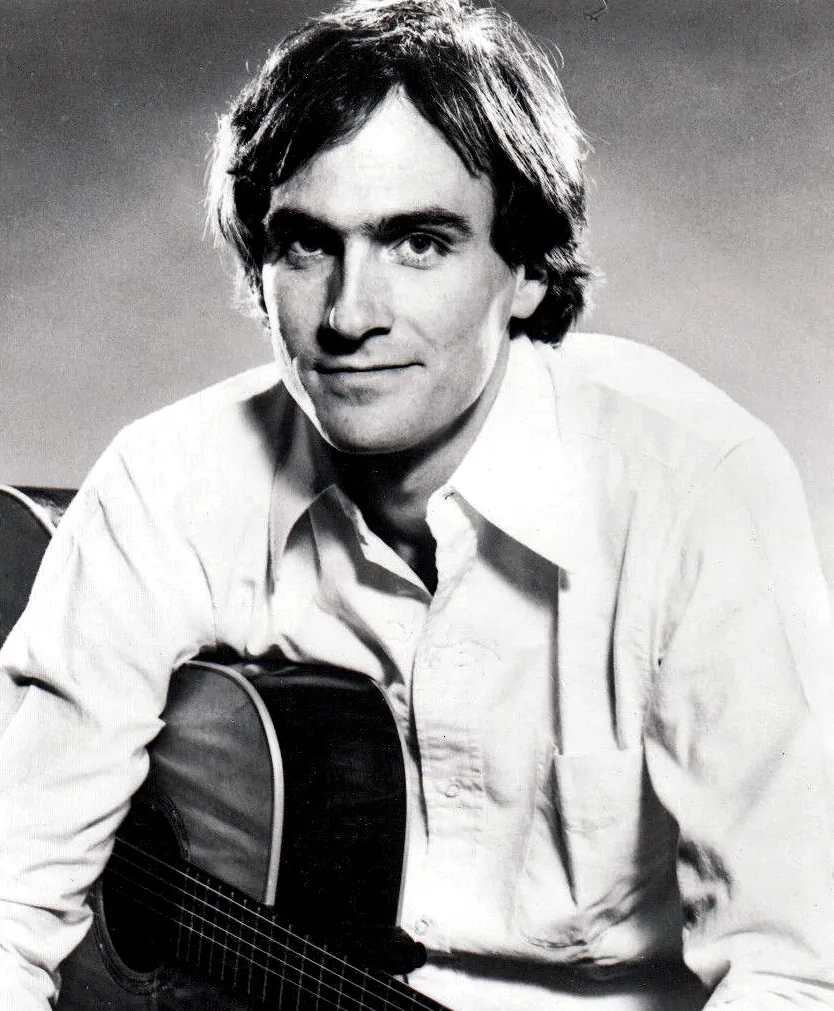
Photo by Columbia Records , licensed under Public domain · Wikimedia Commons
Rank #30
James Taylor
From Wikipedia
James Vernon Taylor is an American singer-songwriter and guitarist.
Discography & Previews
Browse through and click an album to open and play 30-second previews streamed from Apple Music.
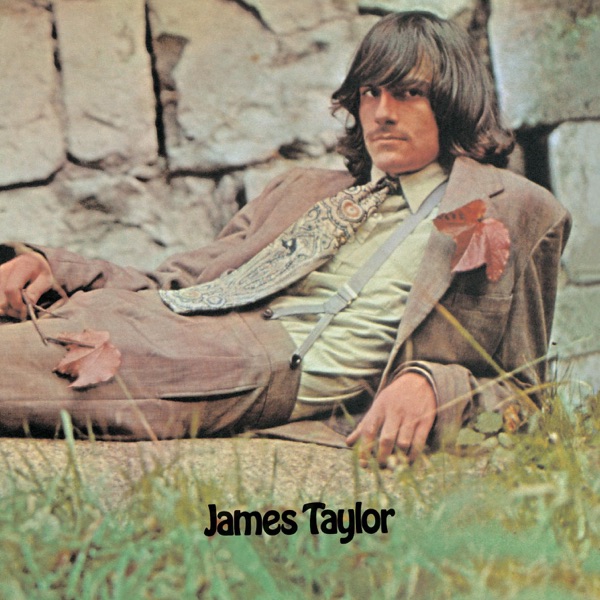
James Taylor
1968 · 16 tracks
- 1 Don't Talk Now ↗ 2:37
- 2 Something's Wrong ↗ 3:09
- 3 Knocking 'Round the Zoo ↗ 3:27
- 4 Sunshine Sunshine ↗ 2:50
- 5 Taking It In ↗ 3:06
- 6 Something In the Way She Moves ↗ 3:04
- 7 Carolina In My Mind ↗ 3:38
- 8 Brighten Your Night With My Day ↗ 2:28
- 9 Night Owl ↗ 4:17
- 10 Rainy Day Man ↗ 3:00
- 11 Circle 'Round the Sun ↗ 3:25
- 12 The Blues Is Just a Bad Dream ↗ 3:53
- 13 Sunny Skies (Demo Version) ↗ 2:14
- 14 Let Me Ride (Demo Version) ↗ 3:59
- 15 Sunshine Sunshine (Mono Demo Version) ↗ 2:53
- 16 Carolina In My Mind (Mono Demo Version) ↗ 3:08

Sweet Baby James
1970 · 11 tracks

Mud Slide Slim and the Blue Horizon
1971 · 13 tracks
- 1 Love Has Brought Me Around ↗ 2:45
- 2 You've Got a Friend ↗ 4:29
- 3 Places In My Past ↗ 2:02
- 4 Riding On a Railroad ↗ 2:43
- 5 Soldiers ↗ 1:15
- 6 Mud Slide Slim ↗ 5:19
- 7 Hey Mister, That's Me Up On the Jukebox ↗ 3:48
- 8 You Can Close Your Eyes ↗ 2:29
- 9 Machine Gun Kelly ↗ 2:37
- 10 Long Ago and Far Away ↗ 2:21
- 11 Let Me Ride ↗ 2:44
- 12 Highway Song ↗ 3:53
- 13 Isn't It Nice to Be Home Again ↗ 0:55

One Man Dog
1972 · 18 tracks
- 1 One Man Parade ↗ 3:11
- 2 Nobody But You ↗ 2:57
- 3 Chili Dog ↗ 1:35
- 4 Fool for You ↗ 1:42
- 5 Instrumental I ↗ 0:54
- 6 New Tune ↗ 1:37
- 7 Back On the Street Again ↗ 3:02
- 8 Don't Let Me Be Lonely Tonight ↗ 2:35
- 9 Woh, Don't You Know ↗ 2:11
- 10 One Morning In May ↗ 2:54
- 11 Instrumental II ↗ 1:42
- 12 Someone ↗ 3:37
- 13 Hymn ↗ 2:24
- 14 Fanfare ↗ 2:36
- 15 Little David ↗ 0:58
- 16 Mescalito ↗ 0:29
- 17 Dance ↗ 2:06
- 18 Jig ↗ 1:14


In the Pocket
1976 · 12 tracks
- 1 Shower the People ↗ 4:33
- 2 A Junkie's Lament ↗ 3:30
- 3 Money Machine ↗ 4:36
- 4 Slow Burning Love ↗ 3:43
- 5 Everybody Has the Blues ↗ 2:03
- 6 Daddy's All Gone ↗ 3:39
- 7 Woman's Gotta Have It ↗ 4:20
- 8 Captain Jim's Drunken Dream ↗ 4:04
- 9 Don't Be Sad 'Cause Your Sun Is Down ↗ 3:29
- 10 Nothing Like a Hundred Miles ↗ 3:43
- 11 Family Man ↗ 3:39
- 12 Golden Moments ↗ 3:36
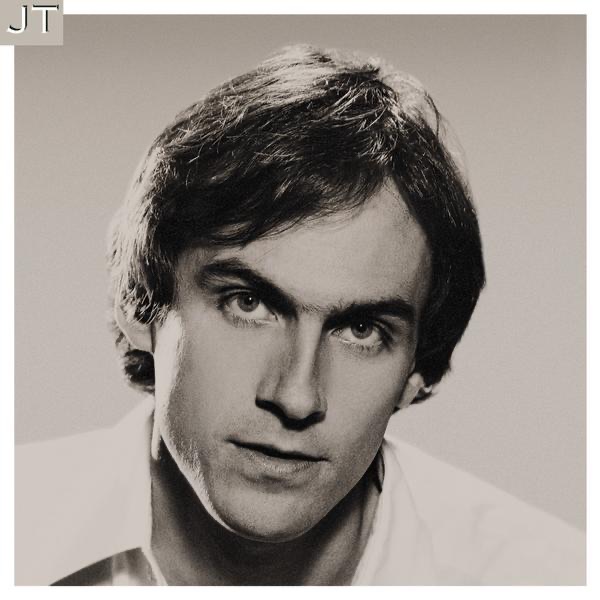
JT
1977 · 12 tracks
- 1 Your Smiling Face ↗ 2:47
- 2 There We Are ↗ 3:01
- 3 Honey Don't Leave L.A. ↗ 3:06
- 4 Another Grey Morning ↗ 2:44
- 5 Bartender's Blues ↗ 4:12
- 6 Secret O' Life ↗ 3:35
- 7 Handy Man ↗ 3:18
- 8 I Was Only Telling a Lie ↗ 3:25
- 9 Looking for Love On Broadway ↗ 2:22
- 10 Terra Nova ↗ 4:32
- 11 Traffic Jam ↗ 1:58
- 12 If I Keep My Heart Out of Sight ↗ 2:59

Flag
1979 · 12 tracks
- 1 Company Man ↗ 3:45
- 2 Johnnie Comes Back ↗ 3:54
- 3 Day Tripper ↗ 4:24
- 4 I Will Not Lie for You ↗ 3:15
- 5 Brother Trucker ↗ 4:01
- 6 Is That the Way You Look? ↗ 1:58
- 7 B.S.U.R. ↗ 3:21
- 8 Rainy Day Man ↗ 2:59
- 9 Millworker ↗ 3:52
- 10 Up On the Roof ↗ 4:20
- 11 Chanson Francaise ↗ 2:02
- 12 Sleep Come Free Me ↗ 4:42

Dad Loves His Work
1981 · 11 tracks
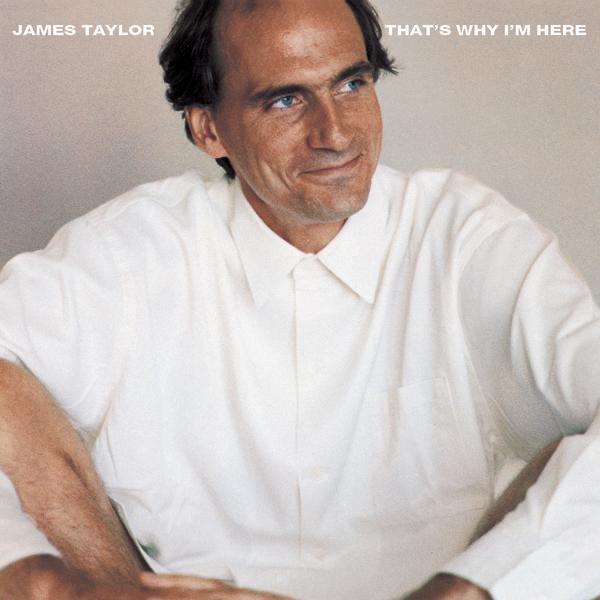
That's Why I'm Here
1985 · 12 tracks
- 1 That's Why I'm Here ↗ 3:37
- 2 Song for You Far Away ↗ 2:56
- 3 Only a Dream In Rio ↗ 4:59
- 4 Turn Away ↗ 3:22
- 5 Going Around One More Time ↗ 3:23
- 6 My Romance ↗ 2:46
- 7 Everyday ↗ 3:14
- 8 Limousine Driver ↗ 3:49
- 9 Only One ↗ 4:18
- 10 Mona ↗ 2:49
- 11 The Man Who Shot Liberty Valance ↗ 3:45
- 12 That's Why I'm Here (Reprise) ↗ 0:26

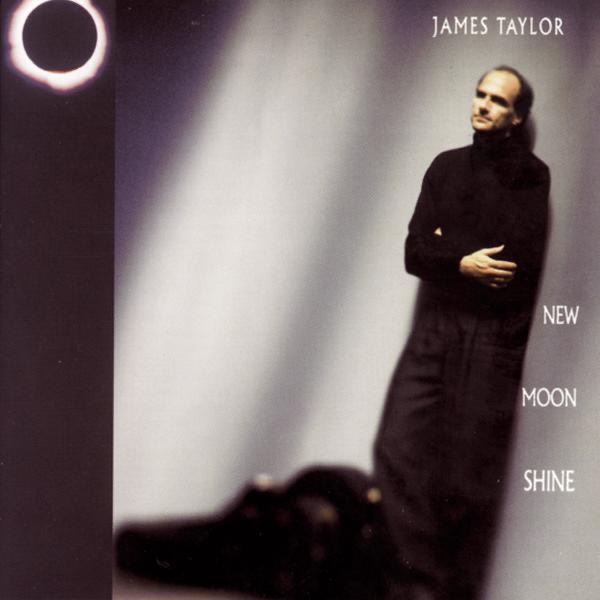
New Moon Shine
1991 · 12 tracks
- 1 Copperline ↗ 4:21
- 2 Down In the Hole ↗ 5:15
- 3 (I've Got To) Stop Thinkin' 'Bout That ↗ 4:00
- 4 Shed a Little Light ↗ 3:52
- 5 The Frozen Man ↗ 3:54
- 6 Slap Leather ↗ 1:58
- 7 Like Everyone She Knows ↗ 4:56
- 8 One More Go Round ↗ 4:41
- 9 Everybody Loves to Cha Cha Cha ↗ 3:37
- 10 Native Son ↗ 3:48
- 11 Oh Brother ↗ 4:23
- 12 The Water Is Wide ↗ 3:01

Hourglass
1997 · 13 tracks
- 1 Line 'Em Up ↗ 4:43
- 2 Enough to Be On Your Way ↗ 5:27
- 3 Little More Time With You ↗ 3:51
- 4 Gaia ↗ 5:29
- 5 Ananas ↗ 5:42
- 6 Jump Up Behind Me ↗ 3:28
- 7 Another Day ↗ 2:21
- 8 Up Er Mei ↗ 3:47
- 9 Up from Your Life ↗ 5:15
- 10 Yellow and Rose ↗ 4:54
- 11 Boatman ↗ 3:57
- 12 Walking My Baby Back Home ↗ 2:28
- 13 Hangnail ↗ 2:21
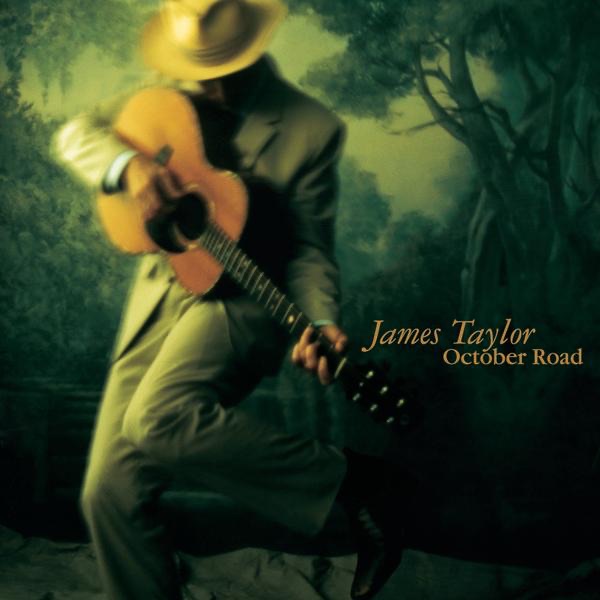
October Road
2002 · 14 tracks
- 1 September Grass ↗ 4:50
- 2 October Road ↗ 3:57
- 3 On the 4th of July ↗ 3:24
- 4 Whenever You're Ready ↗ 4:14
- 5 Belfast to Boston ↗ 4:16
- 6 Mean Old Man ↗ 3:41
- 7 My Traveling Star ↗ 3:53
- 8 Raised Up Family ↗ 4:39
- 9 Carry Me On My Way ↗ 4:30
- 10 Caroline I See You ↗ 4:58
- 11 Baby Buffalo ↗ 4:48
- 12 Have Yourself a Merry Little Christmas ↗ 3:50
- 13 Don't Let Me Be Lonely Tonight ↗ 4:43
- 14 Benjamin ↗ 3:29

James Taylor at Christmas
2006 · 15 tracks
- 1 Winter Wonderland (feat. Chris Botti) ↗ 3:34
- 2 Go Tell It On The Mountain ↗ 3:41
- 3 Santa Claus Is Coming to Town ↗ 2:58
- 4 Jingle Bells ↗ 3:53
- 5 Baby, It's Cold Outside (feat. Natalie Cole) ↗ 4:18
- 6 River ↗ 3:34
- 7 Have Yourself a Merry Little Christmas ↗ 3:25
- 8 Some Children See Him ↗ 4:37
- 9 The Christmas Song (Chestnuts Roasting On An Open Fire) [feat. Toots Thielemans] ↗ 3:52
- 10 Who Comes This Night ↗ 4:10
- 11 In The Bleak Midwinter ↗ 4:11
- 12 Auld Lang Syne ↗ 3:37
- 13 Here Comes the Sun ↗ 2:51
- 14 Mon Beau Sapin ↗ 3:08
- 15 Deck The Halls ↗ 2:51

Covers
2008 · 12 tracks

Before This World
2015 · 10 tracks

American Standard
2020 · 14 tracks
- 1 My Blue Heaven ↗ 2:43
- 2 Moon River ↗ 3:13
- 3 Teach Me Tonight ↗ 2:59
- 4 As Easy as Rolling Off a Log ↗ 2:50
- 5 Almost Like Being in Love ↗ 3:43
- 6 Sit Down, You’re Rockin’ the Boat ↗ 4:11
- 7 The Nearness of You ↗ 3:52
- 8 You’ve Got to Be Carefully Taught ↗ 2:26
- 9 God Bless the Child ↗ 3:22
- 10 Pennies from Heaven ↗ 2:52
- 11 My Heart Stood Still ↗ 3:27
- 12 Ol' Man River ↗ 2:54
- 13 It's Only a Paper Moon ↗ 3:12
- 14 The Surrey with the Fringe on Top ↗ 3:20
-
 James TaylorJames Taylor196816 tracks
 -
 Sweet Baby JamesJames Taylor197011 tracks
 -
 Mud Slide Slim and the Blue HorizonJames Taylor197113 tracks
 -
 One Man DogJames Taylor197218 tracks
 -
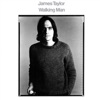 Walking ManJames Taylor197410 tracks
 -
 GorillaJames Taylor197511 tracks
 -
 In the PocketJames Taylor197612 tracks
 -
 JTJames Taylor197712 tracks
 -
 FlagJames Taylor197912 tracks
 -
 Dad Loves His WorkJames Taylor198111 tracks
 -
 That's Why I'm HereJames Taylor198512 tracks
 -
 Never Die YoungJames Taylor198810 tracks
 -
 New Moon ShineJames Taylor199112 tracks
 -
 HourglassJames Taylor199713 tracks
 -
 October RoadJames Taylor200214 tracks
 -
 James Taylor at ChristmasJames Taylor200615 tracks
 -
 CoversJames Taylor200812 tracks
 -
 Before This WorldJames Taylor201510 tracks
 -
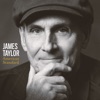 American StandardJames Taylor202014 tracks
Deep Dive
Overview
James Taylor stands as one of the most enduring and commercially successful singer-songwriters in American rock music. Born in 1948, he emerged during the late 1960s at a moment when folk-rock was fragmenting into more introspective, acoustic-driven territory. Taylor’s work—rooted equally in folk tradition, country music, and rock sensibility—helped establish the template for the sensitive, guitar-based singer-songwriter that dominated FM radio and concert halls throughout the 1970s and beyond. Over five decades of recording, he has navigated country, pop rock, soft rock, and jazz-funk idioms while maintaining a consistent lyrical focus on personal reflection and emotional authenticity.
Formation Story
James Vernon Taylor was born in Boston and came of age during a transformative period in American music. His path to rock music was forged in the broader singer-songwriter movement of the 1960s, when acoustic guitar and confessional songwriting began to displace the electric guitar heroics of earlier rock. Taylor’s early musical foundation was rooted in folk tradition and country music, influences that would remain central to his sound throughout his career. By the late 1960s, as psychedelia and folk-rock were reshaping the pop landscape, Taylor positioned himself within an emerging cohort of artists who valued melodic clarity, intricate fingerpicking technique, and deeply personal lyrical matter over sonic experimentation or commercial bombast.
Breakthrough Moment
Taylor’s first album, released in 1968, marked his entry into the professional music sphere, but it was Sweet Baby James, released in 1970, that transformed him from a promising newcomer into a major commercial and artistic force. The album’s success established the template that would define his peak period: acoustic guitar work of considerable technical sophistication, warm and intimate vocal delivery, and songs that explored themes of love, loss, and self-discovery with refreshing directness. The album’s commercial performance and critical reception positioned Taylor at the forefront of the early-1970s singer-songwriter boom, a movement that also included Jackson Browne, Joni Mitchell, and Carly Simon. His alignment with this moment—when introspective, folk-inflected rock had become mainstream rather than marginal—proved crucial to his enduring career trajectory.
Peak Era
The period spanning 1970 through 1977 represents Taylor’s most creatively consistent and commercially dominant stretch. Mud Slide Slim and the Blue Horizon (1971) and subsequent albums consolidated the sound and sensibility established by Sweet Baby James, with each release demonstrating his ability to craft compelling pop-rock material without sacrificing the acoustic sophistication that gave his music its distinctive character. Walking Man (1974), Gorilla (1975), In the Pocket (1976), and JT (1977) show an artist in full command of his craft, comfortable working across multiple genres—folk rock, country-influenced pop, and increasingly, pop rock with denser production arrangements. This seven-year run established Taylor as one of the defining voices of his generation, a singer-songwriter whose melodic gifts and technical musicianship could command large concert halls and radio playlists while maintaining artistic credibility.
Musical Style
Taylor’s musical identity is rooted in fingerpicked acoustic guitar, a technique he mastered early and has remained central to even his most pop-oriented arrangements. His vocal delivery is conversational and intimate, avoiding histrionics in favor of clarity and emotional restraint—a quality that made his records ideal for repeated home listening and FM radio play. His songwriting typically privileges direct emotional expression and narrative clarity; he favors accessible melodies and straightforward harmonic progressions that allow lyrical content to remain foremost. Over the course of his career, Taylor’s sound has absorbed influences from country music, soft rock, pop rock, and elements of jazz-funk, but the through-line remains a fundamentally acoustic sensibility married to professional production values. His later work has extended these explorations, with albums like Covers (2008) demonstrating his range as an interpreter, while albums such as American Standard (2020) show a continued engagement with melodic sophistication and thoughtful arrangement.
Major Albums
Sweet Baby James (1970)
The album that announced Taylor as a major artist, establishing the intimate acoustic-guitar-centered approach that would define his commercial identity and influence a generation of singer-songwriters.
Mud Slide Slim and the Blue Horizon (1971)
A follow-up that consolidated the emotional directness and musical sophistication of Sweet Baby James, proving the debut’s success was no accident and demonstrating Taylor’s ability to sustain commercial and artistic momentum.
Gorilla (1975)
One of Taylor’s most fully realized albums, showing his increasing comfort with fuller production and pop-rock arrangements while maintaining the acoustic foundation that remained his artistic anchor.
JT (1977)
A career peak that balanced accessible pop hooks with sophisticated musicianship, demonstrating Taylor’s ability to work in a more radio-friendly context without compromising artistic integrity.
Covers (2008)
A late-career project that showcased Taylor’s interpretive gifts and his deep engagement with American musical tradition, ranging across genres and eras while maintaining his distinctive approach.
Signature Songs
- “Fire and Rain” — A meditation on mortality and emotional vulnerability that became one of Taylor’s most recognizable songs and a radio staple.
- “You’ve Got a Friend” — A song of profound emotional resonance that has become a standard in American popular music.
- “Something in the Way She Moves” — A early composition that exemplifies Taylor’s ability to capture complex emotional states through simple, direct language and elegant melody.
- “Carolina in My Mind” — A nostalgic and affectionate portrait that demonstrates Taylor’s gift for place-based songwriting and evocative detail.
Influence on Rock
James Taylor’s influence on American rock music cannot be overstated. He was instrumental in establishing the commercial viability of the introspective, acoustic-guitar-based singer-songwriter as a major force in mainstream rock radio. His success in the early 1970s created space for a generation of artists who prioritized emotional authenticity and melodic sophistication over sonic experimentation or technical virtuosity. The soft-rock and country-pop movements that dominated 1970s FM radio owe an enormous debt to the template Taylor helped establish. His influence extends through subsequent generations of singer-songwriters, from those working in overtly folk-influenced traditions to pop artists who adopted the intimate vocal delivery and confessional lyricism that Taylor helped bring into mainstream acceptance.
Legacy
James Taylor’s career spans more than five decades of consistent artistic output and commercial success. His albums have been released across multiple major labels—including Apple Records, Columbia Records, Warner Bros. Records, and others—a testament to his sustained commercial appeal across changing market conditions and industry structures. The longevity of his catalog, from Sweet Baby James through American Standard, demonstrates the enduring appeal of songs built on strong melody, clear production, and emotional directness. Taylor remains a fixture of American popular music, with his songs continuing to receive substantial streaming plays and his concert appearances remaining major cultural events. His influence on contemporary singer-songwriters and his presence in popular culture have been reinforced through continued recording, touring, and cultural recognition, securing his place as one of the most important figures in post-1960s American rock music.
Fun Facts
- Taylor’s recording history spans multiple eras of music industry technology, from analog recording in the 1960s through digital and streaming formats in the twenty-first century.
- His choice to record Covers in 2008 demonstrated a continued artistic restlessness and willingness to engage with traditions beyond his own songwriting.
- The diversity of his record label history—from the Beatles’ Apple Records to major multinational corporations—reflects both his commercial appeal and his ability to remain relevant across industry shifts.