
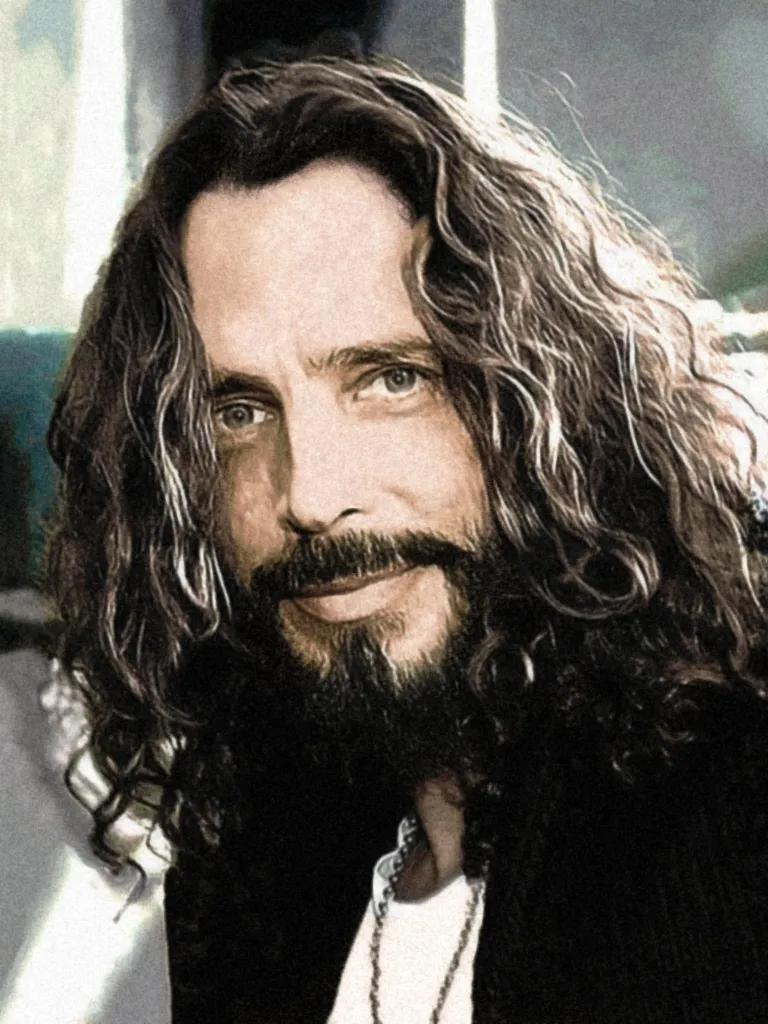
Photo by gdcgraphics , licensed under CC BY-SA 2.0 · Wikimedia Commons
Rank #398
Chris Cornell
From Wikipedia
Christopher John Cornell was an American musician, best known as the lead vocalist, rhythm guitarist, and the primary lyricist for the rock bands Soundgarden and Audioslave. He also had a solo career and contributed to numerous movie soundtracks. Cornell was the founder and frontman of Temple of the Dog, a one-off tribute band dedicated to his late friend, musician Andrew Wood. Several music journalists, fan polls, and fellow musicians have regarded Cornell as one of the greatest rock singers of all time.
Discography & Previews
Browse through and click an album to open and play 30-second previews streamed from Apple Music.
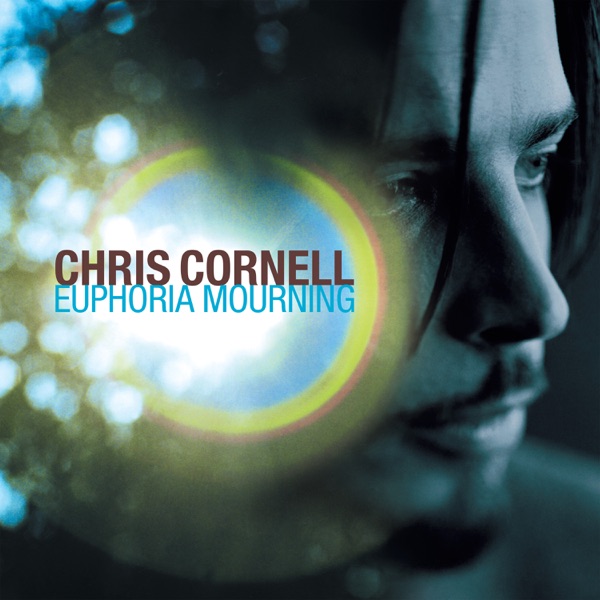
Euphoria Mourning
1999 · 12 tracks
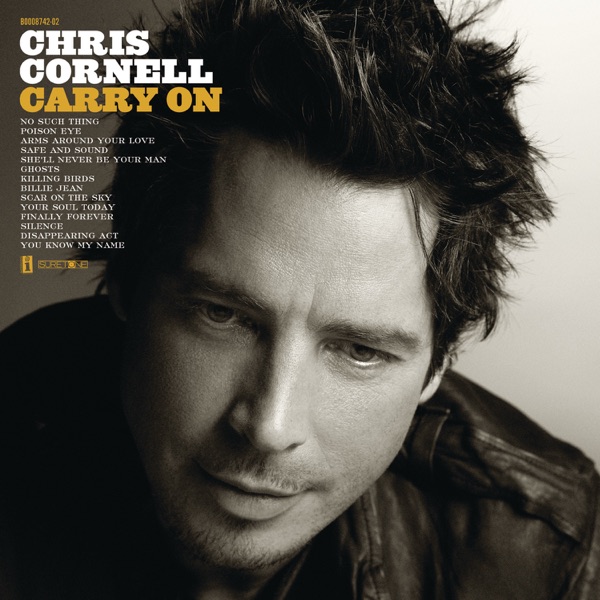
Carry On
2007 · 14 tracks
- 1 No Such Thing ↗ 3:45
- 2 Poison Eye ↗ 3:57
- 3 Arms Around Your Love ↗ 3:34
- 4 Safe and Sound ↗ 4:17
- 5 She'll Never Be Your Man ↗ 3:24
- 6 Ghosts ↗ 3:52
- 7 Killing Birds ↗ 3:39
- 8 Billie Jean ↗ 4:41
- 9 Scar On the Sky ↗ 3:40
- 10 Your Soul Today ↗ 3:26
- 11 Finally Forever ↗ 3:37
- 12 Silence the Voices ↗ 4:27
- 13 Disappearing Act ↗ 4:33
- 14 You Know My Name ↗ 4:00
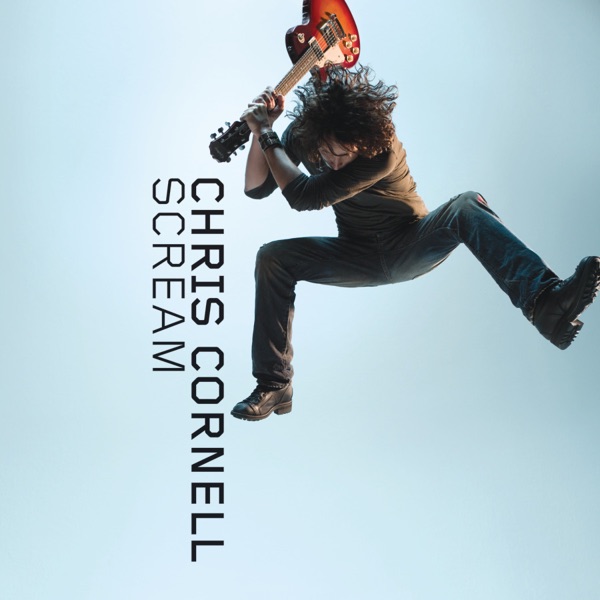
Scream
2009 · 15 tracks
- 1 Part of Me ↗ 5:15
- 2 Time ↗ 4:39
- 3 Sweet Revenge ↗ 4:10
- 4 Get Up ↗ 3:36
- 5 Ground Zero ↗ 3:10
- 6 Never Far Away ↗ 5:07
- 7 Take Me Alive ↗ 4:36
- 8 Long Gone ↗ 5:16
- 9 Scream ↗ 6:15
- 10 Enemy ↗ 4:35
- 11 Other Side of Town ↗ 4:48
- 12 Climbing Up the Walls ↗ 4:50
- 13 Watch Out ↗ 4:02
- 14 Two Drink Minimum ↗ 3:05
- 15 Ordinary Girl ↗ 4:33
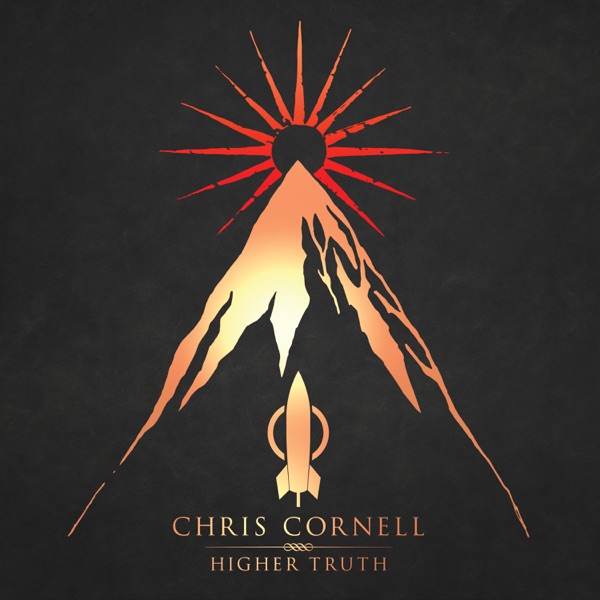
Higher Truth
2015 · 16 tracks
- 1 Nearly Forgot My Broken Heart ↗ 3:54
- 2 Dead Wishes ↗ 4:56
- 3 Worried Moon ↗ 4:32
- 4 Before We Disappear ↗ 3:52
- 5 Through the Window ↗ 4:41
- 6 Josephine ↗ 3:39
- 7 Murderer of Blue Skies ↗ 3:43
- 8 Higher Truth ↗ 5:06
- 9 Let Your Eyes Wander ↗ 3:42
- 10 Only These Words ↗ 3:30
- 11 Circling ↗ 3:29
- 12 Our Time In the Universe ↗ 4:19
- 13 Bend In the Road ↗ 3:37
- 14 Wrong Side ↗ 5:14
- 15 Misery Chain ↗ 4:42
- 16 Our Time In the Universe (Remix) ↗ 3:59
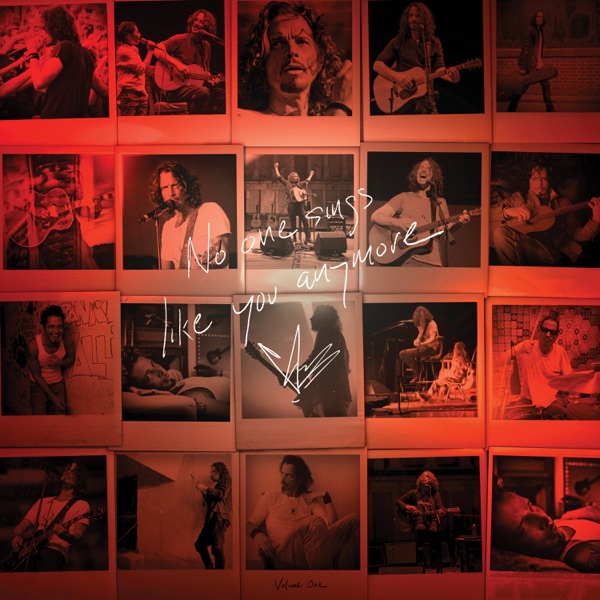
No One Sings Like You Anymore
2020 · 10 tracks
-
 Euphoria MourningChris Cornell199912 tracks
 -
 Carry OnChris Cornell200714 tracks
 -
 ScreamChris Cornell200915 tracks
 -
 Higher TruthChris Cornell201516 tracks
 -
 No One Sings Like You AnymoreChris Cornell202010 tracks
Deep Dive
Overview
Chris Cornell was an American rock musician whose career spanned from the mid-1980s until his death in 2017. Best known as the lead vocalist, rhythm guitarist, and primary lyricist for Soundgarden and Audioslave, Cornell became one of the defining voices of the grunge movement and, by extension, one of the most acclaimed rock singers of his era. His solo work, spanning from 1994 onward, demonstrated a versatility that extended far beyond the heavy guitar-driven sound of his primary bands, encompassing soul, funk, and orchestral influences while maintaining the emotional intensity that characterized all his work.
Formation Story
Born in Seattle, Washington, in 1964, Chris Cornell came of age during a period when the city’s underground rock scene was beginning to crystallize into something unprecedented. By the early 1980s, Cornell had embedded himself in Seattle’s music community, initially performing in various local bands before finding his vehicle in Soundgarden, which he founded in 1984. The Seattle of that era was a fertile ground for experimentation—punk and heavy metal collided with folk influences and an underlying melancholy that seemed to reflect the region’s gray skies and economic uncertainty. Cornell’s arrival as a frontman coincided with Soundgarden’s own evolution from a raw garage-punk outfit into something more ambitious and heavier. His powerful tenor voice and willingness to explore both sonic extremes and introspective balladry set him apart from his contemporaries and would eventually help define the sound that grunge would come to embrace.
Breakthrough Moment
Soundgarden’s commercial breakthrough came in the early 1990s, but Cornell’s solo work began in earnest in 1994 with the release of Supermainstream. This album introduced listeners to a different facet of Cornell—one less tethered to the distorted guitar riffs of Soundgarden and more interested in exploring soul, funk, and R&B influences. The 1999 album Euphoria Mourning further established his credentials as a solo artist, expanding his palette and demonstrating that his vocal prowess and songwriting depth were not dependent on any single band or musical template. By the time he recorded Carry On in 2007, Cornell had already proven himself a major solo artist in his own right, capable of commanding a stage and connecting with audiences independent of his band affiliations.
Peak Era
The decade spanning the mid-1990s through the early 2000s represented Cornell’s most visible and creatively expansive period. While Soundgarden achieved massive commercial success during this time, culminating in their 1994 album Superunknown, Cornell’s solo career was simultaneously flourishing. He released Euphoria Mourning in 1999, a deeply personal work that demonstrated his willingness to strip away heavy instrumentation in favor of more intimate arrangements. Following Soundgarden’s initial dissolution in 1997, Cornell threw himself into both solo work and his involvement with Audioslave, the supergroup formed in 2001 with Tom Morello and the former members of Rage Against the Machine. This period saw him navigating multiple creative endeavors, each demanding different things from him as a vocalist and performer, yet each showcasing his adaptability and range.
Musical Style
Cornell’s voice was his signature instrument—a soaring tenor capable of both whispered vulnerability and stratospheric power, often within the same song. His vocal range was exceptional, allowing him to move fluidly between deep, resonant lows and piercing highs without strain. In his band work, particularly with Soundgarden, his voice acted as a counterweight to heavy, sludgy guitar tones, creating a dynamic tension that became central to grunge’s sound. His songwriting tendency was toward complex arrangements and introspective lyrics that explored themes of pain, alienation, and emotional turmoil. In his solo career, this intensity was channeled through different sonic lenses—funk grooves, orchestral arrangements, and stripped-down acoustic settings all featured prominently across his albums. His work with Audioslave saw him adapting his vocal approach to Tom Morello’s angular, effects-laden guitar style, proving once again his ability to serve different musical visions while maintaining his essential character. Throughout all of these contexts, Cornell remained fundamentally a rock vocalist, though one willing to venture into soul, funk, and experimental territory.
Major Albums
Supermainstream (1994)
Cornell’s debut solo album introduced his interest in soul and funk, with production that prioritized groove and atmosphere over the heavy distortion of Soundgarden. The album established him as a solo artist capable of standing on his own merit.
Euphoria Mourning (1999)
This deeply introspective album showcased Cornell’s mature songwriting and featured more stripped-down arrangements, allowing his vocal delivery to become the primary focus. It remains one of his most critically appreciated solo works.
Carry On (2007)
A return to more guitar-driven material while maintaining the emotional sophistication of his earlier solo work, Carry On demonstrated that Cornell could balance accessibility with artistic depth.
Scream (2009)
This album saw Cornell exploring electronic production and contemporary pop influences without sacrificing the emotional weight his work demanded.
Higher Truth (2015)
Released near the end of his life, Higher Truth combined orchestral arrangements with Cornell’s continued exploration of vulnerability and introspection, featuring production elements that expanded his sonic palette further.
Signature Songs
- “Black Hole Sun” — Soundgarden’s landmark 1994 single, featuring one of rock’s most distinctive and unsettling vocal performances over an angular, psychedelic arrangement.
- “Spoonman” — Soundgarden’s 1994 hit that showcased Cornell’s ability to deliver accessible rock while maintaining lyrical and musical sophistication.
- “Soundgarden” — The opening track from Soundgarden’s Superunknown, establishing the band’s sonic heaviness while highlighting Cornell’s vocal control.
- “Cochise” — From Audioslave’s self-titled 2001 debut, demonstrating Cornell’s seamless integration into Tom Morello’s post-Rage Against the Machine project.
- “Nearly Lost You” — A Soundgarden track that exemplified the band’s ability to balance crushing heaviness with melodic sensibility.
Influence on Rock
Chris Cornell’s influence on rock music, and particularly on grunge and alternative metal, cannot be overstated. His vocal approach—technically proficient, emotionally devastating, and willing to explore an exceptionally wide range—became a template for countless rock vocalists who emerged in the 1990s and beyond. Soundgarden’s integration of heavy metal riffing with complex song structures and sophisticated vocal melodies helped establish the template for what would become known as grunge, differentiating it from the straightforward heaviness of traditional metal. His solo work demonstrated that rock vocalists could pursue multiple projects and musical identities without diluting their core artistic vision. The formation of Temple of the Dog, his tribute band dedicated to Andrew Wood of Mother Love Bone, became one of the most significant one-off projects in rock history, producing the album that helped propel grunge into the mainstream consciousness and further cementing Cornell’s status as a musician’s musician—someone respected not just by fans but by his peers.
Legacy
Chris Cornell’s death in 2017 at age 52 cut short a career that still held considerable momentum. His passing prompted widespread recognition of his contributions to rock music, with musicians across genres citing him as an influence and inspiration. In the years following his death, his catalog has experienced renewed interest, with streaming services and reissue campaigns introducing his work to new generations. His voice—arguably the greatest rock tenor of his generation—remains a standard against which contemporary rock vocalists are measured. Temple of the Dog’s place in grunge history has only grown more significant with time, seen now as a crucial document of the movement’s cultural moment. Cornell’s willingness to pursue diverse musical projects, from heavy metal to soul-influenced funk to orchestral pop, established a template for rock artists seeking to expand beyond their primary band identity. His legacy encompasses not just the albums and songs he created, but the standard he set for vocal excellence, emotional authenticity, and artistic fearlessness in rock music.
Fun Facts
- Cornell founded Temple of the Dog in 1990 as a tribute to Andrew Wood following Wood’s death, resulting in one of grunge’s most celebrated albums despite being conceived as a one-off project.
- His work extended beyond music into film soundtracks, demonstrating his versatility across different mediums and audiences.
- Cornell’s vocal range allowed him to perform material across multiple octaves, a technical capability that distinguished him from most of his contemporaries in the rock world.
- He released a live album, Live in Denver (Feb. 12th, 2000), documenting his solo performances and the intimate connection he maintained with audiences outside the context of his main bands.