
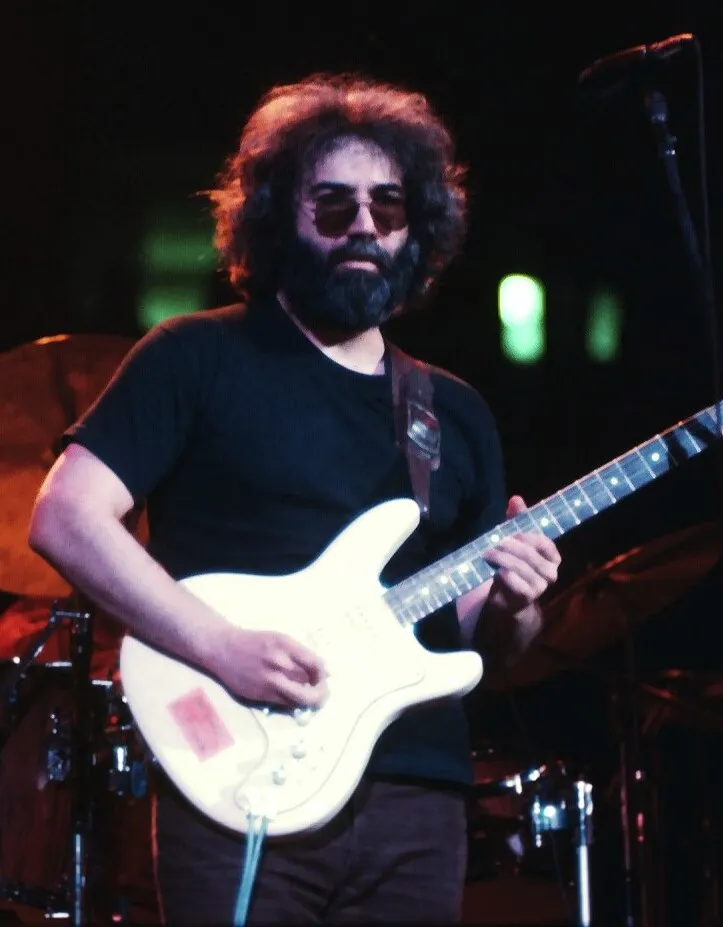
Photo by Carl Lender , licensed under CC BY 2.0 · Wikimedia Commons
Rank #310
Jerry Garcia
From Wikipedia
Jerome John Garcia was an American musician who was the lead guitarist and a vocalist with the rock band Grateful Dead, which he co-founded and which came to prominence during the counterculture of the 1960s. Although he disavowed the role, Garcia was viewed by many as the leader of the band. He was inducted into the Rock and Roll Hall of Fame in 1994 as a member of the Grateful Dead.
Discography & Previews
Browse through and click an album to open and play 30-second previews streamed from Apple Music.
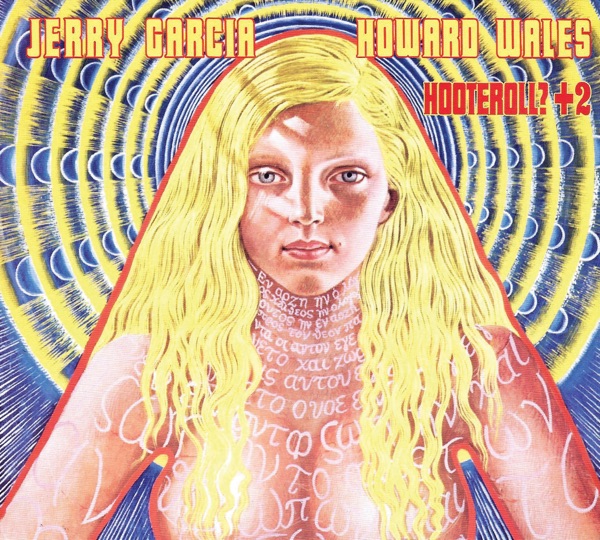
Hooteroll?
1970 · 11 tracks
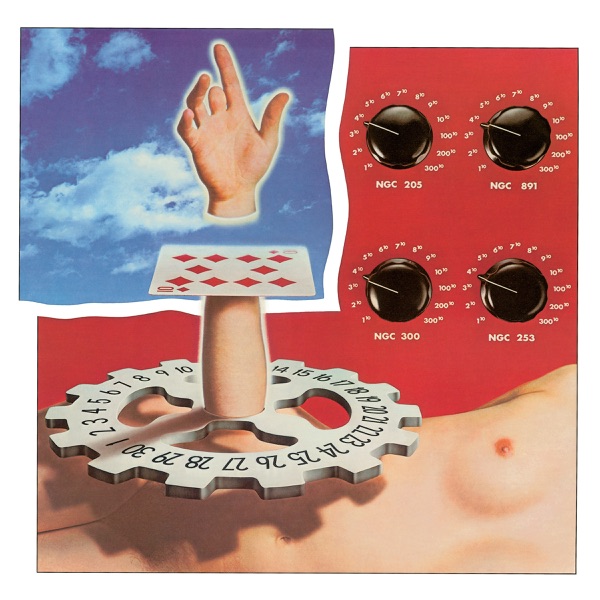

Reflections
1976 · 13 tracks
- 1 Might As Well ↗ 3:54
- 2 Mission In the Rain ↗ 5:04
- 3 They Love Each Other ↗ 4:37
- 4 I'll Take a Melody ↗ 9:29
- 5 It Must Have Been the Roses ↗ 5:30
- 6 Tore Up Over You ↗ 4:30
- 7 Catfish John ↗ 7:00
- 8 Comes a Time ↗ 6:30
- 9 Mystery Train (Studio Jam) [Bonus Track] ↗ 5:13
- 10 All By Myself (Studio Jam) [Bonus Track] ↗ 4:10
- 11 Oh Babe, It Ain't No Lie (Bonus Track) ↗ 3:13
- 12 You Win Again (Bonus Track) ↗ 2:26
- 13 Orpheus (Bonus Track) ↗ 16:45

Run for the Roses
1982 · 7 tracks
- 1 Run for the Roses (2018 Remaster) ↗ 3:42
- 2 I Saw Her Standing There (2018 Remaster) ↗ 2:59
- 3 Without Love (2018 Remaster) ↗ 4:26
- 4 Midnight Getaway (2018 Remaster) ↗ 7:54
- 5 Leave the Little Girl Alone (2018 Remaster) ↗ 3:38
- 6 Valerie (2018 Remaster) ↗ 5:26
- 7 Knockin' on Heaven's Door (2018 Remaster) ↗ 7:30


Not for Kids Only
1993 · 12 tracks
- 1 Jenny Jenkins ↗ 4:22
- 2 Freight Train ↗ 5:20
- 3 A Horse Named Bill ↗ 3:05
- 4 Three Men Went A-Hunting ↗ 3:15
- 5 When First Unto This Country ↗ 4:02
- 6 Arkansas Traveller ↗ 3:29
- 7 Hopalong Peter ↗ 2:37
- 8 Teddy Bears' Picnic ↗ 4:27
- 9 There Ain't No Bugs On Me ↗ 4:50
- 10 The Miller's Will ↗ 3:11
- 11 Hot Corn, Cold Corn ↗ 4:03
- 12 A Shenandoah Lullaby ↗ 7:52
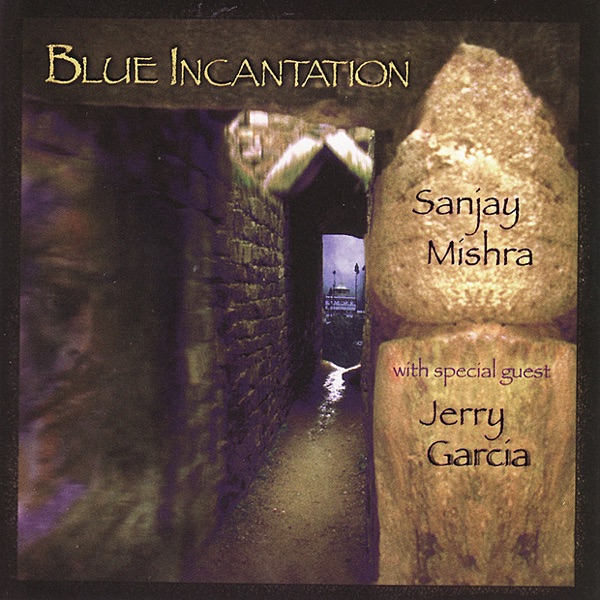

Shady Grove
1996 · 13 tracks
- 1 Shady Grove ↗ 4:20
- 2 Stealin' ↗ 3:31
- 3 Off to Sea Once More ↗ 5:48
- 4 The Sweet Sunny South ↗ 3:25
- 5 Louis Collins ↗ 5:57
- 6 Fair Ellender ↗ 6:05
- 7 Jackaroo ↗ 4:02
- 8 Casey Jones ↗ 4:06
- 9 Dreadful Wind and Rain ↗ 4:48
- 10 I Truly Understand ↗ 3:41
- 11 The Handsome Cabin Boy ↗ 6:14
- 12 Whiskey In the Jar ↗ 4:15
- 13 Down In the Valley ↗ 8:06


The Pizza Tapes
2000 · 20 tracks
- 1 Appetizer, No. 1 ↗ 0:13
- 2 Man of Constant Sorrow ↗ 5:07
- 3 Appetizer, No. 2 ↗ 0:29
- 4 Louis Collins ↗ 5:57
- 5 Shady Jam ↗ 3:41
- 6 Shady Grove ↗ 4:46
- 7 Always Late ↗ 0:54
- 8 Guitar Space / Summertime ↗ 8:42
- 9 Appetizer, No. 3 ↗ 0:27
- 10 Long Black Veil ↗ 4:30
- 11 Rosalee McFall ↗ 3:13
- 12 Appetizer, No. 4 ↗ 1:13
- 13 Drifting Too Far from the Shore ↗ 4:54
- 14 Amazing Grace ↗ 4:53
- 15 Little Sadie ↗ 3:13
- 16 Knockin' On Heaven's Door ↗ 5:48
- 17 Space Jam ↗ 0:59
- 18 So What ↗ 6:29
- 19 Appetizer, No. 5 ↗ 0:22
- 20 The House of the Rising Sun ↗ 8:05

Been All Around This World
2004 · 12 tracks
- 1 Been All Around This World ↗ 3:29
- 2 I'll Go Crazy ↗ 2:29
- 3 Take Me ↗ 5:10
- 4 Handsome Cabin Boy Waltz ↗ 3:29
- 5 The Ballad of Frankie Lee and Judas Priest ↗ 6:59
- 6 I'm Troubled ↗ 3:54
- 7 Blue Yodel #9 ↗ 3:23
- 8 Nine Pound Hammer ↗ 4:54
- 9 I Ain't Never ↗ 3:51
- 10 Sittin' Here in Limbo ↗ 6:53
- 11 Dark as a Dungeon ↗ 6:22
- 12 Drink Up and Go Home ↗ 3:41
-
 Hooteroll?Jerry Garcia197011 tracks
 -
 GarciaJerry Garcia19728 tracks
 -
 ReflectionsJerry Garcia197613 tracks
 -
 Run for the RosesJerry Garcia19827 tracks
 -
 Jerry Garcia / David GrismanJerry Garcia19919 tracks
 -
 Not for Kids OnlyJerry Garcia199312 tracks
 -
 Blue IncantationJerry Garcia199510 tracks
 -
 Shady GroveJerry Garcia199613 tracks
 -
 So WhatJerry Garcia19988 tracks
 -
 The Pizza TapesJerry Garcia200020 tracks
 -
 Been All Around This WorldJerry Garcia200412 tracks
Deep Dive
Overview
Jerry Garcia was the lead guitarist and vocalist for the Grateful Dead, a rock band that rose to prominence during the 1960s counterculture movement. Though Garcia disavowed the title, he was widely regarded as the band’s leader and defining artistic voice. His influence on rock music extended far beyond the Grateful Dead itself: his technical mastery, improvisational fearlessness, and willingness to cross genre boundaries—from psychedelic rock to blues, bluegrass, folk, and rhythm and blues—made him a central figure in the expansion of what rock music could express and contain.
Formation Story
Jerome John Garcia was born in 1942 in the San Francisco Bay Area, a region that would shape his entire musical life. Growing up in the 1950s, Garcia was exposed to country, blues, and folk traditions that ran deep through American music. The arrival of rock and roll, combined with the folk revival of the early 1960s and the psychedelic experimentation emerging from San Francisco’s underground scene, positioned Garcia at the crossroads of multiple musical impulses. By the early 1960s, he was already playing guitar in local bands and absorbing the eclectic mix of sounds—blues, country, folk, and the emerging psychedelic aesthetic—that would define his playing for decades to come. When he co-founded the Grateful Dead in the mid-1960s, Garcia brought with him a deep well of musical knowledge and a commitment to exploration that would become the band’s hallmark.
Breakthrough Moment
The Grateful Dead’s rise to prominence during the psychedelic era of the mid-to-late 1960s was inseparable from Garcia’s emergence as a major force in rock music. The band’s early albums and their integral role in San Francisco’s Haight-Ashbury scene established them as pioneers of psychedelic rock, but it was their extended improvisations and Garcia’s distinctive lead guitar voice that set them apart from contemporaries. Garcia’s technical facility and his ability to navigate complex harmonic territory made the Grateful Dead’s concerts legendary among fans and musicians. While the Grateful Dead would continue to evolve and achieve significant commercial success, Garcia’s reputation as a virtuoso improviser and bandleader solidified during this period, establishing him as one of rock’s most respected guitarists.
Peak Era
Garcia’s creative reach extended throughout the 1970s and into the 1980s, a period marked by his solo recordings and his continued development as the Grateful Dead’s primary voice. His solo albums—beginning with the self-titled Garcia in 1972 and continuing through Reflections (1976) and Run for the Roses (1982)—demonstrated his interest in exploring territory beyond the Grateful Dead’s scope. These records allowed him to work with different musicians and to pursue sonic directions that ranged from country-influenced material to funk and blues interpretations. Throughout this era, Garcia remained deeply committed to live performance and improvisation, the principles that had defined the Grateful Dead from their inception. His dual career—leading the Grateful Dead while maintaining an active solo practice—was unusual in rock and reflected his insatiable drive to play and explore.
Musical Style
Garcia was a guitarist of uncommon technical ability and emotional range. His playing combined the blues-based vocabulary of rock and roll with the intricate fingerpicking traditions of folk and bluegrass music, all filtered through a psychedelic sensibility that prized exploration and extended improvisation. His tone was warm and fluid, capable of singing lines that seemed almost vocal in their expressiveness. Garcia’s approach to soloing was rooted in listening and responding to his bandmates; he was as comfortable accompanying others as leading them. His voice, meanwhile, was unpretentious and direct—not a technically flawless instrument, but one capable of genuine emotional communication. The eclecticism of his musical taste—drawing from blues rock, bluegrass, folk rock, progressive rock, and rhythm and blues—meant that Garcia refused easy categorization. He was as likely to explore country-tinged ballads as he was to venture into complex harmonic explorations or straightforward blues structures.
Major Albums
Garcia (1972)
Garcia’s second solo album and first to bear his name, this record showcased his versatility across blues, country, and folk-influenced material, establishing the template for his solo work outside the Grateful Dead.
Compliments of Garcia (1974)
This album continued Garcia’s exploration of diverse styles, featuring covers and original material that revealed his range as both guitarist and interpreter.
Reflections (1976)
Released during a period of significant creative energy, Reflections demonstrated Garcia’s continued willingness to experiment and collaborate with musicians outside his primary band.
Run for the Roses (1982)
Garcia’s solo output in the early 1980s maintained his commitment to exploring new sonic territory and working with different ensembles, keeping his artistry fresh and engaged.
Jerry Garcia / David Grisman (1991)
This collaborative record paired Garcia with musician David Grisman, showcasing his ability to work in acoustic and traditional-influenced settings and his respect for bluegrass and folk traditions.
Signature Songs
- “Truckin’” — A Grateful Dead classic that became one of the band’s most recognizable songs, featuring Garcia’s fluent guitar work and the band’s signature blend of rock and Americana.
- “Casey Jones” — A driving rock song that showcased Garcia’s ability to lead a tight ensemble performance while maintaining the improvisational spirit that defined the band.
- “Friend of the Devil” — A folk-influenced number that highlighted Garcia’s fingerpicking skills and his comfort with country and traditional American music idioms.
- “Sugar Magnolia” — A dynamic composition that demonstrated the band’s range, moving from delicate fingerpicking to full ensemble power.
- “Ripple” — An acoustic folk number that showed Garcia’s ability to craft beautiful, introspective material and his mastery of the acoustic guitar.
- “Jack Straw” — A rock number that featured Garcia in a more straightforward, driving context while maintaining the improvisational flexibility for which the band was known.
Influence on Rock
Garcia’s influence on rock music extended across multiple dimensions. As the lead guitarist of the Grateful Dead, he helped establish the template for improvisational rock, showing that extended jamming and complex compositional structures were not opposed to emotional directness and accessibility. His technical facility on the guitar—rooted in blues, folk, and country traditions—influenced generations of rock and alternative musicians who came after. Garcia’s eclecticism and his refusal to be confined by genre boundaries helped open rock music to influences from bluegrass, folk, and American roots music that might otherwise have remained segregated. His approach to band leadership—collaborative, open to experimentation, and grounded in the principle that the music should evolve and change with each performance—became a model for countless bands in the jam-band and progressive rock traditions that emerged in the decades following the Grateful Dead’s rise to prominence.
Legacy
Garcia died in 1995, marking the end of an era in rock music. His induction into the Rock and Roll Hall of Fame in 1994 as a member of the Grateful Dead recognized his central role in shaping one of rock’s most enduring and influential bands. The decades since his death have seen a flourishing reissue and archival program, including posthumous releases like Been All Around This World (2004), The Pizza Tapes (2000), and studio recordings from his archive, such as Pacific High Studio, San Francisco, CA 06-02-72 (2015). Garcia’s influence on contemporary rock, alternative, and jam-band music remains substantial; his approach to improvisation, his technical mastery, and his deep commitment to live performance continue to resonate with musicians and fans. The Grateful Dead’s continued cultural presence and the sustained interest in Garcia’s extensive catalog of recordings—both official and from the vast archive of live performances—testify to the depth and durability of his musical legacy.
Fun Facts
- Garcia’s solo career ran parallel to his work with the Grateful Dead, with his first solo album, Hooteroll?, released in 1970 while the band was at the height of the psychedelic era.
- His collaborative work extended beyond the Grateful Dead; his 1991 album with David Grisman demonstrated his commitment to exploring acoustic and traditional music styles throughout his career.
- Late in his career, Garcia recorded Not for Kids Only in 1993 and Blue Incantation in 1995, continuing to create new material until his death that year.
- The vast archive of Grateful Dead live recordings, many of which feature Garcia’s improvisations, has become a cultural touchstone, with fans and researchers continuing to explore and discuss performances decades after they were recorded.