

Photo by Pedro J Pacheco , licensed under CC BY-SA 4.0 · Wikimedia Commons
Rank #439
Jorge Drexler
From Wikipedia
Jorge Abner Drexler Prada is a Uruguayan musician and actor. Drexler is known for winning the 2005 Academy Award for Best Original Song for "Al Otro Lado del Río" from The Motorcycle Diaries, becoming the first Uruguayan to win an Oscar and marking the first time a Spanish-language song received the award.
Discography & Previews
Browse through and click an album to open and play 30-second previews streamed from Apple Music.

Vaivén
1996 · 13 tracks

Llueve
1998 · 12 tracks


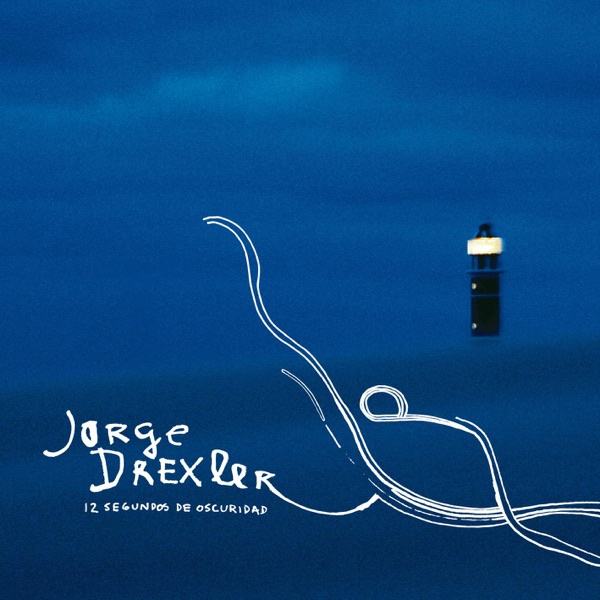
12 segundos de oscuridad
2006 · 13 tracks
- 1 12 Segundos de Oscuridad ↗ 4:07
- 2 La Vida Es Mas Compleja de Lo Que Parece ↗ 3:08
- 3 Transoceanica ↗ 3:24
- 4 Disneylandia ↗ 3:49
- 5 El Otro Engranaje ↗ 3:55
- 6 High and Dry ↗ 3:45
- 7 La Infidelidad de la Era Informatica ↗ 3:03
- 8 Hermana Duda ↗ 3:00
- 9 Inoportuna ↗ 2:45
- 10 Quien Quiera Que Seas ↗ 3:31
- 11 Soledad ↗ 3:58
- 12 Sanar ↗ 4:29
- 13 El Fuego y el Combustible ↗ 3:40

Amar la trama
2010 · 12 tracks
- 1 Tres Mil Millones de Latidos ↗ 3:50
- 2 La Trama y el Desenlace ↗ 4:06
- 3 Las Transeuntes ↗ 5:03
- 4 La Nieve en la Bola de Nieve ↗ 4:56
- 5 Mundo Abisal ↗ 4:07
- 6 Toque de Queda ↗ 3:35
- 7 Una Canción Me Trajo Hasta Aquí ↗ 3:24
- 8 Aquíles por Su Talon Es Aquíles ↗ 3:34
- 9 I Don't Worry About a Thing ↗ 4:18
- 10 Noctiluca ↗ 3:30
- 11 Todos a Sus Puestos ↗ 3:01
- 12 Telon ↗ 2:35

Bailar en la cueva
2014 · 12 tracks
- 1 Bailar en la cueva ↗ 4:03
- 2 Bolivia ↗ 3:56
- 3 Data data ↗ 4:24
- 4 La luna de Rasquí ↗ 3:41
- 5 Universos paralelos ↗ 3:42
- 6 Todo cae ↗ 4:13
- 7 Esfera ↗ 4:05
- 8 La plegaria del paparazzo ↗ 3:31
- 9 La noche no es una ciencia ↗ 3:34
- 10 El triángulo de las Bermudas ↗ 3:14
- 11 Organdí ↗ 6:40
- 12 Cai creo que caí ↗ 4:49

Salvavidas de hielo
2017 · 11 tracks
- 1 Movimiento ↗ 3:51
- 2 Telefonía ↗ 3:06
- 3 Silencio ↗ 3:28
- 4 Pongamos que hablo de Martínez ↗ 3:02
- 5 Estalactitas ↗ 4:21
- 6 Asilo (feat. Mon Laferte) ↗ 3:04
- 7 Abracadabras (feat. Julieta Venegas) ↗ 3:38
- 8 Mandato ↗ 4:52
- 9 Despedir a los glaciares ↗ 3:37
- 10 Quimera ↗ 3:39
- 11 Salvavidas de hielo (feat. Natalia Lafourcade) ↗ 3:29

Tinta y tiempo
2022 · 10 tracks

Taracá
2026 · 11 tracks
-
 VaivénJorge Drexler199613 tracks
 -
 LlueveJorge Drexler199812 tracks
 -
 FronteraJorge Drexler199911 tracks
 -
 SeaJorge Drexler200112 tracks
 -
 EcoJorge Drexler200411 tracks
 -
 12 segundos de oscuridadJorge Drexler200613 tracks
 -
 Amar la tramaJorge Drexler201012 tracks
 -
 Bailar en la cuevaJorge Drexler201412 tracks
 -
 Salvavidas de hieloJorge Drexler201711 tracks
 -
 Tinta y tiempoJorge Drexler202210 tracks
 -
 TaracáJorge Drexler202611 tracks
Deep Dive
Overview
Jorge Abner Drexler Prada stands as one of the most significant musical figures to emerge from Uruguay in the modern era. A versatile musician working across folk, pop, and alternative rock, Drexler achieved international prominence through both his recorded work and his composition for cinema, culminating in the 2005 Academy Award for Best Original Song for “Al Otro Lado del Río” from The Motorcycle Diaries. This recognition marked a watershed moment not only for Drexler’s career but for Spanish-language music in global cinema, positioning him as an artist whose reach extends well beyond conventional rock categorization.
Formation Story
Born in Uruguay in 1964, Drexler emerged from a Latin American cultural landscape shaped by political upheaval, artistic ferment, and a rich tradition of singer-songwriter traditions rooted in folk and nueva canción. Growing up in this context, Drexler absorbed influences from both the classical music heritage of the region and the contemporary rock and pop currents filtering across the Atlantic. His early formation as a musician reflected this synthesis—not a purist commitment to any single genre, but rather an eclectic curiosity about how folk instrumentation, pop sensibility, and rock’s structural freedom could intersect. By the early 1990s, Drexler had positioned himself within the emerging alternative rock and folk-pop scenes, drawing on his Uruguayan roots while remaining open to broader contemporary influences.
Breakthrough Moment
Drexler’s early studio work established him as a distinctive voice within Latin American alternative music. His debut album La luz que sabe robar (1992) introduced audiences to his particular blend of introspective lyricism and rhythmic complexity, and subsequent releases through the 1990s—including Radar (1994), Vaivén (1996), and Llueve (1998)—gradually built his reputation as a serious composer and performer. However, the breakthrough that would cement his international standing came in 2005, when his song “Al Otro Lado del Río,” composed for Walter Salles’s film The Motorcycle Diaries, won the Academy Award for Best Original Song. This achievement made Drexler the first Uruguayan to win an Oscar and marked the first time a Spanish-language song had received the award in the Academy’s history, a watershed moment that dramatically expanded his profile and introduced his work to audiences far beyond Latin America.
Peak Era
Following the Oscar win, Drexler entered his most internationally visible period. The album Eco (2004), released just before the Academy Award ceremony, and the subsequent 12 segundos de oscuridad (2006) demonstrated an artist working at peak creative confidence, synthesizing the songwriting maturity and production sophistication he had developed over a decade and a half into work that resonated across linguistic and cultural boundaries. The 2010 album Amar la trama continued this trajectory, consolidating Drexler’s position as a major figure in contemporary world music and alternative rock. During this period, his work was increasingly recognized not merely as a regional phenomenon but as a significant contribution to the broader landscape of contemporary popular music, drawing listeners interested in folk authenticity, pop accessibility, and rock’s experimental impulses in equal measure.
Musical Style
Drexler’s sound resists easy classification, a defining characteristic that has sustained his artistic identity across three decades. His music pivots on the intersection of acoustic folk instrumentation—guitar, strings, and traditional percussion—with production techniques rooted in contemporary pop and alternative rock, creating soundscapes that feel both intimate and expansive. His vocal approach emphasizes clarity and emotional nuance rather than technical virtuosity, serving the precision of his lyrical content. Thematically, his work often engages with questions of identity, displacement, and connection, drawing on the Spanish-language literary and musical traditions of Latin America while remaining fundamentally cosmopolitan in outlook. His compositional style favors complex harmonic structures, unconventional song forms, and rhythmic patterns informed by both classical music training and the syncopated traditions of South American music. Over the course of his career, production values have evolved from the relatively spare textures of his early work toward increasingly sophisticated arrangements, yet the essential qualities—introspection, formal invention, and linguistic precision—have remained constant.
Major Albums
La luz que sabe robar (1992)
Drexler’s debut established the core elements of his artistic vision: intimate acoustic arrangements, layered songwriting, and a vocal presence focused on emotional restraint and lyrical clarity that would define his subsequent work.
Radar (1994)
The second album refined Drexler’s production palette and demonstrated his growing confidence as a recording artist, expanding the sonic range of his songwriting without abandoning the essential intimacy of his approach.
Frontera (1999)
Released as the 1990s drew to a close, Frontera represented a consolidation of Drexler’s artistic identity and a moment of creative maturity, balancing folk authenticity with contemporary production sensibilities.
Eco (2004)
Issued immediately before his Academy Award victory, Eco showcased Drexler at full artistic command, with sophisticated arrangements and compositions that would soon reach a global audience through the Oscar recognition.
Amar la trama (2010)
Following his international breakthrough, this album demonstrated Drexler’s capacity to maintain artistic integrity while working at the height of his commercial visibility, sustaining both critical and popular esteem.
Salvavidas de hielo (2017)
A more recent work that affirmed Drexler’s continued creative engagement, maintaining the balance between accessibility and formal innovation that has characterized his career.
Signature Songs
- “Al Otro Lado del Río” — The Oscar-winning composition from The Motorcycle Diaries, becoming his most internationally recognized work and introducing his music to audiences across the globe.
Influence on Rock
Drexler’s significance in contemporary rock and alternative music lies not in stylistic innovation but in his demonstration that sophisticated songwriting, linguistic precision, and emotional authenticity could reach international audiences without compromise. His success helped establish a pathway for Spanish-language artists working in alternative rock and singer-songwriter traditions to achieve recognition beyond their regional markets. By winning the Academy Award for a Spanish-language song, Drexler challenged the English-language dominance of global popular music discourse and demonstrated that songs composed in Spanish could meet the highest standards of cinematic and musical artistry. His work has influenced subsequent generations of Latin American songwriters and artists who similarly blend folk traditions with contemporary production and cross-linguistic boundaries in their approach to songwriting and performance.
Legacy
Jorge Drexler’s legacy extends across both recorded music and cinema, territories he has navigated with equal sophistication. His Oscar victory remains historically significant as a cultural moment—not merely a personal achievement but a recognition that reshaped conversations about language, national cinema, and musical value in global institutions. His ongoing recording career, continuing into the 2020s with albums including Bailar en la cueva (2014), Tinta y tiempo (2022), and Taracá (2026), demonstrates an artist committed to sustained creative evolution rather than resting on past accomplishments. Within rock and alternative music more broadly, Drexler occupies a distinctive position as an artist whose influences flow from multiple traditions—classical music, Latin American folk and nueva canción, contemporary pop and alternative rock—synthesized into a cohesive artistic vision. His presence on major streaming platforms and continued touring have maintained his visibility among both longtime supporters and newer audiences discovering his work through film soundtracks or digital recommendation algorithms.
Fun Facts
- Drexler is also an accomplished actor, demonstrating his versatility as a performer across multiple artistic disciplines.
- His Oscar victory made him only the first Uruguayan ever to win an Academy Award, a distinction that reflected both his individual achievement and the broader underrepresentation of Uruguayan culture in international entertainment institutions.
- The Motorcycle Diaries, for which he composed “Al Otro Lado del Río,” documents the early travels of Ernesto “Che” Guevara, connecting Drexler’s work to one of Latin America’s most significant historical narratives.
- His discography spanning from 1992 to 2026 demonstrates a consistency of output and artistic engagement rarely seen in contemporary popular music, with new studio albums released across four decades.