

Photo by Eckhard Henkel , licensed under CC BY-SA 3.0 de · Wikimedia Commons
Rank #492
Joan Armatrading
From Wikipedia
Joan Anita Barbara Armatrading is an English singer-songwriter and guitarist. Her first major commercial success came with her third and fourth albums, Joan Armatrading (1976) and Show Some Emotion (1977), and she continues to play live and record studio albums. A three-time Grammy Award nominee, Armatrading has also been nominated twice for BRIT Awards as Best Female Artist. She received an Ivor Novello Award for Outstanding Contemporary Song Collection in 1996.
Discography & Previews
Browse through and click an album to open and play 30-second previews streamed from Apple Music.

Whatever's for Us
1972 · 14 tracks
- 1 My Family (2015 Remastered Version) ↗ 3:10
- 2 City Girl (2015 Remastered Version) ↗ 3:59
- 3 Spend a Little Time (2015 Remastered Version) ↗ 2:25
- 4 Whatever's For Us, For Us (2015 Remastered Version) ↗ 2:12
- 5 Child Star (2015 Remastered Version) ↗ 2:25
- 6 Visionary Mountains (2015 Remastered Version) ↗ 1:51
- 7 It Could Have Been Better (2015 Remastered Version) ↗ 4:19
- 8 Head of the Table (2015 Remastered Version) ↗ 2:32
- 9 Mister Remember Me (2015 Remastered Version) ↗ 2:17
- 10 Gave It a Try (2015 Remastered Version) ↗ 2:11
- 11 Alice (2015 Remastered Version) ↗ 3:29
- 12 Conversation (2015 Remastered Version) ↗ 2:16
- 13 Mean Old Man (2015 Remastered Version) ↗ 2:35
- 14 All the King's Gardens (2015 Remastered Version) ↗ 3:01

Back to the Night
1974 · 11 tracks


The Key
1983 · 11 tracks


Square the Circle
1992 · 10 tracks

What’s Inside
1995 · 13 tracks
- 1 In Your Eyes ↗ 2:42
- 2 Everyday Boy ↗ 4:37
- 3 Merchant of Love ↗ 4:49
- 4 Shapes and Sizes ↗ 3:15
- 5 Back on the Road ↗ 2:43
- 6 Lost the Love ↗ 3:43
- 7 Songs ↗ 3:49
- 8 Would You Like to Dance ↗ 4:01
- 9 Recommend My Love ↗ 4:30
- 10 Beyond the Blue ↗ 3:53
- 11 Can't Stop Loving You ↗ 3:25
- 12 Shape of a Pony ↗ 4:43
- 13 Trouble ↗ 4:07
Lovers Speak
2003 · 14 tracks
- 1 Lovers Speak ↗ 5:55
- 2 Physical Pain ↗ 3:28
- 3 In These Times ↗ 3:18
- 4 Waiting ↗ 2:54
- 5 Prove Yourself ↗ 3:35
- 6 Fire and Ice ↗ 3:31
- 7 Love Bug ↗ 3:23
- 8 Let's Talk About Us ↗ 4:01
- 9 Ocean ↗ 3:33
- 10 Tender Trap ↗ 4:11
- 11 Less Happy More Often ↗ 3:56
- 12 Crazy for You ↗ 4:10
- 13 You Made Your Bed ↗ 3:57
- 14 Blessed ↗ 1:45

Into the Blues
2007 · 13 tracks
- 1 A Woman in Love ↗ 3:56
- 2 Play the Blues ↗ 4:34
- 3 Into the Blues ↗ 4:23
- 4 Liza ↗ 4:08
- 5 Secular Songs ↗ 4:13
- 6 My Baby's Gone ↗ 3:37
- 7 D.N.A. ↗ 4:03
- 8 Baby Blue Eyes ↗ 3:57
- 9 Deep Down ↗ 4:00
- 10 There Ain't a Girl Alive ↗ 4:28
- 11 Empty Highway ↗ 5:26
- 12 Mama Papa ↗ 4:02
- 13 Something's Gotta Blow ↗ 8:04


Not Too Far Away
2018 · 10 tracks

How Did This Happen And What Does It Now Mean
2024 · 12 tracks
- 1 25 Kisses ↗ 3:05
- 2 Someone Else ↗ 3:15
- 3 Irresistible ↗ 3:18
- 4 I'm Not Moving ↗ 3:37
- 5 Say It Tomorrow ↗ 3:43
- 6 Back And Forth ↗ 4:17
- 7 Come Back To Me (If Only In Dreams) ↗ 2:57
- 8 Here’s What I Know ↗ 3:38
- 9 Redemption Love ↗ 2:25
- 10 How Did This Happen And What Does It Now Mean ↗ 3:41
- 11 Now What ↗ 1:42
- 12 I Gave You My Keys ↗ 4:12
-
 Whatever's for UsJoan Armatrading197214 tracks
 -
 Back to the NightJoan Armatrading197411 tracks
 -
 Joan ArmatradingJoan Armatrading197610 tracks
 -
 Show Some EmotionJoan Armatrading197710 tracks
 -
 To the LimitJoan Armatrading197810 tracks
 -
 Me Myself IJoan Armatrading198010 tracks
 -
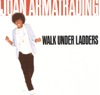 Walk Under LaddersJoan Armatrading198110 tracks
 -
 The KeyJoan Armatrading198311 tracks
 -
 Secret SecretsJoan Armatrading198510 tracks
 -
 Sleight of HandJoan Armatrading198610 tracks
 -
 The Shouting StageJoan Armatrading198810 tracks
 -
 Hearts and FlowersJoan Armatrading199010 tracks
 -
 Square the CircleJoan Armatrading199210 tracks
 -
 What’s InsideJoan Armatrading199513 tracks
 -
 Lovers SpeakJoan Armatrading200314 tracks
 -
 Into the BluesJoan Armatrading200713 tracks
 -
 This Charming LifeJoan Armatrading201011 tracks
 -
 StarlightJoan Armatrading201210 tracks
 -
 Not Too Far AwayJoan Armatrading201810 tracks
 -
 ConsequencesJoan Armatrading202110 tracks
 -
 How Did This Happen And What Does It Now MeanJoan Armatrading202412 tracks
 - Show Some EmotionJoan Armatrading—10 tracks
Deep Dive
Overview
Joan Armatrading is a British singer-songwriter and guitarist whose career spans over five decades of recorded work. Born in 1950, she emerged as a defining figure in the singer-songwriter tradition of the 1970s, standing apart through her fingerstyle guitar work, introspective lyricism, and refusal to align with any particular movement or trend. Her breakthrough came with her third and fourth albums—Joan Armatrading (1976) and Show Some Emotion (1977)—which established her as a major commercial and critical force. A three-time Grammy Award nominee and twice-nominated for BRIT Awards as Best Female Artist, Armatrading has maintained an active recording and touring schedule well into the 2020s, continuing to refine her craft across pop, rock, and blues idioms.
Formation Story
Joan Armatrading grew up in a musical household and developed her guitar skills in her early years, working her way through the British folk and rock scenes of the late 1960s and early 1970s. Unlike many contemporaries who rose through university folk circuits or London coffee-house networks, Armatrading pursued a more independent path, gradually building an audience through live performance and early recordings. Her initial releases—Whatever’s for Us (1972) and Back to the Night (1974)—appeared on smaller labels and received modest attention, but they demonstrated the technical guitar prowess and understated songwriting sensibility that would become her hallmark. By the mid-1970s, she had moved to A&M Records, positioning herself within reach of mainstream airplay while maintaining complete artistic control over her material.
Breakthrough Moment
Armatrading’s transition from cult artist to broad commercial recognition came with the release of her self-titled album Joan Armatrading in 1976. The record showcased a mature songwriter in command of her craft, combining fingerstyle acoustic guitar with subtle pop production that broadened her appeal beyond the folk-music faithful. The follow-up, Show Some Emotion (1977), consolidated that breakthrough and expanded her chart presence, establishing her as one of the most consistently intelligent and technically accomplished singer-songwriters of the era. These two albums marked the point at which radio programmers, music critics, and the listening public recognized her not as a marginal figure but as a major talent, opening doors to larger venues and sustained commercial viability.
Peak Era
Armatrading’s most successful and creatively vibrant period ran through the late 1970s and early 1980s. Following the momentum of Joan Armatrading and Show Some Emotion, she released To the Limit (1978), Me Myself I (1980), and Walk Under Ladders (1981), a run of albums that cemented her position as a leading female artist in rock and pop. During these years, she balanced commercial appeal with artistic autonomy, refusing to adopt the production trends or stylistic shortcuts that might have maximized her chart presence. The Key (1983) extended this productive period, demonstrating that her songwriting and musicianship remained at their peak even as the music industry’s attention drifted toward new wave and synthesizer-driven pop.
Musical Style
Armatrading’s sound is grounded in fingerstyle acoustic guitar, an approach she learned early and never abandoned, even as her records incorporated electric instruments and pop production. Her vocal delivery is understated and conversational—she does not belt or oversell emotion, instead letting the melody and lyrical content carry weight. Her songwriting favors introspection and observational clarity; she writes about love, identity, and social dynamics with the precision of a novelist rather than a poet seeking grand gestures. The production of her albums evolved across her career, moving from sparse folk arrangements in her earliest work toward fuller pop-rock textures by the mid-1980s, but always with restraint. Her influence traces through British folk-rock tradition—artists like Bert Jansch and Fairport Convention—but her pop sensibility and commercial success place her in a lineage with contemporaries like Joni Mitchell and Kate Bush, though her approach remains distinctly her own.
Major Albums
Joan Armatrading (1976)
Her third album and first major commercial success, establishing her as a complete artist in command of production, arrangement, and self-presentation on the world stage.
Show Some Emotion (1977)
Followed immediately on the success of its predecessor, this album further refined her pop-oriented approach while maintaining the emotional depth and guitar craftsmanship her audience valued.
Me Myself I (1980)
Released as the 1970s gave way to a new decade, this album demonstrated her continued growth as both a songwriter and performer, consolidating her status as a permanent fixture in rock and pop.
Walk Under Ladders (1981)
Continuing her prolific output in the early 1980s, this record showed no signs of artistic decline or commercial fatigue.
The Key (1983)
Her eighth studio album represented the natural conclusion of her peak period, proving she could sustain quality and originality across multiple releases.