
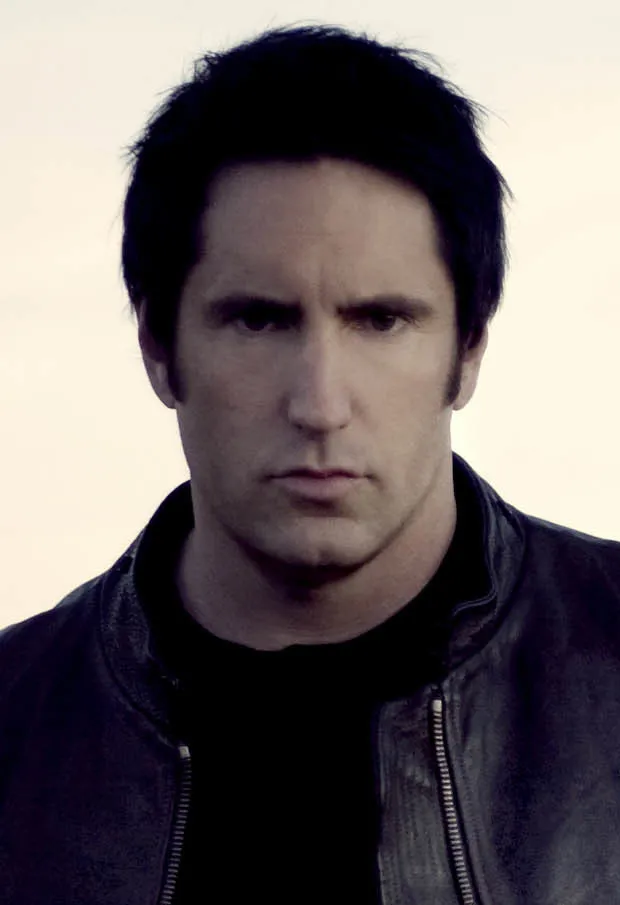
Photo by Rob Sheridan , licensed under CC BY-SA 2.0 · Wikimedia Commons
Rank #334
Trent Reznor
From Wikipedia
Michael Trent Reznor is an American singer, songwriter, musician, and composer. He came to prominence as the founder, lead singer, multi-instrumentalist, and primary songwriter of the industrial rock band Nine Inch Nails. The band's line-up has constantly changed, with Reznor being its only official member from its creation in 1988 until 2016, when he added English musician and frequent collaborator Atticus Ross as its second permanent member.
Deep Dive
Overview
Michael Trent Reznor emerged as one of rock’s most consequential figures of the late twentieth century as the founder, lead singer, multi-instrumentalist, and primary songwriter of Nine Inch Nails. Beginning in 1988, Reznor built the project from a solo entity into a vehicle for exploring the intersection of industrial sonics, rock instrumentation, and deeply personal songwriting. His career spans roles as performer, bandleader, and composer, positioning him at the crossroads of alternative metal, synth-pop, and ambient music—genres that would reshape rock’s experimental landscape.
Formation Story
Reznor was born in 1965 and came of age during the post-punk and synth-pop movements of the 1980s, cultural moments that would prove foundational to his artistic identity. Rather than emerge from a traditional rock band apprenticeship, Reznor built his foundation in studio work and multi-instrumental composition, teaching himself production techniques and synthesizer programming. In 1988, he established Nine Inch Nails as his primary creative outlet, initially operating as a one-man project in which he handled songwriting, vocals, and instrumental arrangements. This solo genesis—with Reznor as the sole official member—allowed him complete artistic control and established a template that would persist for nearly three decades. Only in 2016 did Reznor add English musician and frequent collaborator Atticus Ross as a second permanent member, formalizing a working relationship that had already shaped the band’s sonic evolution.
Breakthrough Moment
Nine Inch Nails’ early work introduced Reznor’s signature aesthetic: distorted synthesizers, aggressive drum programming, and lyrics addressing psychological distress, industrial alienation, and personal anguish. The band’s initial releases on TVT Records and later on Nothing Records—Reznor’s own independent label—carved out a distinct space within alternative rock radio and MTV’s alternative programming blocks. By the early 1990s, Reznor had positioned Nine Inch Nails as one of the decade’s most compelling alternative acts, blending the abrasiveness of industrial music with the song structures and emotional directness of rock and pop.
Peak Era
Reznor’s creative apex and peak commercial success arrived in the 1990s, when Nine Inch Nails became a defining band of the alternative rock mainstream. The project’s output during this period synthesized the noise and abstraction of industrial music with increasingly sophisticated songwriting and production, establishing Reznor as both a provocateur and a serious composer. His work with major labels including Island Records, Columbia Records, and Interscope Records extended the band’s reach while maintaining its artistic credibility. Throughout the 1990s and into the 2000s, Reznor continued to evolve the project’s sound, moving between moments of harsh experimentation and introspective electronic arrangement.
Musical Style
Reznor’s approach to composition centers on the manipulation of electronic and synthetic textures layered with live rock instrumentation—primarily drums, guitar, and synthesizers. His vocal delivery ranges from whispered intimacy to throat-shredding intensity, often within a single song, serving as an additional instrument rather than a merely functional vehicle for melody. Lyrically, he explores themes of isolation, depression, obsession, and technological dehumanization, grounding abstract industrial sounds in visceral emotional experience. The production philosophy underlying his work emphasizes clarity and precision even in moments of extreme distortion, a trait that distinguishes his industrial approach from purely noise-based contemporaries. Over time, Reznor’s production has incorporated ambient textures, orchestral elements, and minimalist approaches alongside his signature harsh electronics, demonstrating a willingness to expand beyond the industrial template without abandoning its core aesthetic.
Major Albums
The Walled Off Hotel (2017)
Released as a collaboration and soundtrack concept, this later work demonstrates Reznor’s continued engagement with compositional experimentation and his evolution beyond traditional rock song structures.
Signature Songs
- “Closer” — A stark exploration of desire and intimacy that became one of Nine Inch Nails’ most recognizable and controversial tracks.
- “Hurt” — An unflinching examination of self-destruction and depression, notable for its sparse arrangement and confessional directness.
- “The Hand That Feeds” — A pointed critique of institutional control and manipulation, delivered through an accessible yet menacing industrial rock framework.
- “Downward Spiral” — A title track capturing the project’s thematic preoccupations with psychological deterioration and loss of control.
Influence on Rock
Reznor’s work expanded the boundaries of what rock music could accommodate sonically and thematically. By proving that industrial textures, harsh production, and experimental structures could coexist with emotional authenticity and mainstream listenership, he created a template adopted by countless alternative and metal acts in subsequent decades. Nine Inch Nails’ fusion of electronic production sophistication with rock’s expressive traditions influenced the trajectory of alternative metal, industrial metal, and synth-driven rock throughout the 1990s and 2000s. His later work as a composer—expanding beyond the rock-based output—further demonstrated the portability of his artistic sensibilities across genre boundaries, suggesting that his core contributions lay in approach and philosophy rather than adherence to any single musical category.
Legacy
Reznor’s career trajectory from the founding of Nine Inch Nails in 1988 through the project’s ongoing evolution represents one of alternative rock’s most sustained and artistically consistent bodies of work. His influence on industrial and alternative rock remains substantial, visible in the work of acts across multiple generations. The addition of Atticus Ross as a permanent member in 2016 marked a formal recognition of their collaborative relationship and signaled the project’s continued creative vitality. Reznor’s work continues to reach audiences through streaming platforms and renewed interest in 1990s alternative culture, establishing him as a figure whose influence extends across rock history and contemporary music.
Fun Facts
- Reznor has maintained Nine Inch Nails as his primary creative vehicle while simultaneously pursuing other projects, demonstrating a commitment to the project’s vision across more than three decades.
- The addition of Atticus Ross as a permanent member in 2016 was formalized after years of frequent collaboration, reflecting the project’s evolution from a solo endeavor to a true collaborative partnership.
- Reznor’s work spans multiple genres including alternative metal, rock, synth-pop, and ambient music, reflecting his refusal to be confined by genre conventions.