
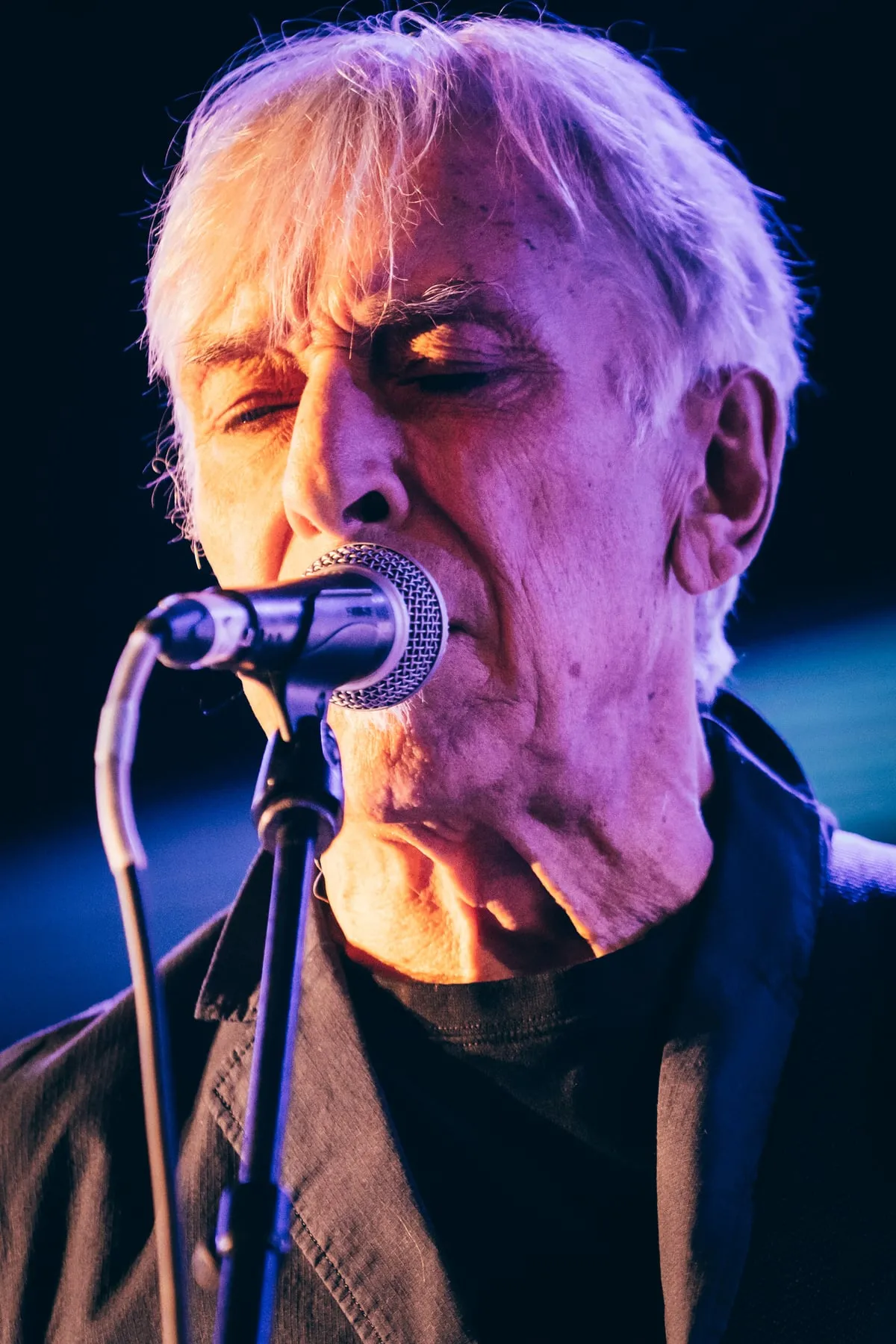
Photo by Paul Hudson from United Kingdom , licensed under CC BY 2.0 · Wikimedia Commons
Rank #101
John Cale
From Wikipedia
John Davies Cale is a Welsh singer, musician, composer, record producer and arranger. He is a founding member of the influential American rock band the Velvet Underground, with whom he recorded two studio albums. Over his six-decade career, Cale has worked in various styles of rock and avant-garde music.
Discography & Previews
Browse through and click an album to open and play 30-second previews streamed from Apple Music.


The Academy in Peril
1972 · 10 tracks
- 1 The Philosopher (Remastered 2024) ↗ 4:32
- 2 Brahms (Remastered 2024) ↗ 6:27
- 3 Legs Larry at Television Centre (Remastered 2024) ↗ 3:40
- 4 The Academy in Peril (Remastered 2024) ↗ 6:57
- 5 Intro (Remastered 2024) ↗ 0:58
- 6 Days of Steam (Remastered 2024) ↗ 2:03
- 7 3 Orchestral Pieces: A) Faust B) the Balance C) Capt. Morgans Lament (Remastered 2024) ↗ 8:37
- 8 King Harry (Remastered 2024) ↗ 4:12
- 9 John Milton (Remastered 2024) ↗ 8:01
- 10 Temper (Bonus Track) ↗ 4:57

Paris 1919
1973 · 16 tracks
- 1 Child's Christmas in Wales (Remastered 2024) ↗ 3:20
- 1 I Must Not Sniff Cocaine (Remastered 2024) ↗ 0:39
- 2 Hanky Panky Nohow (Remastered 2024) ↗ 2:43
- 2 Hanky Panky Nohow (Drone Mix) [Remastered 2024] ↗ 3:02
- 3 The Endless Plain of Fortune (Remastered 2024) ↗ 4:10
- 3 Child's Christmas in Wales (Rehearsal 1) [Remastered 2024] ↗ 3:31
- 4 Andalucia (Remastered 2024) ↗ 3:51
- 4 Half Past France (Intro Chat) [Remastered 2024] ↗ 4:27
- 5 Macbeth (Remastered 2024) ↗ 3:04
- 5 Macbeth (Take 11) [Remastered 2024] ↗ 3:37
- 6 Paris 1919 (Remastered 2024) ↗ 4:04
- 6 Hanky Panky Nohow (Guitar Mix) [Remastered 2024] ↗ 3:41
- 7 Graham Greene (Remastered 2024) ↗ 2:59
- 7 Fever Dream 2024: You're a Ghost ↗ 9:12
- 8 Half Past France (Remastered 2024) ↗ 4:17
- 9 Antarctica Starts Here (Remastered 2024) ↗ 2:52


Music for a New Society
1982 · 25 tracks
- 1 Taking Your Life In Your Hands (Music For a New Society) ↗ 4:46
- 1 Prelude (M:FANS) ↗ 2:17
- 2 Thoughtless Kind (Music For a New Society) ↗ 2:48
- 2 If You Were Still Around (M:FANS) ↗ 5:19
- 3 Sanctus (Sanities) [Music For a New Society] ↗ 6:07
- 3 Taking Your Life In Your Hands (M:FANS) ↗ 5:44
- 4 If You Were Still Around (Music For a New Society) ↗ 3:28
- 4 Thoughtless Kind (M:FANS) ↗ 5:28
- 5 Close Watch (Music For a New Society) ↗ 3:07
- 5 Sanctus (Sanities Mix) [M:FANS] ↗ 5:20
- 6 Broken Bird (Music For a New Society) ↗ 4:46
- 6 Broken Bird (M:FANS) ↗ 5:11
- 7 Chinese Envoy (Music For a New Society) ↗ 3:13
- 7 Chinese Envoy (M:FANS) ↗ 3:52
- 8 Changes Made (Music For a New Society) ↗ 3:16
- 8 Changes Made (M:FANS) ↗ 3:55
- 9 Damn Life (Music For a New Society) ↗ 5:14
- 9 Library of Force (Feat. Man In the Book Excerpt) [M:FANS] ↗ 3:09
- 10 Risé, Sam and Rimsky Korsakov (Music For a New Society) ↗ 2:23
- 10 Close Watch (M:FANS) ↗ 5:15
- 11 Library of Force (Music For a New Society) ↗ 4:47
- 11 If You Were Still Around (Choir Reprise) [M:FANS] ↗ 4:45
- 12 Chinese Envoy (Outtakes) [Music For a New Society] ↗ 3:39
- 12 Back To the End (M:FANS) ↗ 3:35
- 13 Thoughtless Kind (Outtakes) [Music For a New Society] ↗ 2:34


Words for the Dying
1989 · 9 tracks

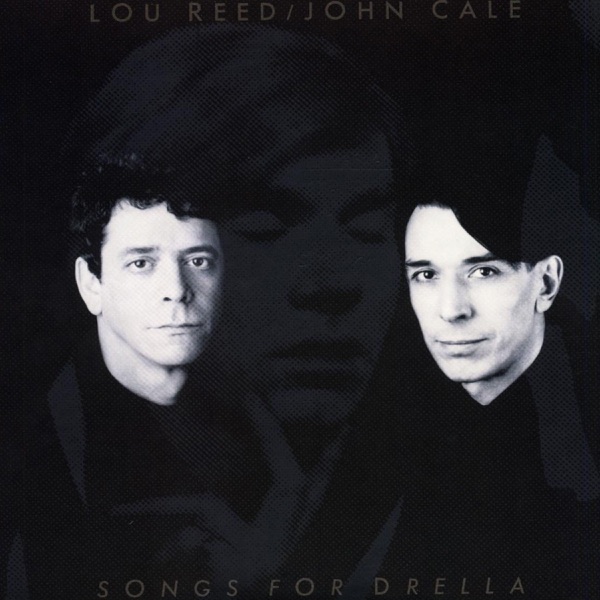
Songs for Drella
1990 · 15 tracks
- 1 Smalltown ↗ 2:03
- 2 Open House ↗ 4:18
- 3 Style It Takes ↗ 2:54
- 4 Work ↗ 2:37
- 5 Trouble With Classicists ↗ 3:41
- 6 Starlight ↗ 3:28
- 7 Faces and Names ↗ 4:12
- 8 Images ↗ 3:31
- 9 Slip Away (A Warning) ↗ 3:05
- 10 It Wasn't Me ↗ 3:30
- 11 I Believe ↗ 3:18
- 12 Nobody But You ↗ 3:46
- 13 A Dream ↗ 6:33
- 14 Forever Changed ↗ 4:52
- 15 Hello It's Me ↗ 3:03

Last Day on Earth
1994 · 16 tracks
- 1 Overture: A Tourist / A Contact / A Prisoner ↗ 8:06
- 2 Café Shabu ↗ 5:38
- 3 Pastoral Angst ↗ 2:29
- 4 Who's In Charge? ↗ 2:53
- 5 Short Of Time ↗ 3:08
- 6 Angel Of Death ↗ 4:20
- 7 Paradise Nevada ↗ 5:34
- 8 Old China ↗ 3:13
- 9 Ocean Life ↗ 4:48
- 10 Instrumental ↗ 1:57
- 11 Modern World ↗ 5:53
- 12 Streets Come Alive ↗ 3:23
- 13 Secrets ↗ 4:20
- 14 Maps Of The World ↗ 4:53
- 15 Broken Hearts ↗ 3:04
- 16 The High And Mighty Road ↗ 5:04


Shifty Adventures in Nookie Wood
2012 · 12 tracks
M:FANS
2016 · 25 tracks
- 1 Taking Your Life In Your Hands (Music For a New Society) ↗ 4:46
- 1 Prelude (M:FANS) ↗ 2:17
- 2 Thoughtless Kind (Music For a New Society) ↗ 2:48
- 2 If You Were Still Around (M:FANS) ↗ 5:19
- 3 Sanctus (Sanities) [Music For a New Society] ↗ 6:07
- 3 Taking Your Life In Your Hands (M:FANS) ↗ 5:44
- 4 If You Were Still Around (Music For a New Society) ↗ 3:28
- 4 Thoughtless Kind (M:FANS) ↗ 5:28
- 5 Close Watch (Music For a New Society) ↗ 3:07
- 5 Sanctus (Sanities Mix) [M:FANS] ↗ 5:20
- 6 Broken Bird (Music For a New Society) ↗ 4:46
- 6 Broken Bird (M:FANS) ↗ 5:11
- 7 Chinese Envoy (Music For a New Society) ↗ 3:13
- 7 Chinese Envoy (M:FANS) ↗ 3:52
- 8 Changes Made (Music For a New Society) ↗ 3:16
- 8 Changes Made (M:FANS) ↗ 3:55
- 9 Damn Life (Music For a New Society) ↗ 5:14
- 9 Library of Force (Feat. Man In the Book Excerpt) [M:FANS] ↗ 3:09
- 10 Risé, Sam and Rimsky Korsakov (Music For a New Society) ↗ 2:23
- 10 Close Watch (M:FANS) ↗ 5:15
- 11 Library of Force (Music For a New Society) ↗ 4:47
- 11 If You Were Still Around (Choir Reprise) [M:FANS] ↗ 4:45
- 12 Chinese Envoy (Outtakes) [Music For a New Society] ↗ 3:39
- 12 Back To the End (M:FANS) ↗ 3:35
- 13 Thoughtless Kind (Outtakes) [Music For a New Society] ↗ 2:34

MERCY
2023 · 12 tracks
- 1 MERCY (feat. Laurel Halo) ↗ 7:00
- 2 MARILYN MONROE'S LEGS (Beauty Elsewhere) [feat. Actress] ↗ 6:53
- 3 NOISE OF YOU ↗ 5:16
- 4 STORY OF BLOOD (feat. Weyes Blood) ↗ 7:32
- 5 TIME STANDS STILL (feat. Sylvan Esso) ↗ 5:21
- 6 MOONSTRUCK (Nico's Song) ↗ 5:31
- 7 EVERLASTING DAYS (feat. Animal Collective) ↗ 5:02
- 8 NIGHT CRAWLING ↗ 4:54
- 9 NOT THE END OF THE WORLD ↗ 6:17
- 10 THE LEGAL STATUS OF ICE (feat. The Fat White Family) ↗ 7:24
- 11 I KNOW YOU'RE HAPPY (feat Tei Shi) ↗ 5:15
- 12 OUT YOUR WINDOW ↗ 5:14

POPtical Illusion
2024 · 13 tracks
- 1 God Made Me Do It (Don't Ask Me Again) ↗ 4:49
- 2 Davies and Wales ↗ 4:16
- 3 Calling You Out ↗ 4:49
- 4 Edge of Reason ↗ 5:24
- 5 I'm Angry ↗ 5:26
- 6 How We See the Light ↗ 4:45
- 7 Company Commander ↗ 4:08
- 8 Setting Fires ↗ 5:41
- 9 Shark - Shark ↗ 5:00
- 10 Funkball the Brewster ↗ 5:35
- 11 All to the Good ↗ 4:31
- 12 Laughing in My Sleep ↗ 5:46
- 13 There Will Be No River ↗ 3:58
-
 Vintage ViolenceJohn Cale197011 tracks
 -
 Church of AnthraxJohn Cale19715 tracks
 -
 The Academy in PerilJohn Cale197210 tracks
 -
 Paris 1919John Cale197316 tracks
 -
 FearJohn Cale19749 tracks
 -
 Honi SoitJohn Cale19819 tracks
 -
 Music for a New SocietyJohn Cale198225 tracks
 -
 Artificial IntelligenceJohn Cale19859 tracks
 -
 Words for the DyingJohn Cale19899 tracks
 -
 Wrong Way UpJohn Cale199010 tracks
 -
 Songs for DrellaJohn Cale199015 tracks
 -
 Last Day on EarthJohn Cale199416 tracks
 -
 HoboSapiensJohn Cale200312 tracks
 -
 Black AcetateJohn Cale200513 tracks
 -
 Shifty Adventures in Nookie WoodJohn Cale201212 tracks
 - M:FANSJohn Cale201625 tracks
-
 MERCYJohn Cale202312 tracks
 -
 POPtical IllusionJohn Cale202413 tracks
Deep Dive
Overview
John Cale is a Welsh musician, composer, and producer whose career spans six decades and encompasses avant-garde composition, rock instrumentation, and studio production work across multiple genres. Best known as a founding member of the Velvet Underground—the band that introduced a collision of classical training, street-level poetry, and feedback-driven rock to American popular music in the mid-1960s—Cale has sustained a restless creative practice that moves between art rock, experimental drone, folk, and pop contexts. His influence extends far beyond his two studio albums with the Velvet Underground; his solo work, production credits, and collaborative projects have made him one of the most consistently inventive figures in postwar rock music.
Formation Story
John Davies Cale was born in Wales in 1942 and grew up in a musical household that exposed him to both classical composition and popular forms. His early training in music theory and composition positioned him at an intersection between the concert hall and the emerging rock scene. Cale arrived in New York in the mid-1960s at a moment when the city’s avant-garde art community and rock musicians were beginning to cross paths. It was in this environment that he encountered Lou Reed and Sterling Morrison, and together with drummer Maureen Tucker, they formed the Velvet Underground. The band emerged not from a traditional rock apprenticeship but from an unlikely fusion of Reed’s songwriting, Cale’s classical and experimental background, Tucker’s propulsive minimalist drumming, and the art-world provocations of Andy Warhol, who became the band’s champion and multimedia collaborator.
Breakthrough Moment
The Velvet Underground’s first two studio albums, released in 1967 and 1969, positioned Cale as a figure who could integrate dissonance, drone, and noise into rock song structures without abandoning melody or lyrical content. His viola, cello, and piano work on these records—combined with his arrangements and production sensibility—gave the band a sound unlike any contemporary rock group. Though the Velvet Underground disbanded in 1970, Cale’s subsequent solo career began immediately, with Vintage Violence arriving that same year. This album marked his first statement as a solo artist and showed a more accessible, song-oriented approach than his work with the Velvet Underground, establishing a pattern he would follow: alternating between experimental, avant-garde projects and more structured pop and rock settings.
Peak Era
The early 1970s represented Cale’s most prolific and artistically adventurous period as a solo artist. Albums including The Academy in Peril (1972), Paris 1919 (1973), and Fear (1974) showcased his willingness to move between chamber-pop arrangements, song cycles, and more abstract instrumental work. Paris 1919 in particular crystallized Cale’s gift for creating lush, sophisticated rock songs that borrowed from art song traditions while remaining rooted in contemporary rock idioms. By the mid-1970s, with Helen of Troy and Slow Dazzle (both 1975), Cale had established himself as one of the most idiosyncratic and intellectually engaged rock artists of his era. This period saw him balancing commercial appeal with uncompromising artistic vision, a balance that would define his career trajectory across subsequent decades.
Musical Style
Cale’s sound is defined by his classical training and his comfort with dissonance, minimalism, and unconventional instrumental combinations. His work draws on drone music, art rock, and experimental composition traditions while remaining connected to song-based rock. The viola and cello, often treated as primary melodic instruments rather than accompaniment, became his signatures; he uses them to create both textural density and lyrical warmth. His production work reveals an ear for studio manipulation, orchestration across a wide dynamic range, and an openness to spoken word, sampling, and found sound. Across his albums, Cale has moved between sparse, intimate acoustic arrangements and elaborate chamber-pop productions, between instrumental avant-garde work and straightforward rock and pop songs. His voice—when he chooses to use it—is understated and often deadpan, serving the lyrical content without ornamentation. The through-line is intellectual rigor: Cale’s albums reward close listening and reveal layers of compositional craft beneath their surfaces.
Major Albums
Paris 1919 (1973)
Cale’s most cohesive and celebrated solo work, a song cycle that moves through orchestral arrangements, minimalist repetition, and lyrical restraint, balancing art-song sophistication with rock accessibility and establishing him as a serious composer beyond his Velvet Underground legacy.
The Academy in Peril (1972)
An instrumental album that showcases Cale’s classical training and his interest in contemporary composition, combining orchestral arrangements with rock and experimental approaches to create a distinctive sound that bridges avant-garde concert music and popular forms.
Fear (1974)
A darker, more aggressive exploration of rock song forms, with Cale’s arrangements creating tension and unease while maintaining strong melodic hooks, demonstrating his ability to infuse rock music with emotional complexity and compositional sophistication.
Helen of Troy (1975)
A return to fuller rock instrumentation with intricate arrangements, showing Cale’s continued evolution as both a songwriter and producer, blending pop sensibility with art-rock ambition and establishing patterns of production work that would extend into subsequent decades.
Songs for Drella (1990)
A collaborative project with Lou Reed, a cycle of songs about Andy Warhol that reunited Cale with his Velvet Underground partner and marked a significant moment of artistic reconciliation while demonstrating the enduring connection between the Velvet Underground’s founding members.
Music for a New Society (1982)
A spare, haunting exploration of vocal minimalism and instrumental restraint, with Cale’s voice and simple arrangements creating an atmosphere of intimacy and vulnerability that stands apart from his more maximalist work.
Signature Songs
- Heartbreak Hotel (Paris 1919) — A restrained, orchestral reimagining that transforms Elvis Presley’s rock standard into an art song, exemplifying Cale’s approach to recontextualizing familiar material through compositional sophistication.
- Pablo Picasso (from the Velvet Underground) — A deadpan, minimalist tribute that highlights Cale’s ability to create narrative and emotional complexity through understatement and sparse arrangement.
- Leaving It Up to You (Paris 1919) — A quietly devastating song that moves through key changes and orchestral dynamics, showing Cale’s gift for emotional depth within structured pop forms.
- Fear Is a Man’s Best Friend (Fear) — The title track presents Cale’s darker, more aggressive rock sensibility, using his viola and voice to create psychological tension within a recognizable rock framework.
- Garbageman (Songs for Drella) — A touching collaboration with Lou Reed that balances nostalgia and irony while honoring the friendship between the two composers and the Warhol factory era they documented together.
Influence on Rock
Cale’s impact on rock music stems primarily from his work with the Velvet Underground, where he demonstrated that rock could be intellectually rigorous, formally experimental, and commercially viable simultaneously. The combination of rock rhythm section, pop song structure, and classical instrumentation—combined with subject matter drawn from urban experience, sexuality, and drug culture—created a template that influenced generations of art rock, post-punk, alternative rock, and experimental musicians. His solo work reinforced this influence by showing that artists could move fluidly between avant-garde and pop contexts without sacrificing artistic integrity. Cale’s willingness to work as a producer—bringing his sensibility for arrangement, dynamics, and unconventional instrumentation to other artists’ projects—amplified his influence beyond his own recordings. His integration of classical forms and techniques into rock music helped legitimize the art-rock movement and demonstrated that rock could engage seriously with contemporary composition.
Legacy
John Cale’s six-decade career has established him as one of the most important figures in the development of art rock and experimental music. The Velvet Underground’s cultural impact has only deepened with time, and Cale’s role as a founding member and primary arranger is now widely understood as fundamental to the band’s distinctive sound and approach. His solo albums remain in print and continue to circulate in both rock and classical-music contexts, attracting new listeners while maintaining the respect of established critics and musicians. Cale’s prolific output—over thirty studio albums across his solo career—demonstrates a commitment to continuous artistic exploration and reinvention. Recent albums including Black Acetate (2005), Shifty Adventures in Nookie Wood (2012), and POPtical Illusion (2024) show an artist who continues to work across his full range of interests, from pop songwriting to experimental composition. Cale’s influence extends across multiple genres: art rock, post-punk, experimental music, and alternative rock all trace significant lineage through his work. His legacy as both a founding member of one of rock music’s most important bands and as a singular, restless creative force in his own right remains secure.
Fun Facts
- Cale studied at Goldsmiths College in London before moving to New York, where he initially worked in experimental music and avant-garde composition circles before encountering Lou Reed and the rock scene.
- He has produced and arranged albums for numerous artists across different genres, bringing his distinctive approach to orchestration and sound design to projects beyond his own recordings.
- The Velvet Underground’s second album, which Cale co-wrote and arranged, was largely overlooked commercially during the 1960s but has since been recognized as one of the most influential rock records ever made, with Cale’s instrumental arrangements and production work now understood as central to its impact.
- Cale has maintained a lifelong interest in the intersection of rock music and contemporary classical composition, often incorporating elements from both traditions into single pieces or albums.