

Photo by Secretaría de Cultura de la Ciudad de México , licensed under CC BY 2.0 · Wikimedia Commons
Rank #381
Julieta Venegas
From Wikipedia
Julieta Venegas Percevault is a Mexican singer, songwriter, instrumentalist, and producer who specializes in pop-rock-indie music in Spanish. She embarked on her musical journey by joining several bands, including the Mexican ska band Tijuana No!. Venegas is proficient in playing 17 instruments, including the acoustic guitar, accordion, and keyboard.
Discography & Previews
Browse through and click an album to open and play 30-second previews streamed from Apple Music.

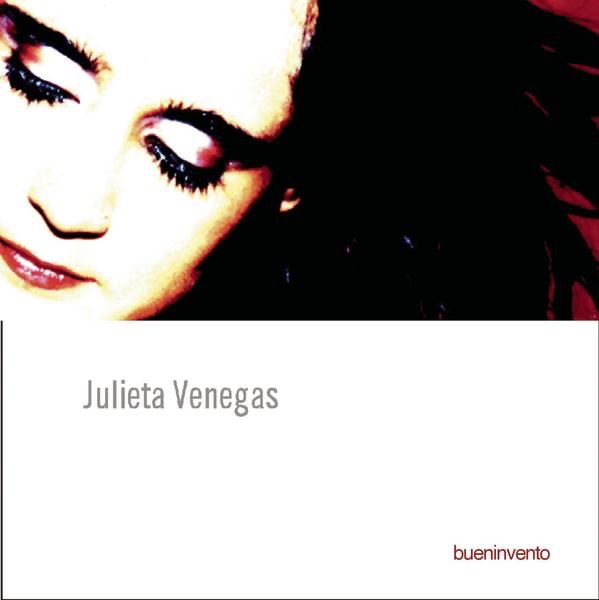
Bueninvento
2000 · 14 tracks
- 1 Fe ↗ 3:40
- 2 Hoy No Quiero ↗ 3:13
- 3 Casa Abandonada ↗ 4:07
- 4 Enero y Abril ↗ 3:34
- 5 Voluntad ↗ 4:29
- 6 Salvavídas ↗ 3:44
- 7 Siempre en Mi Mente ↗ 4:05
- 8 Flor ↗ 3:58
- 9 Todo Inventamos ↗ 3:08
- 10 Bueninvento ↗ 3:11
- 11 Sería Feliz ↗ 3:25
- 12 Otro Sol ↗ 5:10
- 13 Instantanea ↗ 4:24
- 14 Sueño de Sombras ↗ 4:35


Limón y sal
2006 · 14 tracks
- 1 Canciones de Amor ↗ 2:52
- 2 Me Voy ↗ 3:08
- 3 Primer Día ↗ 3:56
- 4 Limón y Sal ↗ 3:25
- 5 Dulce Compañía ↗ 3:22
- 6 De Qué Me Sirve ↗ 2:36
- 7 A Donde Sea ↗ 2:55
- 8 Mírame Bien ↗ 3:37
- 9 No Seré ↗ 2:58
- 10 Última Vez ↗ 4:00
- 11 Eres para Mí ↗ 3:13
- 12 No Hace Falta ↗ 3:28
- 13 Te Voy a Mostrar ↗ 3:18
- 14 Sin Documentos ↗ 3:49

Otra cosa
2010 · 13 tracks
- 1 Amores Platónicos ↗ 2:35
- 2 Bien o Mal ↗ 2:57
- 3 Despedida ↗ 3:24
- 4 Debajo de Mi Lengua ↗ 2:39
- 5 Revolución ↗ 3:23
- 6 Otra Cosa ↗ 2:39
- 7 Original ↗ 3:51
- 8 Ya Conocerán ↗ 3:14
- 9 Duda ↗ 3:34
- 10 Si Tú No Estas ↗ 3:03
- 11 Un Lugar ↗ 3:05
- 12 Eterno ↗ 3:46
- 13 Bien o Mal (Mexican Institute of Sound Remix) ↗ 3:13


-
 AquíJulieta Venegas199712 tracks
 -
 BueninventoJulieta Venegas200014 tracks
 -
 SíJulieta Venegas200310 tracks
 -
 Limón y salJulieta Venegas200614 tracks
 -
 Otra cosaJulieta Venegas201013 tracks
 -
 Los momentosJulieta Venegas201311 tracks
 -
 Algo sucedeJulieta Venegas201512 tracks
 -
 La enamoradaJulieta Venegas20199 tracks
 -
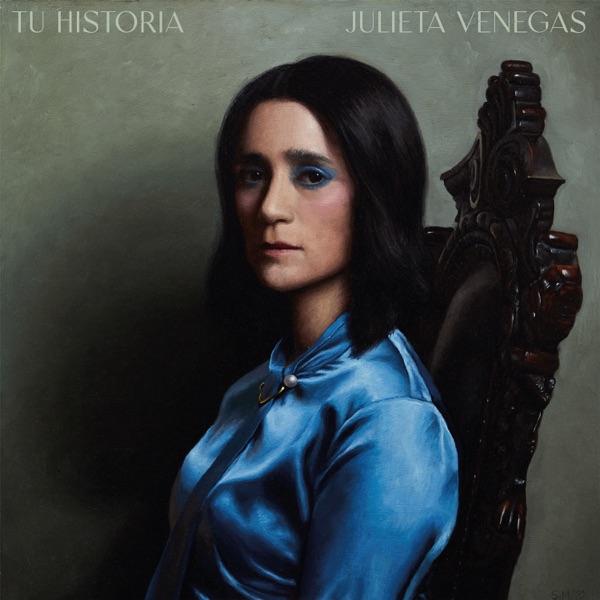
 Tu historiaJulieta Venegas202211 tracks
Deep Dive
Overview
Julieta Venegas Percevault stands as one of Mexico’s most accomplished pop-rock artists, an instrumentalist and producer whose career spans the late 1990s through the present day. Operating across pop-rock, indie pop, and folk-rock idioms, all in Spanish, Venegas carved out a distinct space in Latin rock that emphasizes melodic sophistication, instrumental versatility, and lyrical introspection. Her body of work demonstrates the vitality of Spanish-language rock in an era increasingly dominated by English-language production, and her prolific output—nine studio albums over twenty-five years—has made her a touchstone for subsequent generations of Latin American singer-songwriters.
Formation Story
Venegas’s entry into music came through ensemble work rather than solo performance. Early in her career, she joined Tijuana No!, a Mexican ska band that gave her initial platform and collaborative experience. Those formative years in a ska ensemble exposed her to rhythmic complexity and ensemble arrangement, elements that would later distinguish her solo work. The ska context—inherently energetic, percussive, and rooted in Jamaican and British subculture—provided a counterpoint to the singer-songwriter sensibility she would develop as a solo artist. Her training extended across an unusually wide instrumental palette; Venegas became proficient on seventeen instruments, including acoustic guitar, accordion, and keyboard. This multi-instrumental fluency, rare among rock vocalists, allowed her to shape her own arrangements and production decisions from the outset of her solo career.
Breakthrough Moment
Venegas’s solo debut, Aquí, arrived in 1997, establishing the template for her approach: introspective pop-rock songs built around her voice and multi-tracked instrumental contributions. The album signaled her independence from the ska milieu and introduced the Spanish-language pop-rock audience to her compositional voice. However, her artistic and commercial momentum accelerated with Bueninvento in 2000, which expanded her sonic palette and demonstrated growing confidence in both songwriting and production. By the time Sí was released in 2003, Venegas had achieved sufficient profile within Latin American rock to be recognized as a significant voice rather than an emerging talent. The album’s title—affirmative, direct—reflected her maturation as a solo artist.
Peak Era
The period from 2006 to 2010 represented Venegas’s peak commercial and creative moment. Limón y sal, released in 2006, became her most internationally recognized work, distributing her music across Latin America and beyond. The album showcased her ability to blend cumbia rhythms, accordion textures, and introspective pop-rock songwriting into a cohesive statement. She sustained that momentum with Otra cosa in 2010, demonstrating that her popularity was not tethered to a single album but rooted in a consistent artistic vision. During this five-year span, Venegas solidified her reputation as a producer and instrumentalist in her own right, a rare status for a female-fronted rock artist in the Latin market.
Musical Style
Venegas’s sound synthesizes pop-rock melody, folk-rock sensibility, and Latin percussion and harmonic traditions. Her vocal approach is straightforward and emotionally direct—no melismatic excess, but rather clarity of phrasing that centers the song’s lyrical content. Instrumentally, she favors the acoustic guitar and accordion as primary textural elements, often layering them with keyboard and subtle percussion to create arrangements that feel both intimate and complete. Her use of cumbia rhythms and Latin American instrumentation within a rock-song framework distinguishes her from purely Anglo-American singer-songwriter traditions; she does not simply adopt cumbia as a surface gesture but integrates it into fundamental song structure. The accordion, in particular, becomes a signature element—a European folk instrument that, in Latin American hands, carries both warmth and melancholy. Her production aesthetic tends toward clarity over density; even on full arrangements, individual instrumental lines remain audible, a trait that reflects her multi-instrumental sensibility and her desire to hear each voice in the composition.
Major Albums
Limón y sal (2006)
Venegas’s breakthrough album internationally, Limón y sal balanced pop-rock immediacy with folk-rock and Latin rhythmic sophistication, becoming her most recognizable work and establishing her as a significant figure in Spanish-language indie and alternative rock.
Aquí (1997)
Her solo debut introduced her compositional voice and multi-instrumental approach, marking her transition from ska-band ensemble work to a solo artist’s personal vision.
Bueninvento (2000)
The second album demonstrated expanded sonic range and growing studio confidence, moving closer to the pop-rock and indie sensibility that would define her mature work.
Otra cosa (2010)
Released during her peak period, this album sustained the commercial and artistic momentum established by Limón y sal and proved the durability of her songwriting and production approach.
La enamorada (2019)
Appearing nine years after Algo sucede, La enamorada returned Venegas to the recording studio with fresh material, sustaining her presence in Spanish-language pop-rock into the streaming era.
Signature Songs
- “Limón y sal” — The title track and lead single from her breakthrough album, embodying her fusion of Spanish-language lyricism, accordion textures, and introspective pop-rock melody.
- “Sí” — From the 2003 album of the same name, a direct and emotionally clear statement that exemplifies her approach to songwriting and vocal delivery.
- “Ángel” — A showcase for her accordion work and her ability to layer folk instrumentation within modern pop-rock contexts.
- “Ese camino” — Demonstrates her facility with cumbia-inflected rhythms and her integration of Latin percussion traditions into rock song structures.
Influence on Rock
Venegas’s career demonstrates the vitality and market presence of Spanish-language rock and pop-rock outside the mainstream English-language industry. She proved that Latin American artists could achieve sustained commercial success and critical credibility without compromising their language or cultural context. Her multi-instrumental approach and hands-on production involvement established a template for female singer-songwriters in the Latin rock sphere, normalizing the idea of women as composers, arrangers, and technical architects of their own sound rather than simply performers. Her incorporation of regional Latin American instruments and rhythms—cumbia, accordion textures—into rock song forms influenced subsequent indie and alternative artists across Latin America and Spanish-speaking communities globally, showing that such fusions need not feel decorative or tourism-adjacent but can be fundamental to a modern rock identity.
Legacy
Across twenty-five years of activity, Venegas has remained continuously engaged with recording and composition, releasing new material into the 2020s through Tu historia in 2022. She represents a model of sustained artistic practice in Spanish-language rock, a genre and market less visible in English-language music criticism and streaming recommendation systems but substantial in reach and cultural influence. Her prolific discography and consistent recording schedule demonstrate the durability of her songwriting and commercial viability; she has not been confined to a single era or album’s legacy but has evolved through multiple decades of recording. Her proficiency across seventeen instruments and her hands-on production approach position her as a technical innovator within Latin American rock, expanding the conversation about who creates and controls the sound of modern Spanish-language music.
Fun Facts
- Venegas is proficient on seventeen instruments, including acoustic guitar, accordion, and keyboard, making her one of the most multi-instrumentally versatile vocalists in modern rock music.
- She emerged from Tijuana No!, a Mexican ska band, before transitioning to solo work and becoming known for pop-rock and indie sensibilities vastly different from ska’s percussive energy.
- Her career span extends from 1997 to the present day, encompassing nine studio albums and positioning her as a fixture of Spanish-language rock across three decades.
- The accordion, historically associated with European folk and Latin American cumbia, became a signature element of her production, differentiating her sound within global rock contexts.