
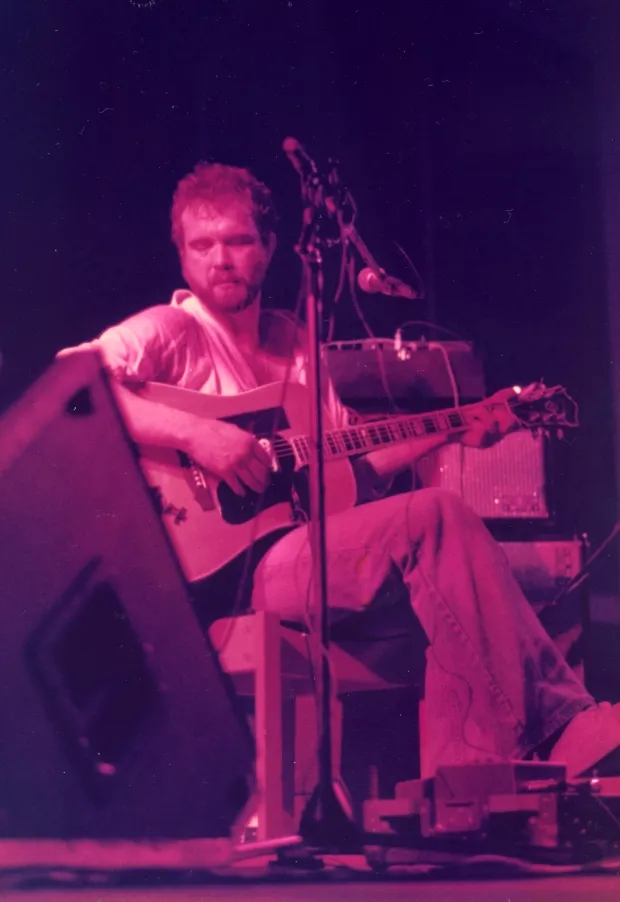
Photo by TimDuncan , licensed under CC BY 3.0 · Wikimedia Commons
Rank #323
John Martyn
From Wikipedia
Iain David McGeachy, known professionally as John Martyn, was a British singer-songwriter and guitarist. Over a 40-year career, he released 23 studio albums and received frequent critical acclaim. The Times described him as "an electrifying guitarist and singer whose music blurred the boundaries between folk, jazz, rock and blues".
Discography & Previews
Browse through and click an album to open and play 30-second previews streamed from Apple Music.

London Conversation
1967 · 13 tracks
- 1 Fairy Tale Lullaby ↗ 2:49
- 2 Sandy Grey ↗ 2:23
- 3 London Conversation ↗ 2:39
- 4 Ballad of an Elder Woman ↗ 2:40
- 5 Cocain ↗ 2:55
- 6 Run Honey Run ↗ 2:35
- 7 Back to Stay ↗ 3:27
- 8 Rolling Home ↗ 5:41
- 9 Who's Grown Up Now ↗ 4:01
- 10 Golden Girl ↗ 2:30
- 11 This Time ↗ 3:05
- 12 Don't Think Twice It's Alright ↗ 4:12
- 13 She Moves Through the Fair ↗ 2:33

The Tumbler
1968 · 12 tracks
- 1 Sing a Song of Summer ↗ 2:20
- 2 The River ↗ 2:55
- 3 Goin' Down to Memphis ↗ 3:09
- 4 The Gardeners ↗ 3:13
- 5 A Day At the Sea ↗ 2:31
- 6 Fishin' Blues ↗ 2:36
- 7 Dusty ↗ 3:03
- 8 Hello Train ↗ 2:34
- 9 Winding Boy ↗ 2:21
- 10 Fly On Home ↗ 2:31
- 11 Knuckledy Crunch and Slippledee-Slee Song ↗ 2:53
- 12 Seven Black Roses ↗ 4:05


Inside Out
1973 · 14 tracks
- 1 Fine Lines ↗ 3:49
- 2 Eibhli Ghail Chiuin Ni Chearbhail ↗ 3:06
- 3 Ain't No Saint ↗ 3:37
- 4 Outside In ↗ 8:22
- 5 The Glory of Love ↗ 1:56
- 6 Look In ↗ 2:55
- 7 Beverley ↗ 3:53
- 8 Make No Mistake ↗ 5:57
- 9 Ways To Cry ↗ 3:00
- 10 So Much In Love With You ↗ 2:51
- 11 Beverley / Make No Mistake (BBC Radio One "Sounds of the Seventies" Session) ↗ 5:22
- 12 Fine Lines (BBC Radio One "Sounds of the Seventies" Session) ↗ 3:12
- 13 Eibhli Ghail Chiuin Ni Chearbhail (BBC Radio One "Sounds of the Seventies" Session) ↗ 2:57
- 14 Outside In (BBC Radio One "Sounds of the Seventies" Session) ↗ 7:50


Electric
1982 · 10 tracks



Couldn't Love You More
1992 · 15 tracks
- 1 Lonely Love ↗ 4:01
- 2 Couldn't Love You More ↗ 3:51
- 3 Sweet Little Mystery ↗ 4:25
- 4 Head And Heart ↗ 4:06
- 5 Could've Been Me ↗ 3:55
- 6 One Day Without You ↗ 4:33
- 7 Over The Hill ↗ 3:06
- 8 Fine Lines ↗ 3:59
- 9 May You Never ↗ 3:34
- 10 One World ↗ 6:27
- 11 Ways To Cry ↗ 4:43
- 12 Angeline ↗ 5:19
- 13 Man In The Station ↗ 3:53
- 14 Solid Air ↗ 6:30
- 15 Never Let Me Go ↗ 3:24
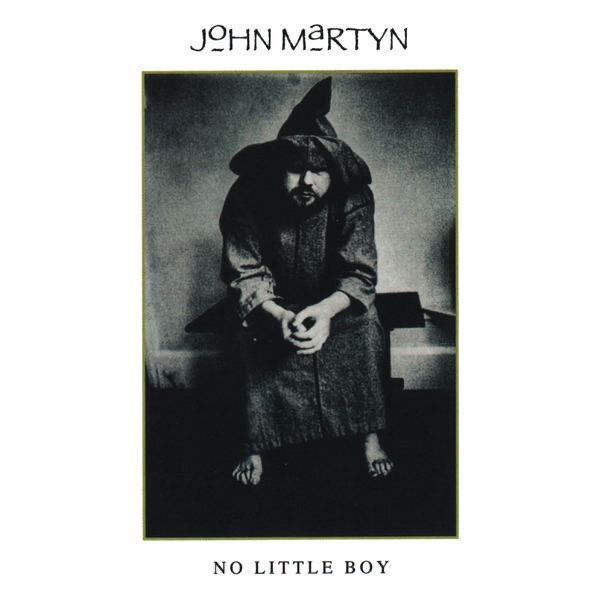
No Little Boy
1993 · 16 tracks
- 1 Solid Air ↗ 6:44
- 2 Ways to Cry ↗ 5:05
- 3 Could've Been Me ↗ 4:20
- 4 Don't Want to Know ↗ 4:30
- 5 Just Now ↗ 4:08
- 6 One Day Without You ↗ 3:55
- 7 Sweet Little Mystery ↗ 4:14
- 8 Pascanel ↗ 4:28
- 9 Sunday's Child ↗ 6:13
- 10 Head and Heart ↗ 4:03
- 11 Fine Lines ↗ 4:20
- 12 Bless the Weather ↗ 4:43
- 13 Man In the Station ↗ 4:07
- 14 One World ↗ 8:34
- 15 Rock Salt and Nails ↗ 5:00
- 16 Hole In the Rain ↗ 4:09

And.
1996 · 34 tracks
- 1 Bless the Weather ↗ 4:29
- 1 Couldn't Love You More ↗ 3:07
- 2 Head and Heart ↗ 4:57
- 2 Certain Surprise ↗ 3:50
- 3 Glistening Glyndebourne ↗ 6:33
- 3 Dancing ↗ 3:54
- 4 Solid Air ↗ 5:47
- 4 Small Hours ↗ 8:43
- 5 Over the Hill ↗ 2:53
- 5 Dealer ↗ 4:56
- 6 Don't Want to Know ↗ 3:00
- 6 One World ↗ 4:00
- 7 I'd Rather Be the Devil (Devil Got My Woman) ↗ 6:21
- 7 Some People Are Crazy ↗ 4:16
- 8 May You Never ↗ 3:44
- 8 Lookin' On ↗ 5:11
- 9 Fine Lines ↗ 3:51
- 9 Johnny Too Bad ↗ 3:54
- 10 Eibhli Ghail Chiuin Ni Chearbhail ↗ 3:08
- 10 Sweet Little Mystery ↗ 5:23
- 11 Make No Mistake ↗ 5:59
- 11 Hurt in Your Heart ↗ 4:56
- 12 One Day Without You ↗ 2:59
- 12 Baby, Please Come Home ↗ 3:52
- 13 Lay It All Down ↗ 1:53
- 13 Sapphire ↗ 5:13
- 14 Root Love ↗ 4:35
- 14 Fisherman's Dream ↗ 4:16
- 15 Sunday's Child ↗ 3:20
- 15 Angeline ↗ 4:44
- 16 Spencer the Rover ↗ 4:10
- 16 Send Me One Line (Live) ↗ 4:45
- 17 You Can Discover ↗ 3:45
- 18 Call Me Crazy ↗ 7:30

The Church With One Bell
1998 · 10 tracks

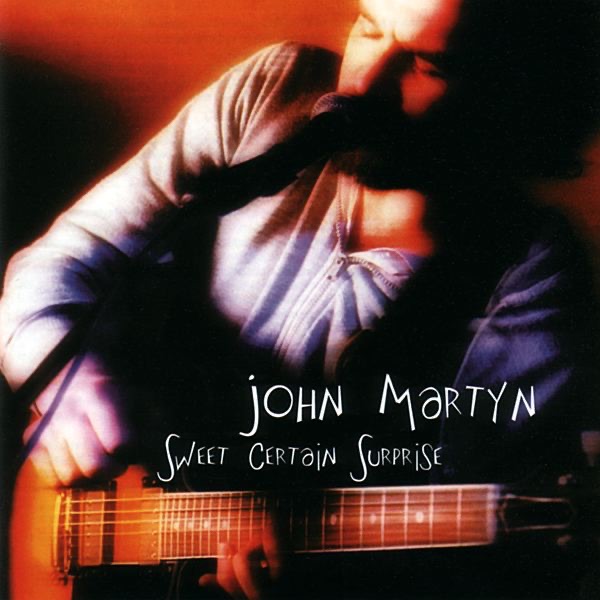
Sweet Certain Surprise
2001 · 16 tracks
- 1 Head and Heart ↗ 5:58
- 2 Main In the Station ↗ 3:29
- 3 May Baby Girl ↗ 3:19
- 4 Make No Mistake ↗ 4:29
- 5 Bless the Weather ↗ 5:48
- 6 Seven Black Roses (instrumental) ↗ 3:28
- 7 Certain Surprise ↗ 4:32
- 8 Couldn't Love You More ↗ 4:15
- 9 Over the Hill ↗ 4:07
- 10 Solid Air ↗ 5:53
- 11 The Easy Blues ↗ 4:07
- 12 One Day Without You ↗ 4:02
- 13 Big Muff ↗ 6:10
- 14 Sweet Little Mystery ↗ 7:23
- 15 May You Never ↗ 3:40
- 16 Spencer the Rover ↗ 4:19

-
 London ConversationJohn Martyn196713 tracks
 -
 The TumblerJohn Martyn196812 tracks
 -
 The Road to RuinJohn Martyn197010 tracks
 -
 Bless the WeatherJohn Martyn197110 tracks
 -
 Inside OutJohn Martyn197314 tracks
 -
 Solid AirJohn Martyn197310 tracks
 -
 Sunday's ChildJohn Martyn197511 tracks
 -
 One WorldJohn Martyn19778 tracks
 -
 ElectricJohn Martyn198210 tracks
 -
 SapphireJohn Martyn198410 tracks
 -
 Piece by PieceJohn Martyn19869 tracks
 -
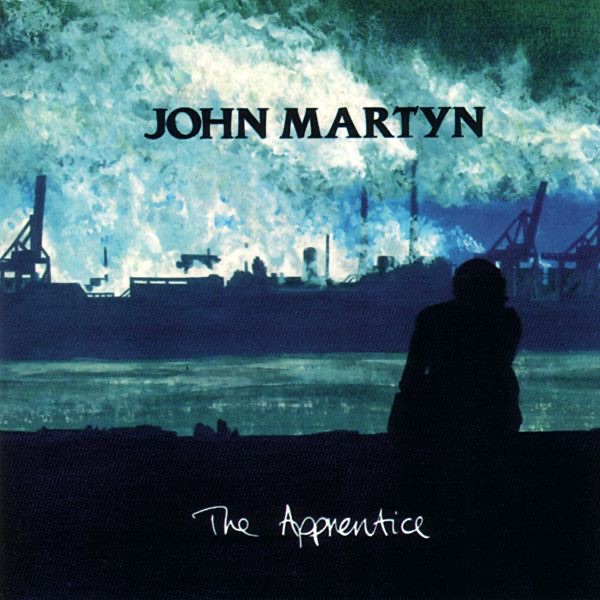
 The ApprenticeJohn Martyn199011 tracks
 -
 CooltideJohn Martyn19919 tracks
 -
 Couldn't Love You MoreJohn Martyn199215 tracks
 -
 No Little BoyJohn Martyn199316 tracks
 -
 And.John Martyn199634 tracks
 -
 The Church With One BellJohn Martyn199810 tracks
 -
 Glasgow WalkerJohn Martyn200010 tracks
 -
 Sweet Certain SurpriseJohn Martyn200116 tracks
 -
 On the CobblesJohn Martyn200410 tracks
Deep Dive
Overview
John Martyn, born Iain David McGeachy, stands as one of Britain’s most restlessly inventive and genre-defying musicians. Over four decades from 1967 to 2009, he released 23 studio albums and earned consistent critical praise for his fearless approach to songwriting and instrumental work. The Times summed up his artistic reach in a single phrase: “an electrifying guitarist and singer whose music blurred the boundaries between folk, jazz, rock and blues.” Martyn’s refusal to settle within a single idiom—moving fluidly between acoustic traditionalism and electric experimentation—secured him a place as a musician’s musician whose influence rippled through multiple generations of artists across rock, folk, and beyond.
Formation Story
John Martyn emerged from a British folk scene in transition during the early 1960s. He came of age as an acoustic guitarist and singer during a period when folk music was beginning to splinter into purist and progressive camps. His early immersion in traditional folk forms and his natural gift for the guitar set the foundation for a career that would refuse easy categorization. Martyn entered the recording world in 1967 with London Conversation, an album steeped in acoustic folk sensibility that announced his arrival as a thoughtful, skilled player with a distinctive voice.
Breakthrough Moment
Martyn’s rise from folk circuit performer to recognized artist gained momentum across the early 1970s. Bless the Weather (1971) marked a turning point, signaling his willingness to deepen his approach to melody, arrangement, and emotional range. By 1973, he had released two landmark albums in quick succession: Inside Out and Solid Air. Solid Air in particular cemented his reputation as an innovator capable of synthesizing folk roots with contemporary studio production and jazz-inflected harmonies. These albums demonstrated that Martyn had evolved beyond the acoustic troubadour template into a fully realized artist with a singular vision.
Peak Era
The mid-to-late 1970s represented Martyn’s most adventurous and creatively fertile period. One World (1977) and Grace and Danger (1980) showcased an artist at the height of his powers, unafraid to layer electric instruments, effects, and unconventional arrangements into his foundation of folk and blues. Grace and Danger in particular revealed the depth of Martyn’s studio ambition, presenting a fully realized vision of how rock, soul, and folk could coexist within a single artistic statement. During this stretch, Martyn had also released Sunday’s Child (1975), further demonstrating his prolific output and restless creative energy. He followed with Glorious Fool (1981), Well Kept Secret and Electric (both 1982), proving his hunger to keep evolving did not diminish as the decade progressed.
Musical Style
John Martyn’s sound defied simple categorization, which was precisely the point. His guitar playing—whether fingerpicked on acoustic or layered with effects on electric instruments—served as the cornerstone of his aesthetic. His voice, warm and expressive, carried the emotional weight of his lyrics with an honesty that never veered into melodrama. Martyn drew equally from the storytelling traditions of folk music, the harmonic sophistication of jazz, the rhythmic drive of rock, and the soulful depth of blues. Over time, he grew more comfortable with studio technology and electric instrumentation, using echo, reverb, and overdubbing not as mere effects but as integral compositional elements. His later work, particularly through the 1980s and 1990s, showed no retreat from this electroacoustic experimentation; albums like Sapphire (1984), Piece by Piece (1986), and Cooltide (1991) proved he remained committed to pushing his sound forward rather than mining his past.
Major Albums
Solid Air (1973)
A watershed moment in Martyn’s catalog, Solid Air balanced his folk and blues roots with sophisticated production and intricate arrangements, establishing him as a major figure in 1970s singer-songwriter circles.
Grace and Danger (1980)
Martyn’s most fully realized statement on the interplay between rock, soul, and folk, Grace and Danger showcased his mastery of the studio and his gift for haunting, multilayered compositions.
Bless the Weather (1971)
This early-1970s release marked a crucial evolution from pure folk troubadour toward a more expansive artistic vision, featuring richer instrumentation and more emotionally complex songwriting.
One World (1977)
A mid-career reassessment that leaned into electric arrangements and global influences, confirming Martyn’s refusal to be confined by genre boundaries.
The Apprentice (1990)
A return after a creative pause, The Apprentice demonstrated that Martyn’s creative instincts remained sharp and his willingness to explore new textures undiminished.
Signature Songs
- “Solid Air” — The title track from his landmark 1973 album, a masterclass in how fingerpicking, atmosphere, and emotional restraint could combine into something unforgettable.
- “May You Never” — A folk-rooted ballad showcasing Martyn’s gift for timeless melody and his ability to convey depth through apparent simplicity.
- “One World” — The centerpiece of his 1977 album, reflecting his ambitions to synthesize multiple musical traditions into a coherent vision.
- “Grace and Danger” — The title track from his 1980 masterpiece, demonstrating his maturity as both a guitarist and a composer working within a fully realized sonic palette.
Influence on Rock
John Martyn’s influence extended far beyond the folk and singer-songwriter worlds he inhabited. His fearless approach to blending genres—refusing the false choice between “electric” and “acoustic,” between “folk purity” and “rock ambition”—opened doors for countless artists who came after. Musicians across rock, folk-rock, and alternative styles found in Martyn a model for artistic integrity without stagnation. His sophisticated use of the studio and his willingness to let technology serve emotional and compositional ends rather than dominate them influenced producers and engineers as much as songwriters. The cross-pollination of folk, jazz, rock, and blues that defined his sound became a template for boundary-crossing artists throughout the late 20th century. His longevity—maintaining creative vitality across four decades—also demonstrated that a career need not follow a predetermined arc of decline.
Legacy
John Martyn’s 40-year recording legacy, spanning from London Conversation (1967) through On the Cobbles (2004) and beyond, established him as one of British rock’s most consequential and uncompromising figures. His refusal to repeat himself or trade on past successes earned him the respect of critics and musicians alike, even as commercial recognition sometimes lagged behind artistic achievement. After his death in 2009, the catalog Heaven and Earth was released posthumously in 2011, ensuring that even his final work remained in circulation. The breadth and quality of his recorded work—23 studio albums of consistently high ambition—secured his place as a musician’s musician whose impact on rock, folk, and jazz-inflected songwriting remains significant decades after his passing. His continued presence on streaming platforms and in archival reissues keeps his influence alive for new generations of listeners and players.
Fun Facts
- Martyn recorded for Island Records during a period when the label was home to both reggae and progressive rock experimenters, a diversity that reflected his own genre-spanning approach.
- His professional name, John Martyn, was adopted early in his career, a deliberate choice that helped establish a clear artistic identity separate from his birth name, Iain David McGeachy.
- Over his 40-year career, Martyn never settled into a fixed band lineup, instead working with session musicians and collaborators who suited each project’s particular vision.
- His later albums, including Cooltide (1991) and Couldn’t Love You More (1992), proved that his creative appetite remained fierce well into his fifties and beyond.