

Photo by Henry W. Laurisch , licensed under CC BY-SA 4.0 · Wikimedia Commons
Rank #330
John Maus
From Wikipedia
John Maus is an American musician, composer, singer, and songwriter known for his baritone singing style and his use of vintage synthesizer sounds and medieval music church modes, a combination that often draws comparisons to 1980s goth-pop. His early lo-fi music recordings anticipated and inspired the late 2000s hypnagogic pop movement. On stage, he is characterized for his intense displays of emotion while performing. He is also a former teacher of philosophy at the University of Hawaiʻi, where he later earned his PhD in political science.
Discography & Previews
Browse through and click an album to open and play 30-second previews streamed from Apple Music.

Songs
2006 · 16 tracks
- 1 Opening ↗ 1:10
- 2 Time To Die ↗ 3:25
- 3 Don't Be a Body ↗ 3:13
- 4 That Night ↗ 1:14
- 5 Real Bad Job ↗ 2:40
- 6 Forever and Ever and Ever ↗ 4:17
- 7 Maniac ↗ 3:35
- 8 Just Wait Til Next Year ↗ 2:26
- 9 I'm Only Human ↗ 2:43
- 10 Less Talk More Action ↗ 1:47
- 11 Through the Skies for You ↗ 3:06
- 12 Blowing In the Mind ↗ 3:14
- 13 Of North of North Stars ↗ 2:10
- 14 It Takes Time ↗ 2:30
- 15 The Peace That Earth Cannot Give ↗ 2:49
- 16 And Heaven Turned To Her Weeping ↗ 5:25

Love Is Real
2007 · 14 tracks
- 1 Heaven Is Real ↗ 4:16
- 2 Do Your Best ↗ 2:47
- 3 Rights for Gays ↗ 2:38
- 4 Love Letters from Hell ↗ 2:58
- 5 The Silent Chorus ↗ 5:02
- 6 Navy Seals ↗ 2:17
- 7 Pure Rockets ↗ 3:22
- 8 My Whole World's Coming Apart ↗ 3:43
- 9 Don't Worship the Devil ↗ 3:44
- 10 Tenebrae ↗ 5:20
- 11 Too Much Money ↗ 3:24
- 12 Green Bouzard ↗ 1:00
- 13 Old Town ↗ 2:00
- 14 Times Is Weird ↗ 3:42

We Must Become the Pitiless Censors of Ourselves
2011 · 11 tracks
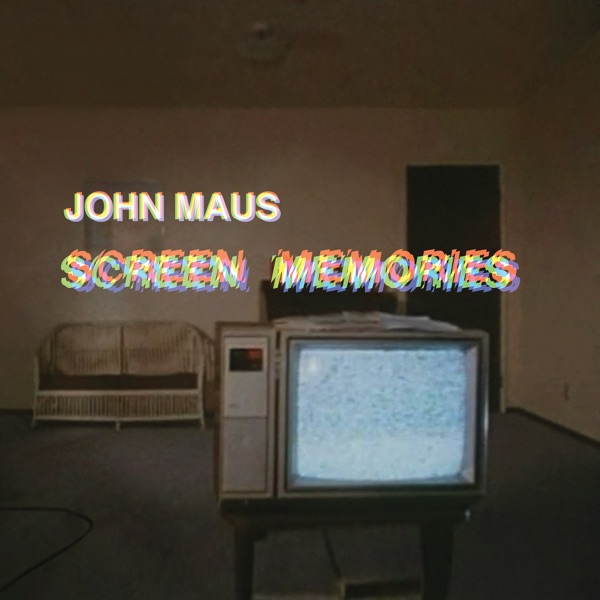
Screen Memories
2017 · 12 tracks

Later Than You Think
2025 · 16 tracks
- 1 Because We Built It ↗ 3:13
- 2 Disappears ↗ 3:00
- 3 Reconstruct Your Life ↗ 3:09
- 4 Shout ↗ 1:54
- 5 Came & Got ↗ 2:33
- 6 I Hate Antichrist ↗ 2:09
- 7 Theotokos ↗ 3:16
- 8 Let The Time Fly ↗ 1:57
- 9 Out Of Time ↗ 1:31
- 10 Tous Les Gens Qui Sont Ici Sont D'ici ↗ 2:24
- 11 Tonight ↗ 2:28
- 12 Let Me Through ↗ 1:51
- 13 Water ↗ 2:13
- 14 Pick It Up ↗ 3:40
- 15 Losing Your Mind ↗ 2:59
- 16 Adorabo ↗ 2:41
-
 SongsJohn Maus200616 tracks
 -
 Love Is RealJohn Maus200714 tracks
 -
 We Must Become the Pitiless Censors of OurselvesJohn Maus201111 tracks
 -
 Screen MemoriesJohn Maus201712 tracks
 -
 AddendumJohn Maus201812 tracks
 -
 Later Than You ThinkJohn Maus202516 tracks
Deep Dive
Overview
John Maus is an American musician and composer whose distinctive baritone voice, paired with vintage synthesizer textures and medieval church modes, carved out a singular space within experimental and alternative rock. Active since 1980, Maus has built a career that straddles art-rock sophistication and lo-fi immediacy, earning recognition both as a pioneering figure in early-2000s underground music and as an intellectual voice bridging popular song and formal study. His combination of theatrical emotional intensity on stage, minimalist production, and harmonic adventurousness placed him ahead of aesthetic currents that would later crystallize in the hypnagogic pop movement of the late 2000s.
Formation Story
Maus emerged as a musician during the 1980s, a period that saw him develop his characteristic approach to composition and performance. Working largely in isolation and outside mainstream commercial channels, he began crafting music that drew from the visual and sonic vocabulary of 1980s goth-pop while maintaining an idiosyncratic distance from its conventions. His artistic trajectory was paralleled by a serious engagement with intellectual life; Maus would eventually earn his PhD in political science and taught philosophy at the University of Hawaiʻi, a dual commitment that informed his conceptual approach to songwriting and his public persona as both artist and scholar.
Breakthrough Moment
Maus’s initial studio albums, beginning with Love Letters from Hell (2000) and I Want to Live (2003), circulated within underground and experimental music communities, establishing his reputation among collectors and musicians attuned to lo-fi and avant-garde aesthetics. These early recordings, characterized by lo-fi production, sparse arrangements, and Maus’s distinctive baritone, anticipated the aesthetic that would later define the hypnagogic pop movement—a late-2000s underground phenomenon that celebrated dreamy, digitally degraded, and emotionally intense pop songwriting. By the mid-2000s, with albums like Songs (2006) and Love Is Real (2007), Maus had become a touchstone for musicians and listeners exploring the intersection of experimental production, melodic craft, and emotional vulnerability.
Peak Era
The period from 2006 to 2011 represented Maus’s most visible and prolific stretch, encompassing Songs, Love Is Real, and the ambitious We Must Become the Pitiless Censors of Ourselves (2011). During these years, his work gained recognition from critics and experimental music institutions, particularly as the hypnagogic pop aesthetic it had anticipated began to achieve broader underground currency. His live performances became legendary among those who witnessed them, marked by an intensity of emotional expression that contrasted sharply with the detached or ironic stance common in art-rock contexts. Maus’s willingness to perform with visible feeling—vulnerability, passion, even anguish—set him apart as an artist working against prevailing cool.
Musical Style
Maus’s sound is built on a foundation of vintage synthesizer tones, often processed or degraded in ways that evoke both 1980s electronic music and lo-fi DIY aesthetics. His baritone voice, rich and often pushed into the mid-to-upper register for dramatic effect, serves as a counterpoint to the sometimes spectral or distant quality of his arrangements. A formal preoccupation with medieval church modes—particularly the Phrygian and Dorian modes—gives his harmonic progressions an archaic, minor-key quality that sidesteps conventional pop songwriting and invokes a timelessness that can feel both intimate and austere. The combination yields music that resists easy categorization: it shares DNA with goth-pop’s theatrical melancholy but strips away much of that genre’s bombast, preferring instead a kind of ascetic emotional directness. His production choices—often intentionally limited fidelity, stark instrumental textures, and vocals recorded close and dry—create an aesthetic of immediacy and rawness that anticipates rather than follows trends in lo-fi and hypnagogic music.
Major Albums
Love Letters from Hell (2000)
Maus’s debut established his core aesthetic: sparse synth arrangements, baritone vocals, and medieval harmonic sensibilities set against lo-fi recording quality that grants the songs an intimate, almost confessional character.
Songs (2006)
A turning point that showcased refined songwriting and a clearer production palette while maintaining Maus’s signature emotional intensity and harmonic adventurousness, positioning him as a serious alternative figure beyond underground obscurity.
Love Is Real (2007)
Focused and cohesive, this album deepened Maus’s exploration of synth-based arrangements and his baritone’s expressive range, cementing his reputation among experimental music listeners and critics.
We Must Become the Pitiless Censors of Ourselves (2011)
An ambitious work that reflected both his artistic maturity and his broader intellectual interests, combining intricate songwriting with his established sonic vocabulary of vintage synthesizers and medieval modes.
Screen Memories (2017)
Marked a return after a six-year gap, demonstrating Maus’s continued commitment to his core aesthetic while engaging with contemporary production possibilities.
Signature Songs
- “The Ultrviolet Catastrophe” — A showcase for Maus’s baritone and his use of medieval modes, the song exemplifies his ability to blend electronic textures with timeless harmonic sensibility.
- “Believer” — Demonstrates his gift for emotionally direct songwriting paired with lo-fi production that emphasizes the rawness of vocal performance.
- “Love Is Real” — A centerpiece of his 2007 album, the song encapsulates his approach to vulnerability and theatrical intensity within an experimental pop framework.
- “Screen Memories” — The title track from his 2017 album, reflecting his continued exploration of synthesizer-based arrangements and emotional directness.
Influence on Rock
Maus’s work proved instrumental in shaping the aesthetic parameters of the hypnagogic pop movement that emerged in the late 2000s, a genre-like phenomenon characterized by dreamy, often digitally degraded pop music that valued emotional intensity and experimental production. His early lo-fi recordings demonstrated that technical limitation need not impede artistic expression; rather, constraint could deepen emotional immediacy. Artists and producers working in experimental pop, chillwave, and related movements drew explicit inspiration from Maus’s synthesis of vintage synthesizer sounds, medieval harmonic language, and unironic emotional performance—a combination that challenged the irony and cool detachment that had long dominated art-rock discourse. His parallel career as a philosopher and scholar also modeled an alternative relationship between popular music-making and intellectual life, suggesting that sophisticated musical work and formal intellectual engagement need not be separate domains.
Legacy
John Maus remains a cult figure whose influence extends beyond his modest sales or streaming presence. His role in anticipating and inspiring the hypnagogic pop aesthetic secured his place in early-2000s underground music history, and his continued output—including Addendum (2018) and Later Than You Think (2025)—demonstrates an uncompromising commitment to his artistic vision across more than four decades. The combination of his music and his intellectual work in political science and philosophy established him as an unusual figure in rock music, one whose ideas about art, emotion, and society inform both his songwriting and his public persona. His live performances remain remembered by those who have witnessed them as singular experiences of emotional intensity, a reminder that rock music, at its most vital, remains a form capable of direct and unmediated feeling.
Fun Facts
- Maus earned his PhD in political science and taught philosophy at the University of Hawaiʻi, bringing formal academic rigor to his engagement with ideas and art.
- His use of medieval church modes—particularly Phrygian and Dorian—was a deliberate compositional choice to escape the harmonic conventions of contemporary pop music.
- Maus’s early lo-fi recordings were made with minimal technical resources, yet they anticipated and influenced the late-2000s hypnagogic pop movement, which later embraced similar production aesthetics intentionally.
- His live performances are characterized by visible emotional intensity and vulnerability, a stance that stood in deliberate contrast to the ironic distance common in experimental and art-rock contexts during his peak era.