
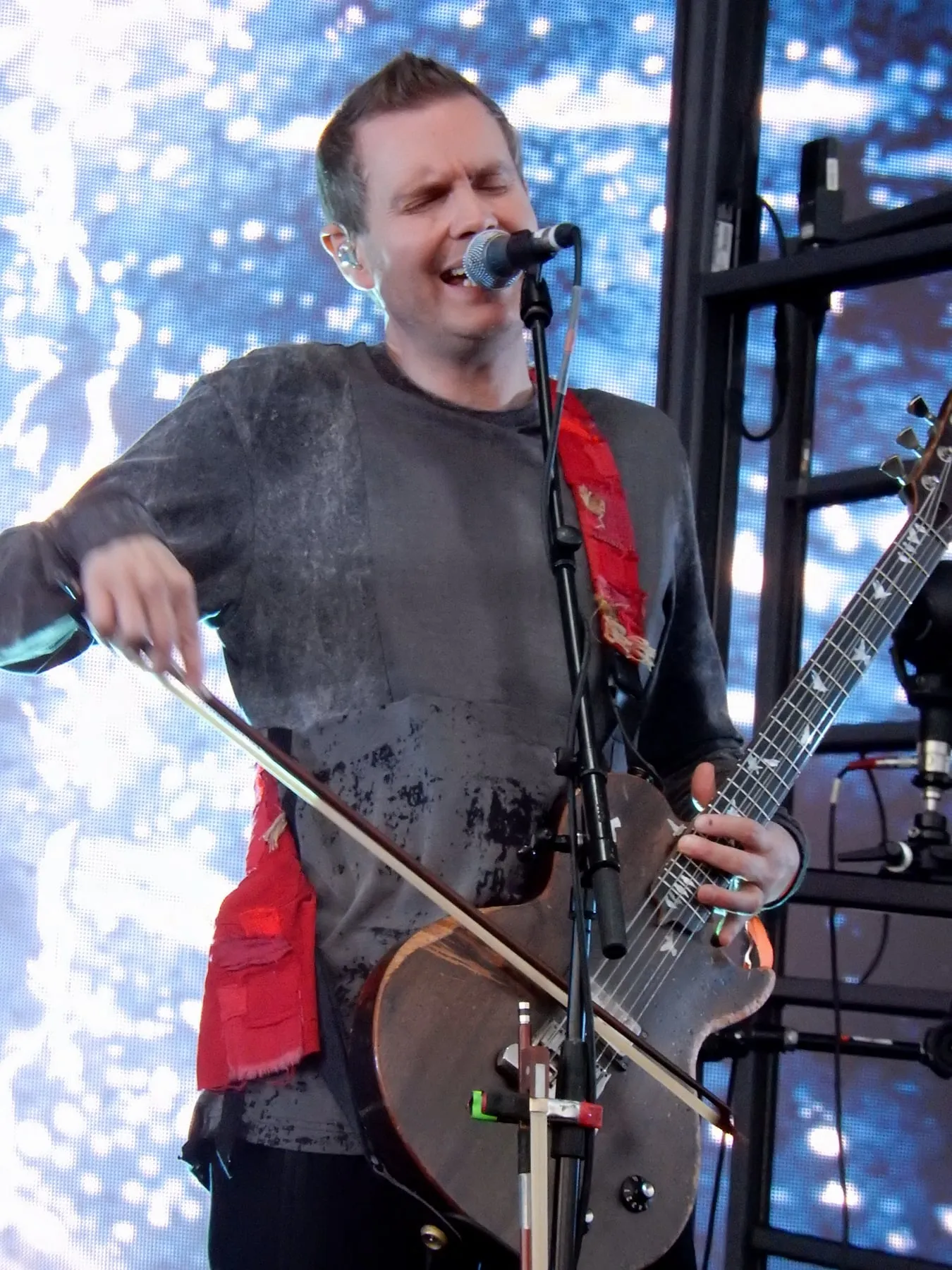
Photo by Drew de F Fawkes , licensed under CC BY 2.0 · Wikimedia Commons
Rank #331
Jónsi
From Wikipedia
Jón Þór "Jónsi" Birgisson is an Icelandic musician; he is the vocalist and multi-instrumentalist for the Icelandic post-rock band Sigur Rós. He is known for his use of a cello bow on guitar and his falsetto or countertenor voice.
Discography & Previews
Browse through and click an album to open and play 30-second previews streamed from Apple Music.


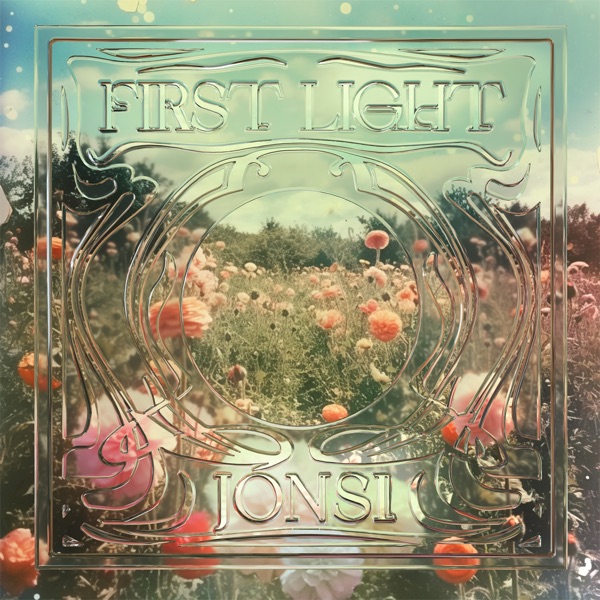
First Light
2024 · 14 tracks
-
 GoJónsi20109 tracks
 -
 ShiverJónsi202011 tracks
 -
 ObsidianJónsi202110 tracks
 -
 Sounds of Fischer Vol. 1Jónsi20229 tracks
 -
 First LightJónsi202414 tracks
Deep Dive
Overview
Jón Þór Birgisson, known professionally as Jónsi, is an Icelandic musician whose role as vocalist and multi-instrumentalist in the post-rock band Sigur Rós has defined his artistic identity since the mid-1990s. Beyond his work with the ensemble, Jónsi has pursued a solo career spanning since 2010, marking his emergence as a standalone artist with distinct compositional and production interests. His signature sound—built on a falsetto or countertenor voice paired with unconventional guitar technique using a cello bow—has positioned him as a key figure in post-rock’s development and the broader landscape of art-rock experimentation.
Formation Story
Jónsi was born in Iceland in 1975, coming of age during a period when Reykjavík’s underground music scene was beginning to forge an identity separate from dominant Anglo-American rock and pop traditions. The country’s small population and geographic isolation created a hothouse for experimental music-making, where musicians drew freely from ambient, classical, and avant-garde sources. In the mid-1990s, Jónsi co-founded Sigur Rós, a band that would eventually place Icelandic post-rock on the international map. His role within that ensemble—as primary vocalist, guitarist, and creative voice—consumed most of his artistic output for nearly two decades, establishing the sonic templates and instrumental innovations for which he became known. His adoption of the cello bow as a guitar technique emerged from a desire to move beyond conventional rock instrumentation and toward orchestral textures within an electric context.
Breakthrough Moment
Jónsi’s breakthrough on a global scale came not through an early solo release but through Sigur Rós’s album Ágætis byrjun (1999), which positioned him and the band as architects of a new post-rock language. However, his transition to solo work began with the album Go in 2010, a project that allowed him to explore musical territories distinct from the band’s collaborations. Go represented his formal debut as a solo artist, marked by his continued use of distinctive vocal and instrumental techniques but in a more personal compositional framework.
Peak Era
The decade following Go saw Jónsi maintain activity in both his solo and band contexts. His solo career gained momentum with the release of Shiver in 2020, demonstrating sustained creative output after a decade-long gap between albums. The 2020s have proved particularly prolific: Obsidian arrived in 2021, Sounds of Fischer Vol. 1 in 2022, and First Light in 2024. This clustering of releases signals a period of intensified solo work, during which Jónsi has consolidated his identity as an independent artist while continuing his association with Sigur Rós, solidifying his position across multiple creative contexts.
Musical Style
Jónsi’s vocal approach stands among the most distinctive in contemporary rock music. His use of a falsetto or countertenor register creates an ethereal, often otherworldly timbre that sits at odds with traditional rock masculinity, pulling instead from operatic and avant-garde vocal traditions. This voice is frequently layered, looped, and processed to create harmonic textures that blur the line between instrumental and vocal sound. His instrumental technique with the cello bow on guitar—drawing the bow across strings rather than plucking or striking them—extends single notes into sustained, singing lines and creates ambiguous tonal masses that suggest orchestral or chamber music rather than rock band conventions. The broader sonic palette encompasses ambient music, art rock, baroque pop, post-metal, and alternative rock, reflecting both his classical music foundations and his willingness to draw from disparate sources. Production is typically sparse and carefully considered, with emphasis on space and resonance over volume or rhythmic drive.
Major Albums
Go (2010)
Jónsi’s debut solo album established the artistic autonomy that would characterize his solo work, showcasing his falsetto voice and string-based compositional approach in a more intimate context than Sigur Rós’s ensemble settings.
Shiver (2020)
Returning after a decade, Shiver demonstrated sustained creative ambition and introduced textural and instrumental developments in Jónsi’s approach to melody and arrangement.
Obsidian (2021)
Released within months of Shiver, Obsidian further deepened the artistic vision articulated in the preceding album, suggesting a period of prolific material development.
First Light (2024)
Jónsi’s most recent release caps a burst of creative activity across the early 2020s, confirming his status as an active and evolving solo artist beyond his band commitments.
Signature Songs
- “Go” — The title track and opening statement of his debut solo album, establishing his falsetto and ambient sensibility.
- “Svefn-g-englar” — Though primarily a Sigur Rós composition, this track exemplifies his vocal and orchestral innovations and remains his most globally recognized work.
- “Hoppípolla” — Another Sigur Rós standard that showcases his ability to craft infectious yet unconventional melodies using his distinctive instrumental and vocal techniques.
Influence on Rock
Jónsi’s innovations in vocal and instrumental technique have exerted significant influence on post-rock, art rock, and experimental music broadly. His embrace of the falsetto as a lead vocal timbre—moving away from the traditional masculine rock register—opened aesthetic and emotional possibilities for subsequent artists working in alternative and art-rock contexts. The cello bow on guitar, while not unique to Jónsi, became synonymous with his aesthetic and subsequently appeared in the toolkit of post-rock musicians seeking orchestral texture and tonal complexity. Through Sigur Rós and his solo work, Jónsi demonstrated that rock music could absorb and synthesize elements from ambient, classical, and avant-garde traditions without sacrificing immediate emotional resonance. His work helped establish Iceland—a country with a tiny population—as a source of significant artistic innovation in rock music, influencing a generation of musicians to view geographic and cultural isolation as creative advantage rather than limitation.
Legacy
Jónsi’s legacy remains fluid, given his continued artistic activity into the 2020s. As the voice and primary creative force behind Sigur Rós, he has secured a position in post-rock’s historical core. The band’s albums have achieved sustained critical and cult-audience appreciation, with compositions appearing in film scores and serving as touchstones for musicians and listeners seeking emotional depth within experimental frameworks. His solo career, while less commercially prominent than the band, has demonstrated his willingness to evolve and experiment beyond established templates. The clustering of solo releases in the early 2020s suggests that the separation between his Sigur Rós identity and his solo identity may be increasingly deliberate and artistically productive. Jónsi’s influence on vocalists, guitarists, and producers working in post-rock and related genres remains tangible, and his recordings continue to circulate widely on streaming platforms, ensuring that new listeners regularly encounter his innovations.
Fun Facts
- Jónsi’s use of the Hopelandic language—a wordless vocal technique often employing non-English phonetics—with Sigur Rós became a signature element that blurred the distinction between voice-as-instrument and voice-as-language.
- His adoption of the cello bow technique emerged from a specific desire to move beyond conventional guitar vocabulary, reflecting a broader post-rock ethos of instrumental innovation.
- Iceland’s small music scene meant that Jónsi and his contemporaries often collaborated across genres and projects, creating a particularly interconnected artistic ecosystem in Reykjavík.