
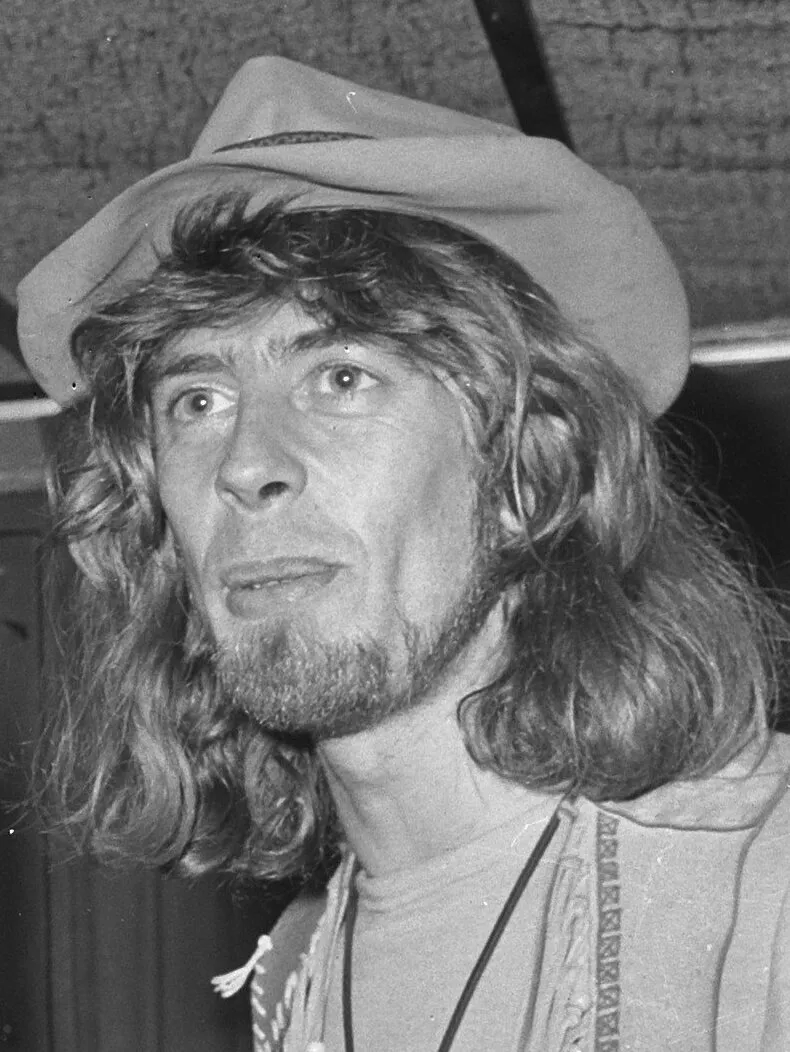
Photo by Joost Evers / Anefo , licensed under CC0 · Wikimedia Commons
Rank #134
John Mayall
From Wikipedia
John Brumwell Mayall was an English blues and rock musician, songwriter and producer. In the 1960s, he formed John Mayall & the Bluesbreakers, a band that has counted among its members some of the most famous blues and blues rock musicians of all time. A singer, guitarist, harmonica player, and keyboardist, he had a career that spanned nearly seven decades, remaining an active musician until his death aged 90. Mayall has often been referred to as the "godfather of the British blues", and was inducted into the Rock and Roll Hall of Fame in the musical influence category in 2024.
Discography & Previews
Browse through and click an album to open and play 30-second previews streamed from Apple Music.

The Blues Alone
1967 · 14 tracks
- 1 Brand New Start ↗ 3:24
- 2 Please Don't Tell ↗ 2:30
- 3 Down the Line ↗ 3:41
- 4 Sonny Boy Blow ↗ 3:47
- 5 Marsha's Mood ↗ 3:12
- 6 No More Tears ↗ 3:08
- 7 Catch That Train ↗ 2:17
- 8 Cancelling Out ↗ 4:17
- 9 Harp Man ↗ 2:43
- 10 Brown Sugar ↗ 3:41
- 11 Broken Wings ↗ 4:12
- 12 Don't Kick Me ↗ 3:09
- 13 Brand New Start (First Version) ↗ 3:02
- 14 Marsha's Mood (First Version) ↗ 3:17

Blues From Laurel Canyon
1968 · 14 tracks
- 1 Vacation ↗ 2:48
- 2 Walking On Sunset ↗ 2:53
- 3 Laurel Canyon Home ↗ 4:33
- 4 2401 ↗ 3:48
- 5 Ready to Ride ↗ 3:34
- 6 Medicine Man ↗ 2:45
- 7 Someone's Acting Like a Child ↗ 3:28
- 8 The Bear ↗ 4:41
- 9 Miss James ↗ 2:27
- 10 First Time Alone ↗ 5:08
- 11 Long Gone Midnight ↗ 3:30
- 12 Fly Tomorrow ↗ 9:01
- 13 2401 (Single Version) ↗ 3:55
- 14 Wish You Were Mine (Live '68) ↗ 8:36

Empty Rooms
1970 · 12 tracks
- 1 Don't Waste My Time ↗ 3:13
- 2 Plan Your Revolution ↗ 2:38
- 3 Don't Pick a Flower ↗ 3:55
- 4 Something New ↗ 4:40
- 5 People Cling Together ↗ 2:55
- 6 Waiting for the Right Time ↗ 5:35
- 7 Thinking of My Woman ↗ 2:30
- 8 Counting the Days ↗ 5:33
- 9 When I Go ↗ 4:46
- 10 Many Miles Apart ↗ 2:57
- 11 To a Princess ↗ 3:33
- 12 Lying In My Bed ↗ 4:24


Back to the Roots
1971 · 26 tracks
- 1 Prisons on the Road ↗ 4:18
- 1 Dream with Me ↗ 5:22
- 2 My Children ↗ 5:10
- 2 Full Speed Ahead ↗ 5:22
- 3 Accidental Suicide ↗ 6:17
- 3 Mr. Censor Man ↗ 4:45
- 4 Groupie Girl ↗ 3:54
- 4 Force of Nature ↗ 6:34
- 5 Blue Fox ↗ 3:43
- 5 Boogie Albert ↗ 2:16
- 6 Home Again ↗ 4:57
- 6 Goodbye December ↗ 5:25
- 7 Television Eye ↗ 7:33
- 7 Unanswered Questions ↗ 4:42
- 8 Marriage Madness ↗ 3:37
- 8 Devil's Tricks ↗ 7:46
- 9 Looking at Tomorrow ↗ 6:58
- 9 Travelling ↗ 4:43
- 10 Accidental Suicide (feat. Eric Clapton & Mick Taylor) [Remix] ↗ 6:25
- 10 Prisons on the Road (feat. Mick Taylor & Eric Clapton) [Remix] ↗ 4:20
- 11 Force of Nature (feat. Mick Taylor & Eric Clapton) [Remix] ↗ 5:34
- 11 Home Again (Remix) ↗ 4:59
- 12 Boogie Albert (feat. Mick Taylor & Eric Clapton) [Remix] ↗ 2:16
- 12 Mr. Censor Man (Remix) ↗ 4:45
- 13 Television Eye (feat. Mick Taylor & Eric Clapton) [Remix] ↗ 6:09
- 13 Looking at Tomorrow (Remix) ↗ 6:56

Ten Years Are Gone
1973 · 14 tracks
- 1 Ten Years Are Gone ↗ 4:49
- 2 Driving Till The Break Of Day ↗ 5:07
- 3 Drifting ↗ 4:40
- 4 Better Pass You By ↗ 5:17
- 5 California Campground ↗ 3:17
- 6 Undecided ↗ 2:55
- 7 Good Looking Stranger ↗ 4:25
- 8 I Still Care ↗ 4:22
- 9 Don't Hang Me Up ↗ 4:10
- 10 Introduction ↗ 1:57
- 11 Sitting Here Thinking ↗ 7:55
- 12 Harmonica Free Form ↗ 11:36
- 13 Burning Sun ↗ 5:13
- 14 Dark Of The Night ↗ 17:40


Notice to Appear
1976 · 10 tracks
- 1 Lil' Boogie In the Afternoon ↗ 2:50
- 2 Mess of Love ↗ 4:37
- 3 That Love ↗ 4:23
- 4 The Boy Most Likely To Succeed ↗ 3:42
- 5 Who's Next Who's Now ↗ 4:20
- 6 Hail To the Man Who Lives Alone ↗ 4:22
- 7 There Will Be a Way ↗ 4:31
- 8 Just Knowing You Is a Pleasure ↗ 4:04
- 9 A Hard Day's Night ↗ 3:48
- 10 Old Time Blues ↗ 3:50


A Sense of Place
1990 · 11 tracks
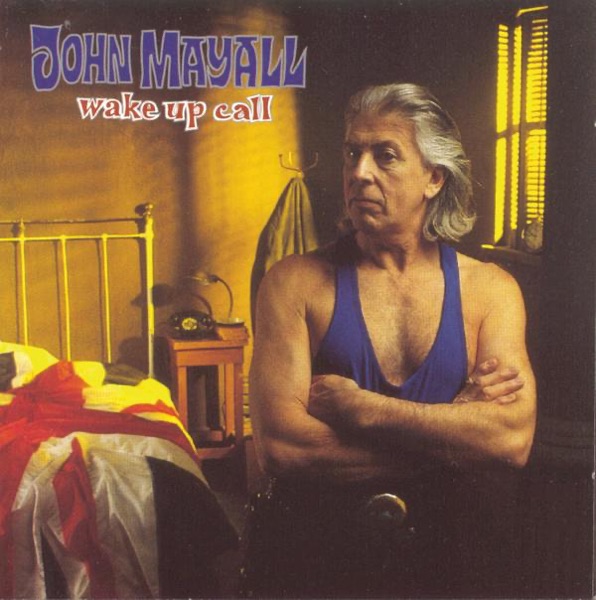
Wake Up Call
1993 · 12 tracks
- 1 Mail Order Mystics ↗ 4:42
- 2 Maydell ↗ 3:58
- 3 I Could Cry ↗ 5:09
- 4 Wake Up Call ↗ 4:14
- 5 Loaded Dice ↗ 4:28
- 6 Undercover Agent for the Blues ↗ 5:22
- 7 Light the Fuse ↗ 4:15
- 8 Anything I Can Say ↗ 3:44
- 9 Nature's Disappearing ↗ 4:53
- 10 I'm a Sucker for Love ↗ 4:07
- 11 Not At Home ↗ 4:09
- 12 Ain't That Lovin' You Baby ↗ 4:14

Room to Move
1998 · 30 tracks
- 1 The Laws Must Change ↗ 6:27
- 1 Memories ↗ 5:02
- 2 California ↗ 9:22
- 2 Nobody Cares ↗ 3:58
- 3 Room to Move ↗ 5:16
- 3 Bad Luck Time ↗ 3:59
- 4 Don't Waste My Time ↗ 3:11
- 4 Country Road ↗ 7:16
- 5 Counting the Days ↗ 5:32
- 5 Dry Throat ↗ 6:40
- 6 When I Go ↗ 4:45
- 6 Worried Mind ↗ 8:55
- 7 To a Princess ↗ 3:32
- 7 Red Sky ↗ 3:52
- 8 Nature's Disappearing ↗ 5:55
- 8 Ten Years Are Gone ↗ 4:46
- 9 Took the Car ↗ 4:07
- 9 Driving Till the Break of Day ↗ 5:04
- 10 My Pretty Girl ↗ 4:20
- 10 Better Pass You By ↗ 5:13
- 11 Prisons On the Road ↗ 4:16
- 11 I Still Care ↗ 4:20
- 12 Accidental Suicide ↗ 6:14
- 12 Brand New Band ↗ 4:19
- 13 Boogie Albert ↗ 2:14
- 13 Gasoline Blues ↗ 3:42
- 14 Television Eye ↗ 7:30
- 14 Going to Take My Time ↗ 2:56
- 15 Home Again ↗ 4:57
- 15 Deep Down Feelings ↗ 4:43

The Last of the British Blues
2000 · 10 tracks
- 1 Tucson Lady (Live/1978) ↗ 4:39
- 2 Parchman Farm (Live/1978) ↗ 4:04
- 3 There's Only Now (Live/1978) ↗ 4:03
- 4 The Teaser (Live/1978) ↗ 4:14
- 5 Hideaway (Live/1978) ↗ 3:17
- 6 The Bear (Live/1978) ↗ 4:43
- 7 Lonely Birthday (Live/1978) ↗ 3:54
- 8 Lowdown Blues (Live/1978) ↗ 4:42
- 9 Another Man (Live/1978) ↗ 2:16
- 10 It Must Be Three (Live/1978) ↗ 4:32

Along for the Ride
2001 · 13 tracks
- 1 A World Of Hurt (feat. Joe Yuele, Jeff Healey, Buddy Whittington, Steve Cropper, Tom Canning & David Smith) ↗ 4:32
- 2 Along For The Ride (feat. Joe Yuele, Buddy Whittington, Tom Canning, David Smith, Billy Preston & Lenny Castro) ↗ 4:51
- 3 Put It Right Back (feat. Joe Yuele, Billy F Gibbons, Buddy Whittington, Tom Canning & David Smith) ↗ 4:31
- 4 That's Why I Love You So (feat. Joe Yuele, Buddy Whittington, Jonny Lang, David Smith, David Z & Reese Wynans) ↗ 4:15
- 5 Yo Yo Man (feat. Peter Green, Steve Miller, John McVie, Mick Fleetwood & Lenny Castro) ↗ 3:00
- 6 If I Don't Get Home (feat. Gary Moore, Joe Yuele, Reese Wynans, Joe Delgado & Bob Delgado) ↗ 5:21
- 7 Testify (feat. Joe Yuele, Shannon Curfman, Buddy Whittington, Tom Canning, David Smith, David Z & Reese Wynans) ↗ 4:27
- 8 Early In The Morning (feat. Andy Fairweather Low, Chris Rea, Steve Miller, John McVie, Mick Fleetwood, Lenny Castro & Dick Heckstall-Smith) ↗ 4:07
- 9 Something About My Baby (feat. Joe Yuele, Buddy Whittington, Andy Fairweather Low, Tom Canning, David Smith & Lenny Castro) ↗ 4:18
- 10 So Many Roads (feat. Greg Rzab, Joe Yuele, Otis Rush, Buddy Whittington & Reese Wynans) ↗ 6:11
- 11 World War Blues (feat. Joe Yuele, Buddy Whittington, Tom Canning, David Smith, Billy Preston & Lenny Castro) ↗ 4:28
- 12 California (feat. Joe Yuele, Buddy Whittington, Tom Canning, David Smith, Lenny Castro, Red Holloway & Davy Graham) ↗ 5:56
- 13 She Don't Play By The Rules (feat. Andy Fairweather Low, Mick Taylor, Joe Yuele, Buddy Whittington, Tom Canning, David Smith & Lenny Castro) ↗ 5:14

Tough
2009 · 11 tracks
- 1 Nothing to Do With Love ↗ 5:55
- 2 Just What You're Looking For ↗ 4:23
- 3 Playing With a Losing Hand ↗ 4:10
- 4 An Eye for an Eye ↗ 4:36
- 5 How Far Down ↗ 5:04
- 6 Train to My Heart ↗ 4:34
- 7 Slow Train to Nowhere ↗ 4:28
- 8 Number's Down ↗ 4:00
- 9 That Good Old Rockin' Blues ↗ 4:56
- 10 Tough Times Ahead ↗ 7:18
- 11 The Sum of Something ↗ 5:32
Smokin’ Blues
2012 · 12 tracks
- 1 Band Introduction (Narrative) [Live] ↗ 1:01
- 2 Got You On My Mind (Live) ↗ 12:13
- 3 No Smoking (Live) ↗ 8:08
- 4 No Holds Barred (Live) ↗ 7:23
- 5 Band Intro (Narrative) [Live] ↗ 1:41
- 6 Feels Good In Frankfurt (Live) ↗ 11:43
- 7 Next Time Around (Live) ↗ 11:27
- 8 Freddie's Request (Narrative) [Live] ↗ 0:32
- 9 Sad to Be Alone (Live) ↗ 6:33
- 10 Red Presents Blue Mitchell (Narrative) [Live] ↗ 1:05
- 11 Filthy McNasty (Live) ↗ 7:55
- 12 Make My Bed Tonight (Live) ↗ 6:43
Howlin’ at the Moon
2013 · 10 tracks
- 1 Mexico City (Live) ↗ 10:17
- 2 Gone From The Canyon (Live) ↗ 4:44
- 3 Caught In The Middle (Live) ↗ 9:58
- 4 John Lee Boogie (Live) ↗ 8:45
- 5 Emergency Boogie (Live) ↗ 4:34
- 6 Rolling With The Blues (Live) ↗ 9:07
- 7 Howlin' Moon (Live) ↗ 6:32
- 8 Room To Move (Live) ↗ 6:39
- 9 Sitting Here Alone (Live) ↗ 6:27
- 10 The Stumble (Live) ↗ 5:16

A Special Life
2014 · 11 tracks
- 1 WHY DID YOU GO LAST NIGHT (feat. C.J. Chenier) ↗ 4:54
- 2 SPEAK OF THE DEVIL ↗ 3:26
- 3 THAT’S ALL RIGHT ↗ 3:20
- 4 WORLD GONE CRAZY ↗ 4:15
- 5 FLOODING IN CALIFORNIA ↗ 4:37
- 6 BIG TOWN PLAYBOY ↗ 4:19
- 7 A SPECIAL LIFE ↗ 4:10
- 8 I JUST GOT TO KNOW (feat. C.J. Chenier) ↗ 4:08
- 9 HEARTACHE ↗ 4:48
- 10 LIKE A FOOL ↗ 4:04
- 11 JUST A MEMORY ↗ 6:39

Find a Way to Care
2015 · 12 tracks
- 1 Mother in law blues ↗ 3:12
- 2 The rivers invitation ↗ 3:47
- 3 Ain't no guarantees ↗ 3:24
- 4 I feel so bad ↗ 4:20
- 5 Find a way to care ↗ 3:42
- 6 Long distance call ↗ 4:31
- 7 I want all my money back ↗ 3:20
- 8 Ropes and chains ↗ 4:17
- 9 Long summer days ↗ 3:52
- 10 Drifting blues ↗ 4:21
- 11 War we wage ↗ 4:15
- 12 Crazy lady ↗ 3:34
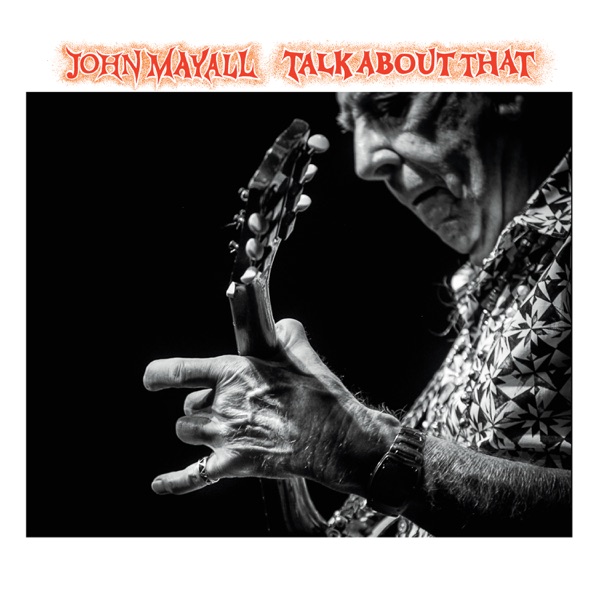
Talk About That
2017 · 11 tracks
- 1 Talk About That ↗ 4:25
- 2 It's Hard Going Up ↗ 4:15
- 3 The Devil Must Be Laughing (feat. Joe Walsh) ↗ 6:57
- 4 Gimme Some Of That Gumbo ↗ 3:57
- 5 Goin' Away Baby ↗ 3:50
- 6 Cards On The Table ↗ 4:17
- 7 I Didn't Mean to Hurt You ↗ 4:25
- 8 Don't Deny Me ↗ 4:29
- 9 Blue Midnight ↗ 4:03
- 10 Across The County Line ↗ 3:19
- 11 You Never Know ↗ 3:31

Nobody Told Me
2019 · 10 tracks
- 1 What Have I Done Wrong (Featuring Joe Bonamassa) ↗ 3:55
- 2 The Moon is Full (Featuring Larry McCray) ↗ 4:55
- 3 Evil and Here to Stay (Featuring Alex Lifeson) ↗ 4:48
- 4 That's What Love Will Make You Do (Featuring Todd Rundgren) ↗ 3:54
- 5 Distant Lonesome Train (Featuring Carolyn Wonderland) ↗ 4:34
- 6 Delta Hurricane (Featuring Joe Bonamassa) ↗ 4:59
- 7 The Hurt Inside (Featuring Larry McCray) ↗ 5:37
- 8 It's So Tough (Featuring Steven Van Zandt) ↗ 4:20
- 9 Like it Like You Do (Featuring Carolyn Wonderland) ↗ 3:46
- 10 Nobody Told Me (Featuring Carolyn Wonderland) ↗ 7:23
The Sun Is Shining Down
2022 · 10 tracks
- 1 Hungry and Ready (feat. Melvin Taylor) ↗ 5:00
- 2 Can't Take No More (feat. Marcus King) ↗ 3:45
- 3 I'm As Good As Gone (feat. Buddy Miller) ↗ 4:23
- 4 Got to Find a Better Way (feat. Scarlet Rivera) ↗ 5:00
- 5 Chills and Thrills (feat. Mike Campbell) ↗ 5:20
- 6 One Special Lady (feat. Jake Shimabukuro) ↗ 4:18
- 7 A Quitter Never Wins ↗ 4:33
- 8 Deep Blue Sea (feat. Scarlet Rivera) ↗ 4:25
- 9 Driving Wheel (feat. Melvin Taylor) ↗ 3:41
- 10 The Sun is Shining Down (feat. Carolyn Wonderland) ↗ 5:20
-
 The Blues AloneJohn Mayall196714 tracks
 -
 Blues From Laurel CanyonJohn Mayall196814 tracks
 -
 Empty RoomsJohn Mayall197012 tracks
 -
 USA UnionJohn Mayall197010 tracks
 -
 MemoriesJohn Mayall197110 tracks
 -
 Back to the RootsJohn Mayall197126 tracks
 - MemoriesJohn Mayall197110 tracks
-
 Ten Years Are GoneJohn Mayall197314 tracks
 -
 New Year, New Band, New CompanyJohn Mayall197510 tracks
 -
 Notice to AppearJohn Mayall197610 tracks
 -
 A Banquet in BluesJohn Mayall19768 tracks
 -
 A Hard Core PackageJohn Mayall197710 tracks
 -
 Road Show BluesJohn Mayall19809 tracks
 -
 A Sense of PlaceJohn Mayall199011 tracks
 -
 Wake Up CallJohn Mayall199312 tracks
 -
 Room to MoveJohn Mayall199830 tracks
 -
 The Last of the British BluesJohn Mayall200010 tracks
 -
 Along for the RideJohn Mayall200113 tracks
 -
 ToughJohn Mayall200911 tracks
 -
 Smokin’ BluesJohn Mayall201212 tracks
 -
 Howlin’ at the MoonJohn Mayall201310 tracks
 -
 A Special LifeJohn Mayall201411 tracks
 -
 Find a Way to CareJohn Mayall201512 tracks
 -
 Talk About ThatJohn Mayall201711 tracks
 -
 Nobody Told MeJohn Mayall201910 tracks
 -
 The Sun Is Shining DownJohn Mayall202210 tracks
Deep Dive
Overview
John Mayall stands as one of the most consequential figures in postwar British music, a multi-instrumentalist and bandleader whose career spanned nearly seven decades and whose influence shaped the development of blues rock on both sides of the Atlantic. Born John Brumwell Mayall in Manchester in 1933, he established himself as a pivotal conduit between American blues traditions and British rock musicians, translating the language of Chicago and Delta blues into a contemporary idiom that appealed to young British audiences emerging from the 1950s. The formation of John Mayall & the Bluesbreakers in the 1960s created a crucial staging ground for some of rock music’s most influential figures, a band that functioned less as a fixed ensemble and more as a finishing school for musicians destined to reshape rock and blues in their own right. His induction into the Rock and Roll Hall of Fame in 2024 in the musical influence category confirmed what decades of musicians and historians had long understood: Mayall was the architect of British blues.
Formation Story
John Mayall grew up in the northwest of England, where he encountered American blues records that would define his artistic direction. The postwar British climate was largely hostile to electric blues; American music arrived in fragments, and the indigenous rock and roll scene drew from different sources. Mayall, however, became fixated on the sound of American blues—the raw vocal delivery, the harmonica work, the electric guitar lines that bent and wailed in ways that conventional British pop did not. By the late 1950s, he had begun performing in the Manchester area, gradually building a local reputation as a serious interpreter of blues material. In the early 1960s, as a blues revival took tentative hold among British youth and a wave of American blues reissues became available, Mayall relocated to London and began working as a session musician and bandleader, recording in various configurations and gradually assembling what would become John Mayall & the Bluesbreakers—a flexible ensemble organized around his vision of transatlantic blues fusion.
Breakthrough Moment
The Bluesbreakers achieved national prominence in the mid-1960s, but Mayall’s transition to broader recognition as a recording artist came with his first studio album, The Blues Alone, released in 1967. This record established him not merely as a player but as a bandleader and composer capable of sustaining an entire LP with originals and carefully chosen covers, all anchored by his singing and harmonica work. The Bluesbreakers’ reputation, however, accelerated dramatically as the band became known for its incubation of talent: musicians passed through the group, absorbed its rigorous approach to blues structure and feeling, and then went on to front some of rock’s most celebrated acts. By 1968, with Blues From Laurel Canyon, Mayall had cemented his role as both a recording artist and a keeper of blues tradition, the elder statesman of a younger generation discovering the form.
Peak Era
The period from 1968 through the early 1970s marked Mayall’s most prolific and creatively vital stretch. Blues From Laurel Canyon (1968), Empty Rooms (1970), USA Union (1970), and Back to the Roots (1971) arrived in rapid succession, each album documenting different configurations of the Bluesbreakers and different aspects of American blues tradition—electric Chicago blues, acoustic Delta blues, gospel-influenced numbers. During these years, Mayall’s band rotated through musicians who would later become household names, and each departure or arrival was captured on record, making his discography a living archive of British blues development. By the mid-1970s, Mayall had become a fixture of touring circuits on both continents, with albums appearing regularly and his identity as the elder statesman of British blues solidifying even as popular music moved toward other directions.
Musical Style
John Mayall’s musical identity rested on his mastery of multiple instruments—guitar, harmonica, keyboards, and a singing voice that ranged from rough and earthy to surprisingly supple—deployed in service of a straightforward aesthetic: authentic blues tradition updated for contemporary rock contexts. His harmonica playing derived from American models, particularly the Chicago school, with its call-and-response dialogue between voice and instrument. His guitar work was propulsive and economical, favoring tone and pocket over flashiness; his keyboard playing, which came more prominently to the fore on later recordings, remained in service of melody and blues structure. The Bluesbreakers’ sound was organized around Mayall’s bandleading: he set the tempos, chose the material, and shaped the overall tone, whether that meant electric ensemble blues with full rock dynamics or more intimate acoustic sessions. His songwriting tended toward the observational and the thematic—songs about travel, hardship, love, and the blues tradition itself—rather than the confessional style that would come to dominate rock. Across more than five decades of recording, from The Blues Alone through his late-career albums like Nobody Told Me (2019) and The Sun Is Shining Down (2022), his essential approach remained consistent: serious engagement with blues forms, executed with technical competence and emotional sincerity.
Major Albums
The Blues Alone (1967)
Mayall’s debut as a bandleader and solo artist, showcasing his multi-instrumental range and establishing him as a recording artist capable of sustaining an entire album of original material and carefully chosen covers.
Blues From Laurel Canyon (1968)
Recorded in Los Angeles, this album brought the Bluesbreakers into a more contemporary context and demonstrated Mayall’s ability to work with different regional blues traditions and musicians.
Back to the Roots (1971)
A notable return to acoustic blues and more intimate instrumental arrangements, capturing Mayall’s interest in the foundational forms of American blues tradition.
A Hard Core Package (1977)
Representative of Mayall’s prolific mid-to-late 1970s output, showing his continued commitment to touring and recording during an era when blues-rock had receded from mainstream charts.
Wake Up Call (1993)
A late-career album demonstrating Mayall’s enduring commitment to the form and his ability to remain relevant across changing musical landscapes.
Signature Songs
- “Crawling Up a Hill” — A Mayall original that distilled the struggle and perseverance themes central to his blues worldview.
- “Permanent Loan” — Showcased his harmonica work and his gift for thematic songwriting rooted in everyday blues experiences.
- “Prisons of the Mind” — Exemplified his ability to write original blues numbers that engaged with contemporary social concerns while respecting traditional blues form.
- “Room to Move” — The title track from his 1998 album, capturing the traveling blues ethos that recurred throughout his career.
- “The Story of a Believer” — Demonstrated his gospel-influenced harmonica and vocal approaches within a blues framework.
Influence on Rock
John Mayall’s influence on rock music operated primarily through two channels: his own recordings and tours, which kept electric blues alive and vital in Britain and North America during periods when the genre had fallen from popular favor, and his function as a bandleader and mentor to musicians who would go on to define their own eras. The Bluesbreakers served as a launching pad for musicians who would reshape rock: they passed through his ensemble, learned his lessons about blues structure, phrasing, and authenticity, and then exported those lessons to their own projects. Mayall himself never achieved the commercial dominance of some of his protégés, but his steady presence as a touring and recording artist, his refusal to dilute blues tradition for commercial purposes, and his consistent output across decades made him an archival and philosophical anchor for blues-rock as a whole. His willingness to evolve—adopting new instrumentation, traveling to record in different cities, working with musicians from different backgrounds—meant that British blues never calcified into pure pastiche; it remained a living tradition capable of responding to new musical contexts.
Legacy
John Mayall’s legacy rests firmly on his longevity, his integrity, and his role as an institutional figure in blues-rock history. He continued recording and occasionally touring well into his ninth decade, appearing on albums through 2022 and demonstrating an unwavering commitment to the blues form. His 2024 induction into the Rock and Roll Hall of Fame in the musical influence category placed formal recognition on what musicians and serious listeners had long understood: that his influence had been pervasive and foundational, even if his own albums never achieved the sales figures or cultural saturation of some of his contemporaries. Streaming platforms carry the full span of his catalogue, from 1967 onward, making his entire documented legacy available to listeners interested in tracing the development of British blues and the genealogy of blues-rock as a whole. His example—of an artist sustaining a serious artistic vision across seven decades, never abandoning craft or principle for commercial expediency, and serving as a mentor and conduit for emerging talent—has secured his place as one of rock music’s essential figures.
Fun Facts
- Mayall was an accomplished keyboardist as well as a guitarist and harmonica player, instruments that featured prominently on different Bluesbreakers recordings depending on the era and available musicians.
- His recording output remained remarkably consistent across decades, with studio albums appearing regularly from 1967 through his final years, making him one of the most prolific blues-rock artists in history.
- The Bluesbreakers’ revolving-door lineup became so famous for producing influential musicians that the band functioned almost as a formal training ground, with membership itself becoming a credential in blues-rock circles.