

Photo by Guido Harari , licensed under Public domain · Wikimedia Commons
Rank #17
Kate Bush
From Wikipedia
Catherine Bush is an English singer, songwriter, musician, dancer and record producer. She is noted for her eclectic musical style and unconventional lyrics, as well as her innovative dance performances. Her sound and choreography have influenced a range of artists.
Discography & Previews
Browse through and click an album to open and play 30-second previews streamed from Apple Music.

Lionheart
1978 · 10 tracks

The Kick Inside
1978 · 13 tracks
- 1 Moving ↗ 3:02
- 2 The Saxophone Song ↗ 3:53
- 3 Strange Phenomena ↗ 2:59
- 4 Kite ↗ 2:57
- 5 The Man with the Child in His Eyes ↗ 2:39
- 6 Wuthering Heights ↗ 4:29
- 7 James and the Cold Gun ↗ 3:37
- 8 Feel It ↗ 3:03
- 9 Oh to Be in Love ↗ 3:18
- 10 L'Amour Looks Something Like You ↗ 2:29
- 11 Them Heavy People ↗ 3:05
- 12 Room for the Life ↗ 4:06
- 13 The Kick Inside ↗ 3:35

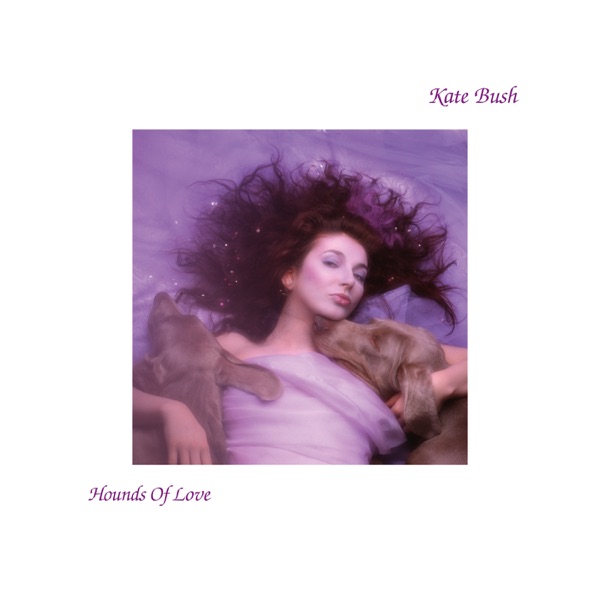
Hounds of Love
1985 · 12 tracks
- 1 Running Up That Hill (A Deal With God) ↗ 4:59
- 2 Hounds of Love ↗ 3:03
- 3 The Big Sky (Special Single Mix) ↗ 4:38
- 4 Mother Stands For Comfort ↗ 3:08
- 5 Cloudbusting ↗ 5:10
- 6 And Dream of Sheep ↗ 2:46
- 7 Under Ice ↗ 2:22
- 8 Waking the Witch ↗ 4:19
- 9 Watching You Without Me ↗ 4:07
- 10 Jig of Life ↗ 4:04
- 11 Hello Earth ↗ 6:13
- 12 The Morning Fog ↗ 2:37

The Sensual World
1989 · 10 tracks
- 1 The Sensual World (2018 Remaster) ↗ 3:57
- 2 Love and Anger (2018 Remaster) ↗ 4:42
- 3 The Fog (2018 Remaster) ↗ 5:07
- 4 Reaching Out (2018 Remaster) ↗ 3:13
- 5 Heads We're Dancing (2018 Remaster) ↗ 5:21
- 6 Deeper Understanding (2018 Remaster) ↗ 4:46
- 7 Between a Man and a Woman (2018 Remaster) ↗ 3:30
- 8 Never Be Mine (2018 Remaster) ↗ 3:45
- 9 Rocket's Tail (2018 Remaster) ↗ 4:07
- 10 This Woman's Work (2018 Remaster) ↗ 3:36

The Red Shoes
1993 · 12 tracks
- 1 Rubberband Girl (2018 Remaster) ↗ 4:44
- 2 And So Is Love (2018 Remaster) ↗ 4:20
- 3 Eat the Music (2018 Remaster) ↗ 4:53
- 4 Moments of Pleasure (2018 Remaster) ↗ 5:19
- 5 The Song of Solomon (2018 Remaster) ↗ 4:26
- 6 Lily (2018 Remaster) ↗ 3:53
- 7 The Red Shoes (2018 Remaster) ↗ 4:02
- 8 Top of the City (2018 Remaster) ↗ 4:14
- 9 Constellation of the Heart (2018 Remaster) ↗ 4:47
- 10 Big Stripey Lie (2018 Remaster) ↗ 3:28
- 11 Why Should I Love You? (2018 Remaster) ↗ 5:03
- 12 You're the One (2018 Remaster) ↗ 5:52

Aerial
2005 · 16 tracks
- 1 King of the Mountain (2018 Remaster) ↗ 4:53
- 1 Prelude (2018 Remaster) ↗ 1:26
- 2 Pi (2018 Remaster) ↗ 6:10
- 2 Prologue (2018 Remaster) ↗ 5:41
- 3 Bertie (2018 Remaster) ↗ 4:19
- 3 An Architect's Dream (2018 Remaster) ↗ 4:55
- 4 Mrs. Bartolozzi (2018 Remaster) ↗ 5:59
- 4 The Painter's Link (2018 Remaster) ↗ 1:36
- 5 How To Be Invisible (2018 Remaster) ↗ 5:32
- 5 Sunset (2018 Remaster) ↗ 5:59
- 6 Joanni (2018 Remaster) ↗ 4:56
- 6 Aerial Tal (2018 Remaster) ↗ 1:02
- 7 A Coral Room (2018 Remaster) ↗ 6:12
- 7 Somewhere In Between (2018 Remaster) ↗ 5:04
- 8 Nocturn (2018 Remaster) ↗ 8:29
- 9 Aerial (2018 Remaster) ↗ 7:54

50 Words for Snow
2011 · 7 tracks
-
 LionheartKate Bush197810 tracks
 -
 The Kick InsideKate Bush197813 tracks
 -
 Never for EverKate Bush198011 tracks
 -
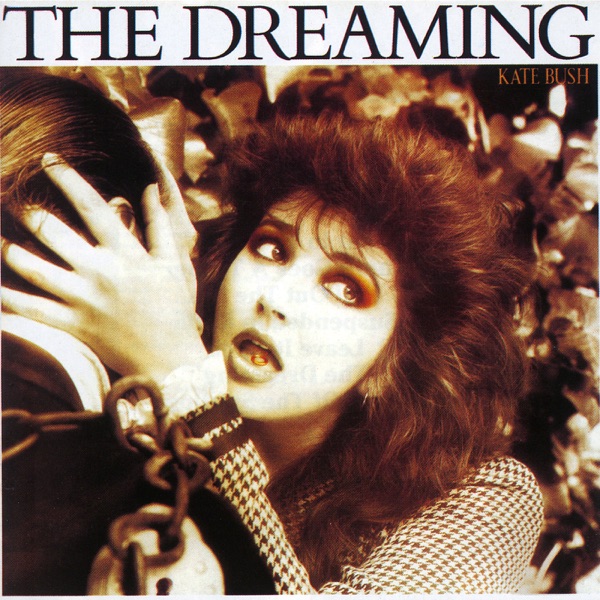
 The DreamingKate Bush198210 tracks
 -
 Hounds of LoveKate Bush198512 tracks
 -
 The Sensual WorldKate Bush198910 tracks
 -
 The Red ShoesKate Bush199312 tracks
 -
 AerialKate Bush200516 tracks
 -
 50 Words for SnowKate Bush20117 tracks
Deep Dive
Overview
Kate Bush is an English singer-songwriter, musician, dancer, and record producer whose work has defined art pop and progressive pop since the late 1970s. Born in 1958, she emerged from a background steeped in classical music and contemporary dance, bringing to rock and pop an unusually eclectic sensibility—one that fused theatrical ambition, baroque arrangements, experimental production, and unconventional lyrical narratives into a coherent artistic vision. Her influence spans multiple generations of alternative and mainstream artists, and her creative output remains one of the most distinct and recognizable bodies of work in rock music history.
Formation Story
Kate Bush was born in 1958 into a creative household in the United Kingdom that valued music and the arts. Growing up in this environment, she developed a foundation in classical training and developed an early facility with songwriting and composition. The convergence of musical education, theatrical sensibility, and dance training coalesced as she entered her late teens, laying the groundwork for a solo career that would soon break through. By the late 1970s, she had secured a recording contract and was ready to unveil a fully realized artistic vision.
Breakthrough Moment
Kate Bush’s arrival was announced with the release of The Kick Inside in 1978, followed immediately by Lionheart the same year. These early albums introduced her distinctive voice, idiosyncratic songwriting approach, and willingness to incorporate baroque pop elements and art rock textures into song structures that nonetheless retained melodic accessibility. The rapid succession of releases signaled an artist with a substantial backlog of material and a clear artistic direction. These debut albums established her as a significant presence in late-1970s rock and pop, earning her recognition among critics and dedicated listeners and positioning her as a leading figure in the emerging art pop movement.
Peak Era
The early-to-mid 1980s represented Bush’s most commercially successful and creatively expansive period. Never for Ever (1980) deepened her sonic palette, while The Dreaming (1982) showcased ambitious production work and thematic complexity. The release of Hounds of Love in 1985 stands as the apex of her commercial reach, combining accessibility with artistic ambition. The Sensual World (1989) continued to build on her established sound, and The Red Shoes (1993) demonstrated her willingness to evolve and experiment further. This decade-and-a-half span saw her become one of Britain’s most celebrated and influential artists, setting the template for how an art-rock sensibility could coexist with broad appeal.
Musical Style
Kate Bush’s sound is built on the intersection of several musical traditions. Her classical training is evident in the intricate arrangements, use of keyboards, and harmonic sophistication that run through her work. She employs baroque pop elements—ornate production, layered instrumentation, and contrapuntal vocal arrangements—while maintaining a progressive pop foundation. Her approach to the human voice is theatrical and multivalent; she shifts between registers and delivery styles within and across songs, treating the voice as another instrument to be shaped and manipulated. Her songwriting is characterized by narrative ambition, emotional directness coupled with lyrical obliqueness, and a refusal to conform to standard pop song structures. Her choreography and visual presentation are integral to her work; she integrates dance and movement into her artistic identity in ways that few rock or pop musicians have attempted. Across her career, she has experimented with electronic production, world music influences, folk elements, and ambient soundscaping, yet her voice and sensibility remain the constant.
Major Albums
The Kick Inside (1978)
Her debut announced a fully formed artist with classical training, baroque sensibilities, and pop instincts, establishing the template for her career while introducing her distinctive vocal personality and narrative-driven songwriting.
Never for Ever (1980)
Building on her initial success, this album expanded her sonic palette and deepened her exploration of production techniques, consolidating her position as one of the era’s most innovative pop artists.
The Dreaming (1982)
An ambitious, densely layered work that showcased her willingness to foreground experimentation and thematic complexity, demonstrating that her artistic vision took precedence over commercial considerations.
Hounds of Love (1985)
Her most commercially successful release, this album balanced accessibility with artistic sophistication, proving that art pop could achieve substantial mainstream reach without compromise.
The Sensual World (1989)
Continuing her evolution, this album maintained her distinctive approach while incorporating new influences and production strategies, further cementing her legacy as a restlessly creative artist.
Aerial (2005)
Released after a sixteen-year gap, this double album signaled her return to recording with a work of substantial ambition that explored ambient textures, nature-based imagery, and further experimentation with form.
Signature Songs
- A song from her early work that became synonymous with her theatrical approach and narrative-driven songwriting.
- A track from the 1980s era that demonstrated her ability to combine accessibility with harmonic and production sophistication.
- A piece from her later work that showcased her ongoing commitment to artistic experimentation and refusal to repeat previous success.
- A song that exemplifies her distinctive vocal approach and the interplay between her classical training and pop sensibilities.
Influence on Rock
Kate Bush’s influence on contemporary music has been profound and multifaceted. She demonstrated that rock and pop music could accommodate baroque and classical elements without losing vitality or contemporary relevance. Her integration of dance, choreography, and visual presentation into the rock and pop idiom opened avenues for artists who sought to treat rock music as a total art form rather than a vehicle for songs alone. Her refusal to follow industry expectations—continuing to make increasingly experimental work even as she achieved commercial success—provided a model for artistic integrity within the commercial music industry. Her approach to production, layering, and sonic manipulation influenced generations of pop and alternative artists. Her lyrical obliqueness and narrative ambition showed that rock and pop songwriting could incorporate literary sophistication without sacrificing emotional directness. Artists across multiple genres—from alternative rock to electronic music to progressive pop—trace their artistic lineage through her work.
Legacy
Kate Bush’s long-term impact on rock and pop music has only grown since her emergence in the late 1970s. Her catalogue has remained continuously in print and available through streaming services, ensuring ongoing discovery by new generations of listeners. Her influence is visible in contemporary art pop, alternative rock, and experimental music, where her commitment to artistic vision and refusal to compromise her creative direction continue to inspire. The integration of movement, choreography, and visual presentation into her artistic identity has made her a touchstone for discussions of performance and embodiment in rock music. Her work stands as a counterpoint to purely commercial pop music, demonstrating that complexity, ambition, and genuine artistic innovation need not be at odds with public recognition and cultural significance. Her career arc—from early success through experimental middle period to continued creative evolution—has made her a crucial figure in understanding how artists can maintain creative relevance and growth across decades without defaulting to repetition or nostalgia.
Fun Facts
- Kate Bush was born in 1958 into a highly creative household that valued music, dance, and the arts, providing the foundational experiences that would shape her artistic practice.
- Her early albums The Kick Inside and Lionheart were both released in 1978, indicating she had developed a substantial body of material before her public breakthrough.
- The gap between The Red Shoes (1993) and Aerial (2005) represented a sixteen-year hiatus from studio recording, demonstrating her refusal to produce work unless it met her exacting artistic standards.
- Her work spans multiple record labels including EMI, Columbia Records, and Harvest, reflecting the evolution of her career across different eras of the music industry.