

Photo by Georges Biard , licensed under CC BY-SA 3.0 · Wikimedia Commons
Rank #387
Lara Fabian
From Wikipedia
Lara Sophie Katy Crokaert, known professionally as Lara Fabian, is a Belgian and Canadian singer and songwriter. Having sold over 12 million records worldwide, she is one of the best-selling Belgian artists of all time.
Discography & Previews
Browse through and click an album to open and play 30-second previews streamed from Apple Music.


Carpe Diem
1994 · 13 tracks
- 1 Puisque c'est l'amour ↗ 4:29
- 2 Tu t’en vas ↗ 3:45
- 3 Leïla ↗ 5:17
- 4 Il existe un endroit ↗ 3:32
- 5 Je suis malade ↗ 4:24
- 6 Je vivrai ↗ 5:01
- 7 Au loin là-bas ↗ 4:25
- 8 Ramène-moi ↗ 4:33
- 9 Pas sans toi ↗ 4:45
- 10 Dites-moi pourquoi je l’aime ↗ 4:55
- 11 Saisir le jour ↗ 4:10
- 12 Si tu m’aimes ↗ 3:30
- 13 Bridge of Hope ↗ 4:35


Lara Fabian
1999 · 13 tracks
- 1 Adagio ↗ 4:27
- 2 Part of Me ↗ 4:32
- 3 Givin' Up On You ↗ 4:36
- 4 You Are My Heart ↗ 4:10
- 5 I Am Who I Am ↗ 3:48
- 6 To Love Again (Si Tu M'Aimes) ↗ 3:45
- 7 You're Not from Here ↗ 4:49
- 8 Till I Get Over You ↗ 3:44
- 9 Love By Grace ↗ 4:08
- 10 Yeliel (My Angel) ↗ 5:03
- 11 I Will Love Again ↗ 3:43
- 12 Broken Vow ↗ 5:15
- 13 Adagio (Italian) ↗ 4:28

Nue
2001 · 14 tracks
- 1 J’y crois encore ↗ 3:29
- 2 Aimer déjà ↗ 4:07
- 3 S’en aller ↗ 4:45
- 4 Silence ↗ 3:48
- 5 Parce que tu pars ↗ 4:29
- 6 Je suis mon cœur ↗ 5:47
- 7 Tango ↗ 4:01
- 8 Imagine ↗ 4:02
- 9 Tu es mon autre (feat. Maurane) ↗ 3:43
- 10 Rio ↗ 3:34
- 11 Bambina ↗ 4:24
- 12 Immortelle ↗ 5:18
- 13 Le roi est une femme ↗ 5:15
- 14 Piano nocturne ↗ 16:51

A Wonderful Life
2004 · 12 tracks

9
2005 · 16 tracks
- 1 Aime (Live) ↗ 4:00
- 2 Les Homéricains (Live) ↗ 3:30
- 3 J'y crois encore (Live) ↗ 4:52
- 4 Il ne manquait que toi (Live) ↗ 4:29
- 5 Tu es mon autre (Live) ↗ 3:52
- 6 Si tu n'as pas d'amour (Live) ↗ 3:52
- 7 Silence (Live) ↗ 3:01
- 8 Un Ave Maria (Live) ↗ 3:59
- 9 Immortelle (Live) ↗ 3:05
- 10 Tout (Live) ↗ 3:49
- 11 Le tour du monde (Live) ↗ 3:18
- 12 L'homme qui n'avait pas de maison (Live) ↗ 3:47
- 13 La lettre (Live) ↗ 5:58
- 14 Papa, Can You Hear Me? (Live) ↗ 3:08
- 15 A Piece of Sky (Live) ↗ 4:07
- 16 Je me souviens (Live) ↗ 3:52

Toutes les femmes en moi
2009 · 13 tracks
- 1 Soleil soleil ↗ 3:56
- 2 J’ai douze ans ↗ 4:42
- 3 Amoureuse ↗ 4:31
- 4 Göttingen ↗ 5:38
- 5 Il venait d’avoir 18 Ans ↗ 3:19
- 6 Mamy Blue ↗ 3:57
- 7 Une femme avec toi ↗ 4:17
- 8 Ça casse ↗ 3:53
- 9 L’amour existe encore ↗ 3:50
- 10 Message personnel ↗ 5:00
- 11 Toutes les femmes en moi ↗ 4:06
- 12 Nuit magique ↗ 3:17
- 13 L’Hymne à l’amour ↗ 6:09


Mademoiselle Zhivago
2010 · 12 tracks
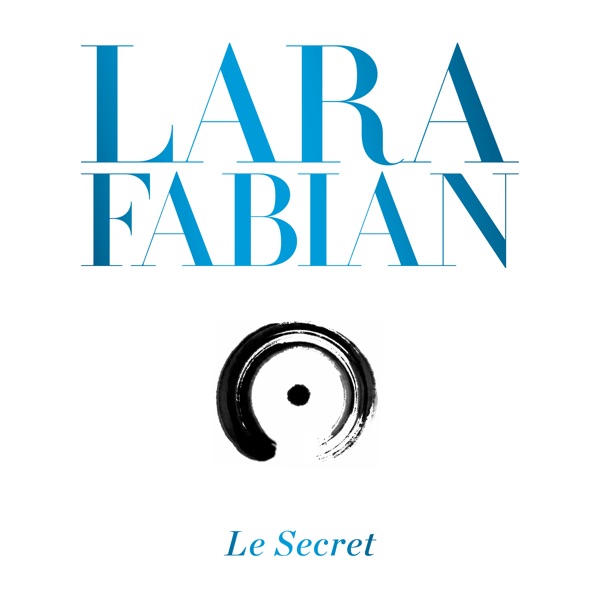
Le secret
2013 · 17 tracks
- 1 Le secret ↗ 5:19
- 2 Danse ↗ 5:00
- 3 Amourexique ↗ 4:59
- 4 Un ange est tombé ↗ 4:15
- 5 Je t'appelle ↗ 4:38
- 6 Mirage ↗ 3:37
- 7 Que j'étais belle ↗ 4:55
- 8 La vie est là ↗ 4:30
- 9 Je rêve d'une étoile ↗ 3:54
- 10 Kalpataru ↗ 6:32
- 11 Deux "ils" deux "elles" ↗ 3:30
- 12 Ce qu'il reste... ↗ 4:01
- 13 P... de grand amour ↗ 4:35
- 14 Il est lune ↗ 4:51
- 15 Mon désir ↗ 4:14
- 16 L'enfant du Gwenwed ↗ 5:00
- 17 I Am A-Wa ↗ 5:27

Ma vie dans la tienne
2015 · 13 tracks
- 1 Quand je ne chante pas ↗ 4:31
- 2 Ma vie dans la tienne ↗ 4:46
- 3 Le désamour ↗ 4:01
- 4 S'il ne reste qu'un ami ↗ 3:20
- 5 Envie d'en rire ↗ 3:28
- 6 Le cœur qui tremble ↗ 3:53
- 7 Ton désir ↗ 4:40
- 8 L'illusionniste ↗ 3:52
- 9 Elle danse ↗ 3:36
- 10 Relève-toi ↗ 3:59
- 11 L'oubli ↗ 4:44
- 12 C'est ma terre ↗ 3:20
- 13 Je vais revoir l'hiver ↗ 3:51

Camouflage
2017 · 12 tracks
- 1 Growing Wings ↗ 2:58
- 2 Chameleon ↗ 3:19
- 3 If I Let You Love Me ↗ 3:36
- 4 Choose What You Love Most (Let It Kill You) ↗ 3:53
- 5 We Are the Flyers ↗ 4:05
- 6 Painting In the Rain ↗ 3:28
- 7 Camouflage ↗ 3:12
- 8 I'm Breakable ↗ 2:36
- 9 Keep the Animals Away ↗ 3:32
- 10 We Are the Storm ↗ 3:40
- 11 Perfect ↗ 3:01
- 12 Communify ↗ 3:16


Lockdown Sessions
2021 · 12 tracks

Je suis là
2024 · 11 tracks
-
 Lara FabianLara Fabian199110 tracks
 -
 Carpe DiemLara Fabian199413 tracks
 -
 PureLara Fabian199612 tracks
 -
 Lara FabianLara Fabian199913 tracks
 -
 NueLara Fabian200114 tracks
 -
 A Wonderful LifeLara Fabian200412 tracks
 -
 9Lara Fabian200516 tracks
 -
 Toutes les femmes en moiLara Fabian200913 tracks
 -
 Every Woman in MeLara Fabian200911 tracks
 -
 Mademoiselle ZhivagoLara Fabian201012 tracks
 -
 Le secretLara Fabian201317 tracks
 -
 Ma vie dans la tienneLara Fabian201513 tracks
 -
 CamouflageLara Fabian201712 tracks
 -
 PapillonLara Fabian20191 track
 -
 Lockdown SessionsLara Fabian202112 tracks
 -
 Je suis làLara Fabian202411 tracks
Deep Dive
Overview
Lara Sophie Katy Crokaert, known professionally as Lara Fabian, stands among the best-selling Belgian artists of all time, with over 12 million records sold worldwide. A Belgian-Italian and Canadian performer, Fabian built her career across three decades as a singer-songwriter working primarily in operatic pop and pop rock. Her career trajectory charts the rise of a European artist whose vocal prowess and emotional intensity found audiences across multiple continents and language markets.
Formation Story
Born in 1970 with dual Belgian and Italian heritage, Lara Fabian emerged from a European cultural landscape that valued classical vocal training alongside contemporary pop production. Growing up with exposure to both operatic traditions and modern pop music, she developed a signature approach that fused high-register, classically trained vocals with rock and pop song structures. By the early 1990s, she was ready to translate her musical ambitions into a recording career, positioning herself as a pop artist with serious vocal credentials at a time when that combination was less common in mainstream markets.
Breakthrough Moment
Fabian’s debut album, Lara Fabian, arrived in 1991 on Sony Music and established her as a credible voice in European pop. The album introduced listeners to her distinctive operatic-pop hybrid sound and set the stage for her sustained chart presence. She followed this with Carpe Diem in 1994 and Pure in 1996, each release expanding her audience and refining her artistic identity. By the late 1990s, Fabian had built a devoted fanbase across Europe and francophone markets, establishing the commercial and critical foundation that would sustain her career into subsequent decades.
Peak Era
The period from 1999 through the mid-2000s represented Fabian’s most prolific and successful stretch. A self-titled album, Lara Fabian, arrived in 1999, followed by From Lara With Love in 2000, Nue in 2001, and A Wonderful Life in 2004. The release of the album 9 in 2005 continued her momentum, showcasing her mature artistry and established appeal. During this span, Fabian cemented her status as a major international pop act, leveraging her vocal range and emotional delivery across ballads and more uptempo material. Her presence on charts in multiple countries and her consistent touring schedule demonstrated an artist at the height of her popularity and creative confidence.
Musical Style
Lara Fabian’s sound rests on the collision of operatic vocal technique with contemporary pop songwriting. Her voice—a powerful, controlled mezzo-soprano capable of both delicate phrasing and soaring belt—became her calling card, deployed across arrangements that balanced pop accessibility with classical sensibility. Rather than treating these elements as opposing forces, Fabian integrated them, allowing her classical training to inform emotional nuance while maintaining radio-friendly song structures and production values. Across her albums, she worked with professional songwriters and producers signed to major labels including Polydor and Universal Music Group, ensuring her records maintained commercial polish. Her songwriting drew on themes of love, loss, personal reflection, and resilience, positioned within her distinctive vocal territory.
Major Albums
Carpe Diem (1994)
An early consolidation of Fabian’s identity, establishing her appeal beyond her debut and refining the balance between balladic material and more energetic pop offerings.
Pure (1996)
This album marked a creative step forward, with Fabian’s vocal control and interpretive depth reaching new sophistication and appealing to a growing international fanbase.
Nue (2001)
Released during her commercial peak, Nue showcased Fabian’s mature artistry and demonstrated her continued ability to connect emotionally with listeners across multiple markets and languages.
A Wonderful Life (2004)
A self-reflective work that captured Fabian in her mid-30s, balancing her established vocal mastery with introspective songwriting and contemporary production values.
Toutes les femmes en moi / Every Woman in Me (2009)
Released simultaneously in French and English versions, this double release underscored Fabian’s bicultural reach and her commitment to both European and Anglophone markets.
Mademoiselle Zhivago (2010)
Continuing her pattern of bilingual releases, this album referenced literary and cultural touchstones while maintaining her pop sensibility and vocal-centric approach.
Signature Songs
- “Carpe Diem” — The title track of her breakthrough second album, exemplifying her ability to marry classical sensibility with contemporary pop appeal.
- “Je t’aime” — A showcase for her emotional intensity and operatic vocal range within a pop context.
- “Adagio” — Demonstrating her facility with balladic material and her classical vocal training.
- “All or Nothing” — A pop-rock statement that balanced her pop accessibility with her signature vocal power.
Influence on Rock
Lara Fabian’s career contributed to a broader 1990s and 2000s trend of pop artists with classical vocal training finding mainstream success without abandoning technical rigor. In the context of European pop, she demonstrated that operatic-influenced vocals could coexist with commercial songwriting and radio production without compromise. While not a guitar-driven rock artist, her work within the operatic-pop and pop-rock spheres influenced the aesthetic choices available to contemporary female vocalists, particularly those working across multiple language markets and seeking to balance theatrical vocal presence with modern production. Her international success, particularly across francophone and European markets, established a template for Belgian artists seeking to compete in global pop music.
Legacy
With over 12 million records sold worldwide, Lara Fabian remains one of Belgium’s most commercially successful musical exports. Her career, spanning from 1991 through the 2020s, reflects sustained relevance and audience connection across changing industry conditions. Recent releases including Camouflage (2017), Papillon (2019), Lockdown Sessions (2021), and Je suis là (2024) demonstrate her continued creative output and relevance in an era of streaming dominance. Her ability to maintain a recording contract with major labels including Sony Music and Universal Music Group across three decades speaks to her enduring commercial appeal. Fabian’s legacy rests on her refusal to choose between technical vocal mastery and pop accessibility, instead building a substantial career by insisting that both were possible simultaneously.
Fun Facts
- Fabian has released albums in multiple languages, including French and English versions of the same material, reflecting her dual cultural positioning and international fanbase.
- Her album 9 arrived in 2005 through her own imprint, 9 Productions, demonstrating her executive involvement in her recorded output during her peak period.
- The span between her 1991 debut and her 2024 album Je suis là encompasses 33 years of continuous recording activity, an unusual feat of longevity in contemporary pop music.
- Her bilingual approach to major releases, particularly Toutes les femmes en moi and Every Woman in Me in 2009, underscored her strategic positioning as an artist serving both French and English-language markets simultaneously.