

Photo by Fryta 73 , licensed under CC BY-SA 2.0 · Wikimedia Commons
Rank #425
Limahl
From Wikipedia
Christopher Hamill, known professionally as Limahl, is an English singer and songwriter. He was the lead vocalist of the pop band Kajagoogoo beginning in 1982, before embarking on a solo career, releasing the 1984 hit "The NeverEnding Story", the theme song for the eponymous film.
Discography & Previews
Browse through and click an album to open and play 30-second previews streamed from Apple Music.

Don’t Suppose
1984 · 15 tracks
- 1 Don't Suppose ↗ 4:19
- 2 That Special Something ↗ 4:16
- 3 Your Love ↗ 4:29
- 4 Too Much Trouble ↗ 3:58
- 5 The NeverEnding Story ↗ 3:32
- 6 Only for Love ↗ 3:56
- 7 I Was a Fool ↗ 4:46
- 8 The Waiting Game ↗ 4:03
- 9 Tar Beach ↗ 3:48
- 10 Oh Girl ↗ 4:41
- 11 O.T.T. (Over the Top) ↗ 1:27
- 12 Only for Love (Dance Mix) ↗ 6:37
- 13 Only for Love (Dub Mix) ↗ 4:36
- 14 You've Been Gone for a Little While ↗ 2:04
- 15 The NeverEnding Story (12'' Dance Mix) ↗ 5:22

Colour All My Days
1986 · 12 tracks
- 1 Love In Your Eyes ↗ 4:22
- 2 Colour All My Days ↗ 4:48
- 3 Nothing on Earth (Can Keep Me from You) ↗ 3:53
- 4 Tonight Will Be the Night ↗ 4:12
- 5 Working Out ↗ 4:18
- 6 Don't Send for Me ↗ 3:39
- 7 Shock ↗ 4:30
- 8 Inside to Outside ↗ 3:33
- 9 Love Will Tear the Soul ↗ 3:41
- 10 For My Heart's Sake ↗ 3:40
- 11 Love in Your Eyes (12" Mix) ↗ 7:27
- 12 Inside to Outside (12") ↗ 6:59
-
 Don’t SupposeLimahl198415 tracks
 -
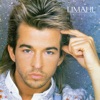 Colour All My DaysLimahl198612 tracks
Deep Dive
Overview
Limahl, born Christopher Hamill, is an English singer and songwriter who emerged as a new wave performer in the early 1980s. Though he rose to prominence as the lead vocalist of the pop band Kajagoogoo beginning in 1982, his solo career achieved mainstream recognition through a single cultural moment: “The NeverEnding Story,” the 1984 theme song for the fantasy film of the same name. That track transcended the bounds of rock radio, becoming a crossover hit that introduced Limahl’s voice to audiences far beyond the new wave audience who knew his band work. His career spans from the new wave explosion of the early 1980s through to the present day, encompassing both the synth-pop landscape of his breakthrough years and later stylistic ventures.
Formation Story
Christopher Hamill was born in the United Kingdom in 1958, coming of age during the post-punk and new wave upheaval of the late 1970s. The new wave movement—with its emphasis on electronic instrumentation, angular songwriting, and theatrical presentation—provided the aesthetic context into which Limahl’s musical sensibility naturally fit. In 1982, he became the lead vocalist of Kajagoogoo, a new wave pop band that would give him his first platform for broader exposure. The band positioned Limahl as a distinctive voice within the new wave idiom, and his tenure in Kajagoogoo established him as a recognizable figure in the UK pop scene before he pursued a solo career in earnest.
Breakthrough Moment
Limahl’s mainstream breakthrough came in 1984 with “The NeverEnding Story,” released as the theme song for Giorgio Moroder and Keith Forsey’s film adaptation of Michael Ende’s novel. The song was perfectly calibrated for the moment: a synth-driven, emotionally direct ballad that paired Limahl’s soaring, almost operatic vocal delivery with a production aesthetic that bridged new wave sensibilities and mainstream film scoring. “The NeverEnding Story” became Limahl’s signature piece, a global hit that achieved far greater commercial penetration than typical new wave fare. It marked the transition point where his identity shifted from “Kajagoogoo’s frontman” to a solo artist with a genuine mass-market calling card. This singular success set the tone for his solo album Don’t Suppose, released the same year, which capitalized on the momentum of the title track.
Peak Era
The mid-1980s represented Limahl’s commercial peak, with the extraordinary reach of “The NeverEnding Story” establishing him as a viable solo act. The release of Don’t Suppose in 1984 positioned him as a solo artist in his own right, though no subsequent single matched the ubiquity of his breakthrough hit. He continued recording and touring through the latter part of the 1980s, releasing Colour All My Days in 1986. During this window, Limahl worked within the new wave and pop frameworks that defined his artistic identity, navigating the shift in popular taste that gradually moved away from the synth-pop orthodoxy of the early 1980s toward other idioms. Though his chart dominance proved temporary, this period secured his place in 1980s pop history.
Musical Style
Limahl’s voice is his most distinctive asset: a high, clear tenor with a natural inclination toward melodic expression and emotional directness. His vocal approach sits comfortably within the new wave and pop tradition, emphasizing tunefulness and dynamic range rather than gravelly texture or blues-inflected phrasing. Musically, his work trades in synth-driven arrangements, programmed drums, and production techniques characteristic of 1980s pop and new wave. “The NeverEnding Story” exemplifies his approach: a song built on synthesizer fundamentals, with Limahl’s voice as the emotional anchor, reaching toward upper registers in moments of heightened feeling. His songwriting sensibility favors direct, narrative-driven lyrics and memorable hooks. While his solo work represents a somewhat more mainstream-oriented vector than some of his new wave contemporaries, it remains rooted in the electronic instrumentation and melodic prioritization that defined the genre at its peak.
Major Albums
Don’t Suppose (1984)
Limahl’s debut solo album, released in the wake of “The NeverEnding Story,” captures the new wave-pop synthesis at the height of its commercial viability. The album rides on the success of its title track while establishing his range as a solo writer and performer across a full-length format.
Colour All My Days (1986)
Released two years into his solo career, Colour All My Days represents Limahl’s attempt to sustain solo momentum beyond his breakthrough hit. The album reflects the mid-1980s pop landscape, with synthesizer-heavy production and focus on melodic pop song structures.
Love Is Blind (1992)
This 1992 release marks a significant gap from his preceding album and suggests a repositioning of Limahl’s career during the grunge-dominated early 1990s, a period inhospitable to the new wave-pop idiom in which he built his name.
Samba, Prazer & Misterio (2025)
Limahl’s most recent album, released in 2025, demonstrates his continued recording activity and willingness to explore new stylistic territory in his later career, extending his recorded output across four decades.
Signature Songs
- “The NeverEnding Story” (1984) — The global hit theme song that defines Limahl’s legacy and introduced his voice to audiences beyond rock and new wave listeners.
- “Never Ending Story (2024 Re-recording)” — His later revisitation of the song that made him famous, extending the reach of his signature composition across generations.
Influence on Rock
While Limahl’s influence on rock music proper is somewhat tangential—his primary impact lies within pop and film music—he represents a particular strand of 1980s new wave sensibility: the melodic, synthesizer-driven side that proved commercially durable. “The NeverEnding Story” demonstrated that new wave idioms could achieve genuine mainstream and cross-cultural reach when coupled with film and narrative context. His work sits within a broader lineage of 1980s synth-pop and new wave vocalists who brought theatrical, emotionally expressive delivery to electronic music. Though he did not pioneer new wave or fundamentally alter rock’s trajectory, he occupied a visible place in the movement’s mainstream evolution and proved that the new wave aesthetic could survive and thrive in commercial contexts outside the traditional rock framework.
Legacy
Limahl’s enduring legacy rests almost entirely on “The NeverEnding Story,” a song that has secured permanent residence in film and pop culture memory. The track’s continued presence in media—through streaming, film repertoires, and cultural references—ensures that his name remains familiar to audiences far beyond those who followed his Kajagoogoo years or his solo albums. His career trajectory illustrates the particular economics of 1980s pop stardom: a breakthrough via a single, mainstream platform (in this case, a film soundtrack), followed by a longer solo recording career that sustained commercial and artistic activity even as mainstream chart dominance receded. At present, Limahl remains active as a recording artist, having released new material as recently as 2025, demonstrating that the foundation built in 1984 has provided a stable platform for a career spanning decades.
Fun Facts
- Limahl was the lead vocalist of Kajagoogoo before launching his solo career, a band connection that remains a significant part of his early 1980s identity.
- “The NeverEnding Story” was composed for Giorgio Moroder and Keith Forsey’s film adaptation, placing Limahl in the tradition of artists whose names became inseparable from major film properties.
- His career has spanned from 1982 onward, encompassing the rise and fall of new wave dominance and multiple eras of recording technology and music distribution.