
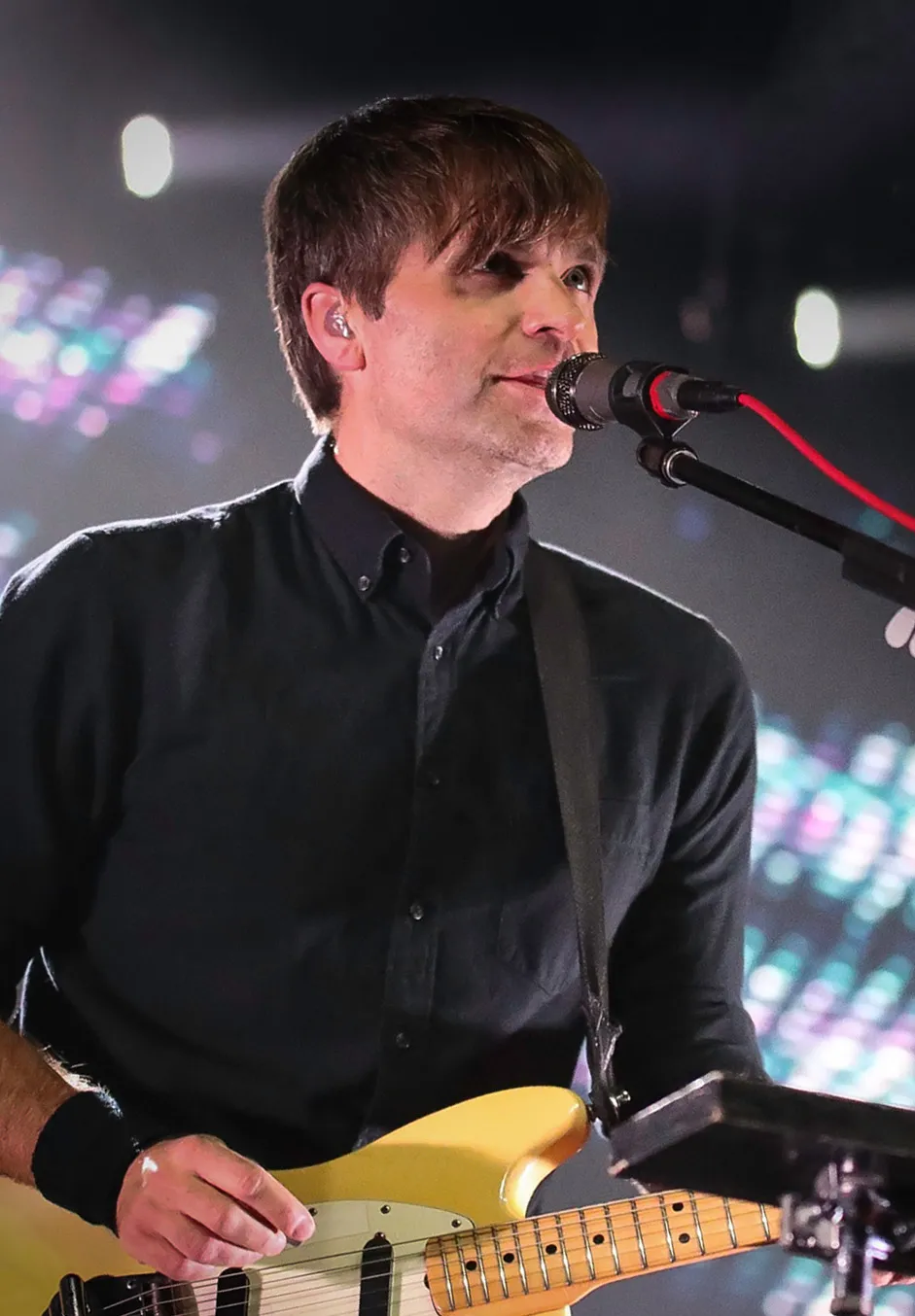
Photo by Andy Witchger , licensed under CC BY 2.0 · Wikimedia Commons
Rank #477
Ben Gibbard
From Wikipedia
Benjamin Gibbard is an American musician. He is best known as the lead vocalist and guitarist of the indie rock band Death Cab for Cutie, with whom he has recorded ten studio albums, and as a member of the indie pop supergroup The Postal Service. Gibbard released his debut solo album, Former Lives (2012), and a collaborative studio album, One Fast Move or I'm Gone (2009), with Jay Farrar.
Discography & Previews
Browse through and click an album to open and play 30-second previews streamed from Apple Music.

Former Lives
2012 · 12 tracks
- 1 Shepherd's Bush Lullaby ↗ 0:50
- 2 Dream Song ↗ 3:33
- 3 Teardrop Windows ↗ 2:48
- 4 Bigger Than Love ↗ 4:48
- 5 Lily ↗ 2:01
- 6 Something's Rattling (Cowpoke) ↗ 3:51
- 7 Duncan, Where Have You Gone? ↗ 3:47
- 8 Oh, Woe ↗ 2:50
- 9 A Hard One to Know ↗ 2:41
- 10 Lady Adelaide ↗ 3:34
- 11 Broken Yolk in Western Sky ↗ 3:32
- 12 I'm Building a Fire ↗ 2:33

-
 Former LivesBen Gibbard201212 tracks
 -
 BandwagonesqueBen Gibbard201712 tracks
Deep Dive
Overview
Ben Gibbard stands as one of indie rock’s most recognizable figures, best known as the lead vocalist and guitarist of Death Cab for Cutie, a band that has released ten studio albums and achieved widespread critical and commercial success. Beyond his primary project, Gibbard has participated in The Postal Service, an indie pop supergroup, and launched a solo career that allowed him to explore different sonic territories. His work spans indie rock and alternative rock idioms, and his songwriting—marked by introspective lyrics and melodic sensibility—has made him a central figure in American alternative music since the late 1990s.
Formation Story
Ben Gibbard was born in 1976 in the United States, coming of age during the rise of indie rock and alternative music in the 1980s and early 1990s. He emerged from the broader indie rock scene of the Pacific Northwest and beyond, absorbing the guitar-driven, emotionally direct aesthetic that defined much of that era’s underground music. His trajectory into rock music was shaped by the culture of independent labels and DIY ethos that characterized indie rock during his formative years. By the mid-1990s, he had begun developing the songwriting voice and instrumental approach that would define his career, positioning himself within the tradition of indie rock that valued introspection and melodic craftsmanship.
Breakthrough Moment
Gibbard’s breakthrough came through Death Cab for Cutie, the indie rock band that would become his primary creative vehicle. With Death Cab for Cutie, he achieved recognition that extended far beyond underground indie circles, building a devoted fanbase and earning critical respect across the 2000s and beyond. The band’s success established Gibbard as a significant voice in contemporary rock music, and their consistent output and touring solidified his status as a major figure in the indie rock landscape.
Peak Era
Gibbard’s creative peak spans the period from the late 1990s through the 2010s, during which Death Cab for Cutie released multiple albums and gained substantial cultural visibility. Throughout this era, he maintained productivity across multiple projects, including his contributions to The Postal Service, which represented a significant tangent into synth-inflected indie pop. This period saw him establish himself not only as a bandleader but as a versatile musician capable of working across different sonic contexts while maintaining a consistent artistic identity.
Musical Style
Gibbard’s musical approach centers on melodic indie rock anchored by his distinctive vocals—conversational in delivery but emotionally precise. His songwriting emphasizes lyrical introspection and narrative specificity, often exploring themes of relationships, urban life, and personal reflection. As a guitarist, he favors clean-toned, jangly electric guitar work that owes debts to the alternative rock tradition while maintaining a contemporary indie sensibility. His music typically features well-crafted song structures that balance accessibility with compositional sophistication, steering clear of both overly experimental abstraction and mainstream pop simplification. The production on his records tends toward clarity and detail, allowing individual instrumental and vocal elements to register distinctly. In his collaboration with Jay Farrar on the 2009 album One Fast Move or I’m Gone, Gibbard demonstrated his ability to adapt his style to collaborative contexts, blending his indie rock foundation with complementary songwriting and arrangements.
Major Albums
One Fast Move or I’m Gone (2009)
A collaborative album with Americana and alt-country artist Jay Farrar, this record showcased Gibbard working outside his primary band context, exploring different textures and songwriting approaches while maintaining his characteristic melodic sensibility and introspective lyricism.
Former Lives (2012)
Gibbard’s debut proper solo album, Former Lives represented his first full-length statement independent of Death Cab for Cutie, demonstrating his ability to sustain a solo project while continuing his work with the band.
Bandwagonesque (2017)
Released five years after Former Lives, this album continued Gibbard’s exploration of solo material, maintaining his indie rock foundation while evolving his artistic approach over the course of the decade.
Signature Songs
- “Soul Meets Body” — A Death Cab for Cutie standout that exemplifies Gibbard’s gift for coupling intimate vocal delivery with carefully arranged instrumentation.
- “I Will Follow You into the Dark” — One of his most recognized compositions, demonstrating his skill at stripped-down, emotionally direct songwriting.
- “Transatlanticism” — A showcase for Gibbard’s ability to build emotional resonance through repetition, melody, and sustained vocal performance.
- “Lack of Color” — Representative of his talent for constructing expansive indie rock narratives with nuanced lyrical observation.
Influence on Rock
Gibbard’s work with Death Cab for Cutie helped define indie rock’s mainstream expansion in the 2000s, proving that consciously literary, emotionally sincere songwriting could reach substantial audiences without sacrificing artistic integrity. His involvement with The Postal Service contributed to the broader acceptance of electronic and synthesizer-based textures within indie rock discourse. Through his dual roles as bandleader and solo artist, Gibbard demonstrated a model of creative sustainability that allowed for both group expression and individual exploration, influencing a generation of indie rock musicians to pursue similarly multifaceted careers. His emphasis on melodic hooks and emotional directness within the indie rock framework helped establish a particular strain of alternative rock that valued accessibility alongside artistic credibility.
Legacy
Ben Gibbard remains an active and respected figure in contemporary rock music, with Death Cab for Cutie continuing to record and perform. His body of work—spanning his primary band, collaborative projects, and solo albums—has established him as a significant artist within indie rock and alternative rock traditions. The consistency and quality of his output across multiple projects and decades has secured his position as a central figure in early-21st-century rock music. His recordings continue to reach audiences through streaming platforms and remain touchstones for fans and musicians engaged with indie rock aesthetics.
Fun Facts
- Gibbard’s solo albums were released through Barsuk Records, the same label that has issued much of Death Cab for Cutie’s catalog, maintaining a long-term relationship with a single independent label.
- His collaborative album with Jay Farrar, One Fast Move or I’m Gone, brought together two distinct regional and stylistic traditions—indie rock and Americana—demonstrating his willingness to work across genre boundaries.
- Gibbard’s career as a solo artist began with his 2012 release of Former Lives, arriving after more than a decade of primary focus on Death Cab for Cutie, showing a relatively late turn toward sustained solo work.