

Photo by Agencia de Noticias ANDES , licensed under CC BY-SA 2.0 · Wikimedia Commons
Rank #494
Melendi
From Wikipedia
Ramón Melendi Espina, known mononymously as Melendi, is a Spanish singer-songwriter. His specialties are rock, flamenco, and rumba styles.
Discography & Previews
Browse through and click an album to open and play 30-second previews streamed from Apple Music.

Que el cielo espere sentao
2005 · 12 tracks
- 1 Caminando por la Vida ↗ 3:32
- 2 Billy el Pistolero ↗ 3:52
- 3 Como Dijo el Rey ↗ 3:53
- 4 Con Tanto Héroe ↗ 2:44
- 5 Novia a la Fuga ↗ 3:05
- 6 Con Sólo una Sonrisa ↗ 3:50
- 7 Hasta Que la Muerte los Separe ↗ 4:35
- 8 Como Se Bailan los Tangos ↗ 3:09
- 9 Cuestión de Prioridades ↗ 3:55
- 10 Con Tu Amor Es Suficiente ↗ 3:09
- 11 Cannabis ↗ 3:10
- 12 Que el Cielo Espere Sentao ↗ 3:22

Lágrimas desordenadas
2006 · 14 tracks
- 1 Tu Jardín Con Enanitos ↗ 3:57
- 2 Lágrimas Desordenadas ↗ 3:49
- 3 Cheque al Portamor ↗ 4:56
- 4 Tu Lista de Enemigos ↗ 4:02
- 5 Aprendíz de Caballero ↗ 4:03
- 6 Autofotos ↗ 3:29
- 7 Mi Primer Beso ↗ 4:16
- 8 La Tortura de Lyss ↗ 3:55
- 9 De Pequeño Fue el Coco ↗ 4:03
- 10 Gatos Celestes ↗ 3:46
- 11 De Repente Desperté ↗ 5:07
- 12 Cheque al Portamor (Acústica) ↗ 4:59
- 13 Tu Jardín Con Enanitos (Acústica) ↗ 4:03
- 14 De Pequeño Fue el Coco (Acústica) ↗ 4:01

Curiosa la cara de tu padre
2008 · 14 tracks
- 1 Como una Vela ↗ 3:41
- 2 Un violinista en tu tejado ↗ 3:43
- 3 Un Tipo Diferente ↗ 3:53
- 4 Piratas del Bar Caribe ↗ 4:05
- 5 Déjame Vivir ↗ 3:43
- 6 Mis Alas Son Tus Hojas ↗ 3:39
- 7 Maldita Vida Loca ↗ 3:49
- 8 En Ocasíones Veo Muertos ↗ 3:26
- 9 Qué Más Puede Salir Mal ↗ 3:12
- 10 Las Cosas del Amor ↗ 3:24
- 11 Curiosa la Cara de Tu Padre ↗ 3:32
- 12 Los Premios Pinocho ↗ 3:48
- 13 La Mi Mozuca ↗ 4:10
- 14 Una Historia de Dos ↗ 4:49
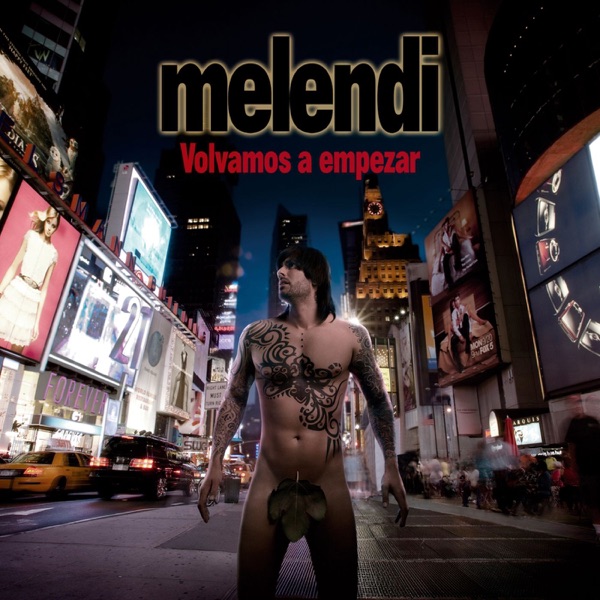
Volvamos a empezar
2010 · 15 tracks
- 1 Barbie de Extrarradio ↗ 3:36
- 2 Llueve ↗ 4:00
- 3 Somos ↗ 3:46
- 4 Volvamos a Empezar ↗ 3:56
- 5 Entre la Ropa Sucia de Cupido ↗ 4:18
- 6 Mi Ley ↗ 3:05
- 7 Melancolémia ↗ 4:13
- 8 Canción de Amor Caducada ↗ 4:08
- 9 Perdóname Ángel ↗ 4:09
- 10 El Parto ↗ 3:44
- 11 Corazón de Peón ↗ 3:53
- 12 Cierra los Ojos ↗ 8:19
- 13 Que Dura la Vída de la Musa ↗ 3:01
- 14 Amigos de la Crisis ↗ 3:48
- 15 Hoy ↗ 4:18

Un alumno más
2014 · 11 tracks

Quítate las gafas
2016 · 11 tracks
- 1 Flores de Agua y Plomo ↗ 4:11
- 2 Destino o Casualidad ↗ 4:19
- 3 Hijos del Mal ↗ 4:03
- 4 Desde que Estamos Juntos ↗ 4:34
- 5 La Casa No Es Igual ↗ 3:34
- 6 Mi Mayor Fortuna (with ChocQuibTown) ↗ 4:21
- 7 Un Amor Tan Grande ↗ 4:46
- 8 Soy Tu Superhéroe ↗ 4:28
- 9 Existen los Ángeles ↗ 4:21
- 10 Quítate las Gafas ↗ 3:56
- 11 Yo Me Veo Contigo ↗ 4:54

Ahora
2018 · 11 tracks
- 1 Mírame ↗ 4:14
- 2 El Arrepentido ↗ 3:39
- 3 Lo Que Nos Merecemos ↗ 3:58
- 4 Para Que No Se Escapen Tus Mariposas ↗ 4:07
- 5 Tiempos de Re-Evolución ↗ 3:42
- 6 Déjala Que Baile (with Alejandro Sanz & Arkano) ↗ 3:39
- 7 Mi Código Postal ↗ 4:14
- 8 Negro Sin Ti ↗ 3:40
- 9 Habitantes de un Mismo Planeta ↗ 4:19
- 10 Lo Nuestro Fue Muy Top ↗ 3:49
- 11 Como el Agua y el Aceite ↗ 5:23

10:20:40
2019 · 11 tracks

Likes y cicatrices
2021 · 11 tracks
-
 Que el cielo espere sentaoMelendi200512 tracks
 -
 Lágrimas desordenadasMelendi200614 tracks
 -
 Curiosa la cara de tu padreMelendi200814 tracks
 -
 Volvamos a empezarMelendi201015 tracks
 -
 Un alumno másMelendi201411 tracks
 -
 Quítate las gafasMelendi201611 tracks
 -
 AhoraMelendi201811 tracks
 -
 10:20:40Melendi201911 tracks
 -
 Likes y cicatricesMelendi202111 tracks
Deep Dive
Overview
Ramón Melendi Espina, known mononymously as Melendi, is a Spanish singer-songwriter whose work synthesizes rock with traditional Spanish musical forms. Emerging in the early 2000s, Melendi carved a distinctive path by fusing contemporary rock songwriting with the rhythmic and emotional vocabulary of flamenco and Cuban rumba, genres rooted in Spain’s cultural landscape and its historical ties to Latin America. His approach positioned him as a bridge between Spanish popular music and international rock idioms, making him a significant figure in the contemporary rock music of the Iberian Peninsula.
Formation Story
Melendi was born in 1979 in Spain, coming of age during a period of cultural revitalization in Spanish popular music. Growing up in a country with deep folkloric traditions, he absorbed the emotional intensity of flamenco and the rhythmic drive of rumba alongside the rock music that dominated global popular culture. Rather than abandon his native musical heritage for a purely Anglo-American rock template, Melendi developed a style that honored both worlds—a choice that would define his artistic identity. He began his recording career in the early 2000s, releasing his debut studio album in 2003, establishing himself as a singer-songwriter willing to explore the intersections between rock and Spain’s regional musical traditions.
Breakthrough Moment
Melendi’s initial studio albums—Sin noticias de Holanda (2003), Que el cielo espere sentao (2005), and Mientras no cueste trabajo (2006)—introduced his artistic signature during the mid-2000s. These early releases demonstrated his fluency in rock songwriting while incorporating flamenco phrasing and rumba rhythmic patterns, establishing a listener base within Spain and among Spanish-language audiences internationally. The consecutive releases between 2005 and 2006, including Lágrimas desordenadas, reflected a prolific period in which Melendi refined his voice as a songwriter, moving from regional recognition toward broader cultural prominence in Spanish-language rock.
Peak Era
The period from 2008 to 2016 represented Melendi’s most commercially and creatively concentrated era. Albums such as Curiosa la cara de tu padre (2008) and Volvamos a empezar (2010) solidified his reputation as a major figure in Spanish rock, while later releases including Un alumno más (2014) and Quítate las gafas (2016) demonstrated his sustained relevance across the 2010s. During this decade-long stretch, Melendi maintained a consistent output, refusing the artistic fragmentation that often accompanies sustained commercial success. His work during these years established him as a serious songwriter within the Spanish rock pantheon, respected for his technical mastery and emotional honesty.
Musical Style
Melendi’s sound is fundamentally a rock musician’s interpretation of Spanish musical traditions. His songwriting emphasizes lyrical narrative and emotional transparency—hallmarks of both Anglo-American singer-songwriter tradition and flamenco’s confessional intensity. Rhythmically, his arrangements often incorporate the syncopated patterns of Cuban rumba and the rhythmic elasticity of flamenco, creating a groove that feels neither purely Iberian folk nor standard rock four-on-the-floor. His vocal delivery carries the passionate, sometimes raw quality associated with flamenco singers, bringing a distinctly Spanish emotional register to rock song structures. Harmonically, Melendi operates within rock conventions but frequents the minor modes and modal inflections typical of Spanish music, creating a tonal palette that feels simultaneously recognizable to international rock listeners and deeply rooted in Spanish cultural expression. This hybrid approach—neither fusion in the jazz sense nor pastiche, but rather a fully integrated musical language—distinguishes his work from both traditional flamenco performers and European rock contemporaries who remained within Anglo-American stylistic boundaries.
Major Albums
Sin noticias de Holanda (2003)
Melendi’s debut marked the full emergence of his artistic voice, establishing the rock-flamenco-rumba synthesis that would define his catalog and introducing listeners to his confessional songwriting style.
Que el cielo espere sentao (2005)
This early album deepened his thematic range and demonstrated the durability of his musical approach, solidifying his position within the Spanish rock landscape during the mid-2000s.
Curiosa la cara de tu padre (2008)
Released at the height of his creative momentum, this album reflected Melendi’s mature artistic vision and became a cornerstone of his commercial and critical standing.
Volvamos a empezar (2010)
An album that captured Melendi’s continued evolution, this release affirmed his role as a sustained creative force rather than a one-era phenomenon.
Un alumno más (2014)
Delivered a decade into his career, this album demonstrated Melendi’s ability to remain artistically engaged and relevant within an ever-shifting musical landscape.
Ahora (2018)
Melendi’s most recent albums, including Ahora, showed his willingness to adapt while maintaining the core values of his songwriting tradition.
Signature Songs
While specific track titles are not detailed in historical sources, Melendi’s signature work emerged across his studio albums from 2003 onward, defined by songs that combined rock narrative songwriting with Spanish musical idioms. His recordings emphasized introspective lyrics delivered with emotional intensity, demonstrating his skill as both a technical musician and a storyteller working within the rock tradition.
Influence on Rock
Melendi’s significance lies in his demonstration that Spanish rock need not adopt wholesale the musical vocabulary of Anglo-American traditions. By integrating flamenco and rumba into a rock framework, he contributed to a broader conversation about cultural hybridity in contemporary popular music. His work encouraged other Iberian and Latin musicians to view traditional regional forms not as obstacles to international rock credibility but as essential resources for distinctive artistic expression. In the context of early 2000s European rock, Melendi’s approach offered an alternative to both nostalgic traditionalism and placeless internationalism.
Legacy
Melendi’s active career spanning from 2003 to the present day—nearly two decades of consistent recording and performance—establishes him as a durable figure in Spanish rock history. His body of work remains embedded in Spanish popular music, and his approach has influenced subsequent generations of Spanish-language rock musicians to pursue cultural authenticity rather than assimilation. The catalog of eleven studio albums across eighteen years reflects an artist committed to long-term artistic development rather than novelty or commercial calculation. Melendi’s sustainability as a recording artist and his refusal to abandon the musical hybridity that defined his earliest work underscore his importance to the broader story of how rock music has adapted to regional and cultural contexts beyond its Anglo-American origins.
Fun Facts
- Melendi was born in 1979, making him a Gen X artist whose career began in the 2000s, bridging the gap between 20th-century rock traditions and contemporary digital-era music distribution.
- His mononymous stage name—performing simply as “Melendi”—mirrors the tradition of iconic Spanish performers across multiple genres, from flamenco to pop, who command recognition through a single name.
- EMI, one of the world’s largest record labels historically, served as his label home, reflecting his status as a commercially significant artist within the Spanish and European music industry.
- The titles of his albums frequently employ Spanish vernacular and regional language patterns, anchoring his work linguistically and culturally within Spain rather than pursuing the English-language strategy common among European artists seeking international crossover.
- His sustained recording output through the 2010s and into 2021 with Likes y cicatrices demonstrates his continued engagement with contemporary songwriting concerns while maintaining the flamenco-rock fusion that has defined his artistic identity since his debut.