
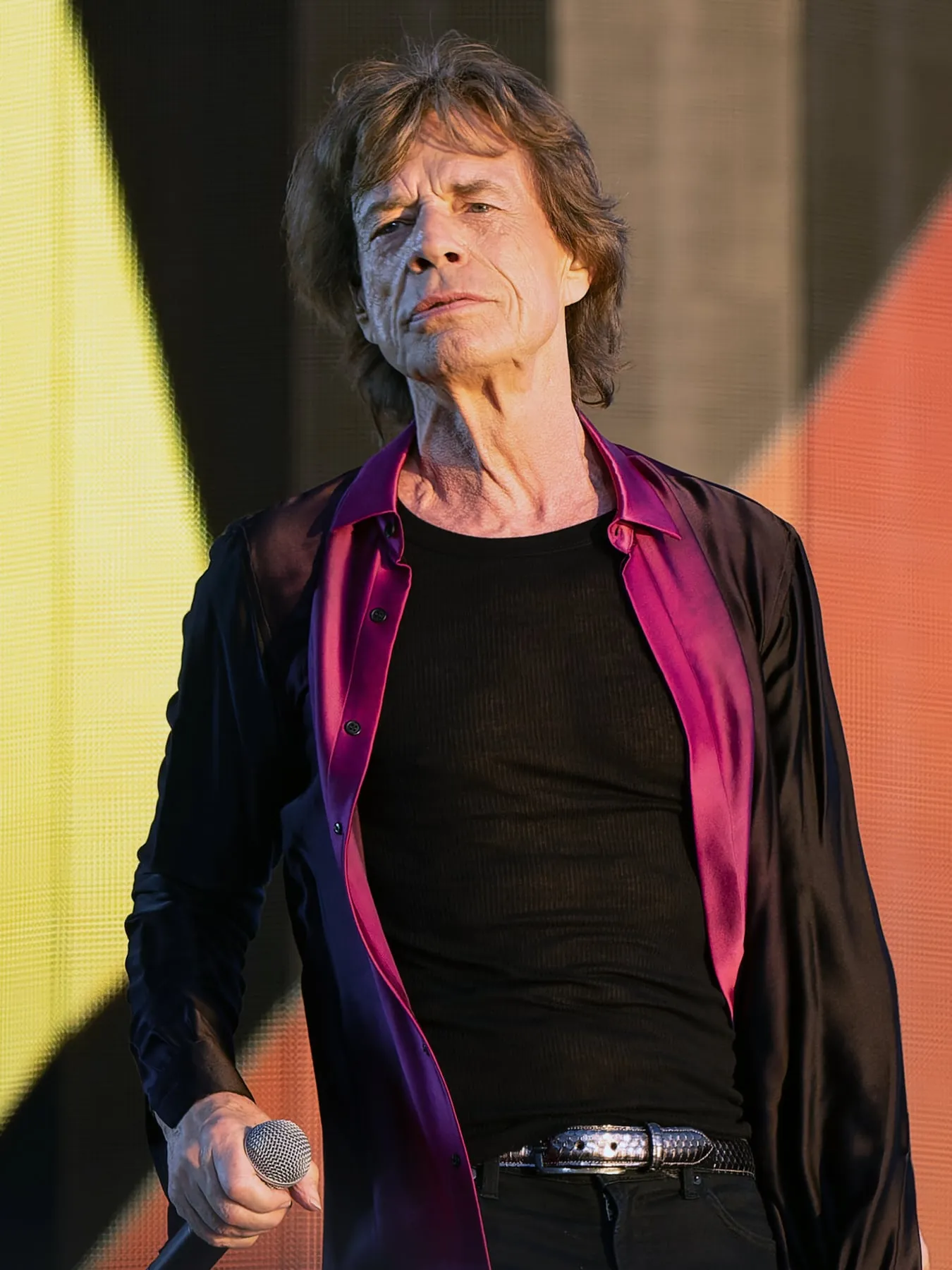
Photo by Raph_PH , licensed under CC BY 2.0 · Wikimedia Commons
Rank #152
Mick Jagger
From Wikipedia
Sir Michael Philip Jagger is an English musician, songwriter, and film producer known as the lead singer and founder members of the Rolling Stones. Jagger has co-written most of the Stones' songs with lead guitarist Keith Richards; their songwriting partnership is one of the most successful in rock music history. His career has spanned more than six decades, and he has been widely described as one of the most popular and influential front men in the history of rock music. His distinctive voice and energetic live performances, along with Richards's guitar style, have been the Rolling Stones' trademark throughout the band's career. Early in his career, Jagger gained notoriety for his romantic involvements and illicit drug use, and has often been portrayed as a countercultural figure.
Discography & Previews
Browse through and click an album to open and play 30-second previews streamed from Apple Music.

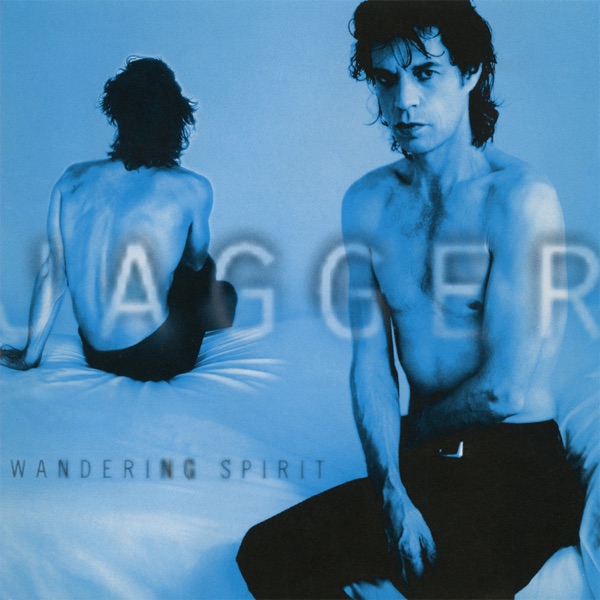
Wandering Spirit
1993 · 14 tracks
- 1 Wired All Night ↗ 4:05
- 2 Sweet Thing ↗ 4:20
- 3 Out of Focus ↗ 4:36
- 4 Don't Tear Me Up ↗ 4:13
- 5 Put Me in the Trash ↗ 3:35
- 6 Use Me ↗ 4:29
- 7 Evening Gown ↗ 3:36
- 8 Mother of a Man ↗ 4:18
- 9 Think ↗ 2:59
- 10 Wandering Spirit ↗ 4:19
- 11 Hang On to Me Tonight ↗ 4:37
- 12 I've Been Lonely for So Long ↗ 3:29
- 13 Angel in My Heart ↗ 3:28
- 14 Handsome Molly ↗ 2:06
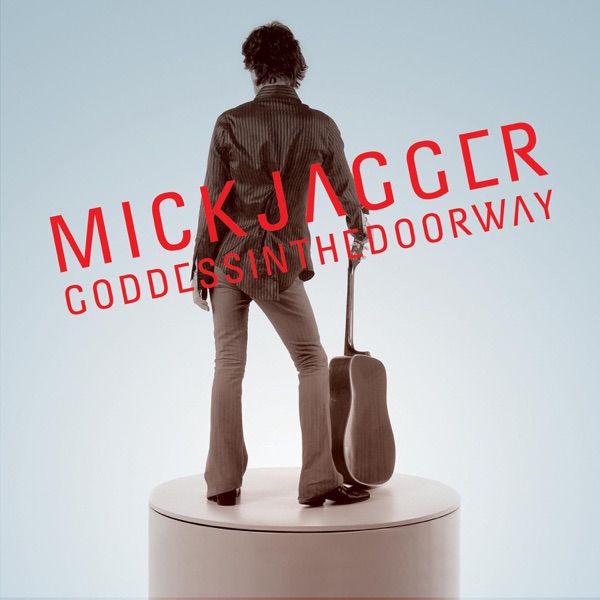
Goddess in the Doorway
2001 · 13 tracks
- 1 Visions Of Paradise ↗ 4:01
- 2 Joy ↗ 4:41
- 3 Dancing In The Starlight ↗ 4:06
- 4 God Gave Me Everything ↗ 3:34
- 5 Hide Away ↗ 4:34
- 6 Don't Call Me Up ↗ 5:14
- 7 Goddess In The Doorway ↗ 4:56
- 8 Lucky Day ↗ 4:51
- 9 Everybody Getting High ↗ 3:57
- 10 Gun ↗ 4:41
- 11 Too Far Gone ↗ 4:36
- 12 Brand New Set Of Rules ↗ 3:44
- 13 Goddess In The Doorway (Cocktail Version) ↗ 1:06
-
 She’s the BossMick Jagger19859 tracks
 -
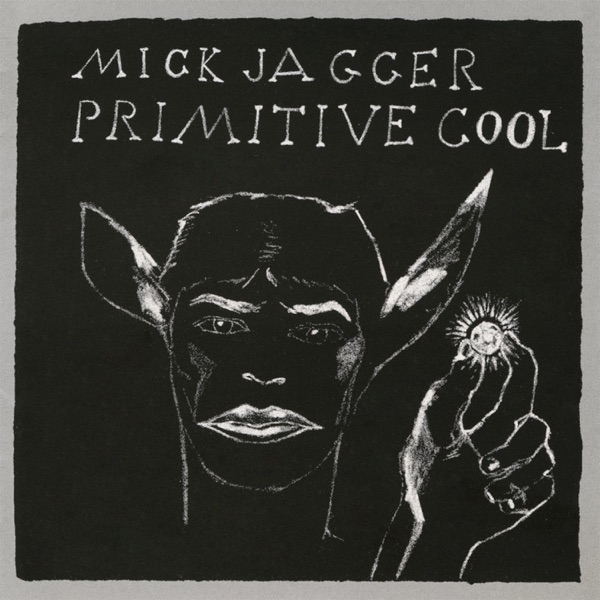
 Primitive CoolMick Jagger198710 tracks
 -
 Wandering SpiritMick Jagger199314 tracks
 -
 Goddess in the DoorwayMick Jagger200113 tracks
Deep Dive
Overview
Mick Jagger stands as one of rock music’s defining frontmen, a figure whose career has unfolded across more than six decades and reshaped the language of performance, charisma, and star power in popular music. As the founder and lead singer of the Rolling Stones, Jagger became the public face of a band that would rival the Beatles in longevity and cultural impact. Beyond his work with the Stones, Jagger has pursued a parallel solo recording career, exploring blues, rhythm and blues, and rock styles while maintaining his signature intensity and theatrical command of the stage.
Jagger’s importance in rock history rests on three pillars: his distinctive voice, his songwriting partnership with Keith Richards (one of the most prolific and successful in the genre’s history), and his revolutionary approach to frontman presence—energetic, sexually charged, and rebellious in ways that shook post-war British society. His early notoriety for romantic entanglements and drug use cemented his image as a countercultural avatar, a role that proved inseparable from the Stones’ appeal and from rock music’s gradual legitimation as an art form worthy of serious attention.
Formation Story
Michael Philip Jagger was born in 1943 into a Britain still rebuilding after World War II, coming of age during a cultural moment when American rhythm and blues and blues records were seeping into British popular consciousness. London in the late 1950s and early 1960s provided the crucible: a city where American records circulated among musicians and fans hungry for something beyond the domestic pop establishment. Jagger’s own path to rock was rooted in deep engagement with blues—Chuck Berry, Muddy Waters, Robert Johnson—styles that would become the Stones’ foundation.
He encountered Keith Richards, a fellow music student, and the partnership that ensued proved transformative not only for Jagger but for rock music itself. Together with bassist Bill Wyman, drummer Charlie Watts, and other early members, Jagger and Richards shaped the Rolling Stones from London blues enthusiasts into a world-altering band. His role was never merely vocal; from the outset, Jagger was a co-creator of the Stones’ sound, lyrics, and attitude, working hand-in-hand with Richards on the songs that would define their era.
Breakthrough Moment
The Rolling Stones’ early singles in the early 1960s—covers of American blues standards—introduced Jagger’s voice and presence to the British public, but it was the band’s original songwriting, developed in partnership with Richards, that transformed them from a covers act to a major creative force. By the mid-1960s, albums such as The Rolling Stones (1964) and Out of Our Heads (1965) established the Jagger-Richards songwriting team as architects of a new strain of blues-based rock that combined American influences with British sensibility.
The breakthrough fully crystallized with the album Aftermath (1966), which featured exclusively Jagger-Richards originals and showcased a band in complete creative command. Jagger’s vocals—ranging from smooth to snarling depending on the song’s demands—and his stage presence became industry hallmarks. His notoriety, amplified by legal troubles and media coverage, only intensified the band’s cultural power and audience reach during the late 1960s.
Peak Era
The period from the late 1960s through the 1970s marked the Stones’ commercial and creative zenith, a time when Jagger’s frontmanship reached its fullest expression. Albums such as Beggars Banquet (1968), Let It Bleed (1969), Sticky Fingers (1971), and Exile on Main St. (1972) established a catalog that would anchor rock music’s canon. Jagger’s voice evolved across these records—deepening, gaining nuance, adapting to blues, country, and rock textures—while his live performances became legendary for their athleticism and command.
During this same span, Jagger also launched his solo recording career, releasing Jamming With Edward! in 1972, a move that underscored his confidence in his own artistry separate from the band. The 1970s and 1980s saw him balance Stones commitments with solo ambitions, establishing himself not merely as a sideman to Richards but as a solo performer capable of leading his own records. His solo albums drew on the same blues and rhythm-and-blues wells that fed the Stones, yet offered Jagger freedom to experiment with different producers, musicians, and stylistic directions.
Musical Style
Jagger’s vocal signature emerged from deep study of American blues singers—a raspiness, a capacity for melisma and rhythmic variation, and an emotional transparency that could shift from desperation to swagger within a single line. His voice lacks the purity of a trained classical singer; instead, it carries the wear and character of lived experience, a quality that blues tradition prizes. Over decades, he refined an ability to color his delivery according to song and mood: sneering on “Sympathy for the Devil,” tender on ballads, brutally direct on protest or sexual material.
As a performer and songwriter, Jagger synthesized American blues, rhythm and blues, and rock and roll into a distinctly British idiom. His stage movement—loose-limbed, pelvic, sexually suggestive in ways that scandalized observers—changed what frontmen could be physically. The Stones’ sound has always been guitar-driven (Richards’s domain) and blues-rooted, but Jagger’s vocal phrasing, his sense of rhythm and space, his ability to deliver lyrics with conversational directness or operatic drama, elevated the band’s records from skillful covers into original artistic statements.
Major Albums
Jamming With Edward! (1972)
Jagger’s solo debut, recorded with producer Eddie Kramer, demonstrated his ability to carry a record on his own terms, blending blues, rock, and soul influences while maintaining the energy and swagger the Stones’ audience expected.
She’s the Boss (1985)
Released on Virgin Records, this album marked Jagger’s most prominent solo effort during an era when the Stones were less active, featuring contemporary production and a more polished approach than his earlier solo work.
Primitive Cool (1987)
A further exploration of contemporary rock and funk, Primitive Cool showed Jagger engaging with 1980s production styles while remaining grounded in blues and rhythm-and-blues sensibilities.
Wandering Spirit (1993)
This album consolidated Jagger’s solo identity, offering a mature reflection on the themes—desire, loss, mortality, and the toll of fame—that had animated his songwriting throughout his career.
Signature Songs
- “Sympathy for the Devil” — A theatrical masterpiece blending blues, rock, and Latin rhythms; Jagger’s vocal performance as the Devil remains one of rock’s most unforgettable characterizations.
- “Jumpin’ Jack Flash” — A blues-rooted rocker that became one of the Stones’ anthems, showcasing Jagger’s raw vocal power and swagger.
- “Brown Sugar” — An iconic riff-driven rock and roll statement with Jagger’s vocals cutting through Richards’s guitar in a perfect marriage of voice and music.
- “Angie” — A slower, more introspective number that revealed Jagger’s capacity for vulnerability and emotional depth.
- “Start Me Up” — A driving rock single that proved the Stones remained vital in the 1980s, with Jagger’s energy undiminished.
- “Midnight Rambler” — A slow blues showcase that allowed Jagger to inhabit the persona of a traditional blues storyteller.
Influence on Rock
Jagger’s influence on rock frontmanship cannot be overstated. Before him, frontmen were often relatively static—singers who stood at a microphone and delivered their material. Jagger transformed the role into one requiring physical presence, theatrical command, and a willingness to use the entire stage as an extension of the song’s emotional and narrative content. His combination of vocal distinctiveness, songwriting skill, and performance intensity became the template against which subsequent rock frontmen have been measured.
The Jagger-Richards songwriting partnership established that rock songwriting could be as serious and enduring as any other musical form. Their ability to draw from blues traditions while creating completely original material demonstrated that rock was not merely a commercial product but an art form capable of depth and longevity. Countless rock and roll songwriters who came after—from Bruce Springsteen to contemporary artists—have absorbed lessons from the Stones’ approach to rhythm, blues phrasing, and narrative construction, all of it mediated through Jagger’s voice and stage presence.
Legacy
With a career spanning more than six decades, Jagger remains active as a performer and recording artist, a fact that testifies to his enduring physical vitality and creative engagement. The Rolling Stones have continued recording and touring well into the 21st century, a longevity matched by few acts in popular music. Jagger’s solo discography, while less prominent than his Stones work, has maintained a consistent presence in his artistic portfolio, proving his ability to sustain interest outside the band’s context.
Jagger’s cultural impact extends beyond music; his role as a countercultural figure in the 1960s and 1970s, his romantic life, his legal troubles, and his evolution into a respectable elder statesman of rock all became part of rock music’s broader narrative. Contemporary streaming platforms and digital reissues have ensured that his catalog—both with the Stones and as a solo artist—remains accessible to new generations. His induction into the Rock and Roll Hall of Fame (as a member of the Rolling Stones) and his knighthood recognize his contributions to music and British culture, cementing his place as one of rock’s most significant figures.
Fun Facts
- Jagger’s first solo album, Jamming With Edward! (1972), came out during a period when the Stones themselves were largely inactive, allowing him to explore musical directions independently while maintaining his connection to recording and performance.
- His collaboration history includes work with an array of producers and musicians from different genres, reflecting a curiosity about musical styles beyond the Stones’ blues-rock foundation.
- Jagger studied briefly at the London School of Economics before committing fully to music, a detail that underscores the intellectual foundations beneath his artistic choices.
- His live performances are legendary not only for their energy but for their consistency across decades; reviewers have regularly noted his physical stamina and command of the stage well into his later years.