
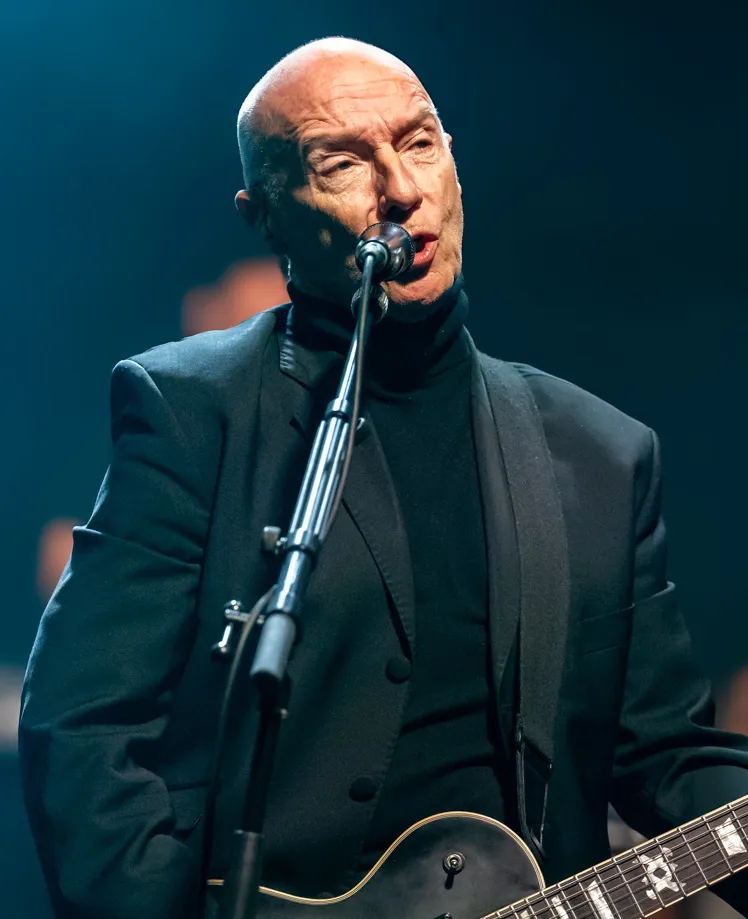
Photo by Stefan Brending ( 2eight ) , licensed under CC BY-SA 3.0 de · Wikimedia Commons
Rank #358
Midge Ure
From Wikipedia
James "Midge" Ure is a Scottish singer-songwriter and record producer. His stage name, Midge, is a phonetic reversal of Jim. Ure enjoyed particular success in the 1970s and 1980s in bands including Slik, Thin Lizzy, Rich Kids, Visage, and as the second bandleader of Ultravox after John Foxx had left, carrying the band into high chart positions for the six following years before disbanding it. In 1984, he co-wrote and produced the charity single "Do They Know It's Christmas?" for the supergroup Band Aid, which he organised with Bob Geldof. He acts as a trustee for the charity. The single sold 3.7 million copies in the UK at first release, has become a staple of Christmas songs compilations ever since, and is the second-highest-selling single in UK chart history. He also organised the events Live Aid and Live 8 with Geldof, and serves as an ambassador for Save the Children.
Discography & Previews
Browse through and click an album to open and play 30-second previews streamed from Apple Music.

The Gift
1985 · 26 tracks
- 1 If I Was (2010 Remaster) ↗ 5:21
- 1 No Regrets (2010 Remaster) ↗ 4:03
- 2 When the Winds Blow (2010 Remaster) ↗ 4:08
- 2 Mood Music (2010 Remaster) ↗ 3:30
- 3 Living the Past (2010 Remaster) ↗ 4:36
- 3 If I Was (Extended Mix) ↗ 6:42
- 4 That Certain Smile (2010 Remaster) ↗ 4:08
- 4 Piano (2010 Remaster) ↗ 2:27
- 5 The Gift (2010 Remaster) ↗ 5:00
- 5 The Man Who Sold the World (2010 Remaster) ↗ 5:44
- 6 Antilles (2010 Remaster) ↗ 4:09
- 6 That Certain Smile (Extended Mix) ↗ 6:36
- 7 Wastelands (2010 Remaster) ↗ 4:41
- 7 The Gift (Instrumental) ↗ 5:09
- 8 Edo (2010 Remaster) ↗ 3:24
- 8 Fade to Grey (Rehearsal Version, 1985) ↗ 4:47
- 9 The Chieftain (2010 Remaster) ↗ 4:46
- 9 Wastelands (Extended Mix) ↗ 6:13
- 10 She Cried (2010 Remaster) ↗ 4:13
- 10 When the Winds Blow (Live) ↗ 4:00
- 11 The Gift (Reprise) [2010 Remaster] ↗ 1:45
- 11 After a Fashion (Live) ↗ 4:37
- 12 The Chieftain / The Dancer (Live at Wembley Arena,1985.) ↗ 5:51
- 13 Call of the Wild (Extended Mix) ↗ 8:03
- 14 That Certain Smile (Live) ↗ 4:01
- 15 The Gift (Live) ↗ 5:09


Pure
1991 · 11 tracks
Move Me
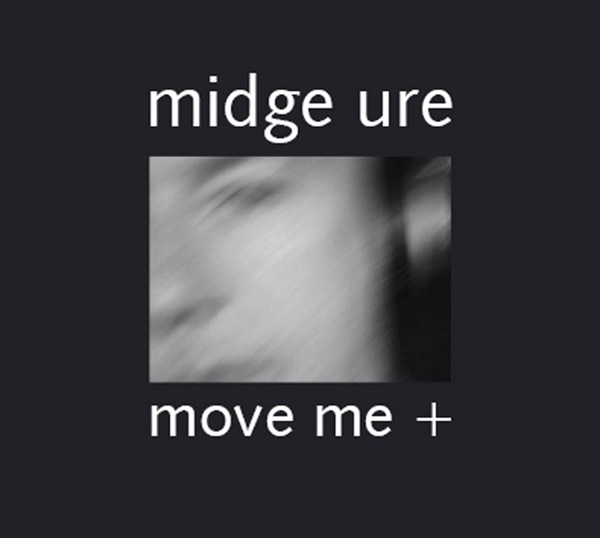
2000 · 16 tracks
- 1 You Move Me ↗ 5:38
- 2 Beneath a Spielberg Sky ↗ 4:54
- 3 Words ↗ 3:44
- 4 Strong ↗ 4:46
- 5 Let Me Go ↗ 4:54
- 6 Alone ↗ 5:12
- 7 Monster ↗ 3:04
- 8 Absolution Sometime! ↗ 4:59
- 9 The Refugee Song ↗ 5:19
- 10 Four ↗ 4:47
- 11 Somebody ↗ 5:52
- 12 Higher (Bonus Track) ↗ 3:58
- 13 Fall (Previously Un-released) ↗ 3:40
- 14 Alone (New Radio Edit 2006) ↗ 3:59
- 15 Beneath a Spielberg Sky (2006 Radio Edit) ↗ 4:00
- 16 You Move Me (Un-released Radio Edit 2000) ↗ 4:07
10
2008 · 13 tracks
- 1 Alfie ↗ 2:33
- 2 Man of the World ↗ 3:02
- 3 Goodbye to Love ↗ 5:28
- 4 Day After Day ↗ 3:16
- 5 Let the Heartaches Begin ↗ 4:07
- 6 My Minds Eye ↗ 2:31
- 7 Song for While I'm Away ↗ 5:42
- 8 Nevermore ↗ 2:54
- 9 To Sir With Love ↗ 4:08
- 10 Lady Stardust ↗ 3:57
- 11 Man Who Sold the World ↗ 2:41
- 12 Little Girl In Bloom ↗ 3:54
- 13 Song for While I'm Away ↗ 5:10


Orchestrated
2017 · 12 tracks
- 1 Hymn (Orchestrated) ↗ 6:57
- 2 Dancing with Tears in My Eyes (Orchestrated) ↗ 5:04
- 3 Breathe (Orchestrated) ↗ 4:47
- 4 Man of Two Worlds (Orchestrated) ↗ 4:47
- 5 If I Was (Orchestrated) ↗ 5:15
- 6 Vienna (Orchestrated) ↗ 5:08
- 7 The Voice (Orchestrated) ↗ 5:18
- 8 Ordinary Man (Orchestrated) ↗ 4:38
- 9 Death in the Afternoon (Orchestrated) ↗ 7:01
- 10 Lament (Orchestrated) ↗ 4:30
- 11 Reap the Wild Wind (Orchestrated) ↗ 4:01
- 12 Fragile (Orchestrated) ↗ 6:20
-
 The GiftMidge Ure198526 tracks
 -
 Answers to NothingMidge Ure19883 tracks
 -
 PureMidge Ure199111 tracks
 -
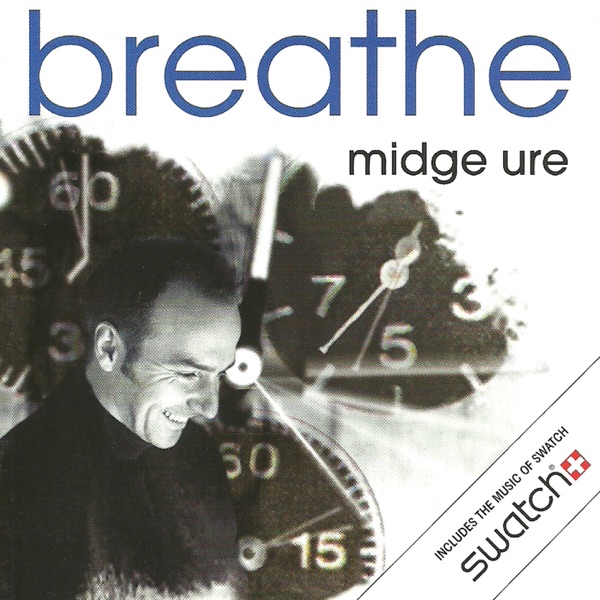
 BreatheMidge Ure199611 tracks
 -
 Move MeMidge Ure200016 tracks
 -
 10Midge Ure200813 tracks
 -
 FragileMidge Ure201410 tracks
 -
 OrchestratedMidge Ure201712 tracks
Deep Dive
Overview
Midge Ure is a Scottish singer-songwriter and record producer whose influence on rock music extends across both his solo catalog and his pivotal role in some of the most commercially and culturally significant bands of the 1970s and 1980s. Born James Ure in 1953, he adopted his stage name as a phonetic reversal of his first name—a decision that would come to represent one of rock’s most distinctive career arcs, spanning from glam-adjacent beginnings through new wave leadership and into his enduring solo work. While his studio recordings as a solo artist represent a substantial body of work, Ure’s widest cultural impact came not only through the electric, synth-driven heights of Ultravox but also through his role as co-organizer—alongside Bob Geldof—of the charity juggernaut Band Aid and the landmark benefit concerts Live Aid and Live 8.
Formation Story
Ure grew up in Scotland during the 1960s as rock music shifted from its blues and R&B roots into prog, glam, and eventually punk and new wave. His early professional career in the 1970s took him through several notable bands that showcased his range as a bandleader, vocalist, and instrumentalist. He played in Slik, a group that tested commercial waters, and later joined Thin Lizzy, the Irish hard-rock outfit fronted by Phil Lynott. In the mid-1970s, Ure gravitated toward the Rich Kids, a proto-punk project that reflected the era’s experimental energy, and then to Visage, a theatrically inclined new-wave group. These stints positioned him squarely in the new-wave ecosystem and honed his understanding of both rock tradition and forward-looking production.
Breakthrough Moment
Ure’s decisive breakthrough came when he joined Ultravox in 1978, taking over as the band’s second frontman and lead songwriter after John Foxx’s departure. Foxx had laid the foundations for Ultravox’s distinctive synth-rock sound, but it was Ure who carried the band into sustained commercial success. Under his leadership, Ultravox achieved high chart positions throughout the early 1980s, establishing themselves as one of the decade’s defining new-wave acts. This period raised his profile substantially, but in 1984, his cultural reach expanded dramatically when he co-wrote and produced “Do They Know It’s Christmas?” alongside Bob Geldof for the supergroup Band Aid. The single became a phenomenon, selling 3.7 million copies in the UK at first release and securing its place as the second-highest-selling single in UK chart history. The success of Band Aid led directly to the organization of Live Aid in 1985, a benefit concert that defined the decade and cemented Ure’s reputation beyond music into the realm of humanitarian action.
Peak Era
Ure’s creative and commercial zenith as a solo artist arrived with his debut album The Gift, released in 1985 immediately following the cultural storm of Band Aid and Live Aid. The album represented his most immediate and focused statement as a solo artist, building on the synth-rock language he had developed with Ultravox and infusing it with the production sophistication and chart awareness honed by the charity project. Answers to Nothing followed in 1988, continuing his exploration of synthesizer-driven pop-rock. While these releases did not achieve the chart saturation of his Ultravox era, they solidified his standing as a serious solo artist capable of sustaining an independent career. His work in this period balanced accessibility with the technical and compositional ambitions characteristic of 1980s art-pop.
Musical Style
Ure’s approach to rock music centers on the synthesis of technological innovation and emotional directness. His voice—distinctive and often quite high in register—sits naturally within the new-wave idiom, capable of both dramatic projection and intimate vulnerability. As an instrumentalist and arranger, he showed early fluency with both traditional rock instruments and the synthesizers that defined 1980s production. His songwriting philosophy favors melodic clarity and accessible song structures, but deployed within production frameworks that emphasize texture, layering, and electronic timbre. The influence of new wave, electronic pop, and new romantic aesthetics runs throughout his career; he draws equally from the art-school conceptualism of early-1970s progressive rock and the three-minute concision of punk and post-punk. Whether in Ultravox’s dramatic synth-scapes or his solo work, Ure’s music rarely abandons rock’s fundamental emphasis on hooks and human performance beneath the technological overlay.
Major Albums
The Gift (1985)
Ure’s debut solo statement, arriving at the peak of his cultural visibility following Band Aid and Live Aid, showcasing synth-rock sophistication and chart-conscious songwriting.
Answers to Nothing (1988)
Continuing his exploration of synthesizer-driven pop-rock production, demonstrating sustained creative focus in the years immediately following his breakthrough.
Pure (1991)
A later addition to his catalog that further developed his solo artistic identity beyond the synth-pop framework of the 1980s.
Breathe (1996)
Reflecting the mid-1990s shift away from synth-heavy production toward more organic arrangements while maintaining his core sensibility.
Move Me (2000)
Marketing a renewed creative engagement as Ure entered the 21st century, balancing retrospection with forward momentum.
Signature Songs
- “Do They Know It’s Christmas?” — The charity single he co-wrote with Bob Geldof that became the second-highest-selling single in UK chart history and redefined benefit music.
- “Vienna” — While an Ultravox composition, this became his most iconic song and remains a staple of 1980s new-wave playlists.
- “Fade to Grey” — Another Ultravox standout that showcased his ability to write melancholic, synth-driven pop with dramatic emotional weight.
- “Love’s Great Adventure” — A solo-era track exemplifying his gift for crafting accessible yet sophisticated electronic pop.
Influence on Rock
Ure’s influence on rock music operates on multiple registers. As frontman of Ultravox, he demonstrated how new-wave and electronic production could achieve genuine commercial scale without sacrificing musical ambition or artistic credibility. His work in the band influenced countless synth-rock acts and new-wave followers throughout the 1980s and beyond. Beyond strictly musical impact, his collaboration with Bob Geldof on Band Aid, Live Aid, and Live 8 fundamentally altered how the rock music industry understood its capacity for social and humanitarian action. He showed that rock musicians and the apparatus of rock production could mobilize around causes of global consequence—a precedent that reverberated through subsequent benefit concerts and charity initiatives. His production work, reflected in both his solo records and his role in shaping Ultravox’s sound, contributed to the sophistication of 1980s rock production, demonstrating how synthesizers and studio technology could enhance rather than replace rock’s emotional core.
Legacy
Midge Ure remains active as a musician and producer, with later albums including 10 (2008), Fragile (2014), and Orchestrated (2017), demonstrating sustained creative engagement across three decades of solo work. His role as a trustee for the Band Aid charity reflects the long-term commitment to humanitarian causes that began in 1984. While his solo catalog has not achieved the enduring chart presence of his Ultravox years, it represents a substantial and coherent body of work that has earned respect from critics and listeners invested in synth-rock and new-wave traditions. Ultravox’s legacy—both in its original run and its subsequent revivals—has undergone significant critical re-evaluation, with Ure’s contributions to new-wave songwriting and production receiving increasing recognition. His bridging of 1970s rock tradition with 1980s electronic innovation positions him as a key transitional figure in rock history, while his humanitarian work established him as one of rock music’s most consequential voices for social engagement.
Fun Facts
- Ure’s stage name is a phonetic reversal of his birth name, Jim—a deliberate wordplay that has remained consistent throughout his five-decade career.
- His 1985 album The Gift was released in the immediate aftermath of Band Aid’s massive success, positioning him as both a commercial and charitable force at the height of his cultural relevance.
- Ure has served as an ambassador for Save the Children, extending his humanitarian work beyond the original Band Aid initiative into sustained advocacy.
- Throughout the 1990s and 2000s, Ure maintained a steady release schedule of solo albums while also engaging in Ultravox-related reunion activities, demonstrating his ability to balance multiple projects across decades.