

Photo by livepict.com , licensed under CC BY-SA 3.0 · Wikimedia Commons
Rank #404
Milton Nascimento
From Wikipedia
Milton Silva Campos do Nascimento, also known as Bituca, is a Brazilian singer-songwriter and multi-instrumentalist.
Discography & Previews
Browse through and click an album to open and play 30-second previews streamed from Apple Music.


Milton
1970 · 13 tracks
- 1 Para Lennon e McCartney ↗ 2:17
- 2 Amigo, Amiga ↗ 4:31
- 3 Maria Tres Filhos ↗ 1:36
- 4 Clube da Esquina N°1 ↗ 2:48
- 5 Canto Latino ↗ 4:31
- 6 Durango Kid ↗ 2:41
- 7 Pai Grande ↗ 5:03
- 8 Alunar ↗ 3:21
- 9 A Felicidade ↗ 2:44
- 10 Tema de Tostao ↗ 2:57
- 11 O Homem da Sucursal ↗ 2:32
- 12 Aqui e o Pais do Futebol ↗ 2:50
- 13 O Jogo ↗ 2:18

Clube da Esquina
1972 · 15 tracks
- 1 Tudo o Que Você Podia Ser ↗ 2:56
- 2 Cais (Ao Vivo) ↗ 2:45
- 3 O Trem Azul ↗ 4:05
- 4 Saídas e Bandeiras Nº 1 ↗ 0:45
- 5 Nuvem Cigana ↗ 3:00
- 6 Cravo e Canela (feat. Lô Borges) ↗ 2:32
- 7 Dos Cruces ↗ 5:22
- 8 Um Girassol da Cor do Seu Cabelo ↗ 4:13
- 9 San Vicente ↗ 2:47
- 10 Estrela ↗ 0:29
- 11 Clube da Esquina Nº 2 ↗ 3:39
- 12 Paisagem da Janela ↗ 2:58
- 13 Me Deixa em Paz (feat. Milton Nascimento) ↗ 3:06
- 14 Os Povos ↗ 4:31
- 15 Saídas e Bandeiras Nº 2 ↗ 1:31

Minas
1975 · 13 tracks
- 1 Minas ↗ 2:32
- 2 Fé Cega, Faca Amolada ↗ 4:38
- 3 Beijo Partido ↗ 3:50
- 4 Saudade Dos Aviões da Panair (Conversando No Bar) ↗ 4:29
- 5 Gran Circo ↗ 4:11
- 6 Ponta de Areia ↗ 4:33
- 7 Trastevere ↗ 4:26
- 8 Idolatrada ↗ 4:46
- 9 Leila (Venha Ser Feliz) ↗ 3:30
- 10 Paula e Bebeto ↗ 2:16
- 11 Simples ↗ 2:13
- 12 Norwegian Wood (This Bird Has Flown) ↗ 6:54
- 13 Caso Você Queria Saber ↗ 3:26

Milton
1976 · 9 tracks
- 1 Raça (Hasa) [Race] ↗ 3:36
- 2 Fairy Tale Song (Cade) ↗ 4:12
- 3 Francisco ↗ 4:28
- 4 Nothing Will Be As It Was (Nada Será Como Antes) ↗ 3:54
- 5 Cravo E Canela (Clove and Cinnamon) ↗ 3:44
- 6 The Call (Chamada) ↗ 5:49
- 7 One Coin (Tostão) ↗ 4:31
- 8 Saídas E Bandeiras (Exits and Flags) ↗ 4:46
- 9 Os Povos (The People) ↗ 8:06


Txai
1990 · 15 tracks
- 1 Overture ↗ 1:16
- 2 Txai ↗ 4:04
- 3 Bau Metoro ↗ 0:35
- 4 Coisas Da Vida (Thats Life) ↗ 4:59
- 5 Hoeipereiga ↗ 0:40
- 6 Estorias Da Floresta (Stories of the Forest) ↗ 1:33
- 7 Yanomami e Nos (Pacto de Vida) [Yanomami and US - Pact of Life] ↗ 4:11
- 8 Awasi ↗ 0:46
- 9 A Tercelra Margem Do Rio (The Third Edge of the River) ↗ 3:48
- 10 Benke ↗ 3:43
- 11 Sertoão Das Ãguas ↗ 2:27
- 12 Que Vira Dessa Escuridao? (What Will Come Out of This Darkness?) ↗ 2:21
- 13 Curi Curi ↗ 1:16
- 14 Nozani Na ↗ 2:19
- 15 BaridJumoko ↗ 1:57

Angelus
1993 · 15 tracks
- 1 Seis Horas da Tarde ↗ 4:13
- 2 Estrelada ↗ 5:01
- 3 De Um Modo Geral... ↗ 5:37
- 4 Angelus ↗ 2:35
- 5 Coisas de Minas ↗ 5:27
- 6 Hello Goodbye ↗ 4:30
- 7 Sófro Calado ↗ 1:11
- 8 Clube da Esquina No 2 ↗ 5:51
- 9 Meu Veneno ↗ 3:45
- 10 Only a Dream In Rio ↗ 6:11
- 11 Qualquer Coisa a Haver Com o Paraisó ↗ 6:59
- 12 Vera Cruz ↗ 6:34
- 13 Novena ↗ 5:03
- 14 Amor Amigo ↗ 4:19
- 15 Sófro Caldo ↗ 2:25

Amigo
1994 · 13 tracks
- 1 Que Bom Amigo (It's Só Good, My Friend) ↗ 4:24
- 2 Canção da America (Unencounter) ↗ 4:36
- 3 Eu Sei Que Vo Te Amar (I Know I'll Love You) ↗ 3:25
- 4 Coração de Estudante (A Student's Heart) ↗ 7:44
- 5 Estrelada (Starry) ↗ 6:36
- 6 Veja Esta Canção (See This Sóng) ↗ 5:59
- 7 Simples (Simple) ↗ 4:18
- 8 Vera Cruz ↗ 5:20
- 9 O Cio da Terra (The Earth In Heat) ↗ 5:03
- 10 Paula e Bebeto (Paula and Beto) ↗ 5:02
- 11 Bola de Meia, Bola de Gude (Stickball and Marbles) ↗ 6:24
- 12 Panis Angelicus (The Bread of Angels) ↗ 6:29
- 13 Milagre Dos Peixes, Suite (Miracles of the Fishes, Suite) ↗ 5:19

Nascimento
1997 · 12 tracks
- 1 Louva-A-Deus (The Praying Mantis) ↗ 3:07
- 2 O Cavaleiro (The Rider) ↗ 3:42
- 3 Guardanapós de Papel (Paper Napkins) ↗ 5:25
- 4 Cuerpo y Alma (Body and Sóul) ↗ 3:59
- 5 Rouxinol (The Nightingale) ↗ 3:15
- 6 Janela Para o Mundo (Window to the World) ↗ 4:05
- 7 E Agôra, Rapaz? (And What Now, Man?) ↗ 4:37
- 8 Levantados do Chão (Ground Raised) ↗ 3:16
- 9 Ana Maria ↗ 5:09
- 10 Ol' Man River ↗ 3:33
- 11 Os Tambores de Minas (Minas Drums) ↗ 3:38
- 12 Biromes y Servilletas Papel (Paper Napkins) ↗ 5:24

Crooner
1999 · 17 tracks
- 1 Aqueles Olhos Verdes (Aquellos Ojos Verdes) ↗ 3:23
- 2 Certas Coisas ↗ 4:22
- 3 Only You ↗ 3:44
- 4 Mas Que Nada ↗ 4:33
- 5 Frenesi ↗ 3:01
- 6 Não Sei Dançar ↗ 4:08
- 7 Respósta ↗ 4:28
- 8 Beat It ↗ 3:23
- 9 Se Alguém Telefonar ↗ 3:16
- 10 Rosa Maria ↗ 4:56
- 11 Castigo ↗ 4:01
- 12 Ooh Child ↗ 3:47
- 13 Lágrimã Flor ↗ 3:24
- 14 Barulho de Trem ↗ 3:14
- 15 Lamento No Morro ↗ 4:04
- 16 Killing Me Sóftty (Faixa Bônus) ↗ 5:01
- 17 Pout-Pourri: O Gato da Madame / Edmundo (In the Mood) / Cumanã (Cumana) [Faixa Bônus] ↗ 3:07

Gil & Milton
2000 · 15 tracks
- 1 Sebastian ↗ 5:02
- 2 Duas sanfonas (feat. Sandy & Junior) ↗ 5:02
- 3 Ponta de areia (Vinheta) ↗ 0:46
- 4 Bom dia ↗ 4:14
- 5 Trovoada ↗ 4:33
- 6 Something ↗ 3:30
- 7 Maria ↗ 4:47
- 8 Lar hospitalar ↗ 4:31
- 9 Yo vengo a ofrecer mi corazon ↗ 4:38
- 10 Dora ↗ 4:32
- 11 Xica da Silva ↗ 4:22
- 12 Canção do sal ↗ 3:39
- 13 Dinamarca ↗ 2:45
- 14 Palco (Vinheta) ↗ 0:43
- 15 Baião da garoa ↗ 3:19

Pietá
2002 · 16 tracks
- 1 A Feminina Voz Do Cantor ↗ 6:18
- 2 Casa Aberta (feat. Marina Machado) ↗ 5:15
- 3 Beleza e Canção (feat. Simone Guimaraes) ↗ 5:32
- 4 Tristesse (feat. Maria Rita) ↗ 6:02
- 5 Quem Sabe Isso Quer Dizer Amor ↗ 4:00
- 6 Imagem e Semelhanca (feat. Marina Machado) ↗ 3:57
- 7 A Lágrima e o Rio ↗ 3:55
- 8 Voa Bicho (feat. Maria Rita) ↗ 3:59
- 9 Outro Lugar ↗ 4:51
- 10 As Vezes Deus Exagera ↗ 3:36
- 11 Cantaloupe Island ↗ 4:45
- 12 Pieta ↗ 4:12
- 13 Beira-Mar Novo (feat. Ponto de Partida & Meninos De Araçuaí) ↗ 2:47
- 14 Os Meninos de Aracuai ↗ 4:18
- 15 Boa Noite (feat. Simone Guimaraes) ↗ 3:49
- 16 Vozes o Vento (feat. Simone Guimaraes, Marina Machado & Maria Rita) ↗ 4:53

Novas bossas
2008 · 14 tracks
- 1 Tudo Que Você Podia Ser ↗ 3:46
- 2 Dias Azuis ↗ 4:09
- 3 Cais ↗ 3:30
- 4 O Vento ↗ 3:51
- 5 Tarde ↗ 4:40
- 6 Brigas Nunca Mais ↗ 2:06
- 7 Caminhos Cruzados ↗ 4:56
- 8 Inútil Paisagem ↗ 3:35
- 9 Chega de Saudade ↗ 3:32
- 10 Medo de Amar ↗ 3:52
- 11 Velho Riacho ↗ 2:43
- 12 Esperança Perdida ↗ 6:07
- 13 Trem de Férro ↗ 4:01
- 14 Samba do Avião ↗ 4:01

...E a gente sonhando
2010 · 16 tracks
- 1 ...E a Gente Sonhando ↗ 3:25
- 2 Flor da Ingazeira ↗ 3:24
- 3 O Ateneu ↗ 3:59
- 4 Do Samba, do Jazz, do Menino, do Bueiro ↗ 3:28
- 5 Estrela, Estrela ↗ 4:06
- 6 Raras Maneiras ↗ 3:55
- 7 O Sol ↗ 4:05
- 8 Espelho de Nós ↗ 3:20
- 9 Me Faz Bem ↗ 4:30
- 10 Resposta ao Tempo ↗ 4:57
- 11 Amor do Céu, Amor do Mar ↗ 5:49
- 12 Gotas de Primavera ↗ 4:43
- 13 Adivinha o Que ↗ 3:38
- 14 Sorriso ↗ 4:15
- 15 Olhos do Mundo ↗ 2:48
- 16 Eu Pescador ↗ 4:29

Milton + Esperanza
2024 · 16 tracks
- 1 the music was there ↗ 0:58
- 2 Cais ↗ 3:41
- 3 Late September ↗ 1:26
- 4 Outubro ↗ 5:18
- 5 A Day in the Life ↗ 4:37
- 6 Interlude for Saci ↗ 1:41
- 7 Saci (feat. Guinga) ↗ 3:30
- 8 Wings for the Thought Bird (feat. Elena Pinderhughes & Orquestra Ouro Preto) ↗ 3:07
- 9 The Way You Are ↗ 0:44
- 10 Earth Song (feat. Dianne Reeves) ↗ 6:43
- 11 Morro Velho (feat. Orquestra Ouro Preto) ↗ 5:15
- 12 Saudade dos Aviões da Panair (Conversando no Bar) [feat. Lianne La Havas, Maria Gadú, Tim Bernardes & Lula Galvão] ↗ 5:25
- 13 Um Vento Passou (para Paul Simon) [feat. Paul Simon] ↗ 4:37
- 14 Get It By Now ↗ 2:24
- 15 outro planeta ↗ 2:06
- 16 When You Dream (feat. Carolina Shorter) ↗ 9:27
-
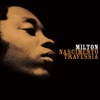 TravessiaMilton Nascimento196710 tracks
 -
 CourageMilton Nascimento196810 tracks
 -
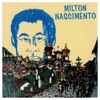 Milton NascimentoMilton Nascimento196910 tracks
 - Milton NascimentoMilton Nascimento196910 tracks
-
 MiltonMilton Nascimento197013 tracks
 -
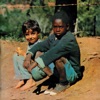 Clube da EsquinaMilton Nascimento197215 tracks
 -
 MinasMilton Nascimento197513 tracks
 -
 MiltonMilton Nascimento19769 tracks
 -
 YauaretêMilton Nascimento19877 tracks
 -
 MiltonsMilton Nascimento19889 tracks
 -
 TxaiMilton Nascimento199015 tracks
 -
 AngelusMilton Nascimento199315 tracks
 -
 AmigoMilton Nascimento199413 tracks
 -
 NascimentoMilton Nascimento199712 tracks
 -
 CroonerMilton Nascimento199917 tracks
 -
 Gil & MiltonMilton Nascimento200015 tracks
 -
 PietáMilton Nascimento200216 tracks
 -
 Novas bossasMilton Nascimento200814 tracks
 -
 ...E a gente sonhandoMilton Nascimento201016 tracks
 -
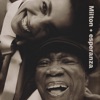 Milton + EsperanzaMilton Nascimento202416 tracks
Deep Dive
Overview
Milton Silva Campos do Nascimento, known by his childhood nickname Bituca, stands as one of the most influential Brazilian singer-songwriters and multi-instrumentalists of the post-war era. Working across música popular brasileira (MPB) and rock idioms, Nascimento carved a distinct artistic path that blended sophisticated harmonic sensibility, falsetto vocals of piercing beauty, and a restless commitment to collaboration. His career, which began in the late 1960s and extended across more than half a century, established him as a major figure in Brazilian music—a songwriter whose reach extended far beyond national borders to influence international rock and jazz scenes.
Formation Story
Milton Nascimento was born in Rio de Janeiro and grew up steeped in the musical traditions of Brazil. By the late 1950s, as bossa nova was taking shape and rock and roll was arriving from North America, Nascimento was developing his craft as a vocalist and instrumentalist in a rapidly changing musical landscape. He emerged as a working musician in the 1960s, writing and performing in Rio de Janeiro’s vibrant club scene. His early recordings and performances established him not merely as a singer but as a composer and arranger of serious intent, unafraid to merge indigenous Brazilian traditions, international influences, and his own distinctive harmonic vocabulary.
Breakthrough Moment
Nascimento’s professional arrival crystallized with Travessia in 1967, his debut album. The record introduced his falsetto voice and sophisticated compositional approach to a broader audience and established the aesthetic foundation for his later work. Throughout the late 1960s and into the early 1970s, he released a succession of albums that deepened his reputation: Courage (1968), his self-titled Milton Nascimento (1969), and Milton (1970). These records demonstrated that he was not a one-album artist but a serious creative force with an evolving vision, capable of crafting songs that moved seamlessly between introspection and infectious grooves.
Peak Era
The early-to-mid 1970s marked Nascimento’s most creatively fertile and commercially significant period. In 1972, he released Clube da Esquina (Club of the Corner), a landmark collaborative album that became synonymous with a whole movement in Brazilian music. The follow-up, Milagre dos peixes (1973), sustained that momentum. His masterpiece arrived in 1975 with Minas, an album that synthesized his gifts for melody, harmony, and lyrical introspection into a cohesive artistic statement. Also in 1975, he recorded Native Dancer, a groundbreaking cross-cultural collaboration that expanded his palette and introduced his work to North American and international jazz and rock audiences. The mid-to-late 1970s—encompassing Geraes (1976), Clube da Esquina 2 (1978), and Journey to Dawn (1979)—cemented his status as a major artist whose influence was reshaping Brazilian and international popular music.
Musical Style
Nascimento’s voice is his immediate signature: a soaring, ethereal falsetto capable of extraordinary emotional range, from whisper-soft vulnerability to piercing clarity. He is equally accomplished as a guitarist, pianist, and arranger, and his compositions typically feature rich harmonic progressions rooted in both Brazilian samba and bossa nova traditions but informed by jazz harmony and Western art-song sensibilities. His melodies are long-lined and eloquent; his rhythmic sense is sophisticated and subtle, never merely decorative. Across his work runs a thread of mystical or spiritual questioning—not explicitly religious, but contemplative and searching. Nascimento’s approach to arrangement emphasizes space and texture; his productions tend toward warmth rather than harshness, building complex emotional landscapes through careful layering of acoustic and electric instruments. His songwriting often incorporated poetry and literary allusion, placing him squarely within the canção tradition while his openness to rock, jazz, and world-music inflections kept his sound contemporary and globally minded.
Major Albums
Travessia (1967)
His debut introduced Nascimento’s falsetto voice and compositional sophistication to record-buying audiences, establishing the artistic template for everything that followed.
Clube da Esquina (1972)
A landmark collaborative album that became emblematic of a movement in Brazilian music, showcasing Nascimento’s ability to work within ensemble contexts while maintaining his distinctive artistic voice.
Minas (1975)
Wide-ranging and deeply introspective, Minas synthesized Nascimento’s melodic gifts, harmonic invention, and lyrical intelligence into his most fully realized work of the era.
Native Dancer (1975)
A boundary-crossing collaboration that brought Nascimento’s music to North American jazz and rock audiences while expanding his own musical horizons through international partnerships.
Encontros e despedidas (1985)
A late-period work that reunited Nascimento with collaborators and demonstrated his continued vitality and relevance three decades into his career.
Signature Songs
- **