
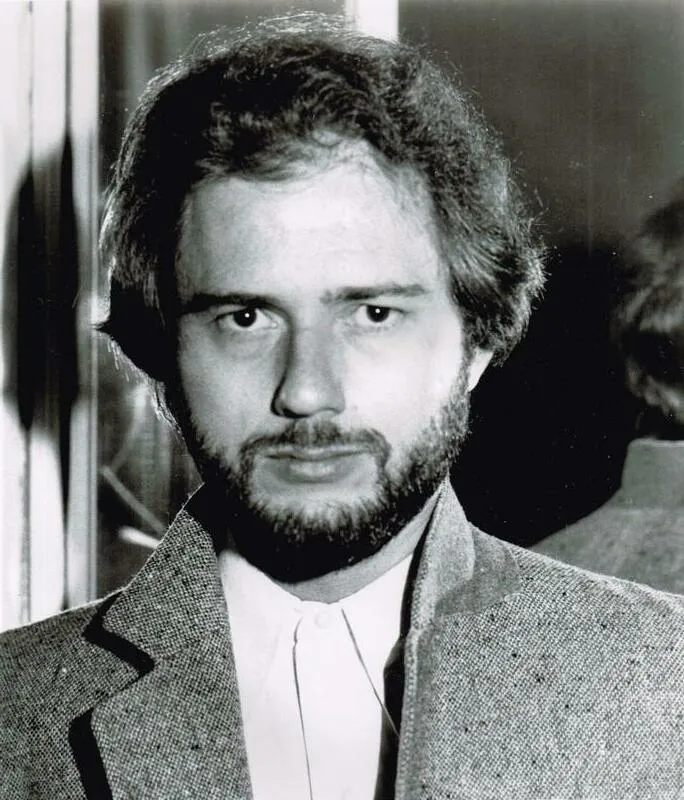
Photo by Infinity Records , licensed under Public domain · Wikimedia Commons
Rank #421
Rupert Holmes
From Wikipedia
Rupert Holmes is a British-born American composer, singer-songwriter, dramatist and author. He is widely known for the hit singles "Escape " (1979) and "Him" (1980). He is also known for his musicals The Mystery of Edwin Drood, which earned him two Tony Awards, and Curtains, his television series Remember WENN, and his novel Murder Your Employer: The McMasters Guide to Homicide.
Discography & Previews
Browse through and click an album to open and play 30-second previews streamed from Apple Music.
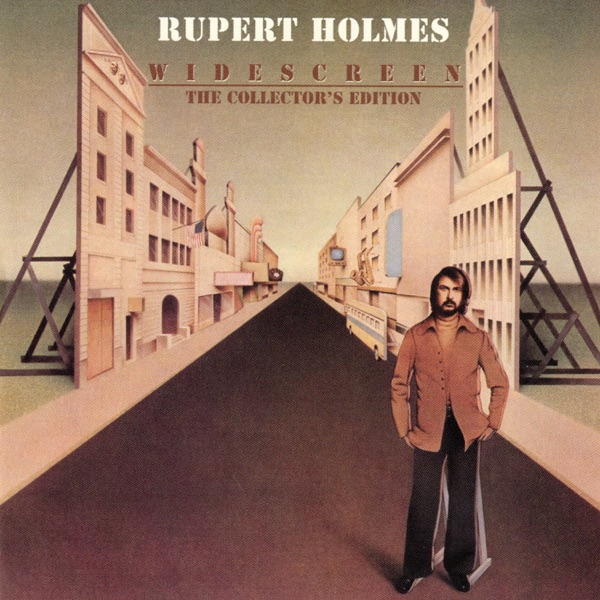
Widescreen
1974 · 21 tracks
- 1 Widescreen ↗ 3:59
- 2 Terminal ↗ 4:18
- 3 Second Saxophone ↗ 4:29
- 4 Phantom Of The Opera ↗ 3:02
- 5 Talk ↗ 3:15
- 6 Bagdad ↗ 4:32
- 7 Our National Pastime ↗ 2:57
- 8 Letters That Cross In The Mail ↗ 3:14
- 9 Soap Opera ↗ 4:16
- 10 Psycho Drama ↗ 9:52
- 11 Studio Musician ↗ 3:50
- 12 Brass Knuckles ↗ 4:33
- 13 No Small Affair (Version 1) ↗ 3:20
- 14 Remember Wenn ↗ 1:00
- 15 There You Are ↗ 2:36
- 16 So Far So Good (No Small Affair) ↗ 3:24
- 17 Theme From Accomplice ↗ 1:57
- 18 Hi Honey, I'm Home! ↗ 0:56
- 19 No Small Affair (Version 3) ↗ 2:55
- 20 By Myself ↗ 1:53
- 21 The Bitter End ↗ 1:44


Pursuit of Happiness
1978 · 11 tracks


-
 WidescreenRupert Holmes197421 tracks
 -
 Rupert HolmesRupert Holmes19759 tracks
 -
 Pursuit of HappinessRupert Holmes197811 tracks
 -
 Partners in CrimeRupert Holmes197910 tracks
 -
 AdventureRupert Holmes198010 tracks
 - Rupert HolmesRupert Holmes19809 tracks
-
 Full CircleRupert Holmes198110 tracks
 -
 Rockin' on BroadwayRupert Holmes201810 tracks
Deep Dive
Overview
Rupert Holmes is a British-born American composer, singer-songwriter, and dramatist who achieved commercial success in the late 1970s and early 1980s before pivoting toward theater and television, where he would earn enduring recognition. He is best known to mainstream audiences for the 1979 hit single “Escape,” a novelty song that combined spoken-word narrative with soft rock instrumentation, and the 1980 ballad “Him.” Beyond his recording career, Holmes has become a major force in musical theater, winning two Tony Awards for his work on The Mystery of Edwin Drood and creating the television series Remember WENN, a project that demonstrated his fluency across multiple entertainment mediums.
Formation Story
Born in 1947 in Britain and later relocating to America, Rupert Holmes came of age during a transitional moment in rock and popular music. He entered the music industry in the early 1970s as a singer-songwriter, navigating the soft rock landscape that dominated radio playlists and record stores during that era. Rather than emerging from a single geographic scene or forming a band, Holmes developed as a solo artist and studio craftsman, gradually assembling a catalog of recordings across multiple independent and major labels—including work with Infinity Records, Private Stock Records, Epic Records, Elektra, and Universal Music Group—before establishing himself first as a recording artist and later as a theatrical composer and writer.
Breakthrough Moment
Holmes’s commercial breakthrough came with Partners in Crime (1979), an album that yielded “Escape,” a playful spoken-word narrative set to soft rock arrangement that became his signature hit. The song’s distinctive structure—blending conversational storytelling with melodic hooks—struck a chord with radio audiences and established Holmes as more than a conventional rock vocalist. The follow-up album, Adventure (1980), solidified his position on the charts and included “Him,” another successful single that showcased his ability to craft emotionally direct soft rock material. These years represented the peak of his visibility as a recording artist in the mainstream market.
Peak Era
The period from 1978 to 1981 represented Holmes’s most prolific and commercially prominent phase as a recording artist. During this window, he released five studio albums: Pursuit of Happiness (1978), Partners in Crime (1979), Adventure (1980), and two albums both titled or attributed to him in 1980 and 1981, followed by Full Circle and She Lets Her Hair Down (both 1981). His work during this span balanced crafted pop sensibility with soft rock instrumentation, and he demonstrated a willingness to experiment with concept and structure—traits that would later define his theatrical work. While his recording career did not sustain the same level of commercial momentum into the 1980s, the foundation he built in these years established him as a skilled songwriter and performer.
Musical Style
Rupert Holmes’s recording style is rooted in soft rock, a genre characterized by polished production, accessible melodies, and emphasis on vocal clarity over instrumental virtuosity. His songs typically feature smooth, expressive vocal delivery and arrangements that prioritize arrangement sophistication and narrative clarity. The spoken-word elements in “Escape” exemplify his approach: rather than pure sung melody, he integrated conversational storytelling with rhythmic accompaniment, creating a hybridized form that felt innovative within the context of late-1970s popular music. His compositions tend toward introspection and emotional directness, with lyrics that explore relationships, adventure, and human connection. This emphasis on narrative and character—evident in his records—would become the dominant feature of his theatrical work, suggesting that songwriting for stage and screen represented a natural extension of his compositional interests rather than a departure from them.
Major Albums
Pursuit of Happiness (1978)
An early indicator of Holmes’s commercial potential, this album established his voice and songwriting approach in a competitive soft rock market.
Partners in Crime (1979)
The breakthrough album that produced “Escape,” one of the era’s most distinctive hit singles, demonstrating Holmes’s skill at blending narrative and melody into radio-friendly packages.
Adventure (1980)
Following his initial success, this album showcased Holmes’s ability to sustain commercial momentum while expanding his thematic and musical range, featuring the hit “Him.”
Full Circle (1981)
Released toward the end of his peak recording period, this album represented his continued output during an era when his theatrical ambitions were beginning to take precedence.
Signature Songs
- “Escape” (1979) — A novelty-inflected soft rock hit built on spoken-word narrative and infectious melody, becoming his most recognizable recording.
- “Him” (1980) — A tender, expressive ballad that demonstrated his capacity for emotional directness and melodic craftsmanship.
Influence on Rock
While Rupert Holmes never became a foundational figure in rock music’s evolution the way contemporary singer-songwriters such as Bruce Springsteen or Joni Mitchell did, he contributed to the normalization of genre-blending and narrative sophistication within soft rock and pop. His use of spoken-word elements in “Escape” predated and paralleled broader late-1970s experimentation with unconventional song structures, and his success demonstrated that radio audiences would embrace material that played with traditional verse-chorus-verse frameworks. More significantly, Holmes’s trajectory—from rock recording artist to Broadway composer—helped establish a model for entertainers who could move fluidly between recording and theatrical contexts, a shift that became increasingly common from the 1980s onward.
Legacy
Rupert Holmes’s lasting impact derives primarily from his work in musical theater and television rather than from his recording legacy. The Mystery of Edwin Drood, which earned him two Tony Awards, and Curtains established him as a major theatrical voice capable of crafting sophisticated narratives and compelling music for stage. His television series Remember WENN demonstrated his range across mediums and his sustained creative productivity. While his 1979–1980 recording career was commercially successful and culturally footnote-worthy, his transition into theater and dramatic writing proved more durable and artistically consequential. In contemporary streaming and media contexts, his theatrical work continues to be performed, recorded, and studied, whereas his soft rock recordings maintain a modest but steady presence on nostalgia and classic rock playlists, anchored by the enduring novelty appeal and memorability of “Escape.”
Fun Facts
- Holmes has worked across multiple entertainment mediums—recording artist, musical theater composer, television creator, and author—with published works including the novel Murder Your Employer: The McMasters Guide to Homicide.
- His transition from recording artist to Broadway composer was not a sudden shift; both careers overlapped significantly during the late 1970s and early 1980s.
- The distinctive spoken-word structure of “Escape” has made it a culturally persistent reference point in discussions of novelty hits and unconventional song arrangements.