
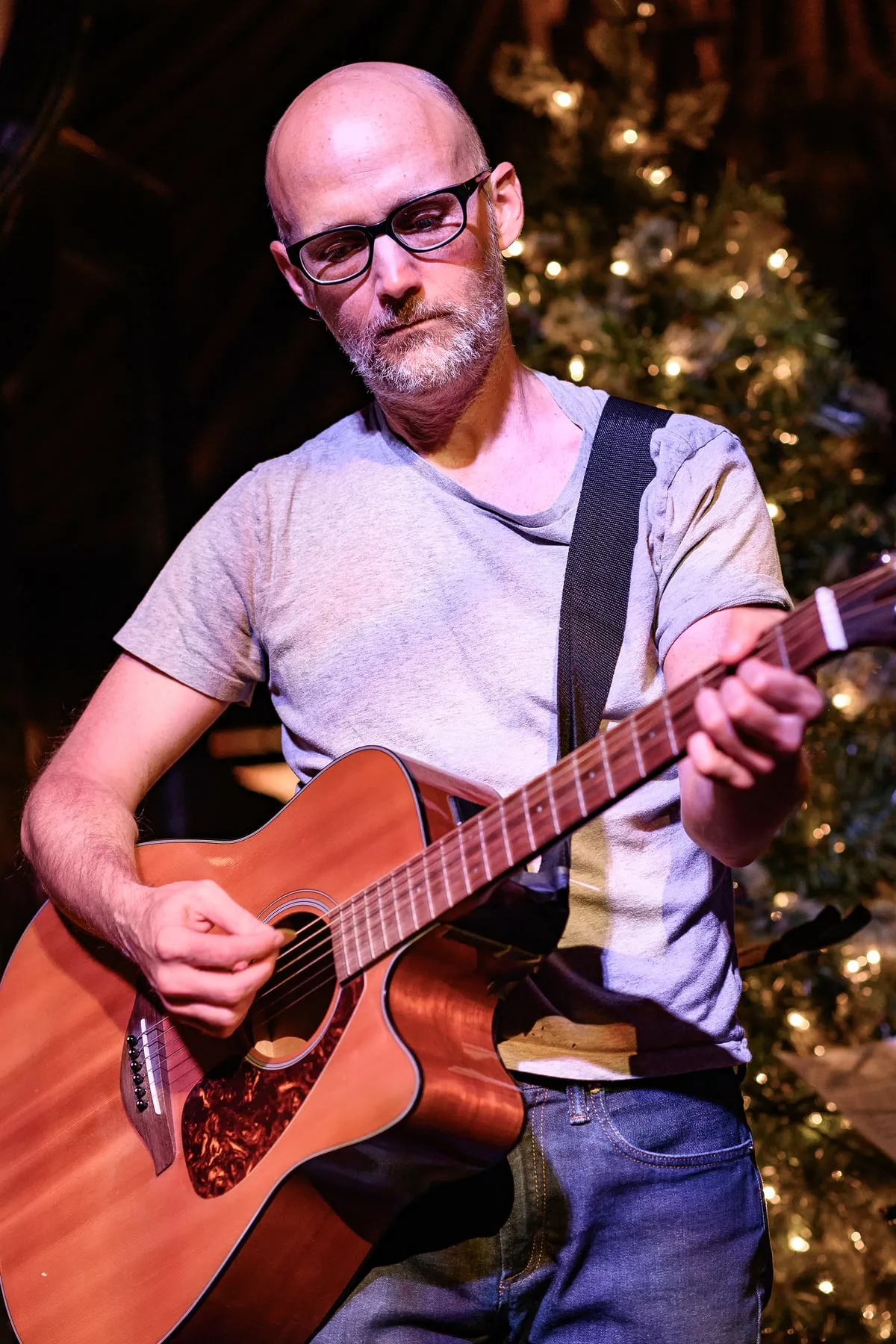
Photo by Justin Higuchi from Los Angeles, CA, USA , licensed under CC BY 2.0 · Wikimedia Commons
Rank #65
Moby
From Wikipedia
Richard Melville Hall, known professionally as Moby, is an American musician, songwriter and animal rights activist. He has sold 20 million records worldwide. AllMusic considers him to be "among the most important dance music figures of the early 1990s, helping bring dance music to a mainstream audience both in the United States and the United Kingdom".
Discography & Previews
Browse through and click an album to open and play 30-second previews streamed from Apple Music.


Everything Is Wrong
1995 · 13 tracks
- 1 Hymn ↗ 3:18
- 2 Feeling so Real ↗ 3:22
- 3 All That I Need Is to Be Loved ↗ 2:43
- 4 Let's Go Free ↗ 0:38
- 5 Everytime You Touch Me ↗ 3:42
- 6 Bring Back My Happiness ↗ 3:13
- 7 What Love ↗ 2:48
- 8 First Cool Hive ↗ 5:17
- 9 Into the Blue (feat. Mimi Goese) ↗ 5:34
- 10 Anthem ↗ 3:28
- 11 Everthing is Wrong ↗ 1:15
- 12 God Moving Over the Face of the Waters ↗ 7:22
- 13 When It's Cold I'd Like to Die (feat. Mimi Goese) ↗ 4:14

Animal Rights
1996 · 16 tracks
- 1 Dead Sun ↗ 3:42
- 2 Someone to Love ↗ 3:10
- 3 Heavy Flow ↗ 1:57
- 4 You ↗ 2:33
- 5 Now I Let It Go ↗ 2:09
- 6 Come on Baby ↗ 4:31
- 7 Soft ↗ 3:55
- 8 Anima ↗ 2:27
- 9 Say It's All Mine ↗ 6:05
- 10 That's When I Reach for My Revolver ↗ 3:56
- 11 Alone ↗ 10:47
- 12 Face It ↗ 10:01
- 13 Old ↗ 3:08
- 14 Living ↗ 7:00
- 15 Love Song for My Mom ↗ 3:44
- 16 A Season in Hell ↗ 3:59
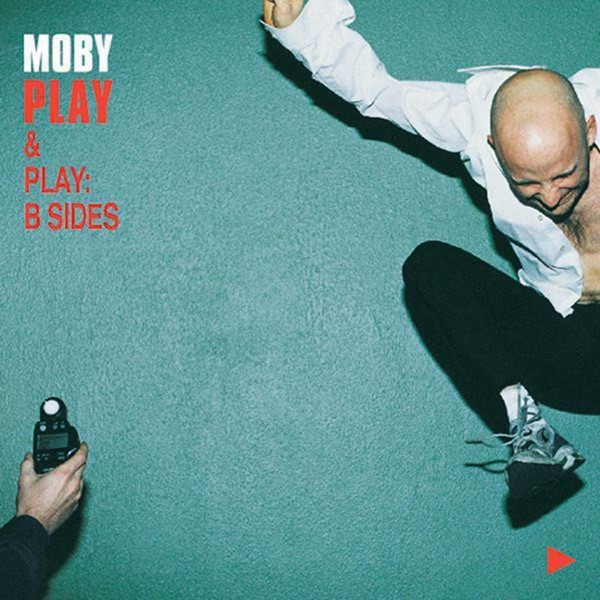
Play
1999 · 29 tracks
- 1 Honey ↗ 3:29
- 2 Find My Baby ↗ 3:59
- 3 Porcelain ↗ 4:01
- 4 Why Does My Heart Feel So Bad? ↗ 4:25
- 5 South Side ↗ 3:50
- 6 Rushing ↗ 3:00
- 7 Bodyrock ↗ 3:36
- 8 Natural Blues ↗ 4:14
- 9 Machete ↗ 3:38
- 10 7 ↗ 1:02
- 11 Run On ↗ 3:45
- 12 Down Slow ↗ 1:35
- 13 If Things Were Perfect ↗ 4:19
- 14 Everloving ↗ 3:26
- 15 Inside ↗ 4:49
- 16 Guitar Flute & String ↗ 2:09
- 17 The Sky Is Broken ↗ 4:19
- 18 My Weakness ↗ 3:39
- 19 Flower ↗ 3:26
- 20 Sunday ↗ 5:03
- 21 Memory Gospel ↗ 6:42
- 22 Whispering Wind ↗ 6:03
- 23 Summer ↗ 5:58
- 24 Spirit ↗ 4:09
- 25 Flying Foxes ↗ 6:16
- 26 Sunspot ↗ 6:49
- 27 Flying Over the Dateline ↗ 4:47
- 28 Running ↗ 7:06
- 29 The Sun Never Stops Setting ↗ 4:21

18
2002 · 31 tracks
- 1 We Are All Made of Stars ↗ 4:33
- 2 In This World ↗ 4:03
- 3 In My Heart ↗ 4:37
- 4 Great Escape ↗ 2:09
- 5 Signs of Love ↗ 4:26
- 6 One of These Mornings ↗ 3:13
- 7 Another Woman ↗ 3:56
- 8 Fireworks ↗ 2:13
- 9 Extreme Ways ↗ 3:58
- 10 Jam for the Ladies (feat. Angie Stone & MC Lyte) ↗ 3:22
- 11 Sunday (The Day Before My Birthday) ↗ 5:09
- 12 18 ↗ 4:29
- 13 Sleep Alone ↗ 4:45
- 14 At Least We Tried ↗ 4:09
- 15 Harbour (feat. Sinéad O'Connor) ↗ 6:28
- 16 Look Back In ↗ 2:21
- 17 The Rafters ↗ 3:22
- 18 I'm Not Worried at All ↗ 4:14
- 19 Landing ↗ 3:44
- 20 Love of Strings ↗ 6:11
- 21 Nearer ↗ 4:19
- 22 Afterlife ↗ 3:56
- 23 String Electro ↗ 6:57
- 24 Downhill ↗ 5:20
- 25 Soul to Love ↗ 4:28
- 26 Bed ↗ 4:17
- 27 Piano & Strings ↗ 5:18
- 28 Horse & Carrot ↗ 6:54
- 29 Life's So Sweet ↗ 6:33
- 30 Iss ↗ 8:45
- 31 Stay ↗ 3:11

Hotel
2005 · 14 tracks

Last Night
2008 · 14 tracks
- 1 Ooh Yeah ↗ 5:19
- 2 I Love to Move in Here ↗ 4:45
- 3 257.Zero ↗ 3:37
- 4 Everyday It's 1989 ↗ 3:40
- 5 Live for Tomorrow ↗ 4:02
- 6 Alice ↗ 4:27
- 7 Hyenas ↗ 3:35
- 8 I'm In Love ↗ 3:42
- 9 Disco Lies ↗ 3:23
- 10 The Stars ↗ 4:21
- 11 Degenerates ↗ 3:58
- 12 Sweet Apocalypse ↗ 5:19
- 13 Mothers of the Night ↗ 3:20
- 14 Last Night ↗ 9:24
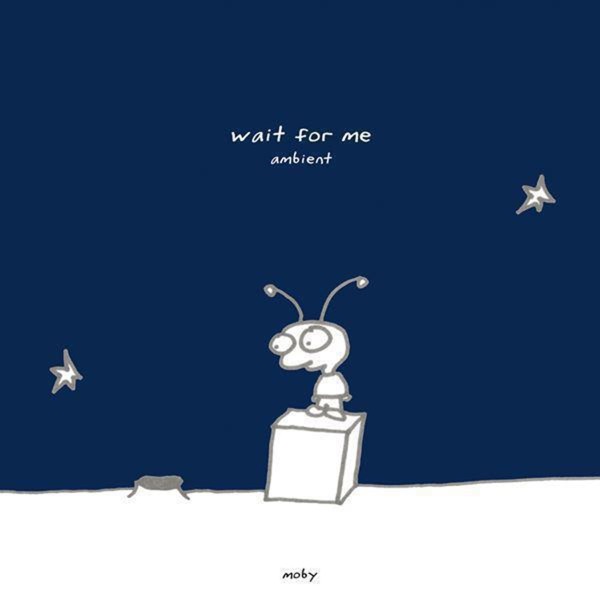
Wait for Me
2009 · 16 tracks
- 1 A Seated Night ↗ 3:56
- 2 Study War ↗ 4:30
- 3 Pale Horses ↗ 4:56
- 4 Stay Down ↗ 6:37
- 5 Hope Is Gone ↗ 3:08
- 6 Wait for Me ↗ 4:25
- 7 Division ↗ 1:38
- 8 Mistake ↗ 3:37
- 9 Walk With Me ↗ 2:58
- 10 Isolate ↗ 3:08
- 11 Shot In the Back of the Head ↗ 3:16
- 12 Slow Light 1 ↗ 3:04
- 13 Ghost Return ↗ 2:34
- 14 Scream Pilots ↗ 7:49
- 15 Jltf 3 ↗ 4:20
- 16 Slow Light 2 ↗ 3:09

Destroyed
2011 · 16 tracks
- 1 The Broken Places ↗ 4:12
- 2 Be the One ↗ 3:31
- 3 Sevastopol ↗ 4:23
- 4 The Low Hum ↗ 4:15
- 5 Rockets ↗ 4:49
- 6 The Day ↗ 4:34
- 7 Lie Down In Darkness ↗ 4:28
- 8 Victoria Lucas ↗ 5:56
- 9 After ↗ 5:32
- 10 Blue Moon ↗ 3:33
- 11 The Right Thing ↗ 4:28
- 12 Stella Maris ↗ 5:16
- 13 The Violent Bear It Away ↗ 6:52
- 14 Lacrimae ↗ 8:07
- 15 When You Are Old ↗ 2:21
- 16 Sandpaper ↗ 3:53

Innocents
2013 · 12 tracks
- 1 Everything That Rises (Live) ↗ 3:36
- 2 Saints (Live) ↗ 6:55
- 3 Don't Love Me (Live) ↗ 5:39
- 4 A Case for Shame (Live) ↗ 6:04
- 5 The Last Day (Live) ↗ 7:22
- 6 A Long Time (Live) ↗ 6:07
- 7 The Lonely Night (Live) ↗ 6:57
- 8 Almost Home (Live) ↗ 7:48
- 9 Tell Me (Live) ↗ 6:48
- 10 The Dogs (Live) ↗ 10:25
- 11 The Perfect Life (Live) ↗ 8:27
- 12 The Perfect Life (Acoustic Reprise) [Live] ↗ 5:28

Hotel : Ambient
2014 · 14 tracks
- 1 Swear ↗ 6:40
- 2 Snowball ↗ 4:26
- 3 Blue Paper ↗ 6:08
- 4 Homeward Angel (Long Version) ↗ 10:57
- 5 Chord Sounds ↗ 7:25
- 6 Not Sensitive ↗ 3:10
- 7 Lilly ↗ 3:54
- 8 May 4 Two ↗ 8:11
- 9 The Come Down ↗ 5:18
- 10 Overland ↗ 6:49
- 11 Live Forever ↗ 7:16
- 12 Aerial ↗ 5:49
- 13 Spaired (Long Version) ↗ 7:51
- 14 Live Forever (Long Version) ↗ 15:40

These Systems Are Failing
2016 · 12 tracks
- 1 Hey! Hey! ↗ 4:23
- 2 Break. Doubt ↗ 4:13
- 3 I Wait for You ↗ 4:00
- 4 Don't Leave Me ↗ 4:39
- 5 Erupt & Matter ↗ 4:09
- 6 Are You Lost In the World Like Me? ↗ 4:27
- 7 A Simple Love ↗ 4:39
- 8 The Light Is Clear In My Eyes ↗ 3:27
- 9 And It Hurts ↗ 1:54
- 10 Almost Loved ↗ 5:06
- 11 The Nighttime ↗ 4:11
- 12 Dark Star ↗ 3:47


Everything Was Beautiful, and Nothing Hurt
2018 · 9 tracks
- 1 Falling Rain & Light (Eastwest Session) ↗ 4:40
- 2 Ceremony of Innocence (Eastwest Session) ↗ 5:37
- 3 The Sorrow Tree (Eastwest Session) ↗ 3:48
- 4 Like a Motherless Child (Eastwest Session) ↗ 5:21
- 5 The Middle is Gone (Eastwest Session) ↗ 5:22
- 6 This Wild Darkness (Eastwest Session) ↗ 5:39
- 7 Mere Anarchy (Eastwest Session) ↗ 5:17
- 8 The Tired and the Hurt (Eastwest Session) ↗ 4:26
- 9 The Last of Goodbyes (Eastwest Session) ↗ 4:31


Reprise
2021 · 14 tracks
- 1 Everloving (Reprise Version) ↗ 3:19
- 2 Natural Blues (feat. Gregory Porter & Amythyst Kiah) [Reprise Version] ↗ 4:30
- 3 Go (Reprise Version) ↗ 3:43
- 4 Porcelain (feat. Jim James) [Reprise Version] ↗ 5:54
- 5 Extreme Ways (Reprise Version) ↗ 4:59
- 6 Heroes (feat. Mindy Jones) [Reprise Version] ↗ 5:18
- 7 God Moving Over The Face Of The Waters (feat. Víkingur Ólafsson) [Reprise Version] ↗ 7:42
- 8 Why Does My Heart Feel So Bad (feat. Apollo Jane, Deitrick Haddon & Mindy Jones) [Reprise Version] ↗ 4:38
- 9 The Lonely Night (feat. Mark Lanegan & Kris Kristofferson) [Reprise Version] ↗ 5:43
- 10 We Are All Made Of Stars (Reprise Version) ↗ 6:01
- 11 Lift Me Up (Reprise Version) ↗ 5:22
- 12 The Great Escape (feat. Nataly Dawn, Alice Skye & Luna Li) [Reprise Version] ↗ 2:51
- 13 Almost Home (feat. Novo Amor, Mindy Jones & Darlingside) [Reprise Version] ↗ 5:28
- 14 The Last Day (feat. Skylar Grey & Darlingside) [Reprise Version] ↗ 5:13

Resound NYC
2023 · 15 tracks
- 1 In My Heart (feat. Gregory Porter) [Resound NYC Version] ↗ 4:56
- 2 Extreme Ways (feat. Dougy Mandagi) [Resound NYC Version] ↗ 4:46
- 3 South Side (feat. Ricky Wilson) [Resound NYC Version] ↗ 4:47
- 4 Flower (Find My Baby) [feat. Amythyst Kiah] [Resound NYC Version] ↗ 4:39
- 5 In This World (feat. Nicole Scherzinger & Marisha Wallace) [Resound NYC Version] ↗ 4:33
- 6 Helpless (feat. Margo Timmins & Damien Jurado) [Resound NYC Version] ↗ 6:34
- 7 Signs Of Love (Resound NYC Version) ↗ 5:54
- 8 The Perfect Life (feat. Ricky Wilson) [Resound NYC Version] ↗ 5:12
- 9 When It's Cold I'd Like To Die (feat. P.T. Banks) [Resound NYC Version] ↗ 5:11
- 10 Slipping Away (Resound NYC Version) ↗ 3:50
- 11 Second Cool Hive (feat. Oum & Sarah Willis) [Resound NYC Version] ↗ 4:28
- 12 Hyenas (Resound NYC Version) ↗ 6:07
- 13 Last Night (Resound NYC Version) ↗ 6:14
- 14 Run On (feat. Danielle Ponder & Elijah Ponder) [Resound NYC Version] ↗ 5:38
- 15 Walk With Me (feat. Lady Blackbird) [Resound NYC Version] ↗ 5:45

Ambient 23
2023 · 16 tracks
- 1 Amb23 - 1 ↗ 8:02
- 2 Amb23 - 2 ↗ 9:07
- 3 Amb23 - 3 ↗ 5:24
- 4 Amb23 - 4 ↗ 7:57
- 5 Amb23 - 5 ↗ 8:01
- 6 Amb23 - 6 ↗ 9:46
- 7 Amb23 - 7 ↗ 6:48
- 8 Amb23 - 8 ↗ 9:31
- 9 Amb23 - 9 ↗ 10:42
- 10 Amb23 - 10 ↗ 10:23
- 11 Amb23 - 11 ↗ 10:07
- 12 Amb23 - 12 ↗ 10:31
- 13 Amb23 - 13 ↗ 8:48
- 14 Amb23 - 14 ↗ 9:04
- 15 Amb23 - 15 ↗ 12:01
- 16 Amb23 - 16 ↗ 9:57

Always Centered at Night
2024 · 11 tracks
- 1 wild flame (dark1 remix) ↗ 6:25
- 2 should sleep (Prins Thomas Diskomix) ↗ 5:11
- 3 feelings come undone (piano remix) [feat. Raquel Rodriguez] ↗ 6:09
- 4 where is your pride? (mar 29 remix) ↗ 6:01
- 5 dark days (tonic walter remix) ↗ 5:44
- 6 on air (house remix1) ↗ 8:48
- 7 transit (july 2 remix) ↗ 4:48
- 8 sweet moon (jung remix) ↗ 4:03
- 9 feelings come undone (feat. Raquel Rodriguez) [remix2] ↗ 3:51
- 10 fall back (coco bryce remix) ↗ 5:24
- 11 precious mind (april 23 remix) ↗ 5:03
Always Centered At Night (Quiet Home: Remixes DJ Mix)
2024 · 11 tracks
- 1 wild flame (dark1 remix) ↗ 6:25
- 2 should sleep (Prins Thomas Diskomix) ↗ 5:11
- 3 feelings come undone (piano remix) [feat. Raquel Rodriguez] ↗ 6:09
- 4 where is your pride? (mar 29 remix) ↗ 6:01
- 5 dark days (tonic walter remix) ↗ 5:44
- 6 on air (house remix1) ↗ 8:48
- 7 transit (july 2 remix) ↗ 4:48
- 8 sweet moon (jung remix) ↗ 4:03
- 9 feelings come undone (feat. Raquel Rodriguez) [remix2] ↗ 3:51
- 10 fall back (coco bryce remix) ↗ 5:24
- 11 precious mind (april 23 remix) ↗ 5:03
always centered at night (3rd Street DJ Mix)
2024 · 11 tracks
- 1 wild flame (dark1 remix) ↗ 6:25
- 2 should sleep (Prins Thomas Diskomix) ↗ 5:11
- 3 feelings come undone (piano remix) [feat. Raquel Rodriguez] ↗ 6:09
- 4 where is your pride? (mar 29 remix) ↗ 6:01
- 5 dark days (tonic walter remix) ↗ 5:44
- 6 on air (house remix1) ↗ 8:48
- 7 transit (july 2 remix) ↗ 4:48
- 8 sweet moon (jung remix) ↗ 4:03
- 9 feelings come undone (feat. Raquel Rodriguez) [remix2] ↗ 3:51
- 10 fall back (coco bryce remix) ↗ 5:24
- 11 precious mind (april 23 remix) ↗ 5:03

Future Quiet
2026 · 14 tracks
- 1 When It's Cold I'd Like to Die ↗ 4:17
- 2 This Was Never Meant for Us ↗ 5:00
- 3 Retreat ↗ 6:44
- 4 Estrella del Mar ↗ 6:42
- 5 Ruhe ↗ 5:07
- 6 Mott St 1992 ↗ 5:48
- 7 Precious Mind (Quiet Future) ↗ 5:39
- 8 Tallinn ↗ 6:33
- 9 On Air (Quiet Future) ↗ 4:49
- 10 Selene ↗ 5:33
- 11 Le Vide ↗ 6:07
- 12 Great Absence ↗ 8:33
- 13 Mono No Aware ↗ 5:52
- 14 The Opposite of Fear ↗ 8:28
-
 MobyMoby199212 tracks
 -
 AmbientMoby199312 tracks
 -
 Everything Is WrongMoby199513 tracks
 -
 Animal RightsMoby199616 tracks
 -
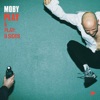 PlayMoby199929 tracks
 -
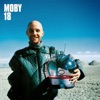 18Moby200231 tracks
 -
 HotelMoby200514 tracks
 -
 Last NightMoby200814 tracks
 -
 Wait for MeMoby200916 tracks
 -
 DestroyedMoby201116 tracks
 -
 InnocentsMoby201312 tracks
 -
 Hotel : AmbientMoby201414 tracks
 -
 These Systems Are FailingMoby201612 tracks
 -
 Long Ambients 1: Calm. Sleep.Moby201611 tracks
 -
 Everything Was Beautiful, and Nothing HurtMoby20189 tracks
 -
 Long Ambients TwoMoby20196 tracks
 -
 All Visible Objects (Remixed: DJ Set)Moby202011 tracks
 - All Visible Objects (Quarantine DJ Set)Moby202011 tracks
- All Visible ObjectsMoby202011 tracks
-
 RepriseMoby202114 tracks
 -
 Resound NYCMoby202315 tracks
 -
 Ambient 23Moby202316 tracks
 -
 Always Centered at NightMoby202411 tracks
 - Always Centered At Night (Quiet Home: Remixes DJ Mix)Moby202411 tracks
- always centered at night (3rd Street DJ Mix)Moby202411 tracks
-
 Future QuietMoby202614 tracks
Deep Dive
Overview
Richard Melville Hall, known professionally as Moby, is an American musician and songwriter whose influence on dance music and electronic production spans three decades. Since his debut in 1992, he has sold 20 million records worldwide and fundamentally altered the relationship between electronic music and the mainstream rock and pop landscape. AllMusic identifies him as “among the most important dance music figures of the early 1990s, helping bring dance music to a mainstream audience both in the United States and the United Kingdom.”
Formation Story
Born in 1965, Moby emerged as a solo artist during the early 1990s electronic music boom, a period when dance and house music were beginning to penetrate Anglo-American rock audiences. Working independently and releasing through Mute Records, he established himself not as part of a traditional band but as a singular creative force—a producer, songwriter, and performer who would define much of his own sound at the synthesizer and studio console. His background in punk rock, reflected in Wikidata’s genre classification, informed his aesthetic sensibility and approach to structure, even as his primary vehicle became electronic production.
Breakthrough Moment
Moby’s 1999 album Play marked the threshold from cult electronic artist to global phenomenon. The record’s use as soundtrack material in films, advertisements, and television gave it unprecedented reach; its accessibility—built on soulful samples, downtempo grooves, and ambient textures—opened dance music to audiences who had never sought it out. Play became the defining commercial moment of his career and established the template for how electronic music could serve mainstream popular culture without sacrificing compositional or sonic integrity.
Peak Era
The period spanning Animal Rights (1996) through 18 (2002) represented Moby’s most commercially successful and creatively expansive phase. Animal Rights demonstrated his willingness to fuse electronic instrumentation with guitar-driven song structures, while Play refined this approach into a globally dominant form. 18, arriving three years later, consolidated his mainstream position and further explored the intersection of electronic production, downtempo sensibility, and emotional resonance. These years established him as not merely a dance music figure but a broader pop and alternative rock presence.
Musical Style
Moby’s sound synthesizes electronic production with ambient, house, downtempo, trip hop, and techno influences, often layered with soul and world music samples. His earliest work embraced raw electronic textures and noise, but he quickly evolved toward more melodic and atmospheric approaches. Vocally, he frequently performed his own lead parts, bringing a distinctly human, often wistful quality to heavily processed soundscapes. The integration of live instrumentation—particularly guitars and strings—alongside electronic elements became a hallmark, allowing him to bridge the gap between electronic purists and rock traditionalists. His subsequent work increasingly emphasized ambient and chill-out music, with later albums exploring long-form, meditative soundscapes that reflect a shift toward introspective, minimal production.
Major Albums
Play (1999)
Play became a watershed moment for electronic music in mainstream culture, combining sample-based production, downtempo grooves, and accessible melodies into a globally successful form that influenced how electronic music would be licensed, marketed, and consumed.
Animal Rights (1996)
This album marked Moby’s first full-scale engagement with guitars and traditional rock instrumentation, blending electronic and organic elements in ways that expanded his audience beyond dance music purists.
18 (2002)
Released three years after Play, 18 further refined his mainstream electronic pop formula while exploring deeper emotional territory and solidifying his position as a commercially dominant force.
Everything Is Wrong (1995)
An earlier entry that helped establish his signature blend of house, ambient, and industrial textures before Play’s breakthrough moment reshaped his public profile.
Hotel (2005)
This album demonstrated his continued evolution, exploring downtempo and electronic approaches in the post-Play era with renewed artistic focus.
Destroyed (2011)
A return to ambient and electronic exploration, Destroyed showcased his ongoing commitment to the genre’s introspective and atmospheric possibilities.
Signature Songs
- “Bodyrock” — An early industrial-electronic track that showcased Moby’s raw, abrasive production style and helped establish him in underground dance circles.
- “Porcelain” — Sampled and arranged from classical sources, this Play era track became one of his most recognizable and widely licensed compositions.
- “Natural Blues” — Built on a spiritual/blues sample, it epitomized the accessible, soulful direction that made Play a mainstream crossover success.
- “Why Does My Heart Feel So Bad?” — A downtempo, emotionally direct composition that demonstrated his ability to convey vulnerability within electronic frameworks.
- “Extreme Ways” — A Play track that showcased his gift for creating cinematic, atmospheric pieces suitable for film and television placement.
Influence on Rock
Moby’s primary influence lies not in traditional rock music but in the legitimization of electronic and dance music within mainstream and alternative rock contexts. By demonstrating that synthesizer-driven compositions and house/techno production could achieve massive commercial success and critical acceptance, he paved the way for countless electronic and electronic-rock hybrid acts. His emphasis on emotional accessibility within electronic frameworks—achieved through sampling, melodic songwriting, and subtle human vocal performance—established a template for how dance music could reach and move audiences beyond nightclub and rave contexts. His work influenced the broader strategy of how rock and pop platforms would engage with electronic music producers, opening career pathways and institutional recognition for figures who might previously have been relegated to underground scenes.
Legacy
With 20 million records sold worldwide, Moby remains one of the best-selling electronic music artists in history. His 1999 album Play stands as a cultural artifact marking the moment electronic music fully entered the mainstream consciousness, and its influence on film, television, and advertising licensing practices persists. Beyond commercial metrics, his longevity and adaptability have kept him creatively active for over three decades. His continued output—including numerous ambient and downtempo projects released through the 2020s such as Ambient 23 (2023) and Always Centered at Night (2024)—reflects a commitment to exploration and reinvention rather than nostalgia. His animal rights activism and engagement with social causes have also made him a figure of broader cultural influence beyond music itself.
Fun Facts
- Moby’s real name, Richard Melville Hall, derives from his descent from author Herman Melville, author of Moby Dick—the source of his stage name.
- His 1992 self-titled debut album Moby established the template for his solo career and early critical recognition in underground electronic and industrial circles.
- The title of his 1993 album Ambient signaled his early engagement with ambient music production, a genre he would return to repeatedly throughout his career and expand significantly in the 2010s and 2020s.
- His official website (https://moby.com) has remained a consistent presence throughout his career, reflecting his early adoption of direct-to-fan digital engagement.
- By 2024 and 2025, Moby’s output had diversified into multiple ambient sub-projects, remixes, and DJ sets, demonstrating a willingness to fragment and experiment with the archive of All Visible Objects and to continue producing new material into what would be his sixth decade of life.