

Photo by Master of Puppets , licensed under CC BY-SA 3.0 · Wikimedia Commons
Rank #335
Patrick Watson
From Wikipedia
Patrick Watson is a Canadian singer-songwriter from Montreal, Quebec, who has formed a band also named Patrick Watson, whose blend of cabaret pop and classical music influences with indie rock has been compared to Rufus Wainwright, Andrew Bird, Nick Drake, Jeff Buckley and Pink Floyd for its experimental musicianship. Patrick Watson's album Close to Paradise was awarded the Polaris Music Prize in 2007.
Discography & Previews
Browse through and click an album to open and play 30-second previews streamed from Apple Music.


Close to Paradise
2006 · 13 tracks
- 1 Close to Paradise ↗ 5:02
- 2 Daydreamer ↗ 4:34
- 3 Slip into Your Skin ↗ 3:38
- 4 Giver ↗ 3:27
- 5 Weight of the World ↗ 4:40
- 6 The Storm ↗ 3:12
- 7 Mr. Tom ↗ 2:48
- 8 Luscious Life ↗ 3:09
- 9 Drifters ↗ 4:27
- 10 Man Under the Sea ↗ 3:30
- 11 The Great Escape ↗ 3:07
- 12 Sleeping Beauty ↗ 5:34
- 13 Bright Shiny Lights ↗ 2:34

Wooden Arms
2009 · 11 tracks
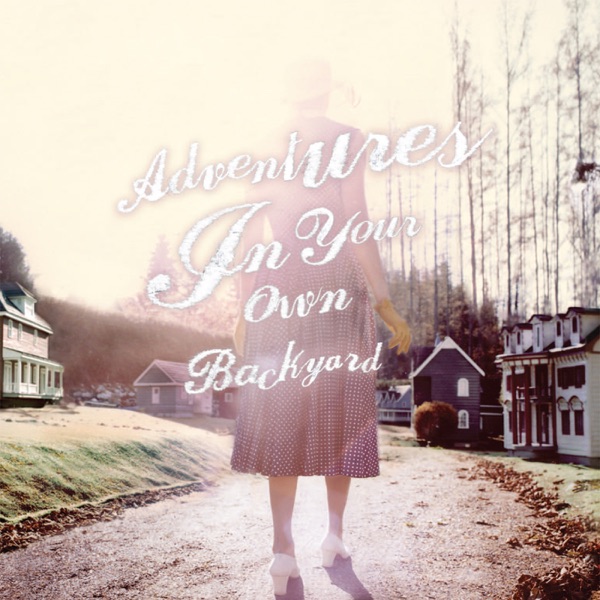
Adventures in Your Own Backyard
2012 · 13 tracks
- 1 Lighthouse ↗ 4:46
- 2 Blackwind ↗ 3:54
- 3 Step Out for a While ↗ 4:04
- 4 Quiet Crowd ↗ 3:57
- 5 Into Giants ↗ 4:29
- 6 Morning Sheets ↗ 3:24
- 7 Words In the Fire ↗ 3:54
- 8 The Things You Do ↗ 3:59
- 9 Strange Crooked Road ↗ 3:43
- 10 Noisy Sunday ↗ 4:02
- 11 Adventures In Your Own Backyard ↗ 4:51
- 12 Swimming Pools ↗ 2:54
- 13 The Things We Do ↗ 4:44



-
 Just Another Ordinary DayPatrick Watson20039 tracks
 -
 Close to ParadisePatrick Watson200613 tracks
 -
 Wooden ArmsPatrick Watson200911 tracks
 -
 Adventures in Your Own BackyardPatrick Watson201213 tracks
 -
 Love Songs for RobotsPatrick Watson201510 tracks
 -
 WavePatrick Watson201910 tracks
 -
 Better in the ShadePatrick Watson20227 tracks
 -
 Uh OhPatrick Watson202511 tracks
Deep Dive
Overview
Patrick Watson is a Canadian singer-songwriter based in Montreal, Quebec, whose work merges cabaret sensibility, classical orchestration, and indie rock into a distinctive and frequently experimental sound. Born in the United States but based in Canada since the late 1970s, Watson emerged as a solo artist in the early 2000s, establishing himself through a series of albums that defied easy genre classification. His 2006 album Close to Paradise earned the Polaris Music Prize, Canada’s most prestigious award for full-length rock and alternative albums, cementing his status as a significant figure in contemporary Canadian music.
Formation Story
Patrick Watson’s journey into music began in the late 1970s, when he relocated to Montreal and immersed himself in the city’s artistic and musical communities. As an American-born artist settling in Quebec, Watson drew inspiration from the city’s bohemian culture and avant-garde traditions, influences that would define his approach to songwriting and arrangement. From the outset, Watson’s sensibility lay in the fusion of disparate musical languages—combining the emotional directness of singer-songwriter tradition with the textural ambitions of classical composition and the rhythmic freedom of indie rock. This eclecticism became his hallmark, setting him apart from both conventional pop songwriting and straightforward rock idioms.
Breakthrough Moment
Watson’s early releases, beginning with Waterproof9 in 2000 and continuing through Just Another Ordinary Day in 2003, established his reputation within Canadian indie circles and among listeners attuned to experimental approaches to song structure and instrumentation. However, it was Close to Paradise, released in 2006, that brought Watson international recognition. The album’s sophisticated blend of orchestral arrangements, introspective lyrics, and unconventional song dynamics resonated with critics and audiences alike, culminating in the Polaris Music Prize in 2007. This award validated Watson’s uncompromising artistic vision and significantly expanded his audience beyond Canadian borders, introducing his work to listeners across North America and Europe who sought alternatives to mainstream indie rock formulas.
Peak Era
The period from 2006 through the early 2010s represented Watson’s most visible and creatively assured phase. Following the Polaris Prize success, he released Wooden Arms in 2009, continuing to expand his sonic palette and thematic reach. Adventures in Your Own Backyard arrived in 2012, further consolidating his reputation as a thoughtful, meticulous artist uninterested in commercial shortcuts. During this era, Watson toured internationally, building a dedicated fanbase drawn to his live performances, which showcased the intricate arrangements and emotional depth characteristic of his recorded work. His willingness to integrate classical instruments, unconventional production choices, and chamber-pop aesthetics into rock contexts made him a touchstone for listeners and musicians interested in genre-blending alternatives.
Musical Style
Watson’s sound is characterized by a refusal to align himself with single-genre conventions. His work draws on the lyrical interiority of singer-songwriter tradition, the orchestral density and harmonic sophistication of classical music, and the rhythmic and textural possibilities of indie rock and experimental pop. Vocally, Watson delivers melodies with a conversational intimacy, often layering his voice or counterpointing it against instrumental arrangements that range from sparse and acoustic to richly orchestrated. His use of strings, woodwinds, and unconventional percussion alongside electric and acoustic guitars creates what has been compared to the work of artists such as Rufus Wainwright, Andrew Bird, Nick Drake, Jeff Buckley, and Pink Floyd—touchstones that point toward his synthesis of art-rock ambition, singer-songwriter vulnerability, and avant-garde sensibilities. Production choices frequently emphasize space and clarity, allowing individual instrumental lines to emerge and interact rather than burying them in walls of sound.
Major Albums
Close to Paradise (2006)
Winner of the 2007 Polaris Music Prize, this album stands as Watson’s landmark statement, featuring sophisticated orchestration, introspective songwriting, and a cohesive artistic vision that established him as a major voice in contemporary indie and alternative music.
Wooden Arms (2009)
Following the Polaris Prize, this album deepened Watson’s exploration of classical-inflected indie rock, showcasing further refinement of his arrangements and a sustained commitment to artistic experimentation.
Adventures in Your Own Backyard (2012)
This album consolidated Watson’s reputation for thoughtful, meticulous songwriting and complex instrumental arrangements, appealing to devoted listeners who valued artistic integrity over commercial accessibility.
Love Songs for Robots (2015)
Continuing his trajectory of genre-blending work, this album title itself suggests Watson’s playful approach to the intersection of emotional authenticity and technological aesthetics.
Wave (2019)
Released nearly a decade into his maturity as a recording artist, this album maintained Watson’s commitment to intricate arrangements and emotional depth.
Signature Songs
- “Close to Paradise” — The title track from his Polaris Prize-winning album, emblematic of Watson’s blend of orchestral arrangement and emotional directness.
- “The Great Escape” — A showcase for Watson’s vocal delivery and his use of unconventional instrumentation within indie rock frameworks.
- “Better Days” — Representative of Watson’s ability to craft accessible melodies within experimental structural frameworks.
- “Adventures in Your Own Backyard” — A song that exemplifies his whimsical yet introspective approach to narrative songwriting.
Influence on Rock
Patrick Watson’s work has contributed to the broader legitimacy of genre-blending approaches within indie rock and alternative music. His synthesis of classical training, cabaret tradition, and rock instrumentation demonstrated that commercial viability and artistic ambition need not conflict, influencing a generation of Canadian and international artists interested in orchestral pop, art rock, and experimental songwriting. The success of Close to Paradise and his Polaris Prize win elevated the profile of Canadian indie music internationally and signaled that audiences and institutions recognized sophisticated, formally ambitious songwriting as worthy of major recognition. Watson’s career has also underscored the importance of the album format as an artistic statement, encouraging listeners and musicians alike to engage with his work as complete artistic statements rather than collections of isolated tracks.
Legacy
Patrick Watson remains an active and touring artist, continuing to record and perform well into the 2020s. His Polaris Prize remains a defining achievement, not only in his personal career trajectory but in the broader history of Canadian music recognition and indie rock credibility. His consistent output—including Better in the Shade (2022) and Uh Oh (2025)—demonstrates an ongoing commitment to artistic development and experimentation. Watson’s work is increasingly recognized as part of the continuum of art-rock and singer-songwriter traditions that value emotional authenticity, sonic experimentation, and formal sophistication. His influence extends across generations of listeners and musicians who continue to discover his catalog, particularly as streaming platforms have made his complete discography more accessible than ever before.
Fun Facts
- Watson recorded his debut album Waterproof9 in 2000 after relocating to Montreal, establishing the city as his creative base and the epicenter of his artistic identity.
- The Polaris Music Prize, awarded to Close to Paradise in 2007, recognizes full-length Canadian rock and alternative albums, making Watson’s win a significant marker in contemporary Canadian music history.
- Watson’s musical approach has been explicitly compared to Pink Floyd’s experimental approach to rock music, highlighting the art-rock lineage within his work.
- His album titles, including Love Songs for Robots and Adventures in Your Own Backyard, reflect a distinctly whimsical and intellectually playful approach to album conception and naming.