
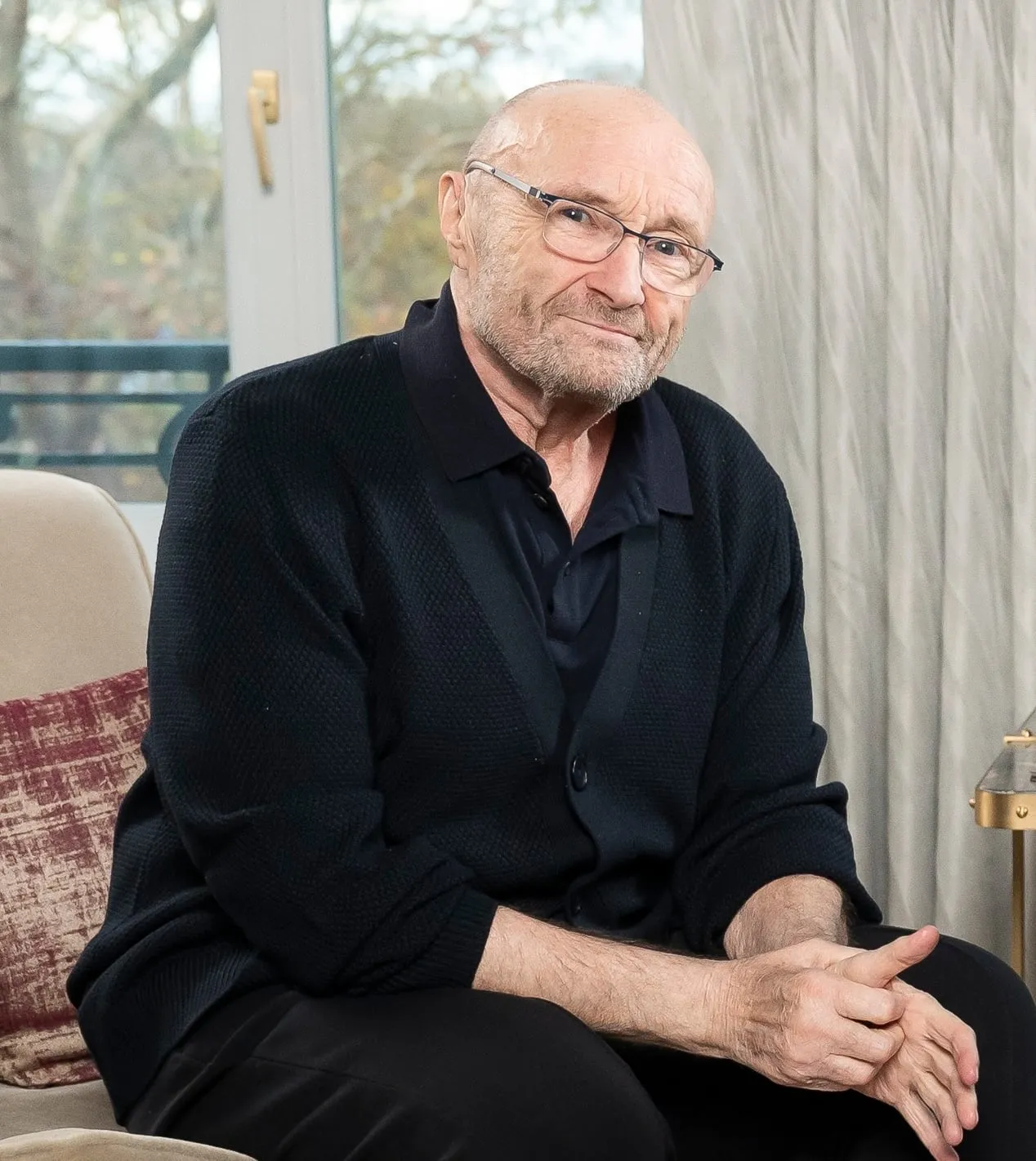
Photo by Will Ireland, Courtesy of Concord , licensed under CC BY-SA 4.0 · Wikimedia Commons
Rank #275
Phil Collins
From Wikipedia
Philip David Charles Collins is an English singer, drummer, songwriter, record producer, and actor. He was the drummer and later became the lead singer of the rock band Genesis and had a successful solo career, achieving three UK number-one singles and seven US number-one singles as a solo artist. In total, his work with Genesis, other artists and solo resulted in more US top-40 singles than any other artist throughout the 1980s. His most successful singles from the period include "In the Air Tonight", "You Can't Hurry Love", "Against All Odds ", "One More Night", "Sussudio", "Another Day in Paradise", "Two Hearts" and "I Wish It Would Rain Down".
Discography & Previews
Browse through and click an album to open and play 30-second previews streamed from Apple Music.

Face Value
1981 · 12 tracks
- 1 In the Air Tonight ↗ 5:36
- 2 This Must Be Love ↗ 3:56
- 3 Behind the Lines ↗ 3:56
- 4 The Roof Is Leaking ↗ 3:17
- 5 Droned ↗ 2:50
- 6 Hand In Hand ↗ 5:23
- 7 I Missed Again ↗ 3:46
- 8 You Know What I Mean ↗ 2:33
- 9 Thunder and Lightning ↗ 4:14
- 10 I'm Not Moving ↗ 2:35
- 11 If Leaving Me Is Easy ↗ 4:55
- 12 Tomorrow Never Knows ↗ 4:50

Hello, I Must Be Going!
1982 · 10 tracks
- 1 I Don't Care Anymore ↗ 5:05
- 2 I Cannot Believe It's True ↗ 5:16
- 3 Like China ↗ 5:09
- 4 Do You Know, Do You Care? ↗ 4:58
- 5 You Can't Hurry Love ↗ 2:56
- 6 It Don't Matter to Me ↗ 4:17
- 7 Thru These Walls ↗ 5:05
- 8 Don't Let Him Steal Your Heart Away ↗ 4:45
- 9 The West Side ↗ 5:02
- 10 Why Can't It Wait 'Til Morning ↗ 3:10

No Jacket Required
1985 · 11 tracks
- 1 Sussudio (2016 Remastered) ↗ 4:23
- 2 Only You Know and I Know (2016 Remastered) ↗ 4:21
- 3 Long Long Way to Go (2016 Remastered) ↗ 4:23
- 4 I Don't Wanna Know (2016 Remastered) ↗ 4:15
- 5 One More Night (2016 Remastered) ↗ 4:51
- 6 Don't Lose My Number (2016 Remastered) ↗ 4:49
- 7 Who Said I Would (2016 Remastered) ↗ 4:02
- 8 Doesn't Anybody Stay Together Anymore (2016 Remastered) ↗ 4:19
- 9 Inside Out (2016 Remastered) ↗ 5:16
- 10 Take Me Home (2016 Remastered) ↗ 5:51
- 11 We Said Hello Goodbye (2016 Remastered) ↗ 4:19
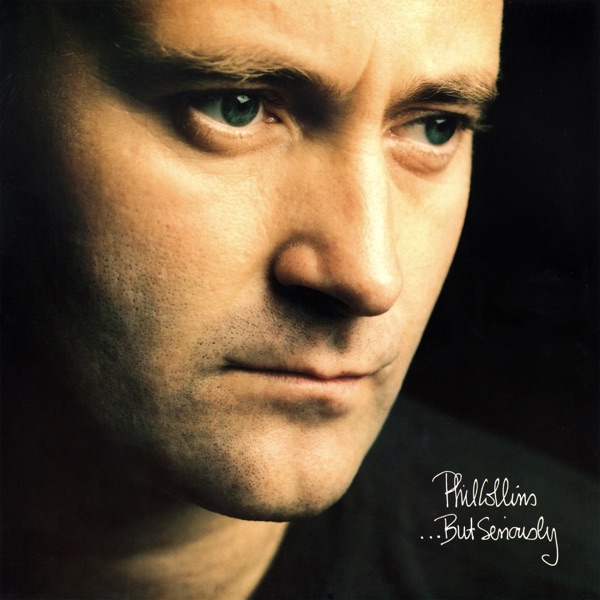
…But Seriously
1989 · 12 tracks
- 1 Hang in Long Enough (2016 Remastered) ↗ 4:44
- 2 That's Just the Way It Is (2016 Remastered) ↗ 5:20
- 3 Do You Remember? (2016 Remastered) ↗ 4:36
- 4 Something Happened on the Way to Heaven (2016 Remastered) ↗ 4:52
- 5 Colours (2016 Remastered) ↗ 8:51
- 6 I Wish It Would Rain Down (2016 Remastered) ↗ 5:28
- 7 Another Day in Paradise (2016 Remastered) ↗ 5:22
- 8 Heat on the Street (2016 Remastered) ↗ 3:52
- 9 All of My Life (2016 Remastered) ↗ 5:35
- 10 Saturday Night and Sunday Morning (2016 Remastered) ↗ 1:26
- 11 Father to Son (2016 Remastered) ↗ 3:28
- 12 Find a Way to My Heart (2016 Remastered) ↗ 6:13

Both Sides
1993 · 11 tracks
- 1 Both Sides of the Story ↗ 6:43
- 2 Can't Turn Back the Years ↗ 4:41
- 3 Everyday ↗ 5:44
- 4 I've Forgotten Everything ↗ 5:15
- 5 We're Sons of Our Fathers ↗ 6:25
- 6 Can't Find My Way ↗ 5:09
- 7 Survivors ↗ 6:05
- 8 We Fly So Close ↗ 7:34
- 9 There's a Place for Us ↗ 6:53
- 10 We Wait and We Wonder ↗ 7:01
- 11 Please Come Out Tonight ↗ 5:47

Dance Into the Light
1996 · 13 tracks
- 1 Dance Into the Light ↗ 4:24
- 2 That's What You Said ↗ 4:21
- 3 Lorenzo ↗ 5:52
- 4 Just Another Story ↗ 6:25
- 5 Love Police ↗ 4:11
- 6 Wear My Hat ↗ 4:44
- 7 It's In Your Eyes ↗ 3:03
- 8 Oughta Know By Now ↗ 5:31
- 9 Take Me Down ↗ 3:27
- 10 The Same Moon ↗ 4:10
- 11 River So Wide ↗ 4:57
- 12 No Matter Who ↗ 4:41
- 13 The Times They Are A-Changin' ↗ 5:08
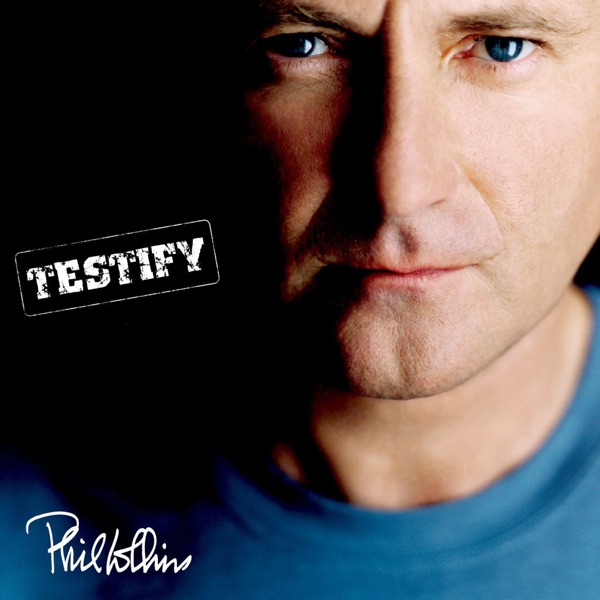
Testify
2002 · 12 tracks
- 1 Wake Up Call (2016 Remastered) ↗ 5:15
- 2 Come with Me (2016 Remastered) ↗ 4:34
- 3 Testify (2016 Remastered) ↗ 6:32
- 4 Don't Get Me Started (2016 Remastered) ↗ 4:41
- 5 Swing Low (2016 Remastered) ↗ 5:08
- 6 It's Not Too Late (2016 Remastered) ↗ 4:00
- 7 This Love This Heart (2016 Remastered) ↗ 4:05
- 8 Driving Me Crazy (2016 Remastered) ↗ 4:38
- 9 The Least You Can Do (2016 Remastered) ↗ 4:22
- 10 Can't Stop Loving You (2016 Remastered) ↗ 4:16
- 11 Thru My Eyes (2016 Remastered) ↗ 5:08
- 12 You Touch My Heart (2016 Remastered) ↗ 4:44

Going Back
2010 · 26 tracks
- 1 Girl (Why You Wanna Make Me Blue) ↗ 2:33
- 2 (Love Is Like A) Heatwave ↗ 3:03
- 3 Uptight (Everything's Alright) ↗ 3:04
- 4 Some of Your Lovin' ↗ 3:20
- 5 Ain't Too Proud to Beg (Bonus Track) ↗ 2:42
- 6 In My Lonely Room ↗ 2:25
- 7 Take Me In Your Arms (Rock Me for a Little While) ↗ 2:59
- 8 Blame It On the Sun ↗ 3:27
- 9 Papa Was a Rolling Stone ↗ 6:44
- 10 Never Dreamed You'd Leave In Summer ↗ 2:59
- 11 Standing In the Shadows of Love (Bonus Track) ↗ 2:41
- 12 You've Been Cheatin' ↗ 2:35
- 13 Don't Look Back ↗ 3:06
- 14 You Really Got a Hold On Me (Bonus Track) ↗ 3:07
- 15 Do I Love You ↗ 2:51
- 16 Jimmy Mack ↗ 2:57
- 17 Something About You ↗ 2:47
- 18 Love Is Here and Now You're Gone ↗ 2:40
- 19 Loving You Is Sweeter Than Ever ↗ 2:49
- 20 Ain't That Peculiar (Bonus Track) ↗ 3:05
- 21 Going to a Go-Go ↗ 2:47
- 22 Nowhere to Run (Bonus Track) ↗ 3:06
- 23 Talkin' About My Baby ↗ 2:48
- 24 Dancing In the Street (Bonus Track) ↗ 2:44
- 25 Going Back ↗ 4:36
- 26 You Keep Me Hangin' On (Bonus Track) ↗ 2:58
-
 Face ValuePhil Collins198112 tracks
 -
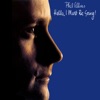 Hello, I Must Be Going!Phil Collins198210 tracks
 -
 No Jacket RequiredPhil Collins198511 tracks
 -
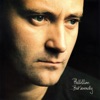 …But SeriouslyPhil Collins198912 tracks
 -
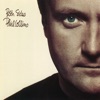 Both SidesPhil Collins199311 tracks
 -
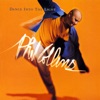 Dance Into the LightPhil Collins199613 tracks
 -
 TestifyPhil Collins200212 tracks
 -
 Going BackPhil Collins201026 tracks
Deep Dive
Overview
Phil Collins is an English singer, drummer, songwriter, record producer, and actor whose dual career as Genesis’s timekeeper and solo hitmaker positioned him as one of the dominant figures in 1980s popular music. Beginning as the drummer for the progressive rock outfit Genesis in the 1970s, Collins transitioned to lead vocals for the band while simultaneously launching a parallel solo career that would eventually eclipse his work with the group in commercial terms. His output across both projects—Genesis recordings and solo albums—generated more US top-40 singles throughout the 1980s than any other artist of the era, a testament to his prolific songwriting, production acumen, and facility across multiple rock and pop idioms.
Formation Story
Collins was born in 1951 in the United Kingdom during the post-war cultural surge that would shape British rock. Coming of age during the late 1960s and early 1970s, he immersed himself in the emerging progressive rock scene, finding his entry point as a technically precise and emotionally direct drummer. His background combined classical training with an instinctive grasp of funk and soul rhythms, an unusual synthesis in the art-rock milieu. By the time he joined Genesis as their drummer in the mid-1970s, Collins had already absorbed the vocabulary of jazz fusion, funk, and the intricate time signatures that defined progressive rock, positioning him uniquely to bridge the gap between the genre’s complexity and pop accessibility.
Breakthrough Moment
Collins’ solo breakthrough arrived with his 1981 debut, Face Value, a stark, introspective album recorded while he was still the drummer for Genesis. The album became a commercial and critical watershed, proving that Collins could sustain listener interest beyond his role in a band. Built largely around his own drumming, piano work, and deeply personal songwriting, Face Value established Collins as a solo artist in his own right. The album’s lead single, “I Missed Again,” began his ascent on the charts, while the emotional directness of tracks like the title song demonstrated a songwriting maturity that transcended typical rock-star vanity projects. The album’s success licensed him to pursue solo work with full confidence even as Genesis continued recording and touring.
Peak Era
Collins’ commercial and creative peak stretched across the mid-to-late 1980s, anchored by three landmark albums. No Jacket Required (1985) became a global phenomenon, spawning multiple hit singles and establishing the template for Collins’ mature solo sound: meticulously produced, funk-inflected pop-rock with melodic hooks and sophisticated drum programming. The album cemented his status as a crossover superstar, appealing equally to rock radio, urban contemporary stations, and adult contemporary audiences. …But Seriously (1989) extended that dominance, featuring further chart success and broader thematic ambition, while Hello, I Must Be Going! (1982) and Both Sides (1993) filled out a catalog of consistent high-charting releases. During this period, Collins achieved three UK number-one singles and seven US number-one singles as a solo artist, a achievement that spoke to his appeal across multiple markets and demographic groups.
Musical Style
Collins’ musical signature blends the precision of progressive rock—his original training ground—with the groove-oriented sensibility of funk and soul. His drumming, whether heard on Genesis records or his solo work, is characteristically crisp, syncopated, and melodically aware; he treats the kit as a compositional voice rather than mere timekeeping. As a vocalist, Collins commands a warm, somewhat reedy tenor that conveys emotional clarity without extremism; his phrasing is conversational and direct, often favoring storytelling over vocal pyrotechnics. His production style, developed through work with both Genesis and his solo projects, emphasizes bright, separated drum sounds—particularly the distinctive gated reverb snare that became a sonic signature of 1980s rock and pop—paired with clean, articulate bass lines and synth-driven arrangements. Lyrically, Collins gravitates toward personal, domestic, and romantic themes, a departure from Genesis’s more abstract and fantastical concerns, making his solo work more immediately accessible to mainstream audiences.
Major Albums
Face Value (1981)
Collins’ introspective debut established him as a serious solo artist capable of sustaining a full album’s worth of personal material without relying on band dynamics or guest stars. The record’s focus on domestic and emotional turmoil, paired with Collins’ own instrumentation and understated arrangements, set a template for confessional 1980s pop-rock.
No Jacket Required (1985)
This album became a global blockbuster, showcasing Collins’ mastery of contemporary production and pop-rock songwriting. With its bright, percussive sound and infectious melodies, No Jacket Required proved that Collins could dominate mainstream charts while retaining artistic credibility.
…But Seriously (1989)
Collins’ third major solo release continued his chart dominance while expanding his thematic scope to include social observation and relationship complexity. The album maintained the polished, groove-centered production that had become his hallmark.
Dance Into the Light (1996)
Following the mid-1990s shift in popular music, Collins updated his sound with contemporary production and collaborators, demonstrating continued relevance even as alternative rock gained cultural ground.
Testify (2002)
Recorded after a creative hiatus, Testify found Collins reasserting his musical identity with fresh arrangements and a return to personal songwriting, proving his songwriting voice remained intact.
Signature Songs
- “In the Air Tonight” — The Face Value standout whose distinctive gated-reverb drum break became one of the most iconic and imitated sounds in 1980s rock and pop.
- “You Can’t Hurry Love” — Collins’ cover of the Supremes classic showcased his interpretive gifts and became a major radio hit, reaching number one on the US chart.
- “Against All Odds” — A contemplative ballad that demonstrated Collins’ ability to craft emotionally resonant pop songs with enduring commercial appeal.
- “One More Night” — A funk-inflected love song that became one of his signature hits and topped charts internationally.
- “Sussudio” — A high-energy, synth-driven single that exemplified Collins’ command of contemporary 1980s pop-rock production.
- “Another Day in Paradise” — A socially conscious ballad paired with a music video addressing homelessness, showing Collins’ willingness to use his platform for thematic breadth.
- “I Wish It Would Rain Down” — A soulful, upbeat track that blended Collins’ funk roots with his pop sensibility.
Influence on Rock
Collins’ influence on rock and popular music operates across multiple registers. His work as Genesis’s drummer elevated the technical and compositional possibilities of rhythm in progressive rock, while his solo career demonstrated that drummers could transition to lead roles without sacrificing credibility. His production approach—particularly the use of gated reverb, tight drum sounds, and synth-pop arrangements—became pervasive in 1980s rock and pop, influencing producers and engineers across multiple genres. By proving that a rock drummer could achieve sustained commercial success as a pop-oriented solo artist, Collins opened a template that would be followed by other drummers and musicians seeking to balance artistic integrity with mainstream appeal. His work across both Genesis and his solo catalog showed that commercial success and artistic relevance were not mutually exclusive, a lesson that resonated throughout the 1980s and beyond.
Legacy
Collins remains one of the most commercially successful artists of the 1980s, with a catalog that has sustained cultural presence across multiple decades. His solo and Genesis recordings continue to circulate widely on streaming platforms, while classic tracks like “In the Air Tonight” retain cultural touchstones through references in film, television, and other artists’ work. The technical innovations he pioneered in drum production and pop-rock arrangement remain studied by musicians and producers, ensuring his influence extends beyond his own recordings. Collins’ ability to balance sophisticated musicianship with genuine pop sensibility established a template for artistic longevity, demonstrating that artists need not choose between critical respect and commercial success. His work has been revisited and reassessed by subsequent generations of musicians and critics, with both his Genesis contributions and his solo period continuing to generate interest and analysis.
Fun Facts
- Collins recorded his debut solo album Face Value while still serving as Genesis’s drummer, juggling both projects simultaneously during a period of intense creative output.
- The distinctive gated-reverb drum sound heard on “In the Air Tonight” and other tracks became so ubiquitous in 1980s production that it became a defining sonic marker of the decade.
- Collins achieved a rare commercial feat by maintaining massive chart success in both his primary band (Genesis) and his solo career throughout the same era, a demonstration of his cross-genre and cross-market appeal.
- His ability to cover existing material—such as the Supremes’ “You Can’t Hurry Love”—with commercial success showed his interpretive skill and ability to make established songs his own.