
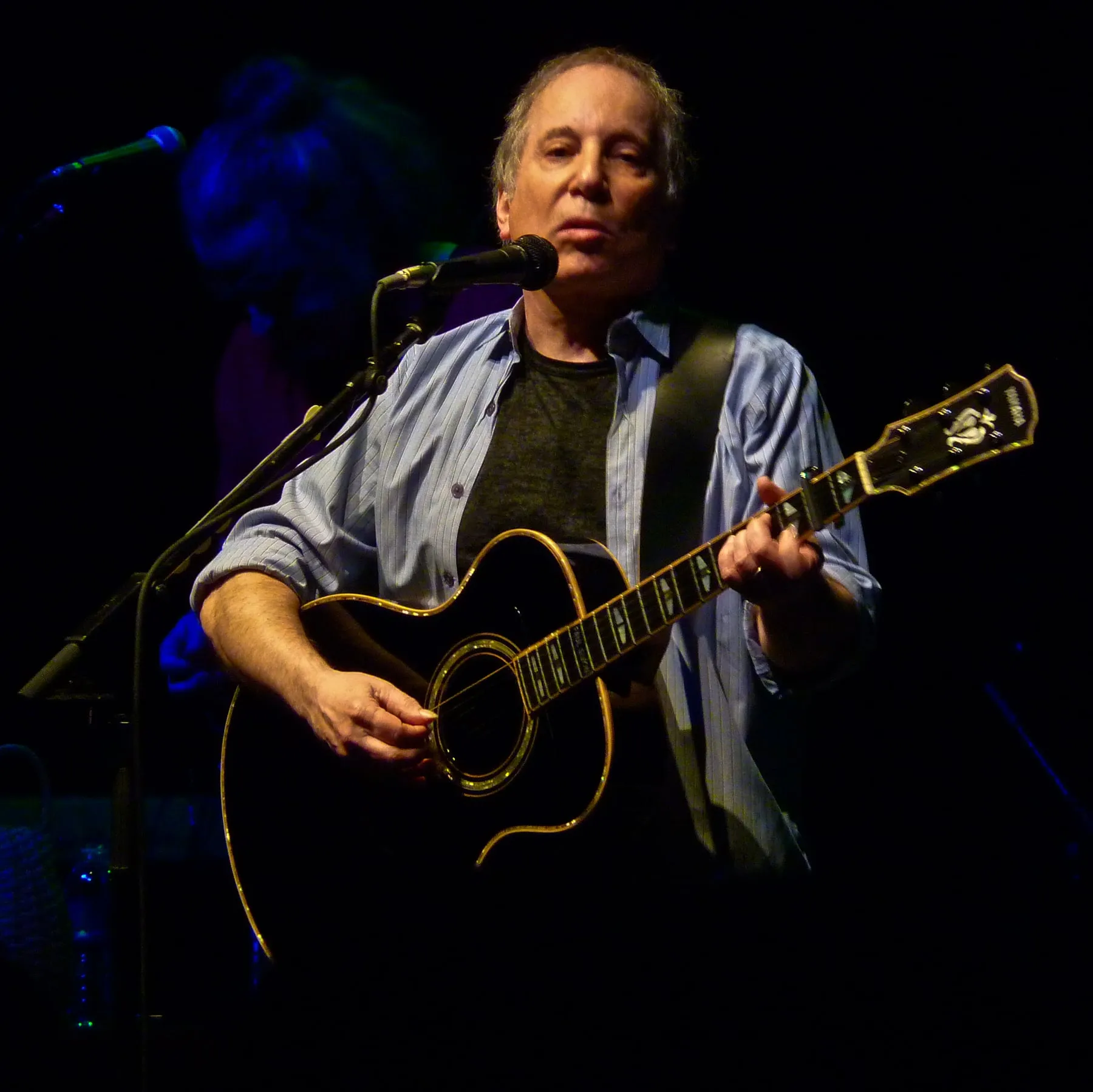
Photo by Matthew Straubmuller (imatty35) , licensed under CC BY 2.0 · Wikimedia Commons
Rank #11
Paul Simon
From Wikipedia
Paul Frederic Simon is an American singer-songwriter and guitarist, known for his solo work and his collaborations with Art Garfunkel. He and Garfunkel, whom he met in elementary school in 1953, came to prominence in the 1960s as Simon & Garfunkel. Their blend of folk and rock, including hits such as "The Sound of Silence" (1965), "Mrs. Robinson" (1968), "America" (1968), and "The Boxer" (1969), served as a soundtrack to the 1960s counterculture. Their final album, Bridge over Troubled Water (1970), is among the best-selling of all time.
Discography & Previews
Browse through and click an album to open and play 30-second previews streamed from Apple Music.
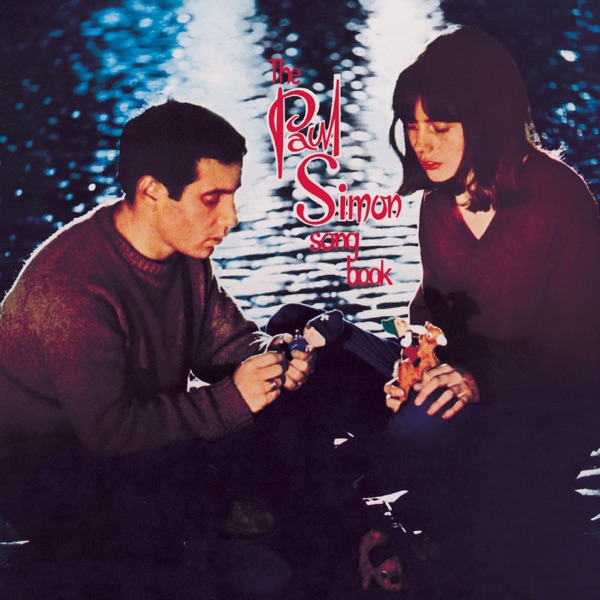
The Paul Simon Songbook
1965 · 14 tracks
- 1 I Am a Rock ↗ 2:46
- 2 Leaves That Are Green ↗ 2:34
- 3 A Church Is Burning ↗ 3:27
- 4 April Come She Will ↗ 1:51
- 5 The Sound of Silence ↗ 3:09
- 6 A Most Peculiar Man ↗ 2:26
- 7 He Was My Brother ↗ 2:50
- 8 Kathy's Song ↗ 3:32
- 9 The Side of a Hill ↗ 2:20
- 10 A Simple Desultory Philippic (Or How I Was Robert McNamara'd Into Submission) ↗ 2:21
- 11 Flowers Never Bend With the Rainfall ↗ 2:20
- 12 Patterns ↗ 3:06
- 13 I Am a Rock (Alternate Version) ↗ 2:48
- 14 A Church Is Burning (Alternate Version) ↗ 3:10

Paul Simon
1972 · 14 tracks
- 1 Me and Julio Down By the Schoolyard (with The Jessy Dixon Singers & Urubamba) [Live 1973] ↗ 2:47
- 2 Homeward Bound (with The Jessy Dixon Singers & Urubamba) [Live 1973] ↗ 2:45
- 3 American Tune (with The Jessy Dixon Singers & Urubamba) [Live 1973] ↗ 4:02
- 4 El Condor Pasa (If I Could) [with The Jessy Dixon Singers & Urubamba] [Live 1973] ↗ 4:06
- 5 Duncan (with The Jessy Dixon Singers & Urubamba) [Live 1973] ↗ 5:08
- 6 The Boxer (with The Jessy Dixon Singers & Urubamba) [Live 1973] ↗ 6:08
- 7 Mother and Child Reunion (with The Jessy Dixon Singers & Urubamba) [Live 1973] ↗ 4:02
- 8 The Sound of Silence (with The Jessy Dixon Singers & Urubamba) [Live 1973] ↗ 4:24
- 9 Jesus Is the Answer (with The Jessy Dixon Singers & Urubamba) [Live 1973] ↗ 3:27
- 10 Bridge Over Troubled Water (with The Jessy Dixon Singers & Urubamba) [Live 1973] ↗ 7:28
- 11 Loves Me Like a Rock (with The Jessy Dixon Singers & Urubamba) [Live 1973] ↗ 3:02
- 12 America (with The Jessy Dixon Singers & Urubamba) [Live 1973] ↗ 4:38
- 13 Kodachrome (Live 1973) ↗ 2:55
- 14 Something So Right (Live 1973) ↗ 4:34

There Goes Rhymin’ Simon
1973 · 14 tracks
- 1 Kodachrome ↗ 3:35
- 2 Tenderness ↗ 2:56
- 3 Take Me to the Mardi Gras ↗ 3:31
- 4 Something So Right ↗ 4:37
- 5 One Man's Ceiling Is Another Man's Floor ↗ 3:48
- 6 American Tune ↗ 3:47
- 7 Was a Sunny Day ↗ 3:44
- 8 Learn How to Fall ↗ 2:48
- 9 St. Judy's Comet ↗ 3:22
- 10 Loves Me Like a Rock ↗ 3:40
- 11 Let Me Live In Your City (Work In Progress) ↗ 4:22
- 12 Take Me to the Mardi Gras (Acoustic Demo) ↗ 2:31
- 13 American Tune (Unfinished Demo) ↗ 4:03
- 14 Loves Me Like a Rock (Acoustic Demo) ↗ 3:25

Still Crazy After All These Years
1975 · 12 tracks
- 1 Still Crazy After All These Years ↗ 3:26
- 2 My Little Town (with Art Garfunkel) ↗ 3:51
- 3 I'd Do It for Your Love ↗ 3:35
- 4 50 Ways to Leave Your Lover ↗ 3:38
- 5 Night Game ↗ 2:58
- 6 Gone At Last (with Phoebe Snow & the Jessy Dixon Singers) ↗ 3:40
- 7 Some Folks' Lives Roll Easy ↗ 3:13
- 8 Have a Good Time ↗ 3:26
- 9 You're Kind ↗ 3:20
- 10 Silent Eyes ↗ 4:05
- 11 Slip Slidin' Away (Demo) ↗ 5:29
- 12 Gone At Last (Demo) [with the Jessy Dixon Singers] ↗ 4:39
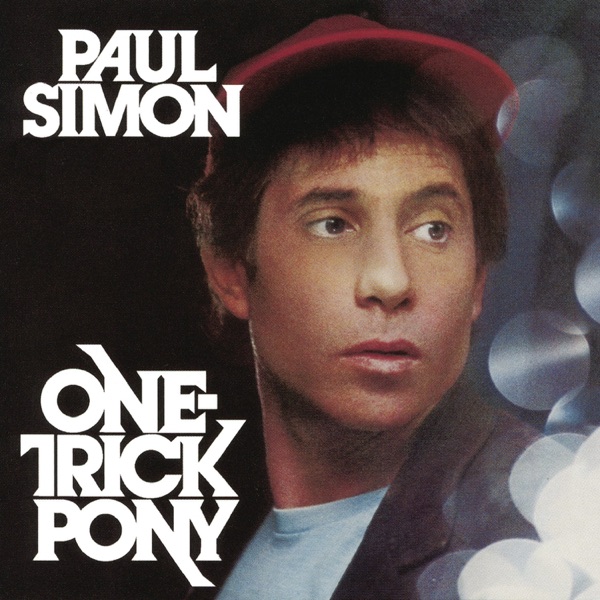
One‐Trick Pony
1980 · 14 tracks
- 1 Late In the Evening ↗ 4:03
- 2 That's Why God Made the Movies ↗ 3:38
- 3 One-Trick Pony (Live at the Agora Theatre, Cleveland, OH - September 1979) ↗ 3:54
- 4 How the Heart Approaches What It Yearns ↗ 2:49
- 5 Oh, Marion ↗ 4:01
- 6 Ace In the Hole (Live at the Agora Theatre, Cleveland, OH - September 1979) ↗ 5:43
- 7 Nobody ↗ 3:33
- 8 Jonah ↗ 3:31
- 9 God Bless the Absentee ↗ 3:18
- 10 Long, Long Day ↗ 3:57
- 11 Soft Parachutes (Soundtrack Recording) ↗ 1:54
- 12 All Because of You (Outtake) ↗ 4:07
- 13 Spiral Highway (Soundtrack Recording) ↗ 2:57
- 14 Stranded In a Limousine ↗ 3:11

Hearts and Bones
1983 · 14 tracks
- 1 Allergies ↗ 4:39
- 2 Hearts and Bones ↗ 5:39
- 3 When Numbers Get Serious ↗ 3:26
- 4 Think Too Much (b) ↗ 2:45
- 5 Song About the Moon ↗ 4:11
- 6 Think Too Much (A) ↗ 3:05
- 7 Train In the Distance ↗ 5:12
- 8 Rene and Georgette Magritte with Their Dog After the War ↗ 3:46
- 9 Cars Are Cars ↗ 3:15
- 10 The Late Great Johnny Ace ↗ 4:53
- 11 Shelter of Your Arms (Work-In-Progress) [Bonus Track] ↗ 3:12
- 12 Train In the Distance (Acoustic Demo) [Bonus Track] ↗ 3:14
- 13 Rene and Georgette Magritte with Their Dog After the War (Original Acoustic Demo) ↗ 3:47
- 14 The Late Great Johnny Ace (Acoustic Demo) [Bonus Track] ↗ 3:22

Graceland
1986 · 11 tracks
- 1 The Boy In the Bubble ↗ 3:59
- 2 Graceland ↗ 4:51
- 3 I Know What I Know (with General M.D. Shirinda & the Gaza Sisters) ↗ 3:13
- 4 Gumboots (with the Boyoyo Boys) ↗ 2:45
- 5 Diamonds On the Soles of Her Shoes ↗ 5:51
- 6 You Can Call Me Al ↗ 4:41
- 7 Under African Skies ↗ 3:37
- 8 Homeless (with Ladysmith Black Mambazo) ↗ 3:48
- 9 Crazy Love, Vol. II ↗ 4:19
- 10 That Was Your Mother (with Good Rockin' Dopsie and the Twisters) ↗ 2:53
- 11 All Around the World or the Myth of Fingerprints (with Los Lobos) ↗ 3:19

The Rhythm of the Saints
1990 · 14 tracks
- 1 The Obvious Child ↗ 4:10
- 2 Can't Run But ↗ 3:37
- 3 The Coast ↗ 5:05
- 4 Proof ↗ 4:40
- 5 Further to Fly ↗ 5:36
- 6 She Moves On ↗ 5:04
- 7 Born At the Right Time ↗ 3:48
- 8 The Cool, Cool River ↗ 4:33
- 9 Spirit Voices ↗ 3:56
- 10 The Rhythm of the Saints ↗ 4:21
- 11 Born At the Right Time (Acoustic Demo) [Bonus Track] ↗ 3:50
- 12 Thelma (Bonus Track) ↗ 4:15
- 13 The Coast (Work-In-Progress) [Bonus Track] ↗ 5:14
- 14 Spirit Voices (Work-In-Progress) [Bonus Track] ↗ 3:50

Songs From The Capeman
1997 · 16 tracks
- 1 Adiós Hermanos ↗ 4:42
- 2 Born In Puerto Rico ↗ 4:54
- 3 Satin Summer Nights ↗ 5:55
- 4 Bernadette ↗ 3:28
- 5 The Vampires ↗ 5:11
- 6 Quality ↗ 4:19
- 7 Can I Forgive Him ↗ 6:11
- 8 Sunday Afternoon ↗ 3:25
- 9 Killer Wants to Go to College ↗ 1:51
- 10 Time Is an Ocean ↗ 5:23
- 11 Virgil ↗ 2:50
- 12 Killer Wants to Go to College II ↗ 2:09
- 13 Trailways Bus ↗ 5:23
- 14 Shoplifting Clothes (Bonus Track) ↗ 3:39
- 15 Born In Puerto Rico (Demo) [with Jose Feliciano] {Bonus Track} ↗ 5:02
- 16 Can I Forgive Him (Demo) [Bonus Track] ↗ 1:57

You’re the One
2000 · 14 tracks
- 1 That's Where I Belong ↗ 3:13
- 2 Darling Lorraine ↗ 6:39
- 3 Old ↗ 2:20
- 4 You're the One ↗ 4:28
- 5 The Teacher ↗ 3:36
- 6 Look At That ↗ 3:54
- 7 Señorita With a Necklace of Tears ↗ 3:41
- 8 Love ↗ 3:51
- 9 Pigs, Sheep and Wolves ↗ 3:58
- 10 Hurricane Eye ↗ 4:12
- 11 Quiet ↗ 4:25
- 12 That's Where I Belong (Live) [Bonus Track] ↗ 3:43
- 13 Old (Live) [Bonus Track] ↗ 2:40
- 14 Hurricane Eye (Live) [Bonus Track] ↗ 6:00
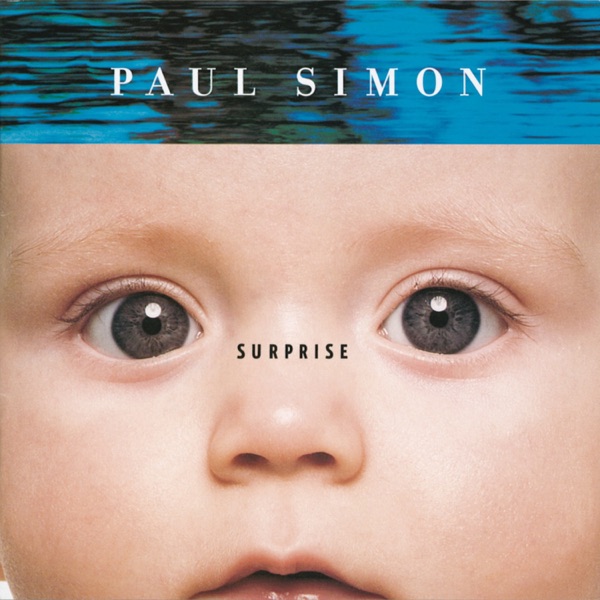
Surprise
2006 · 11 tracks
- 1 How Can You Live In the Northeast? ↗ 3:42
- 2 Everything About It Is a Love Song ↗ 3:57
- 3 Outrageous ↗ 3:24
- 4 Sure Don't Feel Like Love ↗ 3:57
- 5 Wartime Prayers ↗ 4:50
- 6 Beautiful ↗ 3:08
- 7 I Don't Believe ↗ 4:10
- 8 Another Galaxy ↗ 5:22
- 9 Once Upon a Time There Was an Ocean ↗ 3:55
- 10 That's Me ↗ 4:43
- 11 Father and Daughter ↗ 4:11

So Beautiful or So What
2011 · 10 tracks

Stranger to Stranger
2016 · 11 tracks

In the Blue Light
2018 · 10 tracks
- 1 One Man's Ceiling Is Another Man's Floor ↗ 4:01
- 2 Love ↗ 4:10
- 3 Can't Run But ↗ 3:29
- 4 How the Heart Approaches What It Yearns ↗ 4:30
- 5 Pigs, Sheep and Wolves ↗ 4:00
- 6 René and Georgette Magritte with Their Dog After the War ↗ 4:44
- 7 The Teacher ↗ 3:45
- 8 Darling Lorraine ↗ 7:13
- 9 Some Folks' Lives Roll Easy ↗ 3:59
- 10 Questions for the Angels ↗ 4:01

Seven Psalms
2023 · 1 track
- 1 Seven Psalms: The Lord / Love Is Like a Braid / My Professional Opinion / Your Forgiveness / Trail of Volcanoes / The Sacred Harp / Wait ↗ 33:02
-
 The Paul Simon SongbookPaul Simon196514 tracks
 -
 Paul SimonPaul Simon197214 tracks
 -
 There Goes Rhymin’ SimonPaul Simon197314 tracks
 -
 Still Crazy After All These YearsPaul Simon197512 tracks
 -
 One‐Trick PonyPaul Simon198014 tracks
 -
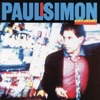 Hearts and BonesPaul Simon198314 tracks
 -
 GracelandPaul Simon198611 tracks
 -
 The Rhythm of the SaintsPaul Simon199014 tracks
 -
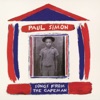 Songs From The CapemanPaul Simon199716 tracks
 -
 You’re the OnePaul Simon200014 tracks
 -
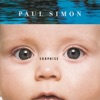 SurprisePaul Simon200611 tracks
 -
 So Beautiful or So WhatPaul Simon201110 tracks
 -
 Stranger to StrangerPaul Simon201611 tracks
 -
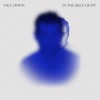 In the Blue LightPaul Simon201810 tracks
 -
 Seven PsalmsPaul Simon20231 track
Deep Dive
Overview
Paul Simon stands as one of rock music’s most durable and intellectually restless songwriters. Born in 1941, he first came to international prominence as half of Simon & Garfunkel, the duo whose intricate vocal harmonies and literate folk-rock arrangements became the sound of 1960s American idealism and angst. After the partnership dissolved, Simon pursued a solo career spanning five decades and counting—one marked by consistent reinvention, genre exploration, and a refusal to calcify around past success. His influence stretches across folk rock, soft rock, world music, and contemporary singer-songwriter traditions.
Formation Story
Paul Simon was born in Newark, New Jersey, and grew up in Queens, New York, in a musical household. He met Art Garfunkel in elementary school in 1953, and the two began singing together as teenagers. By the late 1950s and early 1960s, they were performing in local New York ensembles, eventually adopting the name Tom & Jerry before rebranding as Simon & Garfunkel. The pair emerged from the Greenwich Village folk scene at a moment when acoustic guitar-driven songwriting and vocal harmony were becoming central to rock music’s evolution. Simon’s gift for intricate melodic construction and observational, often melancholic lyrics complemented Garfunkel’s soaring tenor voice, creating a signature sound that would define an era.
Breakthrough Moment
Simon & Garfunkel achieved their first major breakthrough with “The Sound of Silence” in 1965, a studio-produced reimagining of an earlier acoustic track that reached the top of the charts. The song’s arrangement—featuring electric instrumentation layered beneath Garfunkel’s vocal—became a template for the folk-rock hybrid that would dominate the mid-to-late 1960s. Subsequent albums and singles cemented their status: “Mrs. Robinson” and “America” from 1968 captured the anxieties and aspirations of American youth during a turbulent cultural moment. Their 1970 album Bridge over Troubled Water, featuring the title track’s orchestral grandeur, became one of the best-selling albums of all time. The duo’s commercial and critical success was nearly unparalleled among rock acts of their generation.
Peak Era
While Simon & Garfunkel’s commercial dominance peaked in the late 1960s and early 1970s, Simon’s solo career achieved its own peaks across multiple decades. His first solo album, The Paul Simon Songbook, appeared in 1965 while he was still performing with Garfunkel. After the duo’s final studio album in 1970, Simon released Paul Simon in 1972 and There Goes Rhymin’ Simon in 1973, establishing himself as a substantial artist in his own right. Still Crazy After All These Years (1975) deepened his reputation for introspection and sophisticated pop production. In the mid-1980s, the album Graceland (1986) marked a seismic creative and commercial moment: collaborating with South African musicians and producer Quincy Jones, Simon fused American songwriting with African rhythmic and harmonic traditions, reaching audiences across generational and geographical lines and inaugurating a new phase of his career rooted in world music exploration.
Musical Style
Simon’s songwriting is rooted in folk-rock sensibilities—acoustic guitar, clear lyrical narratives, and vocal harmony—but his solo work reveals constant stylistic migration. His early solo work maintained the folk-pop intimacy of the Simon & Garfunkel years while introducing more complex production and diverse instrumental textures. By the 1980s and beyond, his music incorporated Latin percussion, Brazilian rhythms (The Rhythm of the Saints, 1990), theatrical arrangements (Songs From The Capeman, 1997), and subtle electronic elements. His vocal approach—conversational, conversely pitched, emotionally reserved rather than bombastic—remained consistent across decades. Lyrically, Simon gravitates toward observational realism, often exploring themes of aging, mortality, urban life, and cultural displacement. His melodies tend toward the sophisticated: unconventional structures, jazz-inflected chord progressions, and syncopated rhythmic patterns mark his best work.
Major Albums
Still Crazy After All These Years (1975)
A landmark exploration of middle age, mortality, and romantic disappointment, this album solidified Simon’s post-Garfunkel solo identity while maintaining pop accessibility and production sophistication.
Graceland (1986)
A transformative collaboration with South African musicians and Quincy Jones, this album broke conventional boundaries between American pop and world music, introducing African rhythmic and harmonic traditions to mainstream audiences and reigniting Simon’s creative ambitions.
The Rhythm of the Saints (1990)
Following Graceland’s blueprint, Simon again traveled abroad—this time to Brazil—to absorb and incorporate local musical traditions, creating an album dominated by complex percussion and Brazilian cultural perspectives.
Songs From The Capeman (1997)
A theatrical songwriting project addressing identity, crime, and redemption in New York City, this album marked Simon’s most ambitious narrative work and demonstrated his continued willingness to pursue unconventional projects.
Surprise (2006)
Produced by Brian Eno, this late-career work fused subtle electronic textures, intricate layering, and Simon’s signature observational lyricism, proving his creative relevance in the 21st century.
Stranger to Stranger (2016)
Recorded in his seventies, this album showcased Simon’s continued facility with melody and lyrical precision while embracing contemporary production techniques and the wisdom of age.
Signature Songs
- “The Sound of Silence” (1965) — The duo’s breakthrough hit and definitive folk-rock statement, built on the tension between acoustic simplicity and studio sophistication.
- “Mrs. Robinson” (1968) — A commentary on American post-war innocence and disillusionment, featuring one of pop music’s most memorable chorus hooks.
- “America” (1968) — A road-song narrative capturing restlessness and yearning during the turbulent 1960s.
- “The Boxer” (1969) — An elegiac, autobiographically inflected narrative of struggle and survival, featuring intricate harmony and orchestral arrangement.
- “Bridge over Troubled Water” (1970) — A gospel-influenced ballad of consolation and friendship, reaching the pinnacle of 1960s studio arrangement ambition.
- “Graceland” (1986) — The title track merging American and African musical vocabularies, serving as a mission statement for the album’s cultural synthesis.
- “You Can Call Me Al” (1986) — A playful, propulsive exploration of identity and reinvention, featuring prominent bass instrumentation and infectious rhythm.
Influence on Rock
Simon’s influence on rock music operates across multiple dimensions. As a songwriter, he elevated the folk-rock idiom’s lyrical intelligence and melodic sophistication during the 1960s, competing with contemporaries like Bob Dylan by emphasizing clarity, narrative specificity, and harmonic complexity rather than mystique. His solo work demonstrated that a rock artist could sustain a career across five decades while pursuing artistic reinvention; he proved that world music and cross-cultural collaboration could be a legitimate avenue for established Western rock musicians, opening pathways later traveled by David Byrne, Peter Gabriel, and others. His production sensibility—detailed, layered, orchestrally ambitious—influenced soft-rock and adult-contemporary songwriting traditions. Equally, his example of intellectual restraint and skepticism toward his own mythology set a model for singer-songwriters seeking to evolve without caricature.
Legacy
Paul Simon’s legacy rests on four pillars: the Simon & Garfunkel catalog remains canonical in American rock, continuing to reach audiences through streaming, film soundtracks, and cultural memory; his solo albums have achieved enduring critical reassessment, with Graceland and The Rhythm of the Saints recognized as pioneering world-music collaborations; his songwriting influence persists across generations of folk and pop musicians; and his career longevity—continuing to record and perform into his eighties—embodies the possibility of sustained artistic growth in rock music. His albums remain widely available on streaming platforms and through Columbia and Warner Bros. Records, ensuring his music reaches each new generation of listeners seeking intelligent, sophisticated songwriting rooted in folk-rock traditions yet unafraid of global musical synthesis.
Fun Facts
- Simon began his professional recording career in the late 1950s under the stage name Jerry Landis before forming the duo that would become Simon & Garfunkel.
- Graceland was recorded in part without the full knowledge or cooperation of the South African government, undertaken during the final years of apartheid, making the album a subtle political statement on cultural exchange across racial and national boundaries.
- Simon’s 1997 album Songs From The Capeman was based on the true crime story of a young Puerto Rican man in 1950s New York City, demonstrating his commitment to narrative songwriting on a theatrical scale.
- He has continued recording prolifically into the 2020s, with Seven Psalms arriving in 2023, more than six decades after his first professional recordings.