

Image courtesy of Apple Music
Rank #455
Raul Seixas
From Wikipedia
Raul Santos Seixas was a Brazilian singer, songwriter, producer, and multi-instrumentalist, considered "Father of Brazilian Rock". His musical work consists of seventeen albums released during his 26-year career. His musical style is traditionally classified as rock and baião, and he did indeed manage to unite both genres in songs like "Let me Sing, Let me Sing". His debut album, Raulzito e os Panteras (1968), was produced when he was part of the group Raulzito e os Panteras, but he only gained critical and public acclaim with songs like "Ouro de Tolo", "Mosca na Sopa" and "Metamorfose Ambulante," from the album Krig-ha, Bandolo! (1973). Raul Seixas had a musical style that was called "rebellious and mystical". This is due to the ideals he championed, such as the Alternative Society presented in the album Gita (1974), influenced by figures like the British occultist Aleister Crowley.
Discography & Previews
Browse through and click an album to open and play 30-second previews streamed from Apple Music.

Os 24 maiores sucessos da era do rock
1973 · 11 tracks
- 1 Abertura ↗ 0:42
- 2 Rock Around the Clock / Blue Suede Shoes / Tutti Frutti / Long Tall Sally ↗ 4:12
- 3 Rua Augusta / O Bom ↗ 2:57
- 4 Poor Little Fool / Bernardine ↗ 2:25
- 5 Estúpido Cupido / Banho de Lua / Lacinhos Cor-de-Rosa ↗ 3:53
- 6 The Great Pretender ↗ 1:46
- 7 Diana / Little Darlin' / Oh! Carol / Runaway ↗ 3:34
- 8 Marcianita / É Proíbido Fumar / Pega Ladrão ↗ 3:45
- 9 Jambalaya / Shake , Rattle and Roll / Bop-A-Lena ↗ 3:28
- 10 Only You ↗ 2:49
- 11 Vem Quente Que Eu Estou Fervendo ↗ 2:21

Krig-ha, Bandolo!
1973 · 11 tracks
- 1 Introdução - Good Rockin' Tonight ↗ 0:51
- 2 Mosca Na Sopa ↗ 3:59
- 3 Metamorfose Ambulante ↗ 3:51
- 4 Dentadura Postiça ↗ 1:31
- 5 As Minas do Rei Salomão ↗ 2:23
- 6 A Hora do Trem Passar ↗ 1:51
- 7 Al Capone ↗ 2:41
- 8 How Could I Know (Love Was to Go) ↗ 2:38
- 9 Rockixe ↗ 3:46
- 10 Cachorro-Urubú ↗ 2:10
- 11 Ouro de Tolo ↗ 2:52

Gîtâ
1974 · 14 tracks
- 1 Super Heróis ↗ 3:13
- 2 Medo da Chuva ↗ 2:58
- 3 As Aventuras de Raul Seixas Na Cidade de Thor ↗ 3:44
- 4 Água Viva ↗ 2:01
- 5 Moleque Maravilhoso ↗ 2:17
- 6 Sessão das 10 ↗ 2:12
- 7 Sociedade Alternativa ↗ 2:53
- 8 O Trem Das 7 ↗ 2:38
- 9 S.O.S. ↗ 3:05
- 10 Prelúdio ↗ 1:12
- 11 Loteria Da Babilônia ↗ 2:30
- 12 Gîtâ ↗ 4:48
- 13 Um Som Para Laio (Bonus Track) ↗ 3:41
- 14 Não Pare Na Pista ↗ 2:38

Novo Aeon
1975 · 14 tracks
- 1 Tente Outra Vez ↗ 2:23
- 2 Rock do Diabo ↗ 2:11
- 3 A Maçã ↗ 3:22
- 4 Eu Sou Egoísta ↗ 2:48
- 5 Caminhos ↗ 1:49
- 6 Tu És O MDC da Minha Vida ↗ 3:50
- 7 A Verdade Sobre a Nostalgia ↗ 2:06
- 8 Paranóia ↗ 3:51
- 9 Peixuxa (O Amiguinho Dos Peixes) ↗ 2:10
- 10 É Fim de Mês ↗ 2:59
- 11 Sunseed ↗ 2:38
- 12 Caminho II ↗ 0:56
- 13 Novo Aeon ↗ 2:31
- 14 A Maçã ↗ 3:21

Há 10 Mil Anos Atrás
1976 · 11 tracks
- 1 Canto para Minha Morte ↗ 3:50
- 2 Meu Amigo Pedro ↗ 4:46
- 3 Ave Maria da Rua ↗ 4:36
- 4 Quando Você Crescer ↗ 4:16
- 5 O Dia da Saudade ↗ 2:33
- 6 Eu Também Vou Reclamar ↗ 3:21
- 7 As Minas do Rei Salomão ↗ 2:57
- 8 O Homem ↗ 3:02
- 9 Os Números ↗ 2:28
- 10 Cantiga de Ninar ↗ 2:39
- 11 Eu Nasci Há 10 Mil Anos Atrás ↗ 4:49


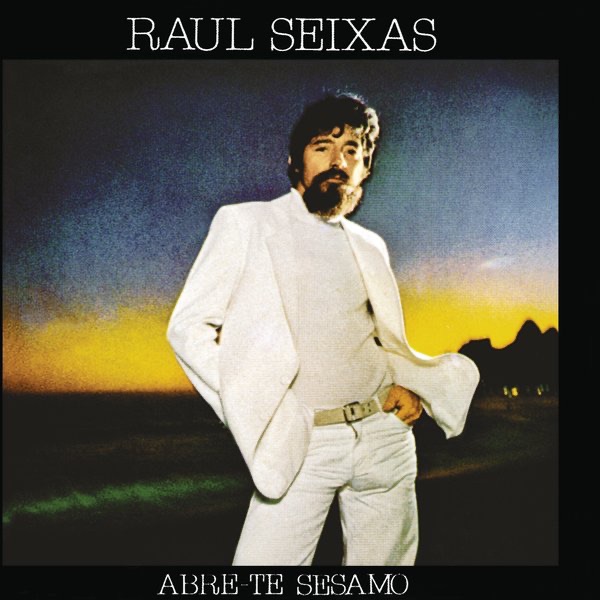
Abre-te Sésamo
1980 · 12 tracks

Metrô linha 743
1984 · 11 tracks
- 1 Metrô Linha 743 ↗ 2:46
- 2 Um Messias Indeciso ↗ 4:55
- 3 Meu Piano ↗ 3:24
- 4 Quero Ser o Homem Que Sou (Dizendo a Verdade) ↗ 4:39
- 5 Canção do Vento ↗ 2:48
- 6 Mamãe Eu Não Queria ↗ 4:12
- 7 Mas I Love You (Pra Ser Feliz) ↗ 3:38
- 8 Eu Sou Egoísta ↗ 3:04
- 9 O Trem das Sete ↗ 3:15
- 10 A Geração da Luz ↗ 2:56
- 11 Anarkilópolis (Cowboy Fora da Lei Nº 2) [Faixa Bônus] ↗ 3:27
-
 Os 24 maiores sucessos da era do rockRaul Seixas197311 tracks
 -
 Krig-ha, Bandolo!Raul Seixas197311 tracks
 -
 GîtâRaul Seixas197414 tracks
 -
 Novo AeonRaul Seixas197514 tracks
 -
 Há 10 Mil Anos AtrásRaul Seixas197611 tracks
 -
 O dia em que a Terra parouRaul Seixas197710 tracks
 -
 Mata virgemRaul Seixas197810 tracks
 -
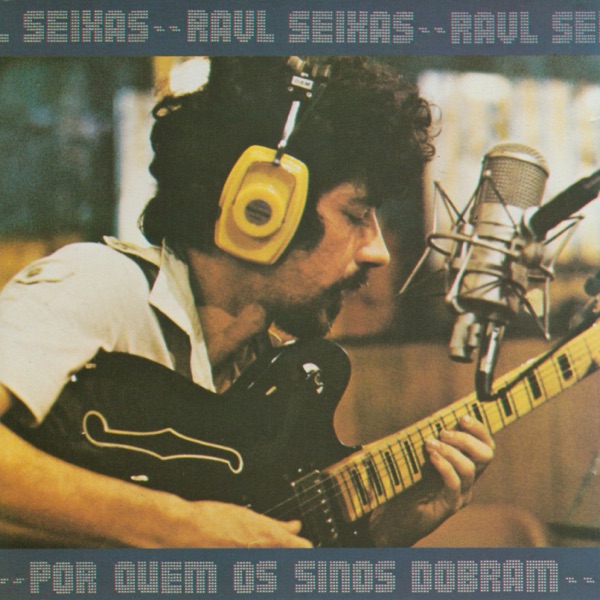
 Por quem os sinos dobramRaul Seixas19799 tracks
 -
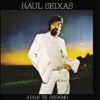 Abre-te SésamoRaul Seixas198012 tracks
 -
 Metrô linha 743Raul Seixas198411 tracks
Deep Dive
Overview
Raul Santos Seixas stands as the founding architect of Brazilian rock music, a singer-songwriter and multi-instrumentalist whose career spanned from 1963 to 1989 and produced seventeen studio albums. Born in Rio de Janeiro in 1945, Seixas bridged two seemingly incompatible musical worlds—the rural Brazilian rhythms of baião and the electric energy of Anglo-American rock—and in doing so created a distinctly Brazilian answer to international rock idioms. His approach was neither imitation nor fusion in the polite sense; rather, it was a deliberate synthesis that asserted rock music as a legitimate vehicle for Brazilian expression, spiritual inquiry, and social questioning.
Seixas’s reputation rests on three foundational pillars: his role as a technical musician fluent across multiple instruments, his willingness to engage occult and mystical themes in his songwriting, and his uncompromising artistic vision in an era when Brazilian popular music remained dominated by samba, bossa nova, and bolero. He earned the epithet “Father of Brazilian Rock” not through commercial dominance alone but through the act of cultural translation—proving that rock could sound authentically Brazilian while remaining recognizably rock.
Formation Story
Raul Seixas was born in Rio de Janeiro in 1945, coming of age during Brazil’s post-war cultural ferment. His path to rock music was not inevitable. In the early 1960s, as bossa nova achieved worldwide fame through João Gilberto and Tom Jobim, and as American rock and roll arrived through radio and records, Seixas found himself drawn to the harder-edged, more anarchic energy of international rock. He was among the first Brazilian musicians to take the genre seriously as something more than a novelty import—to see in rock music a means of expressing ideas and emotions that samba and traditional Brazilian popular song could not.
In the late 1960s, Seixas co-founded Raulzito e os Panteras, a band that recorded the album Raulzito e os Panteras in 1968. This effort, while it provided his initial entry into recording, did not capture the vision that would define his solo career. The group served as a testing ground rather than a lasting artistic statement. It was only after stepping into a solo framework that Seixas found the artistic freedom to realize the full scope of his ambitions.
Breakthrough Moment
Seixas’s breakthrough came with the 1973 album Krig-ha, Bandolo!, released when he was in his late twenties and had already served several years in the Brazilian rock underground. This album introduced three songs that became foundational texts in Brazilian rock: “Ouro de Tolo” (Fool’s Gold), “Mosca na Sopa” (Fly in the Soup), and “Metamorfose Ambulante” (Metamorphosing Mobile). These tracks demonstrated Seixas’s mature songwriting voice—songs that were rhythmically intricate, lyrically provocative, and unafraid to blend mystical and political imagery. The album itself, titled with a phonetic abstraction rather than a conventional phrase, signaled the artistic departure Seixas had undertaken.
Krig-ha, Bandolo! proved that Brazilian audiences and critics were ready for a rock music that did not apologize for its international influence nor dilute its national identity. The album’s success opened doors not only for Seixas’s own subsequent work but signaled to a generation of Brazilian musicians that rock was a legitimate genre worthy of serious artistic investment.
Peak Era
The period from 1973 to 1978 represents Seixas’s most creatively vital and commercially successful years. Following Krig-ha, Bandolo!, he released Gîtâ in 1974, an album that crystallized his artistic philosophy by drawing explicitly on mystical and occult themes, influenced by figures like British occultist Aleister Crowley. Rather than treating these influences as exotic decoration, Seixas integrated them into a broader vision of what rock music could express—a kind of rock music that was not merely entertainment or fashion but a vehicle for philosophical and spiritual inquiry.
The mid-to-late 1970s saw Seixas producing a stream of albums including Novo Aeon (1975), Há 10 Mil Anos Atrás (1976), Raul Rock Seixas (1977), O dia em que a Terra parou (1977), and Mata virgem (1978). This prolific output maintained artistic momentum while also documenting the evolution of his sound and thematic concerns. His musical style during this era was consistently described as “rebellious and mystical,” a characterization that captured both his formal musical ambitions and his ideological commitments to concepts like the Alternative Society.
Musical Style
Raul Seixas’s sound cannot be reduced to a single genre tag, and this refusal of easy categorization was itself a statement. His work drew from rockabilly, folk rock, blues, and traditional baião—the latter being a rhythmic form rooted in Brazilian rural music. Songs like “Let me Sing, Let me Sing” demonstrated his capacity to unite rock and baião within a single compositional framework, creating music that was neither purely traditional nor purely international but genuinely synthetic.
As a multi-instrumentalist, Seixas brought textural variety to his recordings. His arrangements often featured acoustic guitar and percussion alongside electric rock instrumentation, allowing him to move fluidly between intimate acoustic passages and driving rock sections. His vocal delivery was direct and unadorned, avoiding the melismatic elaboration common in Brazilian popular music; instead, he favored clarity and forward momentum, prioritizing lyrical content and the propulsive rhythm of the song itself. His songwriting demonstrated an intellectual ambition unusual in rock music of his era—he engaged with literary and philosophical references, building songs around conceptual themes rather than purely emotional or narrative content.
Major Albums
Krig-ha, Bandolo! (1973)
This album established Seixas’s artistic maturity and introduced the songs that would become cornerstone texts in Brazilian rock. The album’s experimental title and its fusion of rock intensity with Brazilian rhythmic sophistication demonstrated that rock music could be both authentically Brazilian and internationally sophisticated.
Gîtâ (1974)
Following on Krig-ha, Bandolo!‘s success, Gîtâ deepened Seixas’s engagement with mystical and occult themes, presenting a rock album explicitly influenced by esoteric philosophy and the ideals of an Alternative Society. This album crystallized his artistic identity as a thinker as well as a musician.
Novo Aeon (1975)
Continuing the trajectory of his mid-1970s peak, Novo Aeon maintained the momentum of Gîtâ while exploring further the intersection of rock music, mysticism, and Brazilian cultural expression.
Raul Rock Seixas (1977)
Released alongside O dia em que a Terra parou in the same year, this self-titled effort reasserted Seixas’s grounding in rock music proper while maintaining the philosophical and mystical preoccupations that distinguished his work from more conventional rock acts.
Mata virgem (1978)
This album completed Seixas’s most fertile creative period and represented the culmination of the artistic vision he had been developing throughout the 1970s.
Signature Songs
- “Ouro de Tolo” — A foundational Brazilian rock composition that became synonymous with Seixas’s artistic identity, demonstrating the marriage of rock intensity and lyrical sophistication.
- “Mosca na Sopa” — A song that combined rock energy with provocative lyrical content, establishing Seixas’s reputation for uncompromising artistic expression.
- “Metamorfose Ambulante” — A track that showcased Seixas’s capacity to blend rock structure with philosophical and mystical themes.
- “Let me Sing, Let me Sing” — A song explicitly demonstrating his ability to fuse baião rhythmic structures with rock instrumentation and sensibility.
Influence on Rock
Raul Seixas fundamentally altered the trajectory of Brazilian rock music by establishing that the genre could be authentically Brazilian rather than merely a local adaptation of Anglo-American models. His success opened doors for subsequent generations of Brazilian rock musicians, providing proof that international rock idioms could be adopted without sacrificing cultural specificity or artistic integrity. By treating rock music as a serious vehicle for philosophical and mystical inquiry rather than primarily as dance music or romantic entertainment, Seixas elevated the perceived possibilities of the form within Brazil.
His influence extended beyond music into broader Brazilian culture, establishing rock as a legitimate arena for intellectual and artistic expression. Seixas’s work demonstrated that rock music could engage with esotericism, mysticism, and alternative spirituality—themes that would resonate through rock music internationally but which Seixas brought to his local context with particular force and specificity.
Legacy
Raul Seixas died in 1989 at age 44, his career cut short by illness. Despite the brevity of his life, his seventeen studio albums and the songs that emerged from them—particularly the triumvirate of “Ouro de Tolo,” “Mosca na Sopa,” and “Metamorfose Ambulante”—have remained central to Brazilian rock identity. His role as the Father of Brazilian Rock is not merely honorary; it reflects the structural importance of his early work in establishing the genre’s legitimacy within Brazilian culture.
In the decades following his death, Seixas’s work has been preserved and re-circulated through reissues and streaming platforms, allowing new generations of Brazilian listeners and international rock audiences to encounter his fusion of rock, baião, mysticism, and lyrical sophistication. His albums remain reference points for Brazilian musicians and continue to be studied as primary texts in the history of Brazilian rock music.
Fun Facts
- Seixas was explicitly influenced by British occultist Aleister Crowley, incorporating esoteric themes and Alternative Society ideologies into his songwriting and conceptual albums rather than treating them as external decoration.
- His 1968 debut as part of Raulzito e os Panteras predated his solo breakthrough by five years, providing a rehearsal period for the fully realized artistic vision that emerged in 1973.
- Over his 26-year career spanning from 1963 to 1989, Seixas released seventeen studio albums across four major record labels—Philips Records, EMI, Columbia Records, and Warner Music Group—reflecting both the stability and commercial reach his work achieved.
- The title Krig-ha, Bandolo!, the album that launched his breakthrough, uses a phonetic abstraction rather than conventional language, reflecting Seixas’s artistic willingness to experiment with form and meaning in all dimensions of his work.